
Quick Take
- Elk have returned to East Tennessee after a decades-long restoration project.
- The native Eastern elk subspecies disappeared in the mid-1800s, leaving only historical accounts and the occasional bone.
- Hundreds of elk now roam East Tennessee thanks to ongoing restoration efforts.
For roughly 150 years, the sound of bugling elk was missing from Tennessee’s mountains — a silence so long-lasting it felt permanent. The state’s native Eastern elk subspecies disappeared in the mid-1800s, leaving behind little more than a few historical accounts and the occasional bone. Today, though, the story has taken a remarkable turn. Hundreds of elk once again roam the hills of East Tennessee, thanks to a restoration project decades in the making.
To understand how elk vanished, why Tennessee decided it was time to bring them back, and what the herd looks like today, we spoke with Garrett Clevinger, Elk Program Coordinator with the Tennessee Wildlife Resources Agency (TWRA).
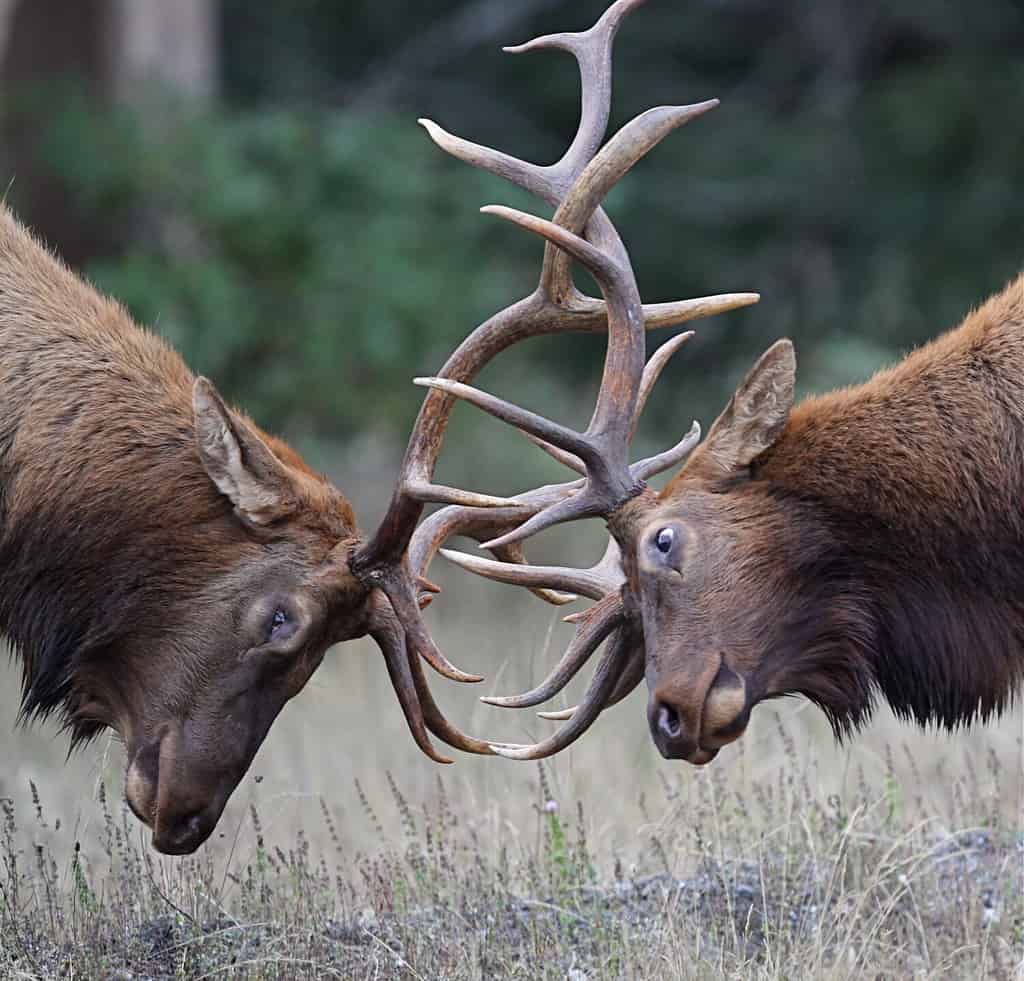
For 150 years, elk were completely absent from Tennessee. But today, thanks to a major restoration effort, they once again roam the state’s northeastern hills.
©Tom Reichner/Shutterstock.com
Why Did Elk Disappear from Tennessee?
Elk didn’t vanish from Tennessee all at once. As settlers moved in, forests came down, farmland spread, and hunting went largely unregulated. Over time, the Eastern elk (the subspecies once native to the region) disappeared altogether.
“A lot of factors led to the population decline of elk in the eastern United States,” Clevinger explains. “But here in Tennessee, we had a lot of habitat loss and overharvest of the subspecies that was native to Tennessee at that time. That species has since gone extinct.”
Even so, the landscape itself never lost its potential. Tennessee still had rugged mountains, forested slopes, and open areas that could support elk again if given the chance. “We always had the habitat here to do what we needed to do,” he says.
So why did it take more than a century to try?
In short, the 1990s changed everything. Across the eastern U.S., states began launching successful elk reintroductions using the western subspecies. Kentucky’s program, now the largest elk herd east of the Mississippi, became an especially powerful example.
“When Tennessee started realizing that other states started doing that, they started looking really closely into what type of habitat we still had on the landscape,” Clevinger says. With Kentucky’s success happening right next door, Tennessee began seriously asking whether it could do the same.
We always had the habitat here to do what we needed to do.
Garrett Clevinger, Elk Program Coordinator with the Tennessee Wildlife Resources Agency (TWRA)
Why Elk Were Ripe for a Comeback
TWRA doesn’t reintroduce a species just because it once lived in the area. The land must be able to support it, and the people living in that area need to be willing to share the space.
As it turns out, elk happened to be a perfect fit.
“Elk are a large and highly charismatic species,” Clevinger notes. “Sociologically, they’re desirable…from a hunter aspect and also for someone who is just out viewing wildlife.”
Biologically, the state already had what elk need: open feeding areas, forest cover, and plenty of room. With both science and public support aligning, TWRA greenlit the project.
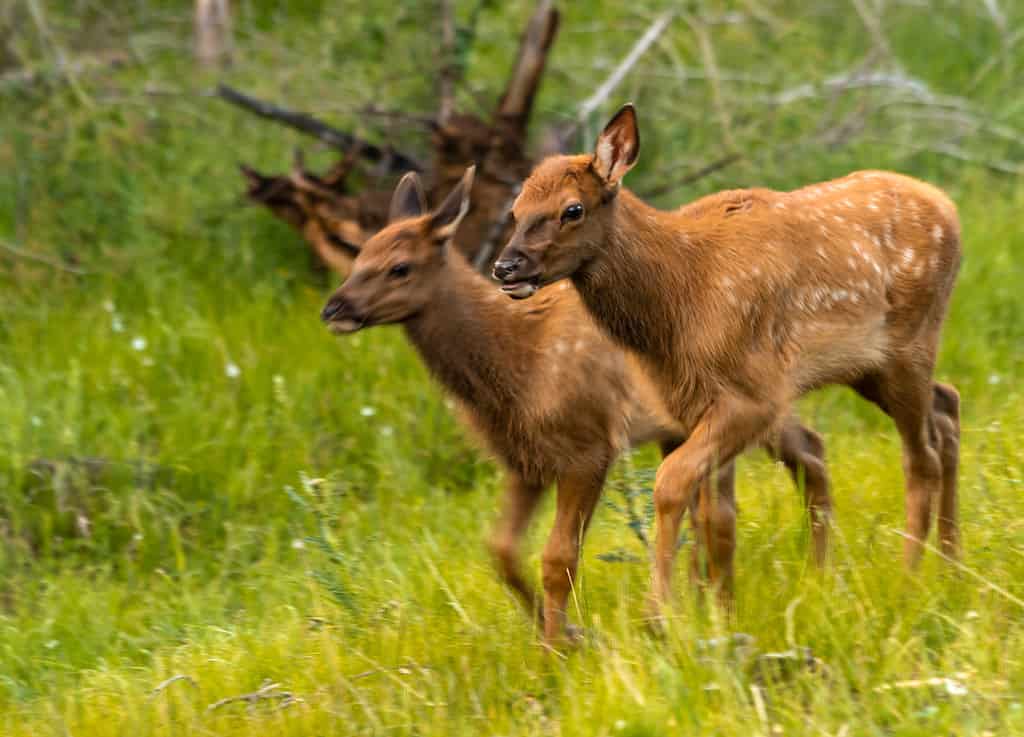
A newborn calf stays close to its mother, reflecting the early-life survival rates TWRA monitors each year to track herd growth.
©tvirbickis/iStock via Getty Images
Where Did Tennessee’s New Elk Come From?
Between 2000 and 2008, Tennessee released 201 elk into its restoration zone. Most came from Elk Island National Park in Alberta, Canada, with others from the Land Between the Lakes herd.
The number-one concern during sourcing? Disease.
“When the original restoration efforts began, one of the biggest things was disease,” Clevinger says. Elk Island had an exceptional track record of healthy animals and low disease prevalence — exactly what Tennessee needed for a safe and sustainable reintroduction. “So disease was the primary factor that the state was looking at.”
Genetic diversity also played a major role. “That’s still something that’s on the forefront of what we do here in Tennessee,” he explains. TWRA continues to work closely with the University of Tennessee to monitor how genetics move across the landscape.
What Made the 670,000-Acre Restoration Zone Viable
Today, Tennessee’s elk restoration zone covers 670,000 acres across five counties in the northeast part of the state. The selection was strategic.
“One of the big things that the agency looked for was making sure that the area was suitable in terms of having a low number of agricultural areas where nuisance issues may occur,” Clevinger explains. In simpler terms: less farmland, fewer fences, and fewer opportunities for elk-human conflict.
The chosen zone also offered large stretches of public land, mostly forested terrain, low human population density, and excellent opportunities for early-successional habitat management. “That five-county zone really met that criteria,” he says.
Do Elk Wander Beyond the Zone?
You might be wondering how common it is for elk to wander beyond the designated zone, and the answer is simple: rarely. Although people occasionally spot elk outside the restoration area, those sightings are extremely uncommon. “We get very few reports of elk outside of the restoration zone,” Clevinger says.
To address those rare cases, the state has an incidental take option for licensed deer hunters, but it has only been used three times in more than a decade. Why would an elk wander at all? Clevinger says the breeding season plays a big role. Younger bulls may get pushed out by dominant males, and younger elk of either sex may roam while figuring out their home range. But overall, elk tend to stay put.
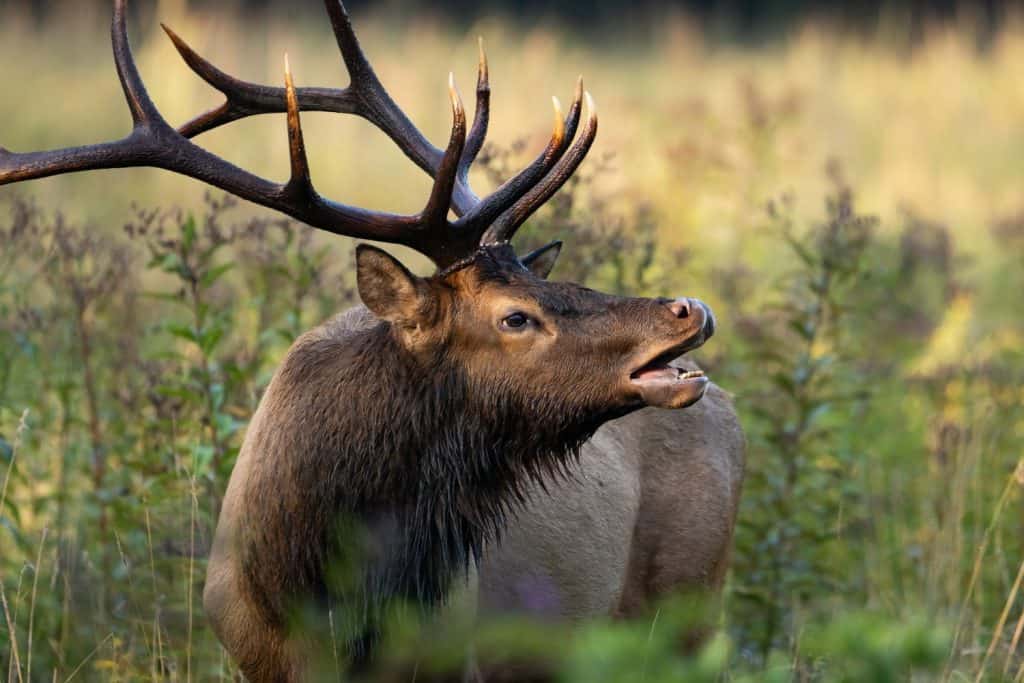
A solitary bull bugles during the fall breeding season, the time of year when younger males may wander farther.
©Cavan-Images/Shutterstock.com
A Carefully Controlled, Highly Limited Elk Hunt
Tennessee launched its first elk hunt in 2009, but unlike western states with massive herds, Tennessee keeps its hunt extremely limited. “We have a very small quota hunt,” says Clevinger. “Currently, we have 19 permits available.” Those permits include firearm, archery, and youth opportunities.
The goal isn’t to reduce numbers; it’s to support long-term management. TWRA uses hunting to help monitor herd health and maintain balance. “With the way the population is, we can’t give out permits to everyone,” he shares.
So, How Many Elk Are in Tennessee Now?
TWRA performs an annual winter survey using the same method each year to keep results consistent. The current estimate is roughly 400 to 450 elk.
“Our population is slowly and steadily going up,” Clevinger says. Growth hasn’t been as fast as early models suggested, but the overall trend is positive. “And that’s good,” he adds.
Elk health is a constant priority, especially when it comes to disease surveillance. “We’re really meticulous in Tennessee with disease monitoring,” Clevinger says. If an elk appears sick or is found dead, it goes straight to the University of Tennessee for a full necropsy. Every harvested elk is also tested.
The most prevalent issue is Chronic Wasting Disease (CWD), which is contagious and slowly destroys the nervous system in deer and elk species. There is no cure for the disease.
“With CWD being our biggest concern, we’re always sampling for CWD on all our harvested animals,” he explains, “so we can monitor for that and make sure we have a grasp on where that is if it ever shows up.”
So far, the disease has never been detected in Tennessee’s elk.

TWRA closely monitors elk health each year, testing harvested animals and investigating any sick or deceased individuals to keep the herd disease-free.
©RelentlessImages/Shutterstock.com
Tourism Meets Conservation at Hatfield Knob
If you want your best chance of seeing elk in Tennessee, head to the Hatfield Knob Viewing Tower in Campbell County — a destination that has taken on a life of its own.
“The Hatfield knob game tower is a very, very popular place,” Clevinger says. A study conducted several years ago estimated about 16,000 annual visitors, and today, social media has only increased its popularity.
“Just having elk around draws a lot of attention,” he adds. Visitors come for grazing herds, summertime calves, and the unforgettable sound of bulls bugling across the ridge.
Looking ahead, TWRA plans to keep improving habitat, continue monitoring the herd closely, and reduce conflicts with private landowners.
In practice, that means expanding early-successional habitat, studying calving and survival rates, monitoring how elk use the landscape, reducing nuisance issues, securing grants for habitat projects, and strengthening overall herd health.
A Comeback Still in Progress
While Tennessee’s elk herd may be small compared to western giants, its comeback is no less impressive. What began as a bold experiment in the early 2000s is now a sustainable, steadily growing herd that draws both locals and visitors into the mountains.
With continued habitat work, ongoing monitoring, and strong public interest, elk are once again part of the Volunteer State’s natural heritage — after more than a century of silence.