
Quick Take
- State Forest State Park is the top spot to see moose, while Moraine Park in Rocky Mountain National Park is ideal for elk.
- Moose are solitary and can charge when threatened, while elk stay in herds and often flee from humans.
- The reintroduction of moose in Colorado transformed ecosystems like the Kawuneeche Valley, affecting willow growth and beaver activity.
Hiking in the Centennial State offers a two-for-one deal if you want to see some of North America’s largest land mammals. Moose and elk are plentiful in Colorado, and you can see each when you hike. The key is to choose the right hiking trails.
Best Hiking Trails to See Moose in Colorado
Head over to State Forest State Park in Walden for the best chance to see moose in Colorado. With more than 600 moose in the park, you can see why Walden is designated the “Moose Capital” of the state. There are more than 136 miles of trails crisscrossing the park.
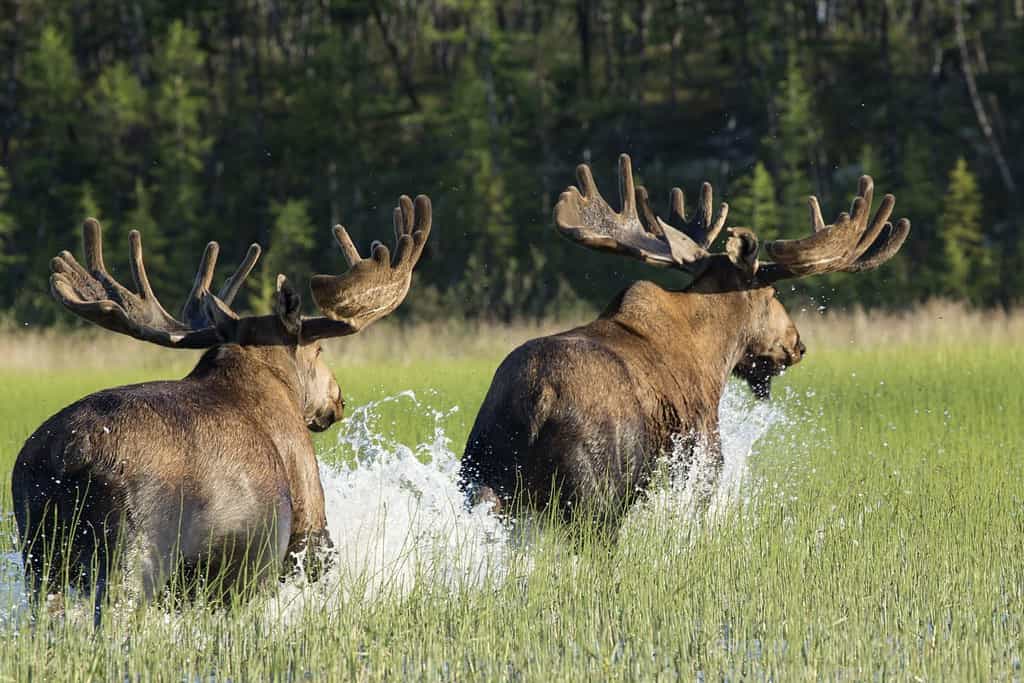
There are more than 600 moose in Colorado’s State Forest State Park.
©Olenyok/Shutterstock.com
Take your pick from these three popular trails where moose are most often spotted. Moose are attracted to these spots because the marshy bogs are home to many willow trees, which are a favorite food.
- Ranger Lakes Nature Trail – This 1.25-mile loop is an easy, flat route that’s ideal for family groups. It’s dog- and kid-friendly, and close to horseback riding and mountain biking. You’re most likely to see moose grazing in the marshlands in between the two lakes and along the banks of the nearby Michigan River.
- Lake Agnes Trail – This short hike, less than two miles round trip, takes you to the shores of Lake Agnes, but you’ll have to work a bit to get there since the trail is steep. It’s worth it, since it is one of the most reliable places to spot moose. They’re usually seen standing in the water near the shoreline.
- American Lakes Trail – The toughest hike on this list, this 7.4-mile out-and-back hike has an ascent of 1,517 feet and is rated difficult. But the extra effort pays off when you reach the American Lakes basin. There, you’ll find yourself in prime moose territory. They can often be seen in the marshy area between Michigan Lake and American Lake.
Best Hiking Trails to See Elk in Colorado
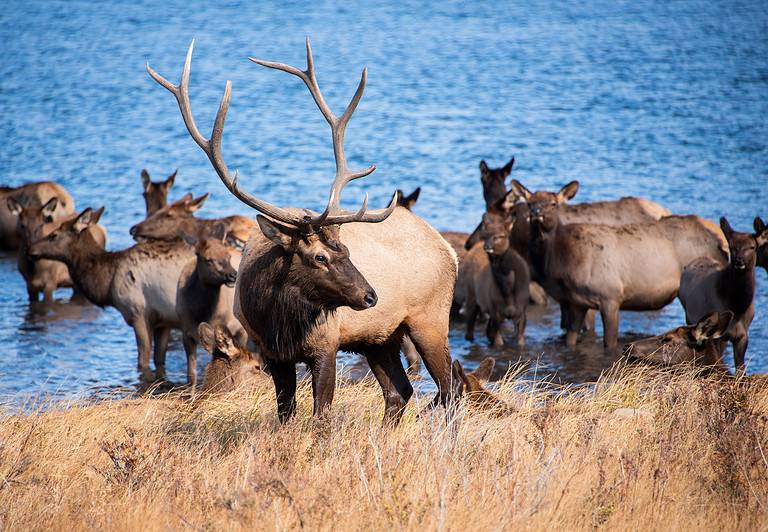
If you’re looking for elk in Colorado, Moraine Park on the east side of Rocky Mountain National Park is a great choice. It features expansive meadows that provide an abundant supply of grass, elk’s favorite food.
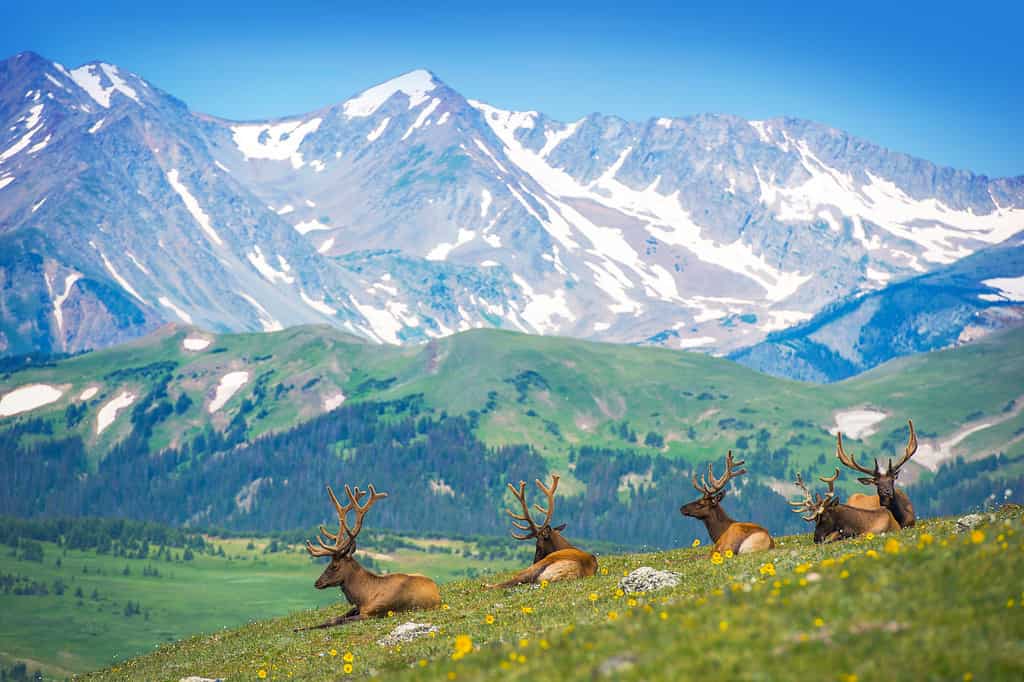
Elk love wide-open meadows where they can lounge and graze.
©welcomia/iStock via Getty Images
Those wide-open meadows also give visitors clear sightlines for admiring and photographing the elk. Here are the top two hikes in Moraine Park for your elk viewing pleasure.
- Moraine Park Loop Trail – This 5.5-mile loop trail has minimal elevation gain, making it easy for the entire family. The loop encircles the sweeping meadows elk love. You’re likely to see numerous herds hanging out in the open meadows. If you don’t see them there, look in the shade of the tall pine trees along the trail.
- Cub Lake Trail – This moderately difficult 4.6-mile round-trip hike takes you along the western edge of Moraine Park, where you’re most likely to see elk. During rutting season, between mid-September and mid-October, bull elk often keep their harem of female elk in the bushy areas at the edge of the meadow to protect them from the competition.
How to Tell the Difference Between Moose and Elk
At first glance, moose and elk might seem to look very similar. After all, they’re both big and brown and have big antlers.
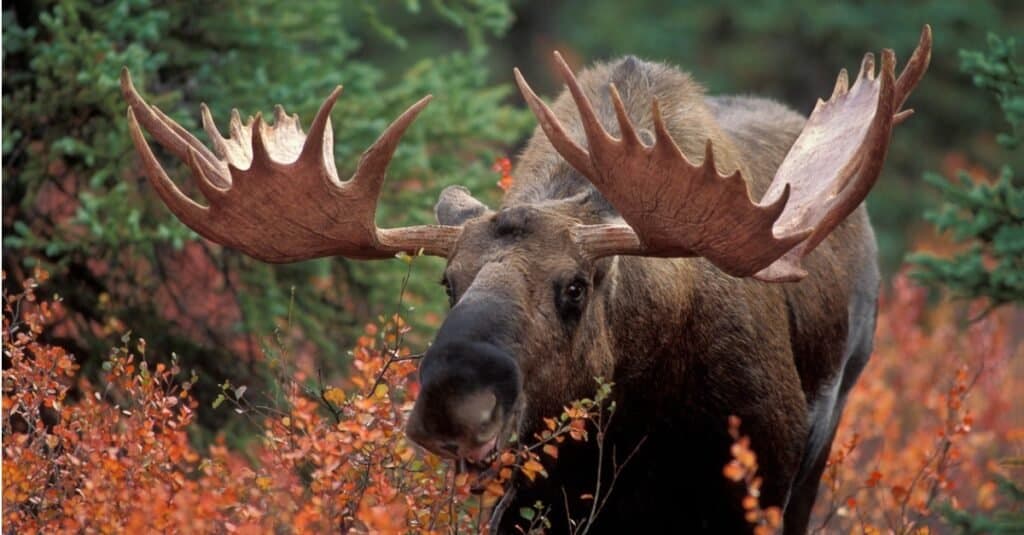
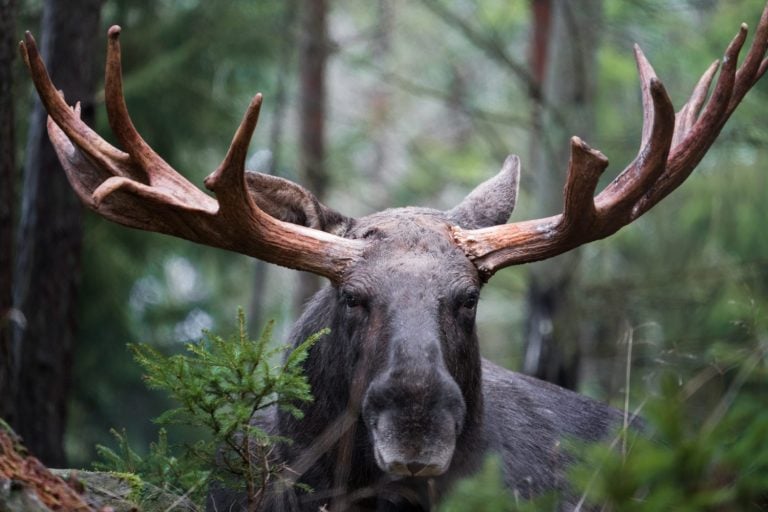
Moose antlers are broad and flat and look like hands.
©iStock.com/RONSAN4D
However, upon closer inspection, there are several key differences. Here are the main features to look for.
Antlers
Perhaps the easiest visual cue is their antlers. Moose antlers are broad and flat and look a little like a hand. They’re technically called “palmate” antlers. Elk, on the other hand, have “spiked” antlers. They feature a main branch with many smaller tines sticking out in various directions. The tips of the tines are called points, and they do have a pointy shape.
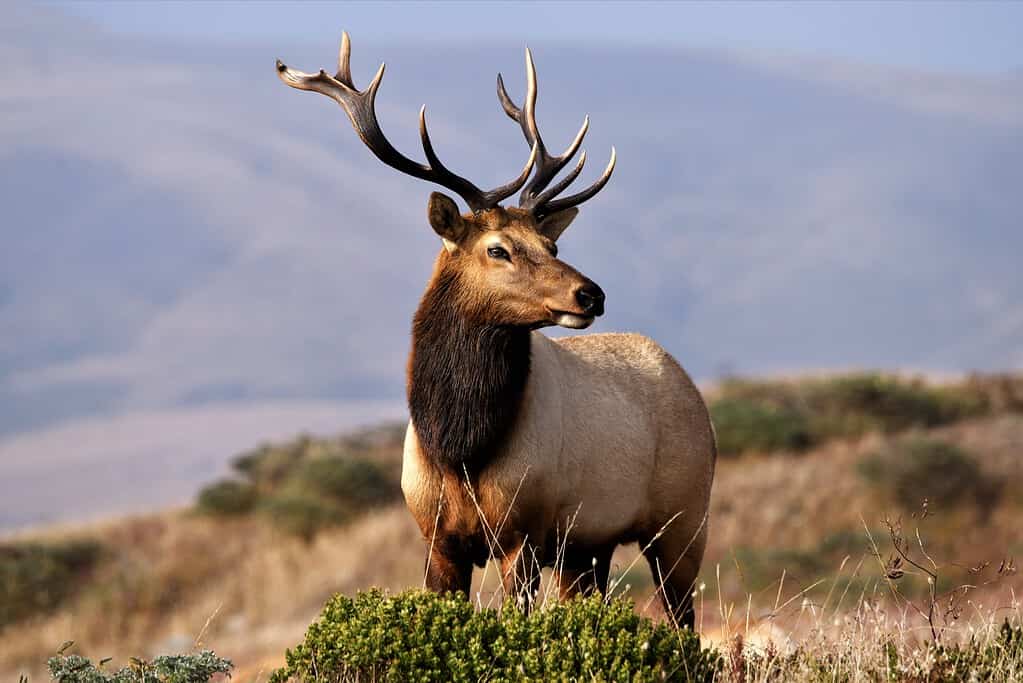
Elk have spiked antlers with pointy tines.
©iStock.com/Eric Clark
Facial Shape
As long as you’re looking at their antlers, look at their faces, too. Moose have a large, bulbous nose and a flap of skin, called a “dewlap,” hanging from their throat. Elk, on the other hand, have more streamlined faces with narrower snouts similar to those of deer, and they lack the dewlap.
Color
Moose are dark brown, sometimes even appearing black. Elk are light brown to tan, with a darker mane and a cream-colored patch near their rumps.
Size
Although you are unlikely to see an elk and a moose standing side by side, it’s helpful to know that moose are significantly larger. Moose stand, on average, between 6.5 and 7 feet tall at the shoulder and can weigh up to 1,500 pounds. Elk are much smaller, standing 4 to 5 feet tall and weighing between 700 and 1,000 pounds.
How Moose and Elk Behavior Differs
Besides their distinctive visual differences, you can also tell the two species apart by how they behave.
Solo Life v. Herd Mentality
Moose are generally solitary animals and prefer to roam alone, except during mating season. In contrast, elk are much more social and typically gather in large herds.
Communication
Another distinction is their vocalizations. During breeding season, elk are famous for their loud “bugling” calls, especially when in herds. Moose are much quieter, using grunts and moans to communicate.
But the Biggest Behavioral Difference Is…
This is perhaps the most important behavior difference to understand, especially for anyone venturing into Colorado’s wild spaces.
When elk perceive a threat, they put their “built for speed” lean bodies to work. According to Kara Van Hoose, Northeast Region Public Affairs Officer for Colorado Parks & Wildlife, “Elk are more naturally fearful of humans, and will usually run away.”
They also take the herd with them. If you approach and hear sudden “bugling” from any of the herd members, it’s a signal for all to turn and bolt in the opposite direction from you.
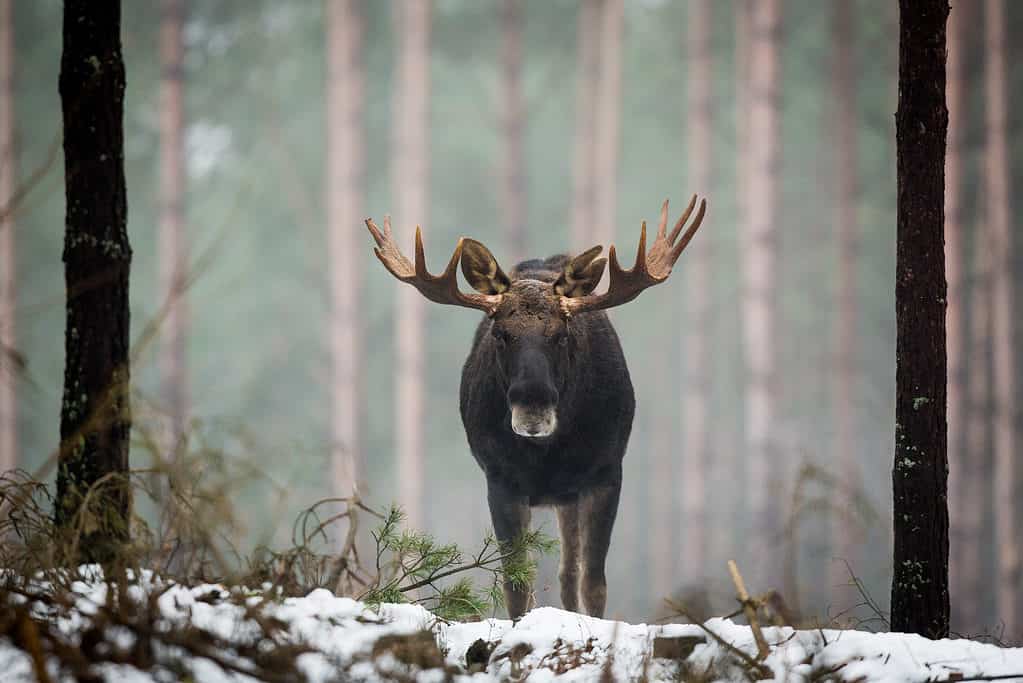
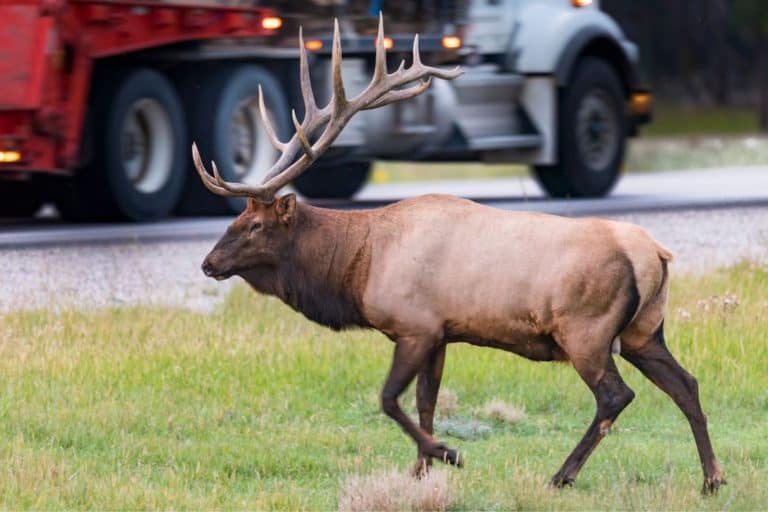
When they perceive a threat, moose will stand their ground and use their size to their advantage.
©Szczepan Klejbuk/Shutterstock.com
Moose are a completely different story. They almost always stand their ground. If they feel provoked, they’re likely to charge the threat, kicking and trampling in their attack. Sometimes it doesn’t even take provocation. Moose like their personal space, and sometimes charge simply because they perceive someone or something as getting too close.
“Moose aren’t afraid of people, and they use their enormous size to their advantage,” Van Hoose says. It’s also not a situation where extreme body language will warn you of an impending attack. “Normally, if they show any reaction to you at all, even by simply acknowledging your presence, it’s a clear sign that you need to start moving away immediately.”
But there is also body language to cue you in. If their ears are pinned back, the hair on their back hump is standing up (their hackles are raised), they’re smacking their lips, or licking their snout, you should retreat.
If a moose charges you, Van Hoose recommends putting objects such as trees between you and the moose. She also suggests seeking higher ground, like climbing onto the roof of your car or into a nearby tree.
She notes, “Moose are big and can run surprisingly fast. The more you can put in the way of the moose getting to you and slow down their direct path, the better.”
The good news, according to Van Hoose, is that it takes a lot of energy for a moose to charge. If you get to a safe spot, the moose will likely leave you alone and go away. It’s just a matter of waiting it out.
Moose aren’t afraid of people, and they use their enormous size to their advantage.
Kara Van Hoose, Northeast Region Public Affairs Officer for Colorado Parks & Wildlife
Do Moose and Elk Ever Live In the Same Spaces?
Moose and elk prefer different foods: moose eat willow trees found in marshy wetlands, while elk prefer grasses in open, dry meadows. However, their habitats can overlap, and they sometimes share the same spaces.
The Kawuneeche Valley is a great example of a place where both moose and elk cohabitate. The valley is also an unfortunate example of the detrimental impact that “browsing pressure” from both species can have on a fragile ecosystem.
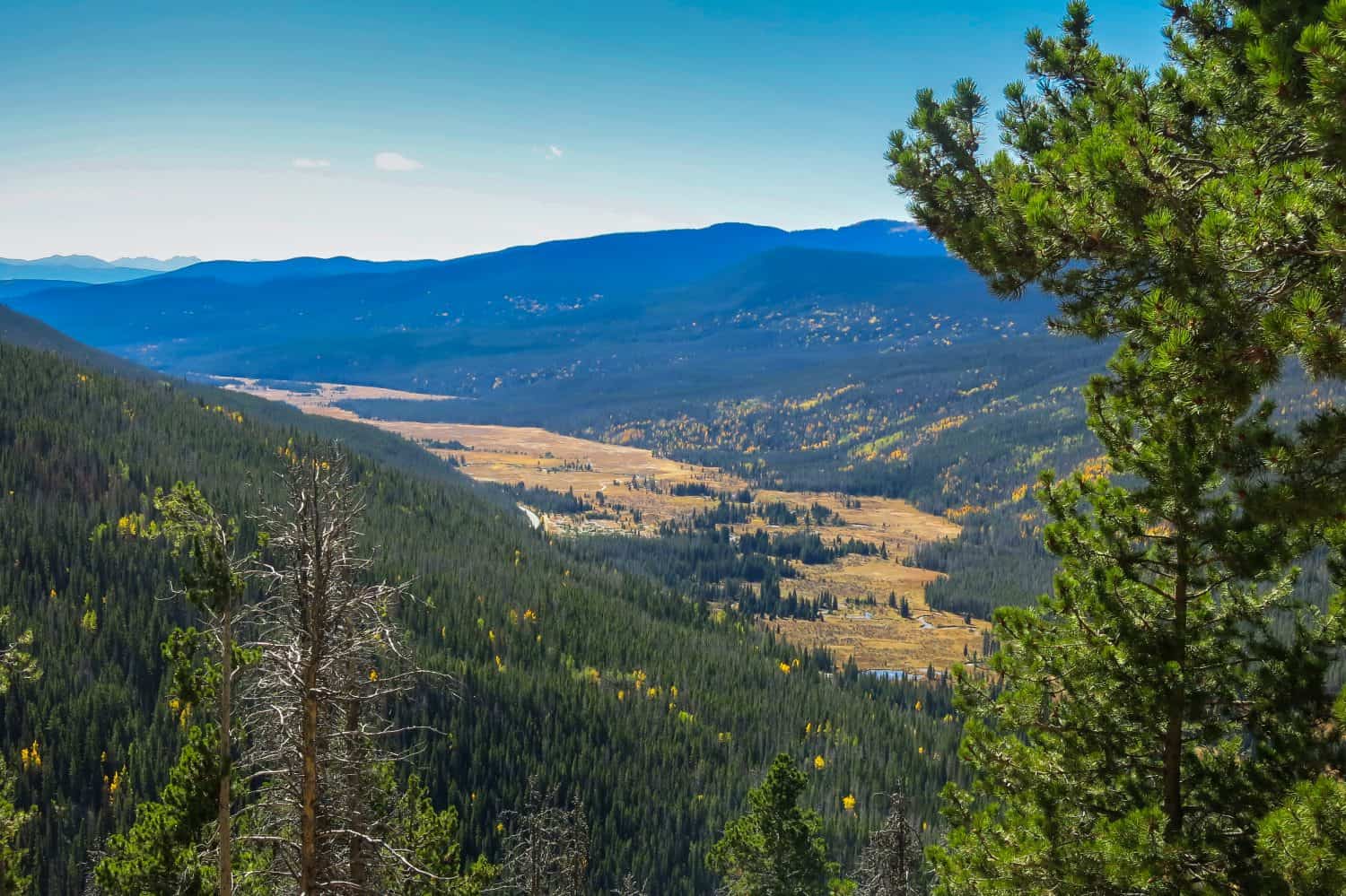
The Kawuneeche Valley was once a lush marshland buffer zone, but overgrazing by moose and elk has changed the valley dramatically.
©Straystone/Shutterstock.com
The Kawuneeche Valley is considered the heart of Rocky Mountain National Park’s west side. Historically, the valley functioned as a transition zone between the park’s high alpine environment and the headlands of the Colorado River. The valley acted as a sponge, absorbing the river’s intense flow.
Beavers were drawn to the wetlands and built dams, which caused the water table in the valley to rise. This allowed willow trees to flourish in the standing water, providing more material for beavers to build additional dams. Elk in the valley also benefited from feeding on the tender willow shoots. Then, in 1978, something changed.
The Great Moose Reintroduction Project of 1978
Colorado Parks and Wildlife (CPW), in cooperation with the National Park Service (NPS), introduced 24 moose near the town of Walden, northwest of Rocky Mountain National Park. The project name is a bit of a misnomer. The moose were not replenishing a native species that had gone extinct in Colorado. In fact, most wildlife experts agree that Colorado never had a native moose population.
Van Hoose notes that there is some evidence that moose did live in Colorado, but it was most likely a scenario where they drifted in and out from nearby states. The primary reasons for bringing moose back to Colorado were more economic in nature. The state wanted to boost tourism numbers from two sectors: wildlife viewing and hunting.
The reintroduction program was wildly successful. “Today, there’s a very healthy moose population across the state,” Van Hoose says. “There are between 3,500 and 4,000 moose now.” The successful reintroduction turned out to have far bigger implications than anyone expected.
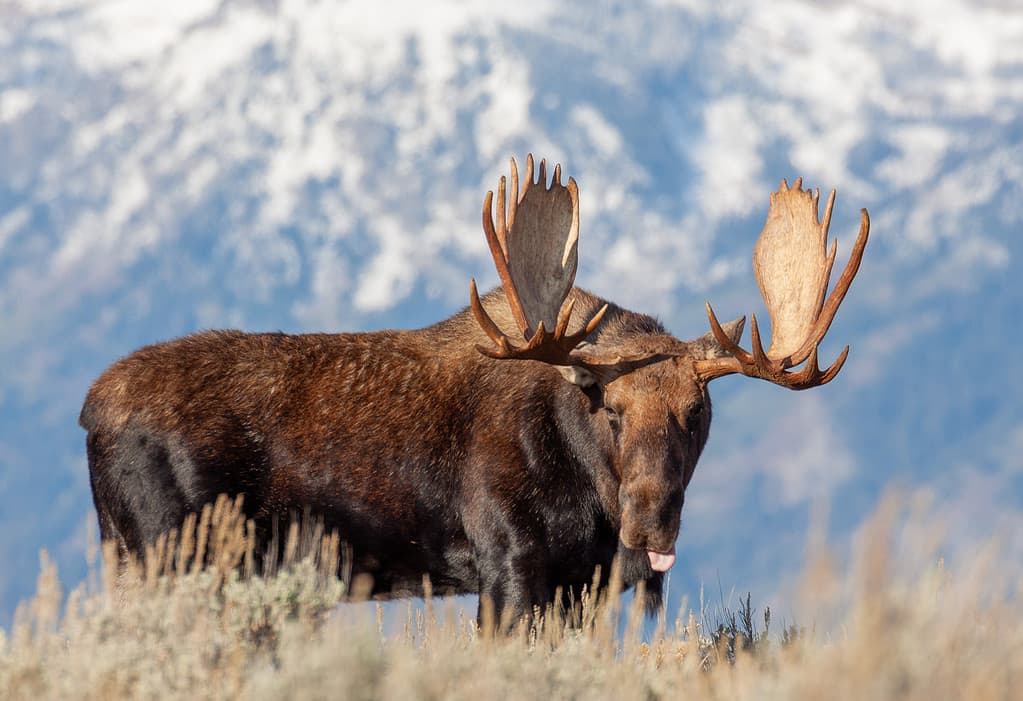
Moose were introduced to Rocky Mountain National Park in 1978.
©equigini/iStock via Getty Images
Twenty-four moose became 250 within a decade. Today, the moose population tops 3,500 in the state. The Colorado State Legislature officially named Walden the “Moose Viewing Capital of Colorado” in 1995. But the presence of moose in Rocky Mountain National Park caused significant changes to the Kawuneeche Valley.
The Impact of Moose on Kawuneeche Valley
While beaver and elk cohabited peacefully and shared resources in the Kawuneeche Valley, the arrival of moose changed the equation. A single moose consumes as much willow during the summer as 15 elk. Since 1999, the tall willows that were once abundant in the valley have declined by 98 percent. This forced both the moose and elk to compete for the young willow shoots before the trees had a chance to grow tall enough to survive the harsh winter.
The lack of mature willows meant beavers no longer had material to build dams, so they stopped building and left the valley. Without natural dams, the water table dropped, turning the once-lush wetland into a dry, grassy meadow. Today, state and federal wildlife experts are trying a variety of techniques to rehabilitate and restore the Kawuneeche Valley.