
Quick Take
- That dog grinning at the camera might be telling you something very different from what you think. Why that grin misleads →
- A veterinarian explains exactly why our instinct to read animals' faces is almost always wrong. Vet explains our blind spot →
- Facial expressions aren't the real window into what your pet is feeling. What to watch instead →
We tend to see photos or videos of dogs “smiling” and assume they must be happy. However, this expression might convey something entirely different. Sometimes, a “smiling” animal is actually in distress.
Human-like expressions on animals don’t necessarily align with human emotions. Certain expressions may actually reflect stress, submission, panting, or simply the natural shape of their mouth. Yet, we interpret it as joy, guilt, or another emotion.
In this article, we speak with a veterinarian about why humans misread animals. Keep reading to learn how we can better understand our pets’ signals.
Why Humans Misread Animal Facial Expressions
It’s human nature to assume that a human-like expression in an animal corresponds to the same emotion in humans. However, this often isn’t the case.
“Humans are instinctively inclined to read faces through a human lens for emotions. Therefore, humans attribute their own emotions (such as guilt, happiness) when animals appear to ‘smile’ or show what appears to be ‘guilt,’” says Iryna Smyrnova, a Veterinarian (DVM) at Meowoff. “However, this interpretation of expression can represent actual feelings of fear/unease related to panting due to anxiety/stress, a display of submissiveness, or just how a pet’s face is physically constructed.”
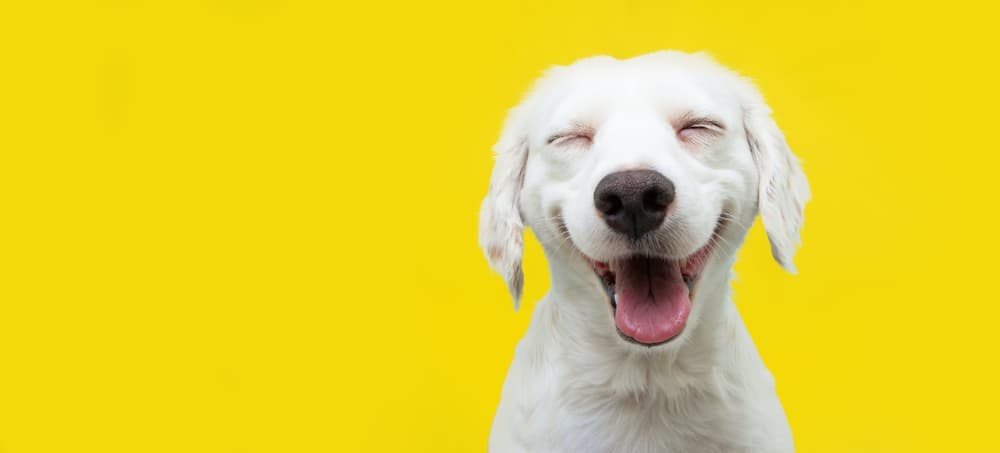
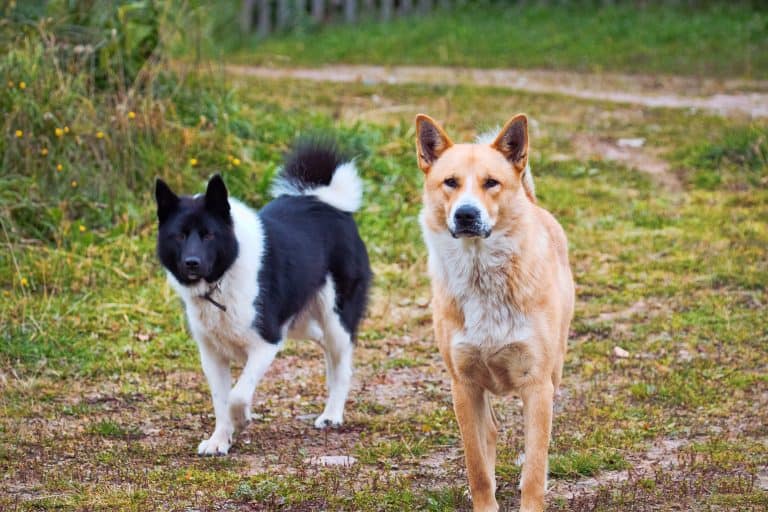
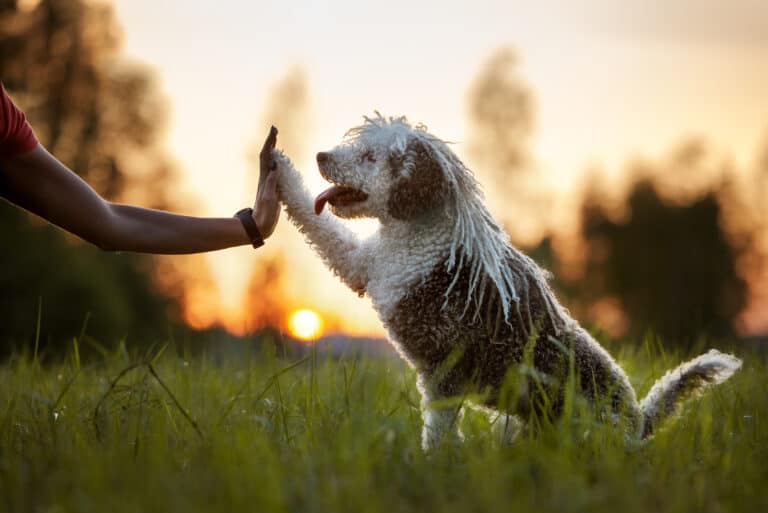
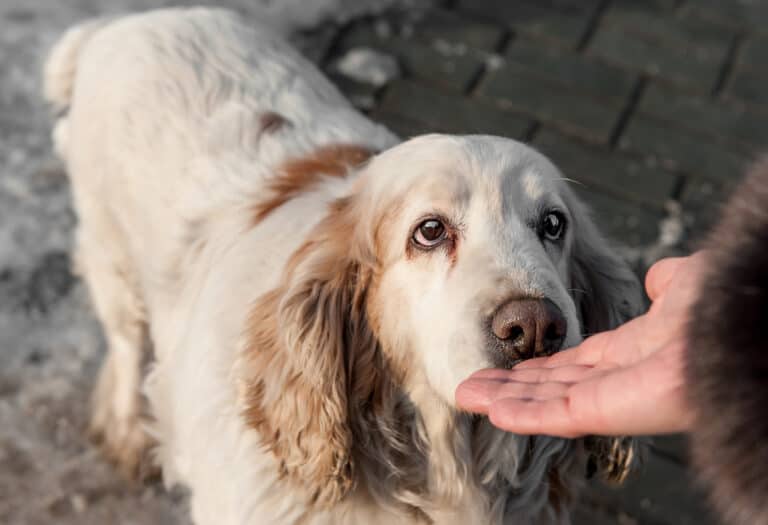
This dog might look like it’s happily smiling, but this expression doesn’t always convey joy.
©smrm1977/Shutterstock.com
For example, we often say, “That puppy is smiling!” just because its mouth is slightly curved upward. In reality, this expression could be a sign of stress in the puppy.
“In particular, some dogs’ mouths are inherently curved upward, so they look like smiling dogs whether they’re at ease or uneasy,” Smyrnova explains. “Some other dogs will open their mouths and breathe rapidly if they become overheated or anxious. On the other hand, flat ears, licks of the lips, or bared teeth can indicate a level of unease/discomfort/submission rather than friendliness.”
It’s important to focus on the animal’s posture, tail orientation, ear positioning, etc., along with the specific environment in which you encounter them.
Iryna Smyrnova, a Veterinarian (DVM) at Meowoff
How to Read Animals
The best way to understand animals is by observing their body language rather than relying solely on their facial expressions.
“It’s important to focus on the animal’s posture, tail orientation, ear positioning, etc., along with the specific environment in which you encounter them,” Smyrnova says. “The ability to recognize species-specific behaviors can provide you with a better understanding of what relaxation means for your animal.”
“In addition, I recommend observing patterns with respect to your individual pets as these pets develop unique ways of communicating,” Smyrnova concludes.