
Quick Take
- Learn why flamingo parents pay a striking physical price to feed their chicks. See the pigmentation cost →
- The hormone that triggers crop milk production in flamingos is the same one at work in a completely different class of animal. Discover the shared hormone →
- Two flamingo dads at a zoo pulled off something most people assume requires a mother, relying on nothing but biology they both already had. Meet the two flamingo dads →
- Flamingo chick feeding looks so strange that zoo guests regularly think something is wrong. See what feeding looks like →
In the mammal world, the mother is the primary, and often the sole, caregiver to their offspring. But it’s different with birds. Most male bird species play an active role in caregiving. They take part in nest building, incubating eggs, and feeding the young. And in a few bird species, including flamingos, both parents feed their chicks a nutritious substance called crop milk.
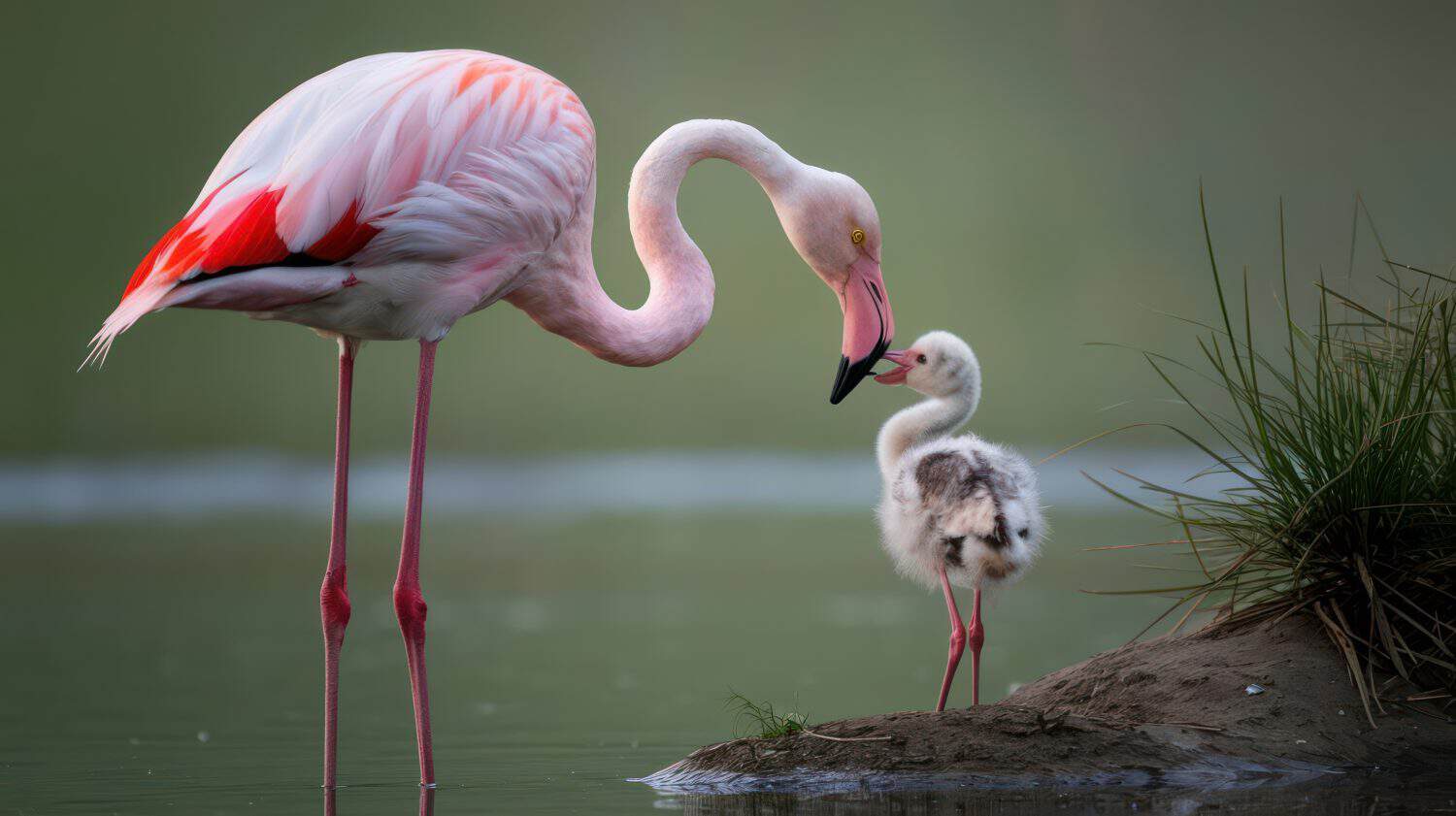
Instead of feeding partially digested solid food, flamingos feed their chicks a milk-like substance called crop milk.
©mumin-uppi/Shutterstock.com
What Is Flamingo Crop Milk?
Only a few types of birds (pigeons, flamingos, and penguins) feed their babies crop milk. Each of the six species of flamingos (wading birds in the family Phoenicopteridae) produces this milk-like substance in the lining of its esophagus. The unique shape of a flamingo’s beak makes it difficult for babies to eat solid food. Flamingos’ beaks have adapted to feed by dipping their head upside down in the water. The upper beak is movable and smaller than the lower beak, which allows flamingos to filter nutrients from the water. However, this unusual beak shape means that flamingo chicks must drink liquid food for the first few months of life.
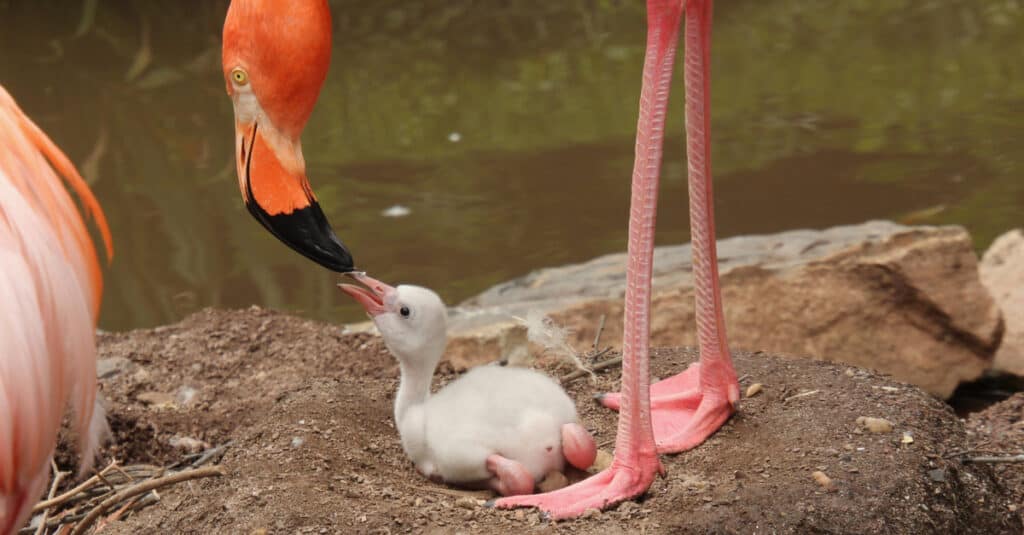
Feeding a baby flamingo crop milk can take around 15 minutes at a time.
©Deb Kletch/Shutterstock.com
Birds, of course, don’t have mammary glands like mammals do, but a few species produce a milk-like substance that serves a similar purpose. Crop milk from flamingos is a high-fat, protein-rich liquid that also contains a large amount of red and white blood cells. It’s a little different from pigeon milk, which is higher in protein. Although it’s called “crop milk” in flamingos, it is not produced in the crop as it is in pigeons. Instead, flamingo crop milk is secreted from glands in the upper digestive tract.
How Flamingo Parents Feed Their Chicks
The flamingo chick drinks milk for about two months until its beak is fully formed and it can forage for food on its own. A hormone called prolactin stimulates milk production in the parents after the chicks hatch. Prolactin is the same hormone that regulates milk production in mammals. The parents produce the milk and regurgitate it directly into the chicks’ mouths.
While most bird species regurgitate food for their young, feeding crop milk works differently. According to a statement by Angie Ray, a lead keeper at the San Diego Zoo Safari Park who works with greater flamingos, “They [parent and chick] stand almost motionless, beaks together tip to tip — and if you look very closely, you may see what looks like a trickle going in the chick’s beak.” Unlike when a robin mother quickly feeds her baby a worm and flies off to gather more, this method is not fast. “It takes a while — maybe 15 minutes,” said Ray. “Guests who see that sometimes ask us, ‘Why are those two flamingos’ beaks stuck together?’”
Why Both Flamingo Parents Can Produce Crop Milk
Because both male and female flamingos produce prolactin, which stimulates crop milk production, both parents share in feeding and caring for the chicks. Flamingos are social birds that live in flocks and often mate with the same partner for years, or even for life. Both parents share in caregiving responsibilities, which gives the chicks a better chance for survival. They work together to build the nest, where the female lays one egg. Each parent takes turns incubating the egg for about 28 days, until it hatches.
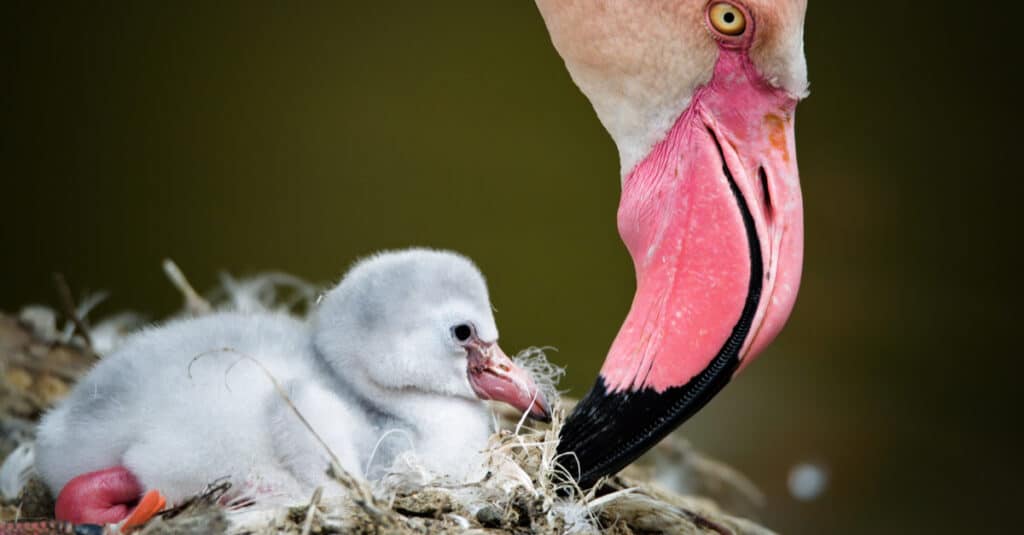
Both parents produce crop milk to feed baby flamingos.
©Ondrej Chvatal/Shutterstock.com
Once the chick hatches, mother and father have equal responsibilities for caregiving. Because both parents feed the babies, same-sex pairs can successfully foster chicks. At the San Diego Zoo Safari Park, two male mated flamingos were given a chance to take care of another pair’s offspring.
At first, zookeepers gave the duo a fake egg to see how the pair would react. The fathers did such a good job of caring for their fake egg that the zoo replaced it with a real egg from another pair. This allowed the original pair to lay a second egg, a process known as double clutching. After the egg hatched, both dads began producing crop milk and were able to feed and care for their foster chick without any assistance from zookeepers.
Fascinating Facts About Flamingo Parenting
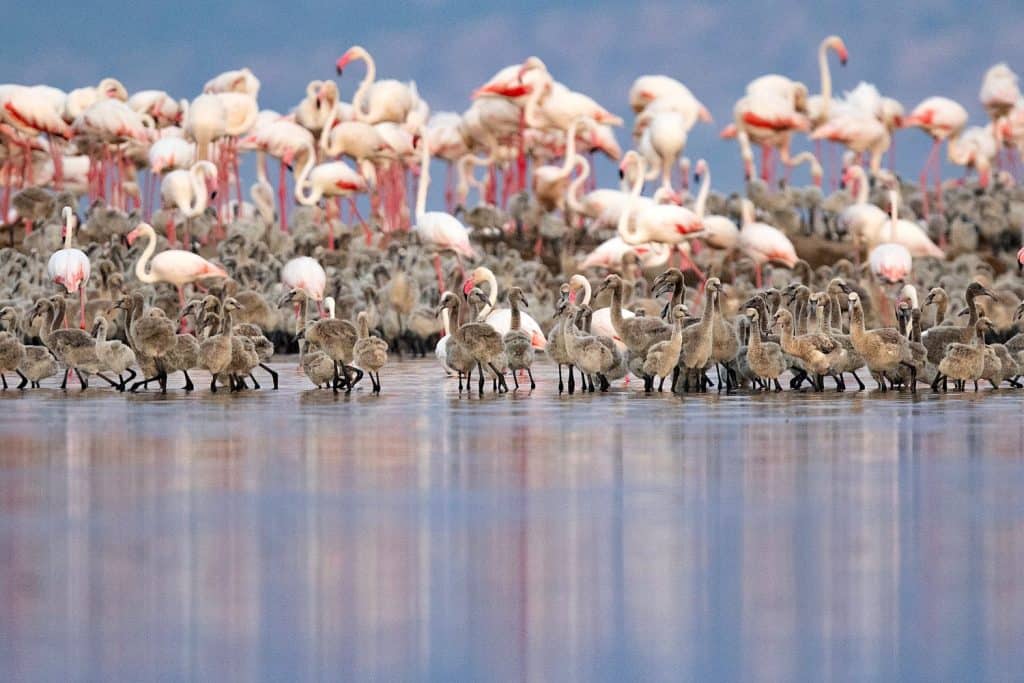
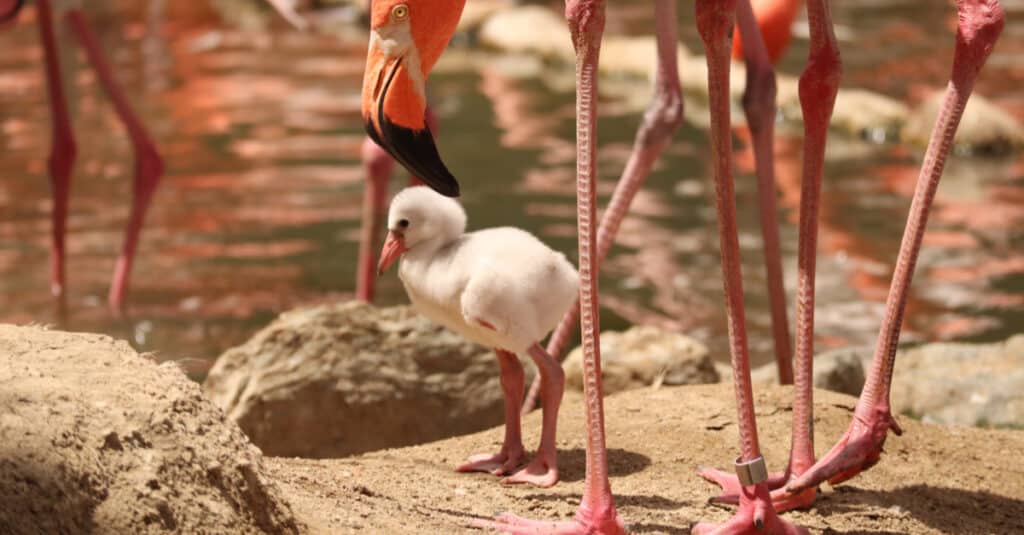
Flamingo chicks join creches with other chicks when they are around 10 days old.
©Dominyk Lever/Shutterstock.com
- When chicks are about 10 days old, they join large groups called creches (nurseries) where a few adults care for them while their parents feed. However, parents can recognize and will only feed their own chicks.
- Flamingo crop milk is tinted red from red blood cells and the pink and red pigments from the foods they eat.
- The crop milk has a thick texture, similar to that of cottage cheese.
- Flamingo parents lose their pink color and turn white while they feed their baby. Producing crop milk depletes their bodies of the carotenoid pigments until they are done feeding their chick.