
Quick Take
- Honeybee swarms sometimes land on planes while searching for new homes, clustering briefly around their queen on any solid surface.
- These events are rare and usually occur in spring and summer, though they can delay flights and draw attention.
- Airports manage swarms safely using beekeepers, traps, or removal methods to protect workers and bees.
- Bees pose little risk to aircraft, especially once airborne.
On April 6, 2026, passengers at the Charlotte Douglas International Airport were delayed by a swarm of honeybees in a very inconvenient place: an American Airlines jet turbine. Beekeepers and ground crews carefully boxed up and relocated the insects before the plane left the gate. Why did this occur? And what would have happened if no one had noticed the insects?
Not Really a Hive, But a Swarm
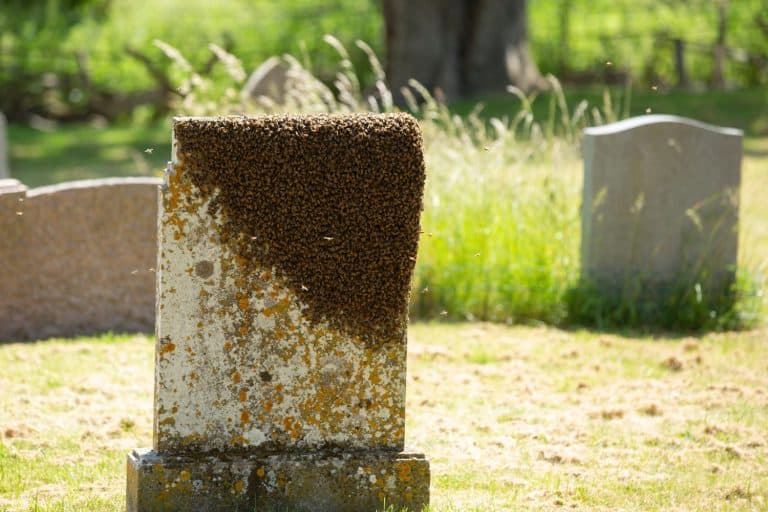
The cluster on the airplane looked like a hive, but it was actually a honeybee swarm. When a large colony splits, the old queen leaves with thousands of workers to form a new home. The bees gather on a solid surface, forming a tight cluster around the queen while scouts search for a permanent site. Though it looks like a hive, a swarm lacks a comb and stored food and is only temporary, usually existing a few hours to a couple of days before moving on.
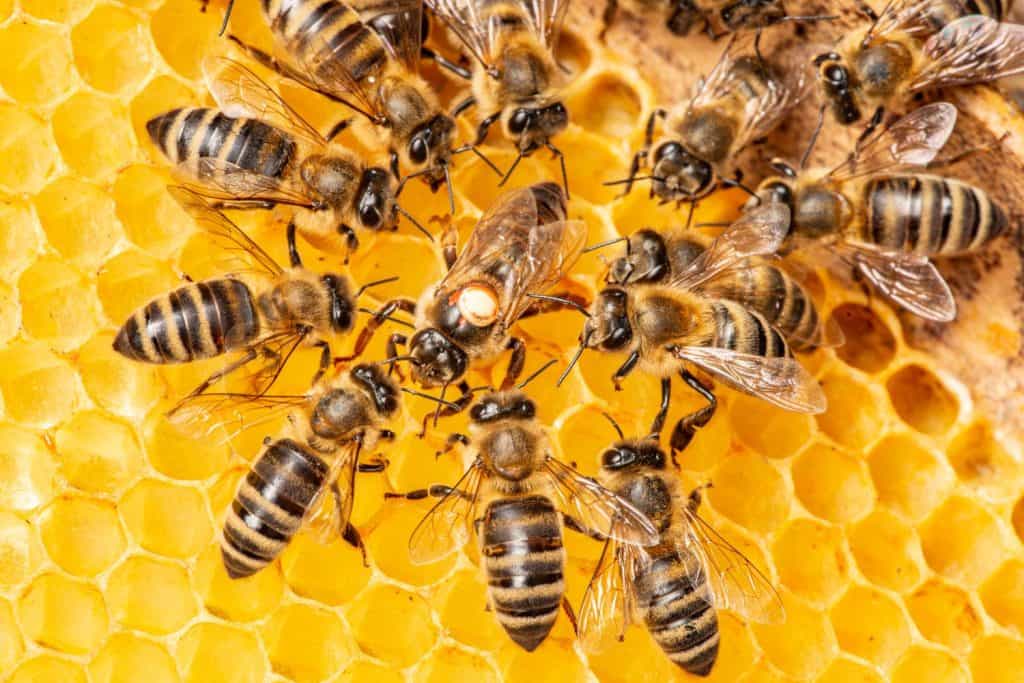
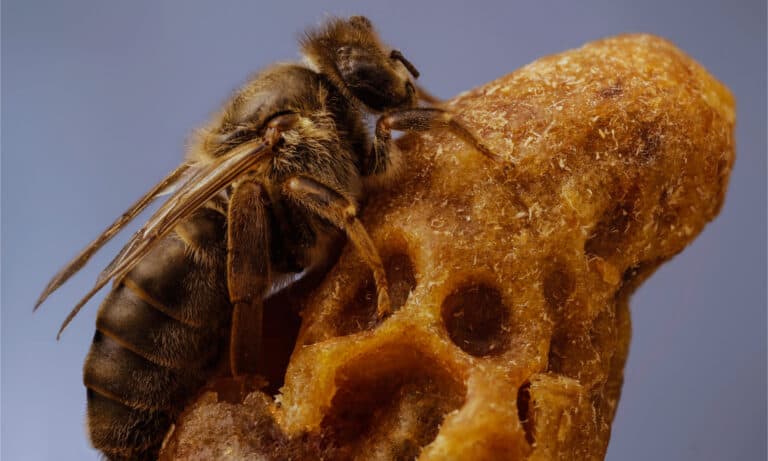
The queen in this photo is identified with a white dot.
©Kuttelvaserova Stuchelova/Shutterstock.com
Why Bees Picked an Airplane
Big airports give bees lots of open space to cross while searching for new homes. When a swarm needs a quick rest, they may land on the first solid object, like a pole, cart, or airplane wing. In Houston in May 2023, bees once covered a Delta jet’s winglet, delaying departure for about three hours. Similar cases have seen bees on cockpit glass, cargo doors, and engines. Experts say this is normal swarming, not aggression, since bees focus on protecting their queen and are usually calm after filling up on honey.
How Common Are Bee–Airplane Encounters?
Bee swarms on planes grab headlines but are rare at major airports, which handle thousands of flights daily. Incidents mostly occur in spring and summer, when colonies split and send out swarms. Some airports use managed hives and swarm traps to attract bees before they land on aircraft. Airport staff treat them as occasional but manageable disruptions.
Can Bees Cause a Plane Crash?
Bees are very unlikely to cause a plane crash. Modern aircraft engines can handle small debris, so a swarm would be blown away or destroyed once engines started. Despite this, airlines treat large bee swarms as safety concerns. The main risks are on the ground, where bees can distract or sting workers or briefly cover surfaces, leading to delays. That is why crews remove swarms before takeoff, but once a plane is airborne, bees pose virtually no threat.
What If the Bees Had Not Been Removed?
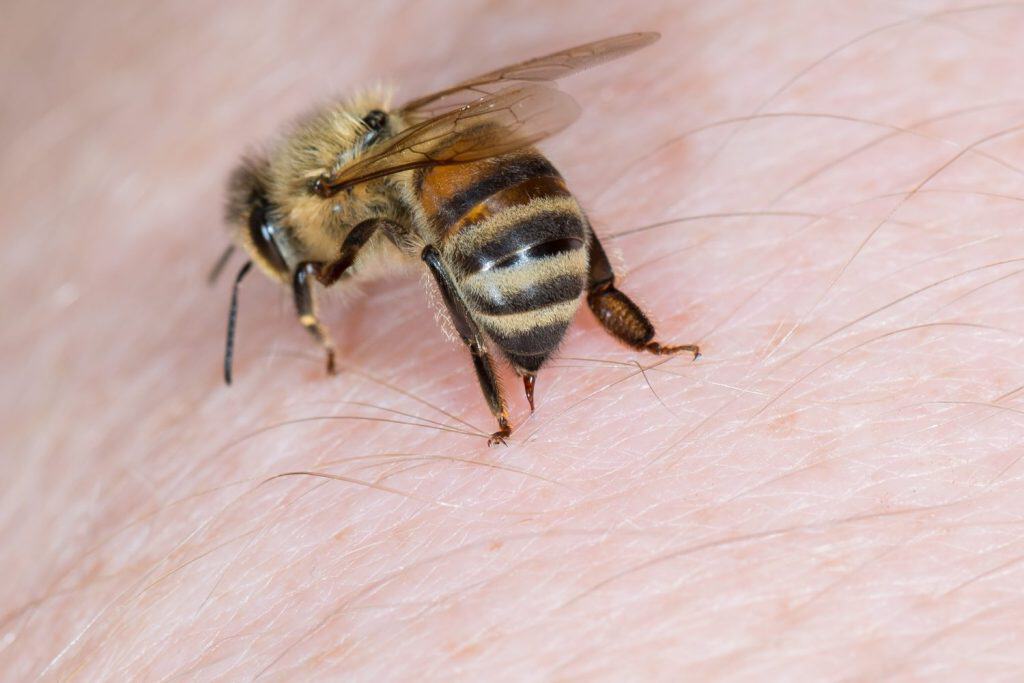
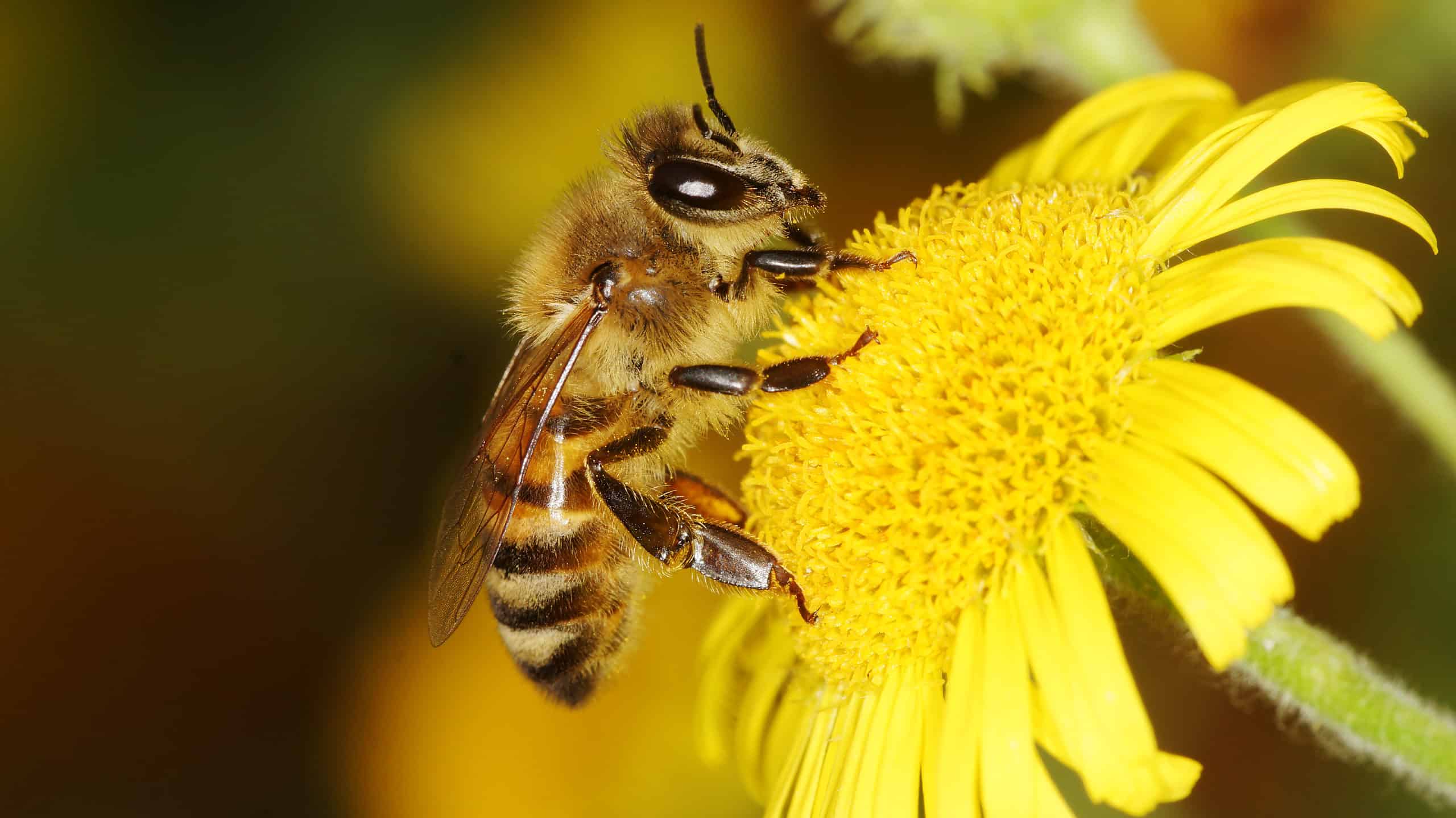
The possibility of bees stinging passengers or crew is the main concern with bees swarming around aircraft.
©Mirko Graul/Shutterstock.com
If crews started the engines, strong suction and hot exhaust would quickly blow them away or kill them. Since modern engines can handle insects without major issues, the bigger concern is ground crews being stung or distracted. Removing the swarm protects workers and spares many bees from harm.
Could Bees Get Inside the Plane?
Passengers often worry swarms could get into the cabin, but that is unlikely. During boarding, only the doors and jet bridge connect to the interior, and engines sit far from those areas. Once doors close, the plane is sealed and pressurized, making it hard for insects to enter. Any bees that do slip in are usually spotted and removed. Overall, swarms pose zero issues for passengers.
Sharing The Skies with Bees
The sight of a buzzing mass of bees on a jet engine makes modern air travel feel strangely wild. Yet the Charlotte swarm shows how honeybee behavior and airport planning can come together to protect both people and pollinators. As airports add pollinator‑friendly habitats and enforce clear routines for handling swarms, they keep planes operating consistently while offering bees safer options.