
Quick Take
- Two real flights show just how quickly a bird can turn a routine takeoff into a catastrophe, and one of them you've definitely seen as a movie. Read the real incidents →
- Airports have kept birds off tarmacs for decades, yet until recently they had no scientific proof it actually worked. See the study findings →
- The study confirmed the obvious, but it immediately complicated matters with findings that could undermine the very policies airports rely on. Explore the complications →
- Treating a flock of starlings and a pair of geese as the same threat could be the exact mistake putting flights at risk. See why nuance matters →
For millennia, humans gazed at the birds in the sky with an unquenchable envy. How could we learn to fly like them? This question dogged us until the Wright Brothers answered it in the early 20th century. Since then, human beings have been able to fly alongside the birds, sharing the same airspace. When creatures and machines collide, however, disaster can quickly ensue. Common sense led airport staff to keep birds off the runways to prevent accidents.
The policy seems intuitive enough: fewer birds on the tarmac mean fewer chances of serious, even deadly, accidents. Yet the global aviation community lacked a scientific basis for this policy until now. A recent meta-analysis, published in PLOS One, confirmed a positive correlation between higher bird abundance and more frequent bird strike accidents. However, this correlation comes with some caveats: namely, systemic issues surrounding standardized counting methods, publication bias, and diminished statistical significance. Let’s learn more about this study, what common-sense notion it affirmed, and why that affirmation hinges on some important systemic limitations.
Serious Stakes
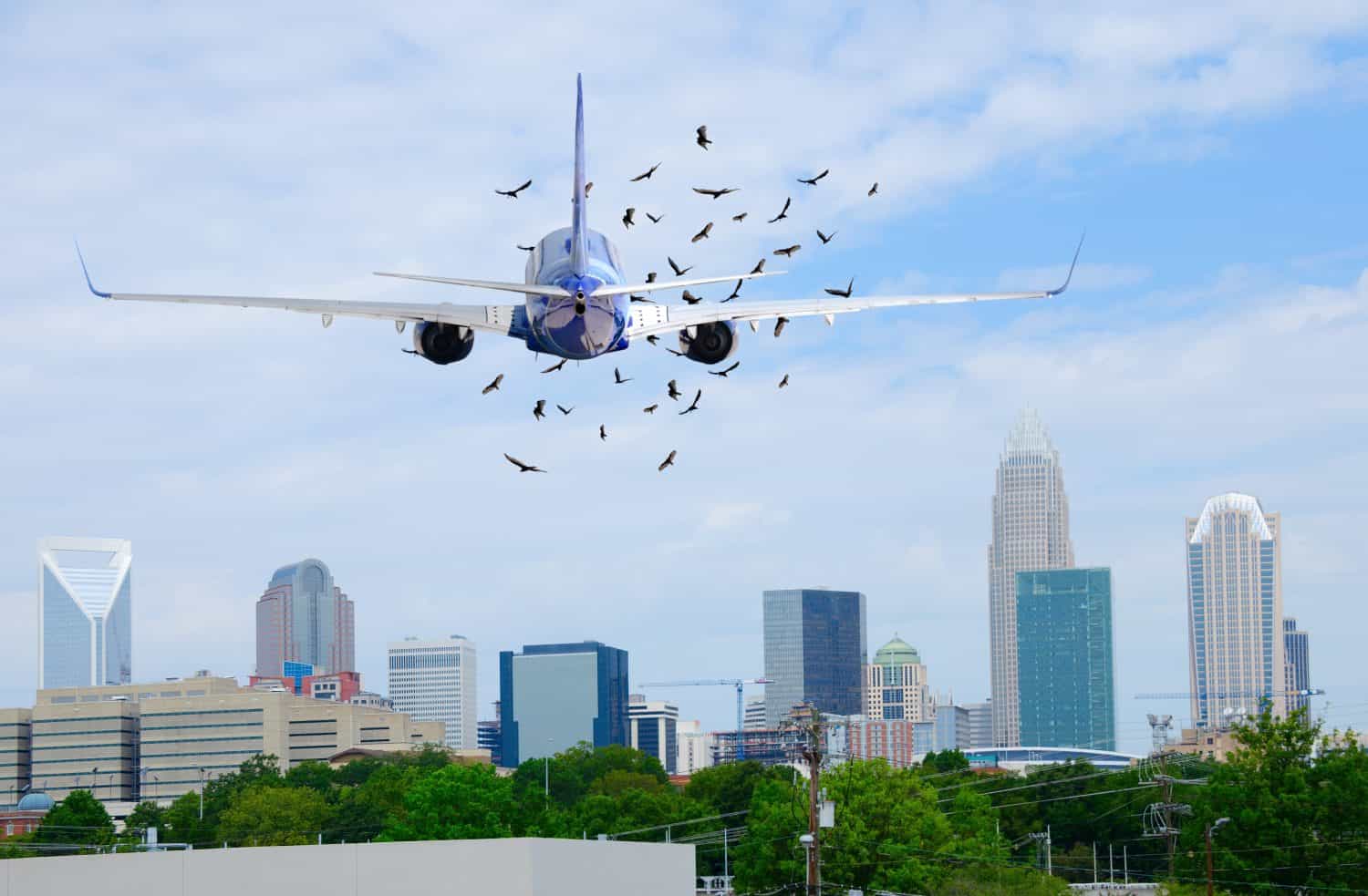
In 1960, a flight departing from Boston’s Logan Airport collided with a flock of birds, resulting in dozens of deaths.
©Michael O'Keene/Shutterstock.com
You may think that a seagull on an airport tarmac is commonplace, but there are serious stakes involved when it comes to accidents involving birds and airplanes. Two incidents from the past century illustrate this gravely.
On October 4, 1960, Eastern Air Lines Flight 375 took off from Logan International Airport. Only seconds into its ascent, the plane collided with a large flock of starlings. Individually tiny but dense when flying in formation, hundreds of starlings were sucked into the plane’s four turboprop engines. Engine failure and power loss ensued immediately. The plane banked sharply to the left and crashed into Winthrop Bay, killing 62 of the 72 people on board.
In January 2009, US Airways Flight 1549 lifted off from New York’s LaGuardia Airport and struck a flock of Canada Geese. This quickly destroyed the internal fan blades in both of the plane’s engines. Extraordinary flying skills allowed the captain to land the plane on the Hudson River, and all people on board survived. The incident, called the “Miracle on the Hudson,” was later depicted in a feature film starring Tom Hanks.
Positive Correlations
The danger of such incidents has made keeping birds away from tarmacs a standard policy at airports worldwide. The efficacy of such policies, however, had not yet been confirmed through scientific rigor. A new study, published in PLOS One, did just that, though with several key caveats.
To do this, a team of researchers conducted a meta-analysis, identifying 20 outcomes from 13 studies. Researchers found a positive correlation: “(Pearson’s r = 0.520, 95% confidence intervals: 0.308–0.683), supporting the positive relationship between bird abundance and bird strike frequency.”
This correlation, however, comes with some cautions from the researchers.
Systemic Issues
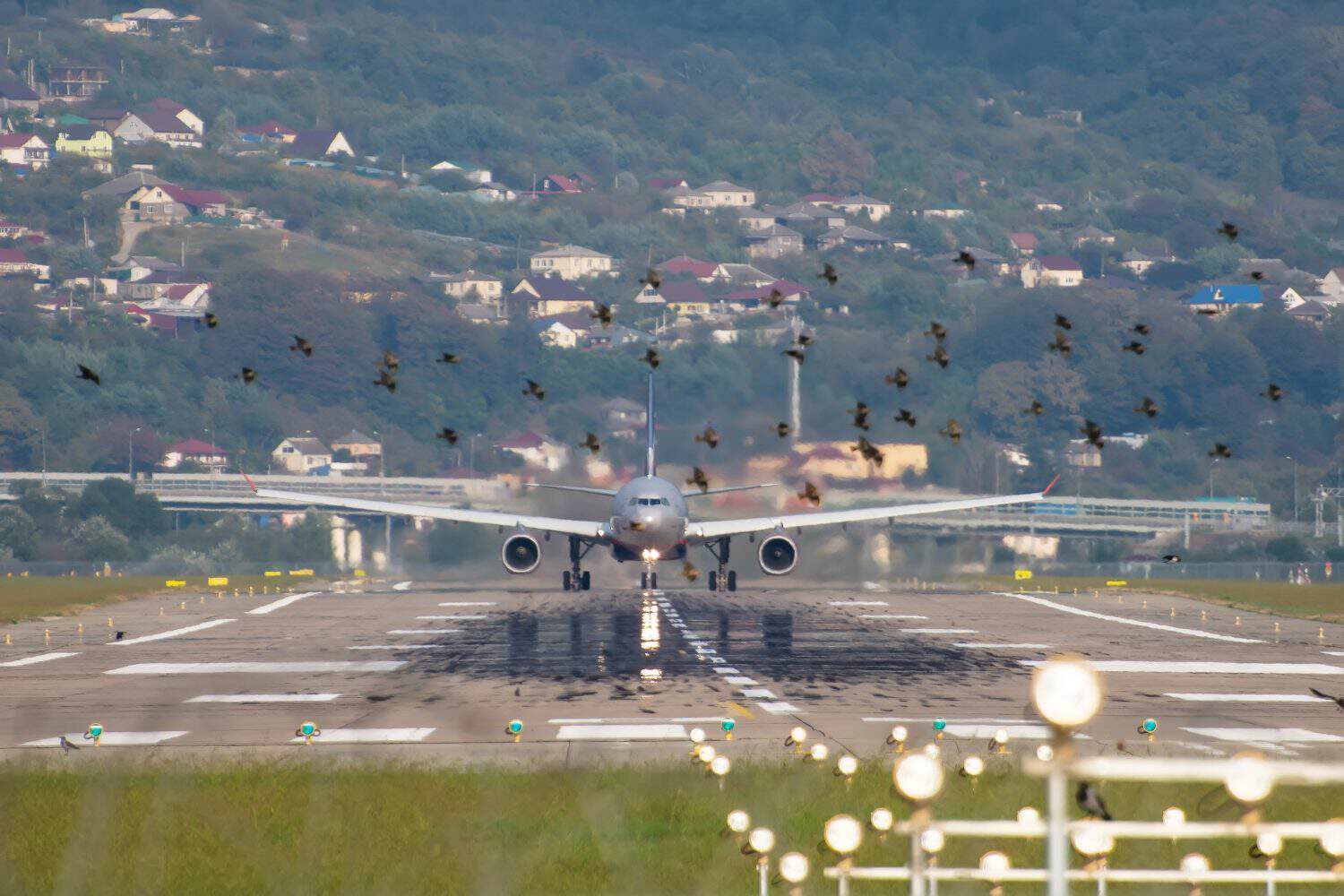
A flock of starlings presents an entirely different type of threat than several solitary Canadian geese.
©aapsky/Shutterstock.com
As evidenced by the study’s abstract, the positive correlation was offset by systemic issues that limited the study’s reliability. For one, the sheer differences between airports alone were enough to prevent a more accurate analysis. An airport in Kansas City, for example, might track bird activity and density completely differently from an airport in Belize. Seasonal timelines, species categories, and other frameworks were often unique to each airport and associated region.
This lack of standardization extended to more granular methodologies. One airport might fail to measure how quickly different species adapt to deterrents, or overlook nocturnal migrations completely. Differences in funding levels and local monitoring programs may also contribute to inconsistent data collection.
Furthermore, publication bias prevented the researchers from constructing a more accurate analysis. The published literature is skewed toward positive results: studies showing a considerable reduction in bird collisions following management efforts are more likely to be published than those with null or inconclusive findings.
Management Implications
Make no mistake: more birds in and around airports result in a greater chance of collisions with planes. The exact extent of this chance, however, remains limited by methods of measurement. With more planes than ever in the sky—and quieter engines—simple deterrence methods are becoming increasingly outdated.
As the researchers behind this new study were quick to point out, the way many airports approach the bird problem lacks nuance and adaptability. A flock of hundreds of starlings is an entirely different type of threat than two Canada geese. To ensure that bird strike threats are reduced across the board, the researchers recommended: “prioritizing the empirical testing of the abundance-bird strike relationship on and near airports across the world, and the standardization of bird survey approaches.”