
Scratching, licking, and rolling around on their tummy are common behaviors in dogs, but sometimes these actions can get out of control when they are feeling itchy. You don’t want your pet to feel miserable, but you must first determine why it is itching. There are many causes of itchiness, from seasonal allergies to reactions to flea bites, and the treatment differs depending on the cause.
A-Z Animals chatted with Dr. Shannon Barrett, a seasoned veterinarian with over a decade of experience who has authored numerous articles on pet health care on her site, Downward Paws. “Pruritus (itchiness) in dogs is a common issue that I see daily,” Dr. Barrett says, “and can be caused by a variety of underlying conditions.”

Dr. Shannon Barrett shares the five most common reasons your dog is itching.
©Dr. Shannon Barrett
Because the symptoms of itching can be similar regardless of the cause, Dr. Barrett says a detailed history, physical exam, and often diagnostic testing are needed to determine the specific cause of your dog’s pruritus.
She shares five common reasons why your dog is itching and—most importantly—how concerned dog owners can help their pup find much-needed relief.
1. Flea Allergy Dermatitis (FAD)
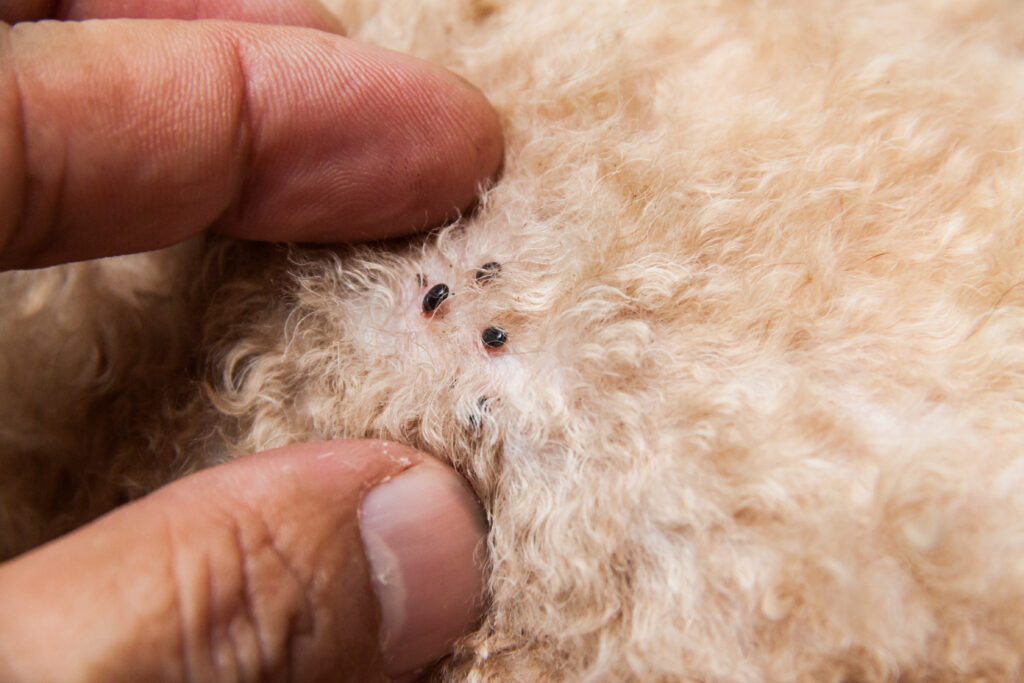
Some dogs are sensitive to flea bites and will have an allergic reaction.
© ThamKC/Shutterstock.com
The most common cause of allergic skin disease in dogs is flea allergy dermatitis (FAD). “Dogs allergic to flea saliva can develop intense itching from just one flea bite,” Dr. Barrett explains.
With FAD, your dog will most likely be itching their tail base, rump, and thighs. You may also find fleas or dirt on its coat, and it’s often worse in the warmer months. “[FAD is] more common in multi-pet households, especially when cats not on flea prevention are present,” Dr. Barrett explains.
“The cornerstone of treatment is strict flea control,” says Dr. Barrett. “This means that every pet in the household must be on consistent, vet-recommended (prescription) flea prevention.”
Dr. Barrett recommends Credelio, Simparica, and Nexgard, as they all kill fleas rapidly and are highly effective in eliminating the cause of itching.
If you have a flea infestation, you’ll also need to treat your home and environment to eliminate fleas.
“Owners must commit to frequent vacuuming and cleaning bedding and other soft surfaces in hot water,” says Dr. Barrett. “I warn owners that if they are experiencing a flea issue, it can take up to 3 months of treating all pets in the house with prescription flea medications and treating the environment before fleas will be eradicated.”
It’s a lot of work, but so necessary!
2. Environmental Allergies (Atopic Dermatitis)
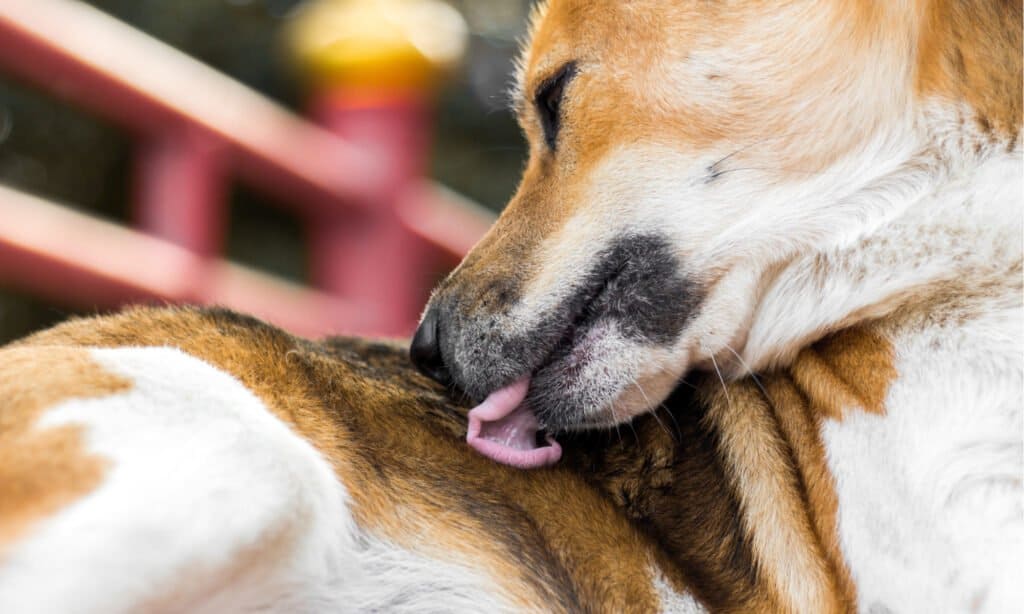
There are several treatment options available if your dog has seasonal allergies.
©Rattanapon Ninlapoom/Shutterstock.com
Just like humans, dogs can get seasonal allergies too. “Dogs can be allergic to environmental triggers such as pollen, mold spores, dust mites, and grasses,” Dr. Barrett says.
Itching usually affects your dog’s front paws and tends to begin before your dog turns 3. According to Dr. Barrett, seasonal allergies may turn into year-round itchiness or may clear up if you move to a different climate. Certain dog breeds, such as golden retrievers and German shepherds, are more predisposed to allergies, and it can run in families. Long-term therapy is often required to manage seasonal allergies in dogs. Treatment options include:
- Allergen-specific immunotherapy: Veterinary dermatologists will perform allergy skin testing on your dog and create a vaccine that slowly desensitizes your dog to environmental allergens over time. “This is the gold standard to provide long-term relief,” says Dr. Barrett.
- Apoquel (oclacitinib): This is a fast-acting oral medication that targets itch-causing cytokines and is used daily to stop pruritus.
- Cytopoint (lokivetmab): A monthly injectable medication that blocks itch signals in the nervous system.
Preventing itchy skin starts with a proactive approach to your dog’s overall skin health and environment.
Dr. Shannon Barrett, veterinarian with Downward Paws
3. Food Allergies (Cutaneous Adverse Food Reactions)
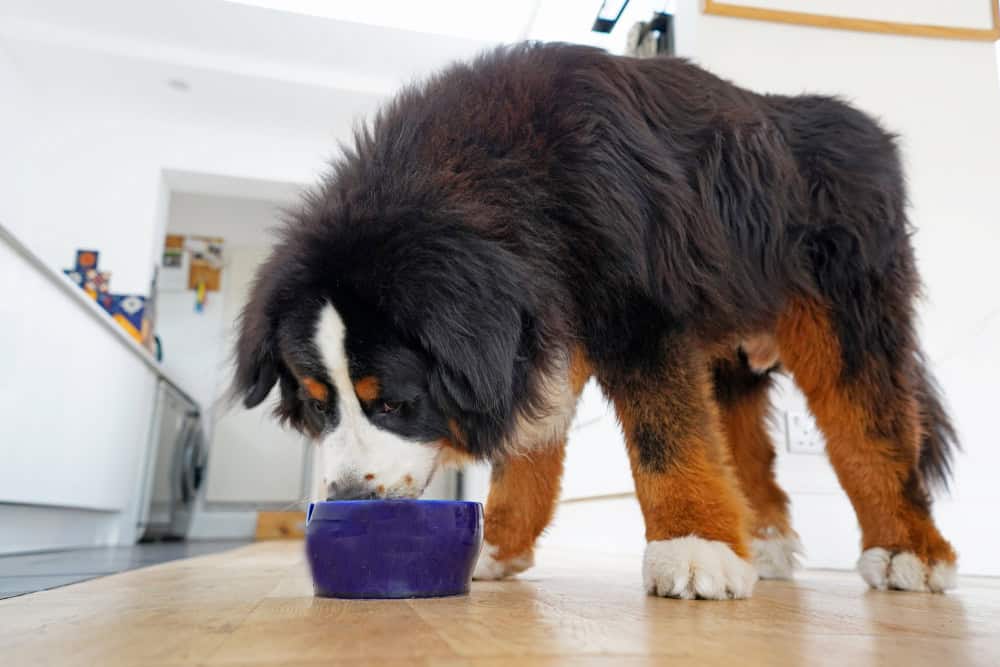
If food allergies are suspected, dogs might have to go on a strict elimination diet.
©Kristesoro/Shutterstock.com
Food allergy symptoms are slightly different from seasonal allergies. “Though less common, food allergies can also cause itching, particularly around the face, feet, ears, and anus,” says Dr. Barrett.
Food allergies will persist year-round and may also cause digestive symptoms, such as soft stool, vomiting, or gas. Itching commonly affects the legs, ears, and paws.
“An elimination diet trial (usually lasting 8 weeks or more) is required for diagnoses,” explains Dr. Barrett. “During this time, pets cannot eat any treats or food [outside of the prescribed diet].”
Veterinarians will prescribe a novel protein or hydrolyzed protein diet that contains proteins either unfamiliar to the dog’s immune system or broken down into tiny pieces to avoid triggering a reaction. Your dog must eat only the prescribed, controlled diet during this time.
“Once a food allergy is confirmed, pet owners can slowly reintroduce treats or other foods one at a time to see if they trigger a reaction,” she adds.
4. Dry Skin
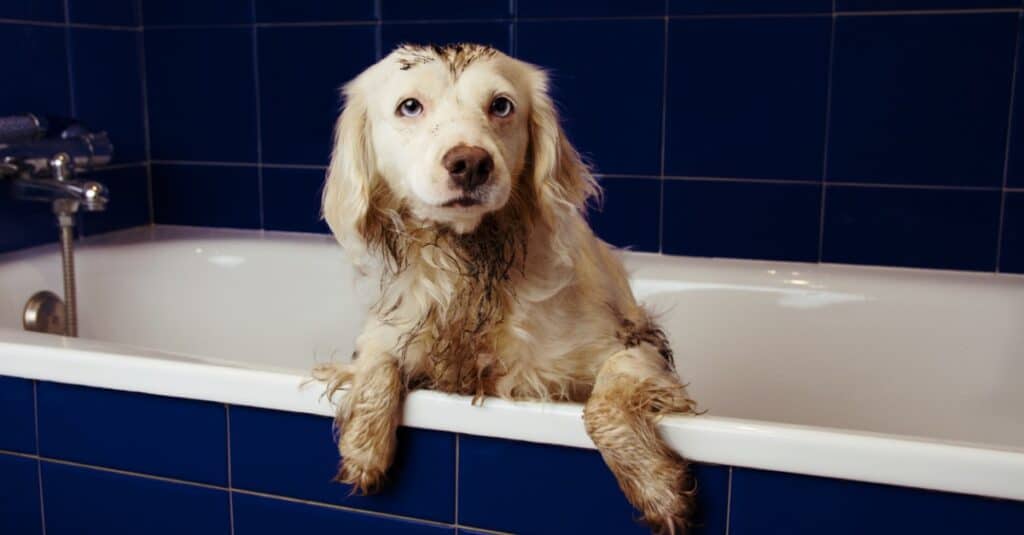
Over-bathing dogs can cause dry skin and itchiness.
©iStock.com/smrm1977
Sometimes, itchiness is nothing more than dry skin. This often appears as dull, flaky, scaly patches on their skin, and their coat may be dry or brittle.
“Low humidity, frequent bathing, or nutritional imbalances (e.g., lack of essential fatty acids) can cause flaky, dry, itchy skin,” Dr. Barrett explains.
“This is common in dry climates, winter months, or in dogs bathed too frequently with harsh shampoos that are not followed with conditioners,” continues Dr. Barrett.
Usually, itchiness associated with dry skin will improve with dietary changes and moisturizing topical treatments.
“Dogs with dry or flaky skin can benefit from supplementation with fatty acids,” Dr. Barrett adds. Products that contain EPA and DHA are the most important, with popular brands including EicosaDerm and Nordic Naturals, which can help strengthen the skin barrier and reduce inflammation.
There are a few other things you can try to help relieve your dog’s itching. “Humidifiers in dry environments, as well as moisturizing shampoos or leave-in conditioners, such as those by Douxo, can also help soothe and hydrate the skin,” Dr. Barrett says. “Feeding a complete and balanced diet is vital, as nutritional deficiencies may contribute to skin issues. Always follow shampooing with a moisturizing conditioner.”
5. Mange
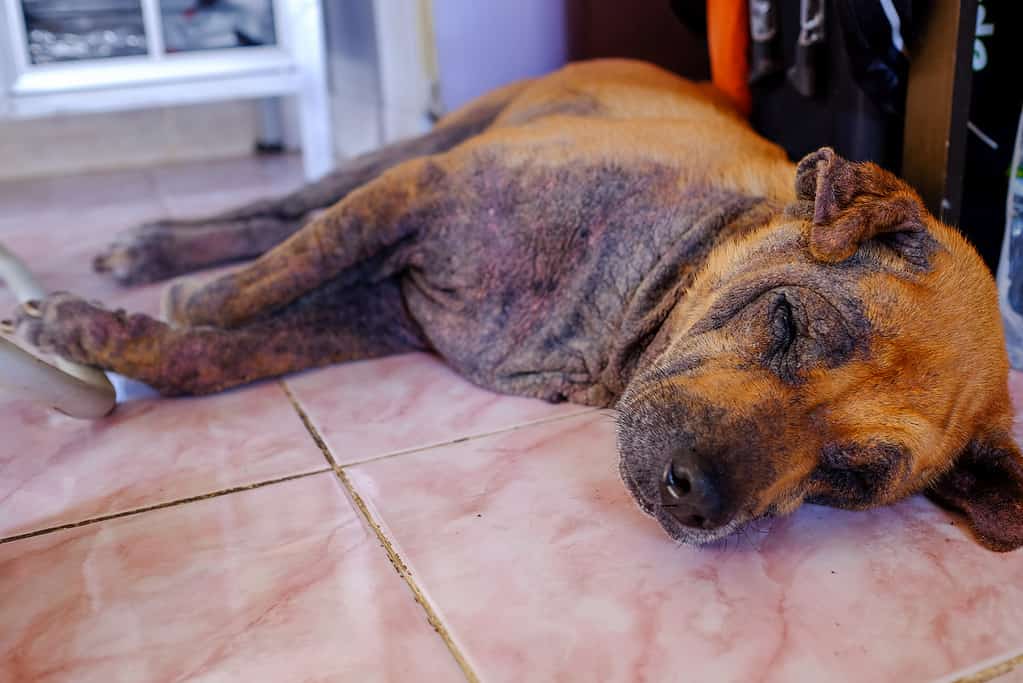
Sarcoptic mange is very itchy and highly contagious.
©poomklong/Shutterstock.com
“In addition to fleas, mites (Sarcoptes) can cause intense pruritus and secondary skin infections,” says Dr. Barrett.
“This mite lives just under the skin’s surface and is highly contagious between dogs, and occasionally transmissible to humans (causing temporary itching or rash),” she explains.
If your dog has sarcoptic mange (also called scabies), they will typically be very itchy, with frequent scratching, red, irritated skin, and scabs. There may also be hair loss due to self-trauma. Your dog should be quarantined from other pets and children, as transmission can occur through direct contact with an infected dog or a contaminated environment.
“Sarcoptic mange can be treated with certain flea and tick medications,” says Dr. Barrett. “In severe cases, multiple treatments may be needed. Since sarcoptic mange is contagious, all in-contact animals may need treatment.”
How to Prevent Itchiness in Dogs
Once you’ve helped your dog find relief from their itchiness, you may wonder how to prevent itching from recurring.
“Preventing itchy skin starts with a proactive approach to your dog’s overall skin health and environment,” says Dr. Barrett.
To prevent itching, ensure all pets are on monthly flea prevention year-round, feed them a high-quality, well-balanced diet to protect their skin barrier, and only bathe dogs when necessary, as over-bathing can cause dry skin. Additionally, use hypoallergenic or medicated shampoos as directed by your vet, and always follow with a conditioner.
Signs to Call Your Vet

Take your dog to the vet for diagnosis and treatment of itchiness.
©maxbelchenko/Shutterstock.com
“Chronic pruritus can significantly reduce a dog’s quality of life and may indicate a systemic disease if left unmanaged,” says Dr. Barrett.
Seek immediate treatment at a veterinarian if:
- The itch persists longer than 5-7 days.
- You see open sores, crusting, or excessive licking/chewing.
- Your dog is losing hair or has thickened, darkened skin.
- There is an odor, pus, or visible parasites.
- Your dog’s behavior is changing due to discomfort (e.g., restlessness, whining).
- Your dog has a reduced appetite.
- Your dog is shaking its head excessively, their ears have a foul odor, or they are scratching their ears excessively.