
Quick Take
- The Coast Guard thought introducing reindeer to a remote Arctic island was a brilliant wartime solution, but what followed was one of nature's most brutal chain reactions. See the wartime decision →
- A biologist visiting in 1957 found something extraordinary, and what thrilled him also terrified him. Read Klein's alarming findings →
- The skeletal remains scattered across the island pointed to a culprit that had nothing to do with predators or disease. Discover what killed them →
Deep in the Bering Sea exists a remote land where no human could survive. Situated perfectly between Alaska and Siberia, St. Matthew Island is brutal, with -40-degree wind chills and frigid, unforgiving snowstorms. Despite these conditions, in 1944, the U.S. Coast Guard brought 29 reindeer to its hostile landscape.
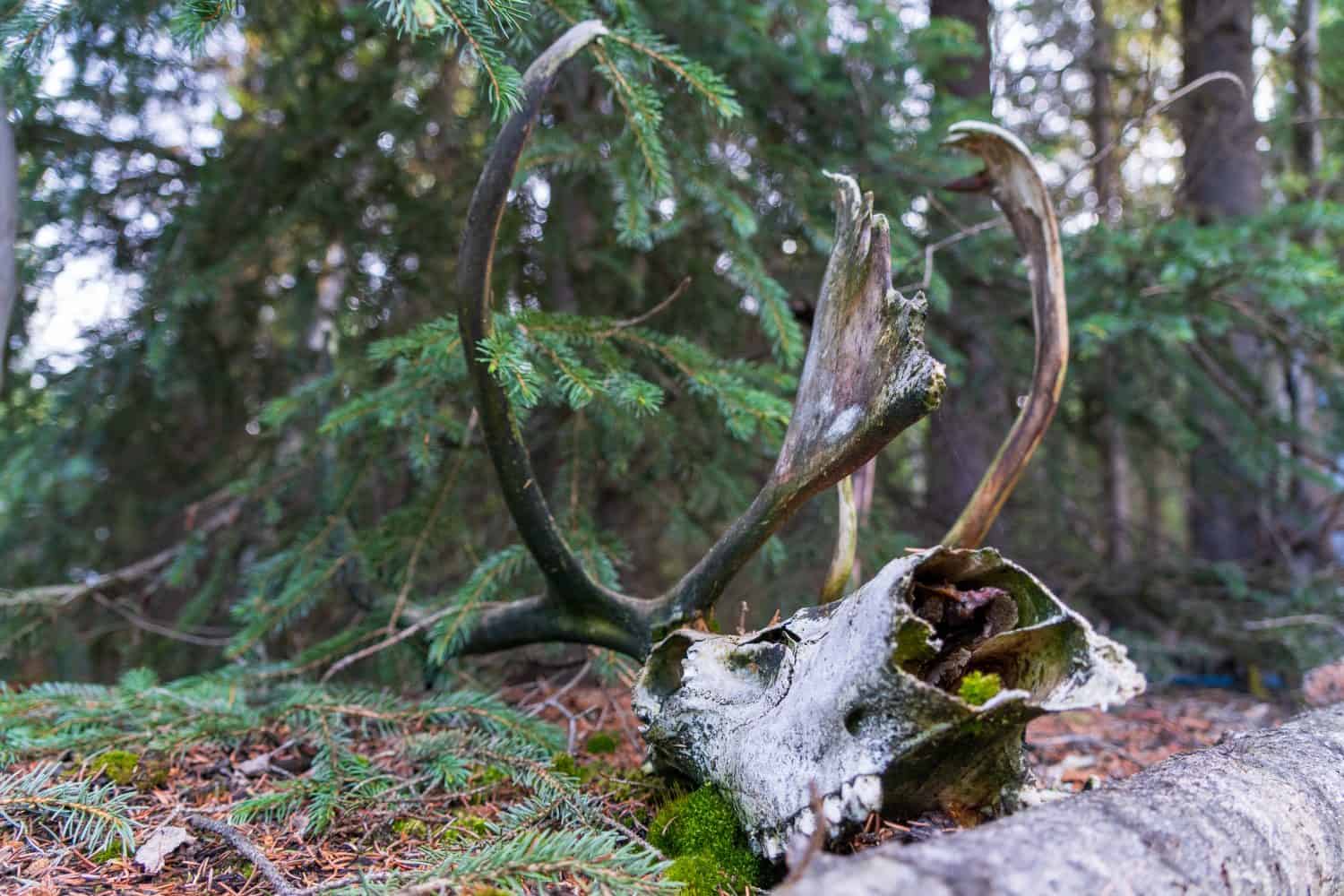
Thirteen years later, after the island had been long forgotten, researchers returned. But they did not find it as desolate as it was a decade prior. The reindeer herd had increased substantially, becoming the overwhelmingly dominant species. But after 1957, researchers returned to find that nearly the entire population had been reduced to skeletal remains.
What happened to the reindeer of St. Matthew’s Island? The answer is grimmer than fiction.
The Reindeer Were Intended as a Food Source
At first, the conditions seemed ideal for reindeer, also known as caribou. These survivalist animals are known to survive temperatures as low as -94 degrees Fahrenheit in locations such as Siberia. It was only natural that the U.S. Coast Guard believed they would thrive on St. Matthew’s Island. The decision was made to use this species as an emergency food source during World War II. It was theorized that if a military crew were stranded, this island would provide shelter and sustenance until rescue.
Unfortunately, this could not be further from the truth.
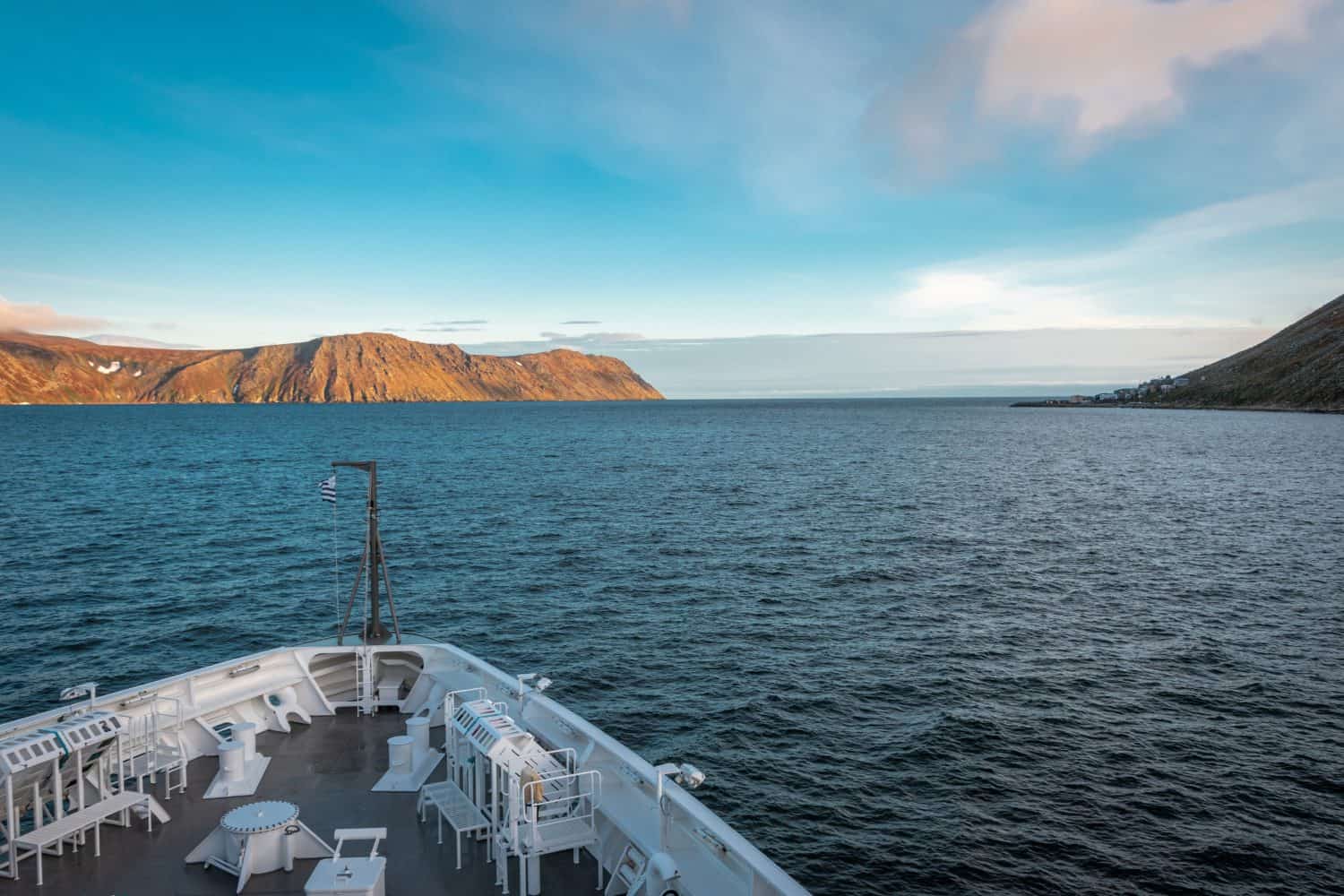
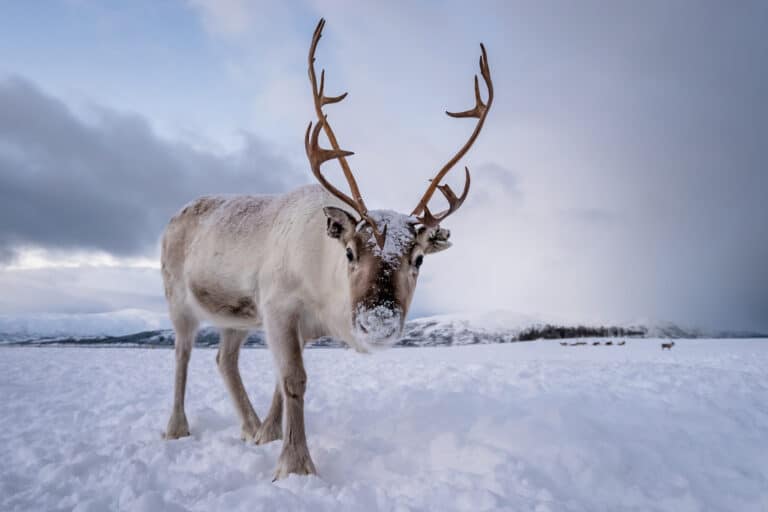
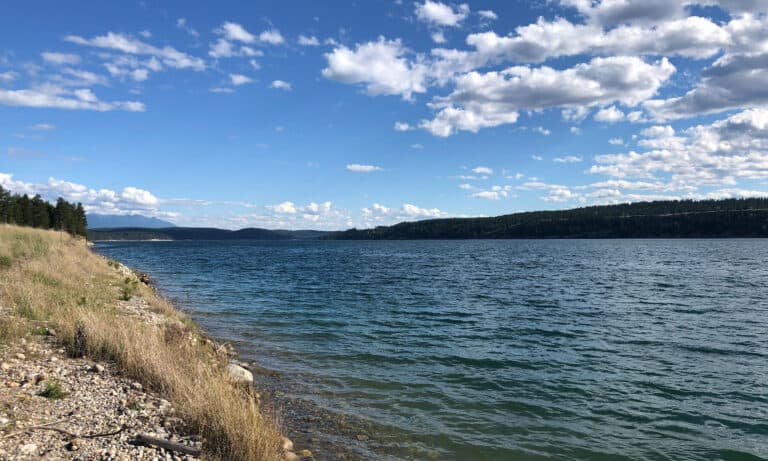
The Bering Sea is harsh and largely uninhabited due to its volatile weather patterns.
©Tetyana Dotsenko/Shutterstock.com
In 1944, when the reindeer were introduced to the island by barge, little was known about the region’s weather or climate. Researchers knew it was cold, but no one anticipated how hostile winters could be on this remote, 30-mile stretch of land. There were some positives, including plenty of lichen for the reindeer to feed on and no natural predators. In theory, it was the perfect new habitat for the caribou population consisting of 24 females and five males. And for a time, this was true.
Reindeer Population Explodes on St. Matthew’s Island
When World War II ended, troops were pulled from the Bering Sea as threats disappeared, but the 29 original reindeer were left behind. Not a second thought was given as to how or if they would survive.
When biologist Dave Klein came to St. Matthew’s Island in 1957, he observed something both extraordinary and unsettling. Rather than a small herd, the reindeer population had grown into the thousands. In a 2003 interview, Klein claimed that he and his team had counted at least 6,000 individuals.
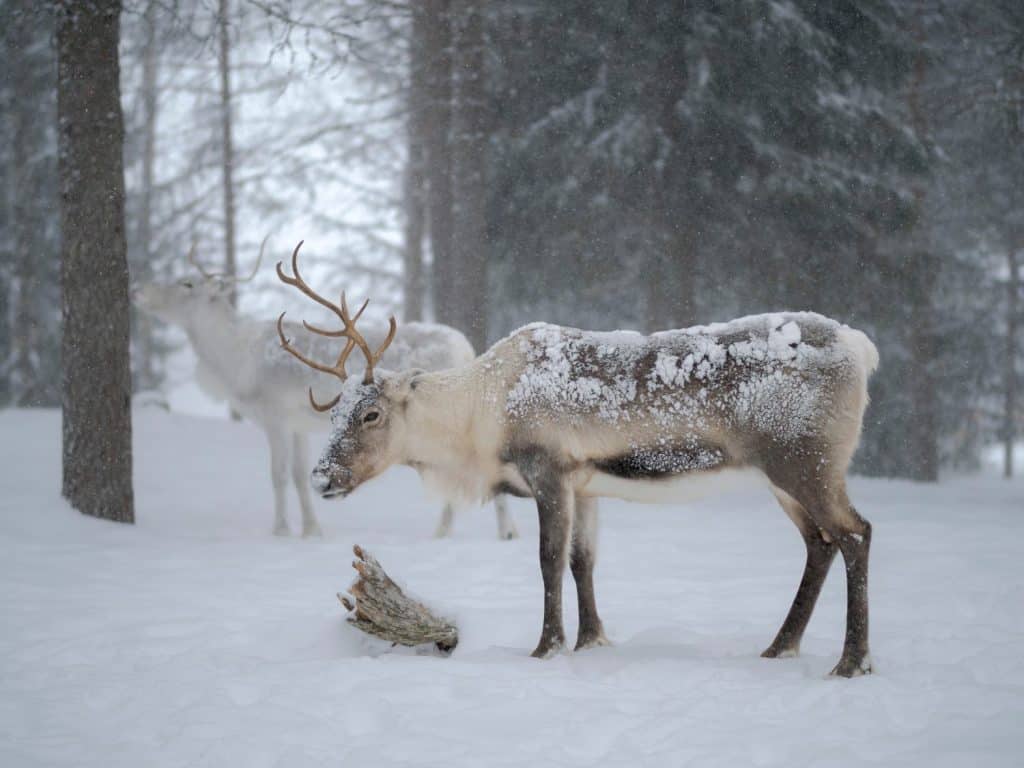
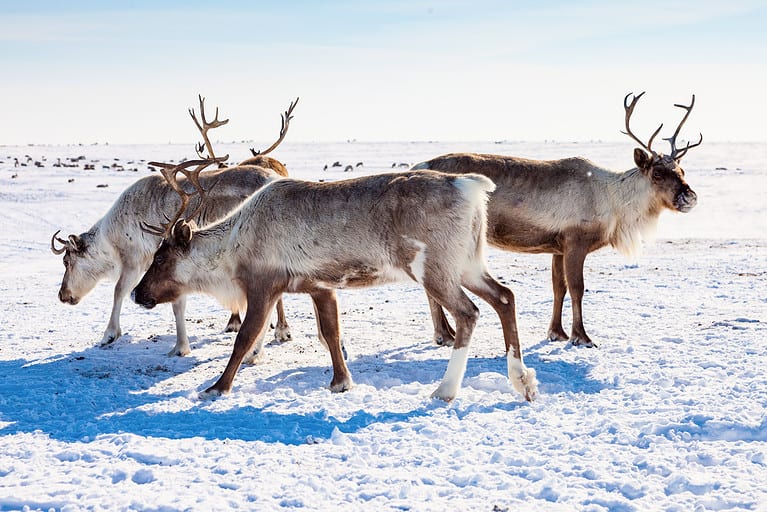
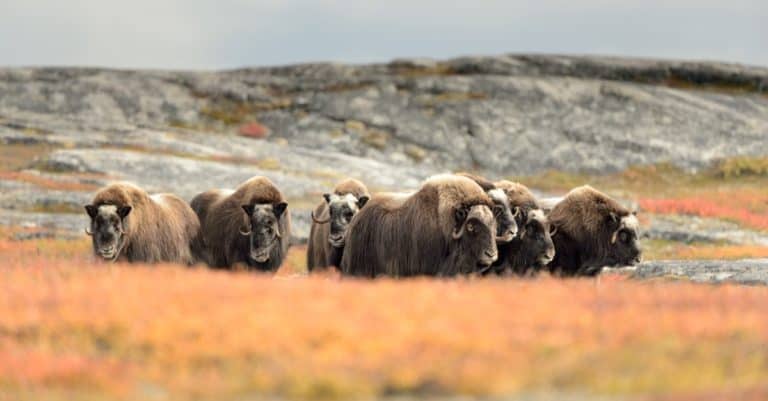
Caribou can withstand severe temperatures, but require a consistent food source.
©Danita Delimont/Shutterstock.com
In Siberia, their native habitat, caribou range over 600 to 750 square miles. On St. Matthew’s Island, they were limited to a 30-mile-box. Some years, caribou migrate up to 3,000 miles in Siberia in search of food. This is one of the longest terrestrial migrations in the world. On the island, this wasn’t an option. Klein’s observations revealed that the reindeer had eaten through most of the island’s lichen and seemed to be desperately foraging for more. Sadly, this foreshadowed the tragedy to come.
Today, No Reindeer Exist on St. Matthew’s Island
The island, once teeming with reindeer, is now devoid of the majestic animals. The dominant animals are now Arctic foxes, singing voles, and hardy songbirds. Scientists didn’t return to the island until 1966, and when they did, they only found 42 individual reindeer remaining, while 99% of the herd had died off in the years prior.
The shocking sight required an explanation. Scientists combed the island for clues and found skeletal remains of many of the reindeer. They found the bones of young mothers next to their offspring, indicating that whatever happened killed the herd quickly.
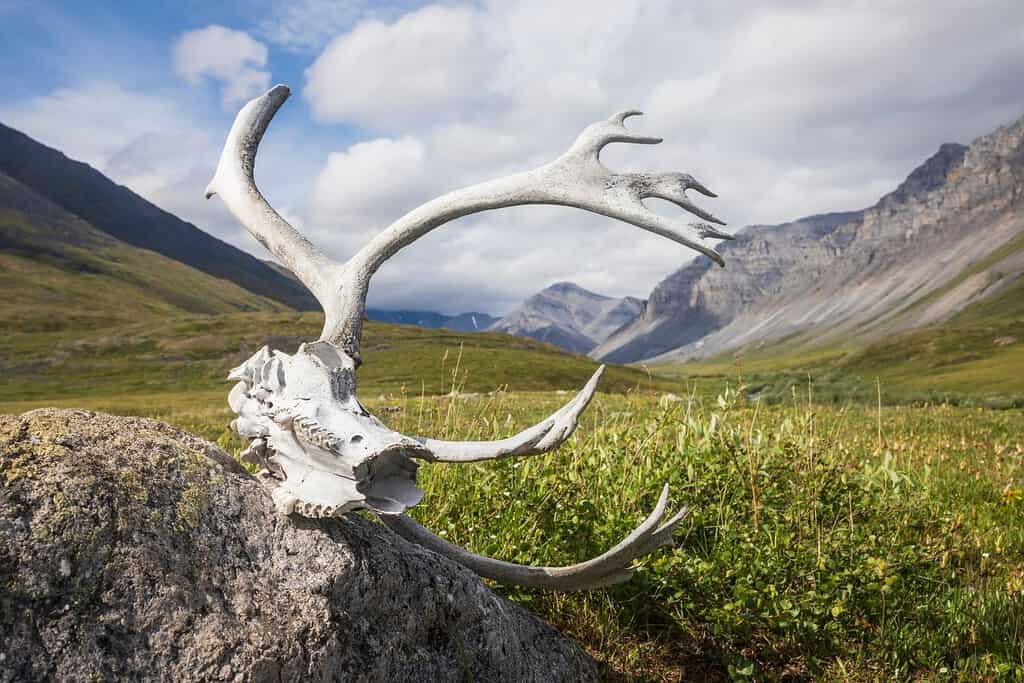
The last of the St. Matthew’s Island reindeer died out in the 1990s.
©BlueBarronPhoto/Shutterstock.com
Winter weather data spanning from 1963 to 1964 revealed that St. Matthew’s Island had experienced the harshest winter to date. The conditions were brutal, slamming the seaward island with Category 3-level atmospheric pressure and a windchill spike to -71.5 degrees Fahrenheit. The reindeer were forced to survive a week of minus 40 temperatures and 30 MPH wind gusts. St. Paul, Alaska–which was the closest town to St. Matthew’s–recorded 141 inches of total snowfall. Scientists surmised the island received far more than that, causing the herd to starve and succumb to exposure.
Today, the tragedy of the St. Matthew’s Island reindeer is a stark reminder of Mother Nature’s unforgiving hand. It’s also a testament to what happens when humans test the natural order of the animal kingdom.