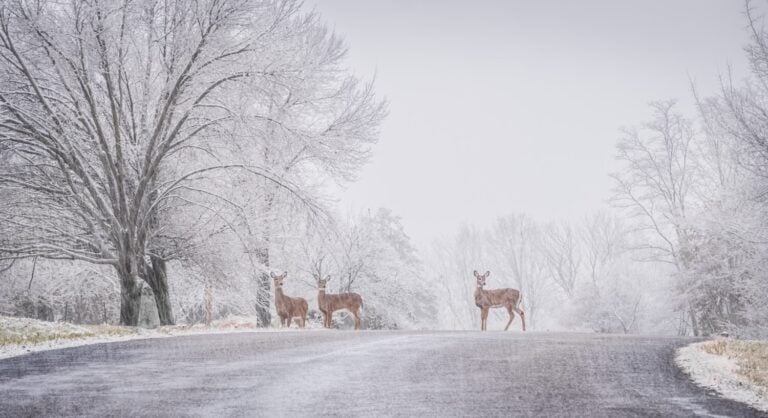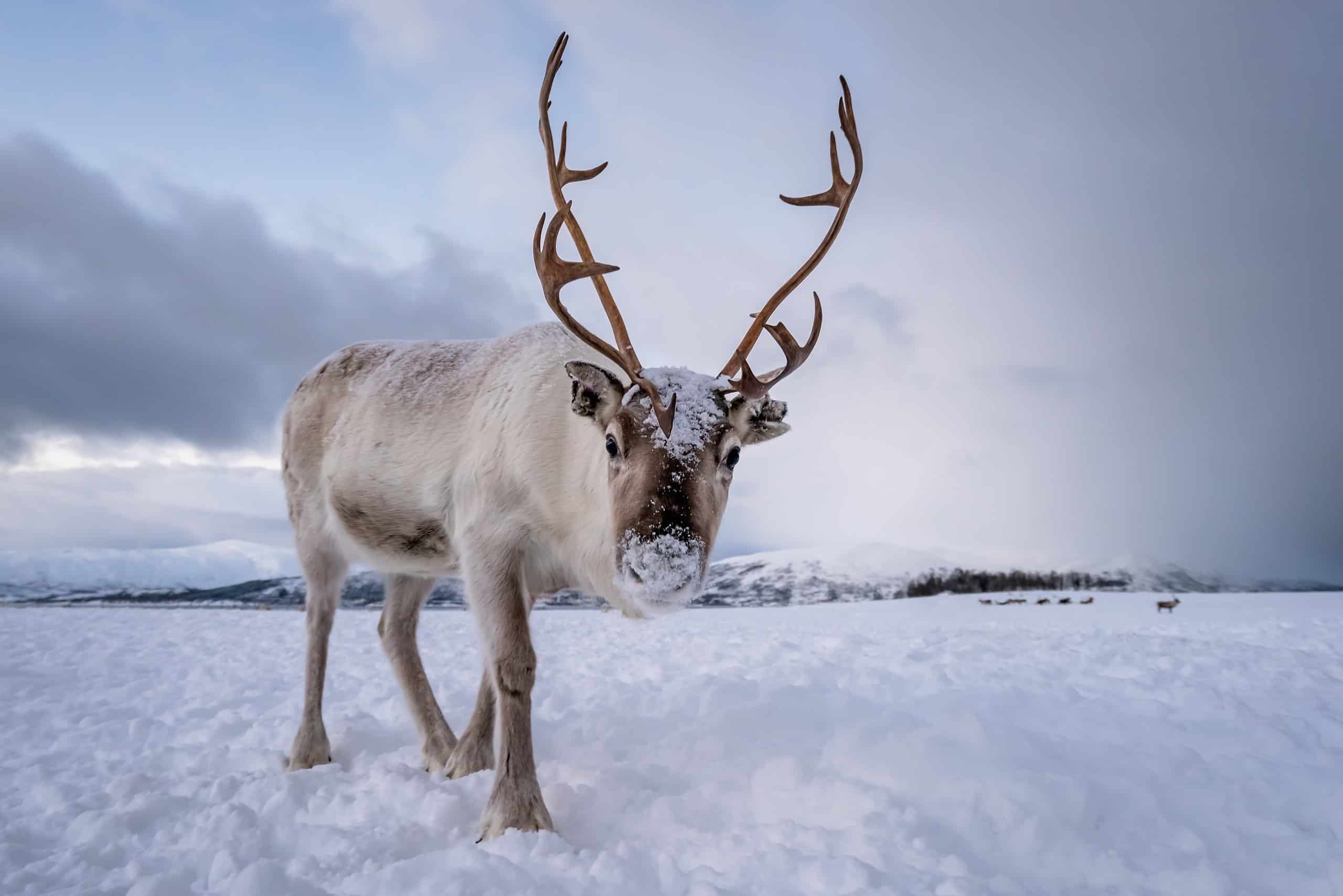

Reindeer (Rangifer tarandus) are one of over 40 species of deer. While reindeer and deer share some characteristics of the Cervidae family, such as hooves, antlers, and multi-chambered stomachs, reindeer have unique adaptations for their habitat that set them apart from other deer species. Keep reading to learn more about the differences between reindeer and deer.
Reindeer vs. Deer Quick Comparison
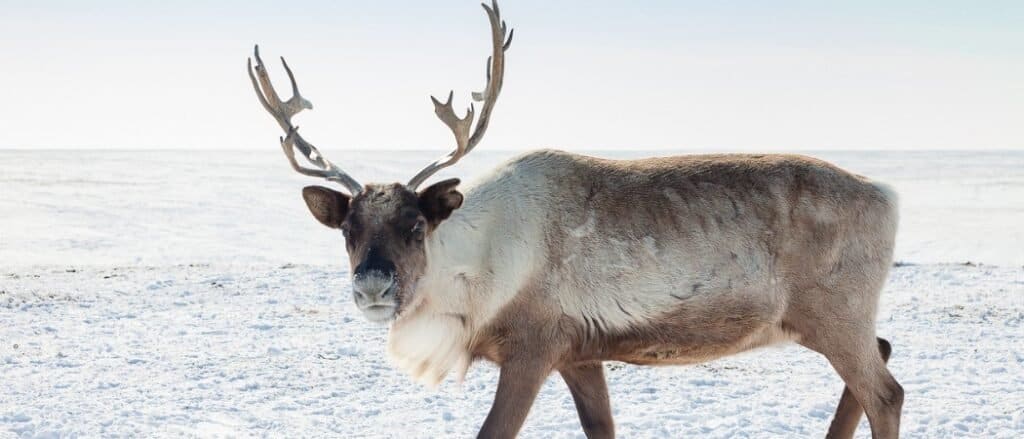
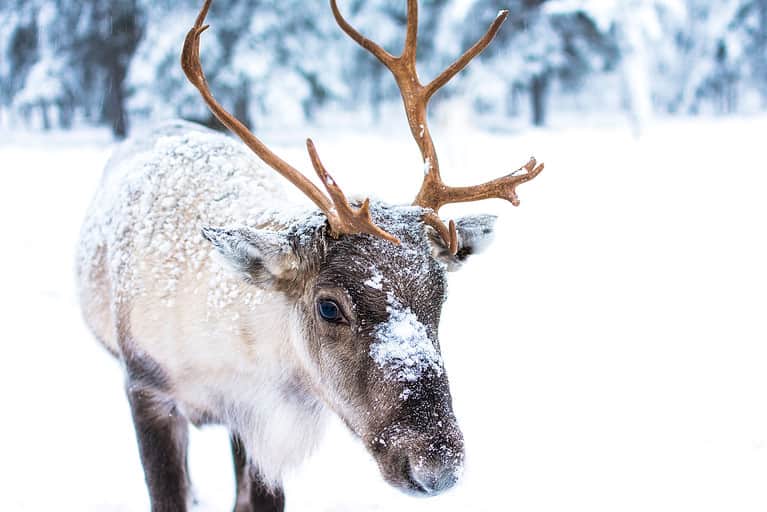
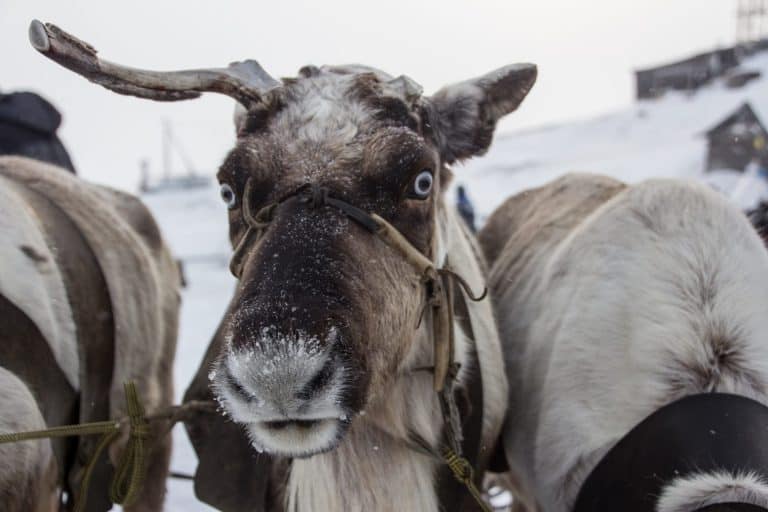
One of the main differences between reindeer and deer is that reindeer live in colder climates.
©Vladimir Melnikov/Shutterstock.com
The table below breaks down important differences between reindeer and deer.
| Reindeer | Deer | |
|---|---|---|
| Distribution and Habitat | Circumpolar Europe, North America, and Asia; Colder climates such as the tundra and the boreal woods | Everywhere except Antarctica; Mostly moderate climates such as meadows and woodlands |
| Migration | Up to 3,000 miles annually; longest migration of any land animal | Some species migrate seasonally, but generally only deer in climates with significant weather changes migrate |
| Size | 4.5 feet at the shoulder, up to 6.5 feet long, 140-550 pounds | Varies by species; ranges from 13 pounds (pudu) to upwards of 1,500 pounds (moose) |
| Antlers | Both males and females grow antlers; shed seasonally but at different times | Only males grow antlers; shed after the rut each fall and regrow in the spring |
| Physical Adaptations | Long but thick legs; hairy, widely split hooves with spongy pads; dense, coarse fur; fur covered noses | Legs are long and narrow with sharper, more pointed hooves; thinner, softer fur; shiny, moist noses |
| Physiological Adaptations | Countercurrent heat exchange in legs and nasal passages; tapetum lucidum changes color seasonally | Countercurrent heat exchange in legs only; tapetum lucidum does not change |
| Domestication | Reindeer are considered to be the only domesticated, or semi-domesticated, deer species | Have not been domesticated; some species farmed commercially |
The Key Differences Between Reindeer and Deer
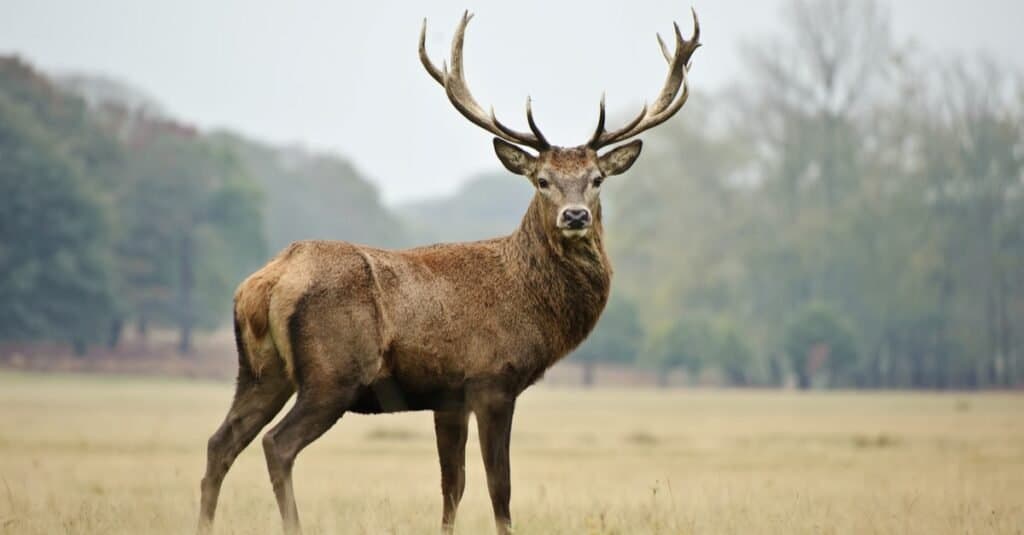
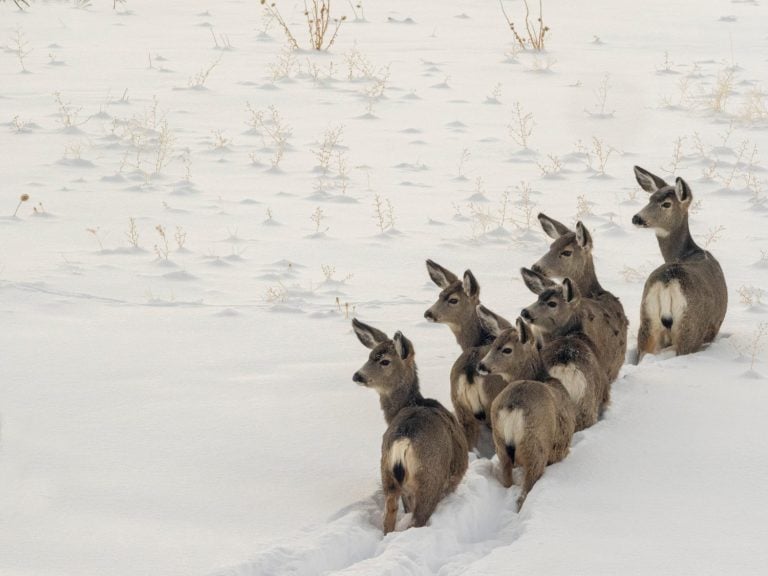
There are over 40 species of deer in the Cervidae family, which includes reindeer.
©iStock.com/Matt_Gibson
As mentioned above, reindeer are similar to other deer because they are a species of deer. However, there are distinctive characteristics that separate reindeer from their cervid cousins. In the paragraphs below, take a closer look at the differences in geographical distribution and habitat, migration, size, antlers, physical adaptations, physiological adaptations, and domestication between reindeer and deer.
Distribution and Habitat
Reindeer inhabit the Arctic and sub-Arctic regions of Europe, Asia, and North America. This includes Scandinavia, Russia, Greenland, Canada, and the U.S. In the U.S., wild reindeer, which are referred to as caribou in North America, are found almost exclusively in Alaska. They primarily live on the open tundra of the Arctic and in the boreal forests of the sub-Arctic, but some subspecies live in mountain habitats.
Deer can be found on every continent in the world except with the exceptions of Australia and Antarctica. They live in all 50 U.S. states, although the species varies by region. Most deer generally prefer more temperate climates than reindeer. They favor wooded and forested areas with abundant vegetation, but they are very adaptable and can thrive in a variety of habitats. Deer can be found in swamps, grasslands, farmlands, mountains, deserts, and even suburban areas.
Migration
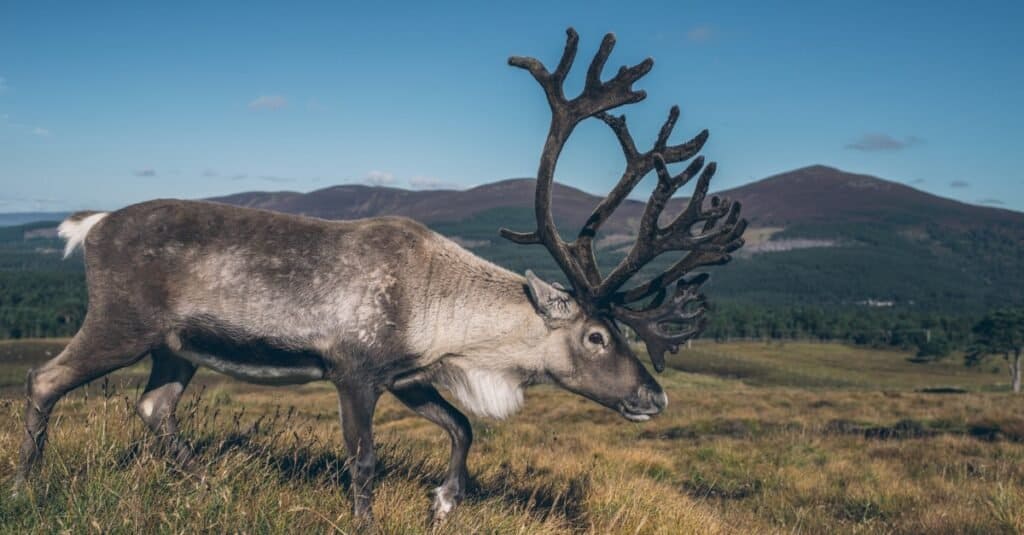
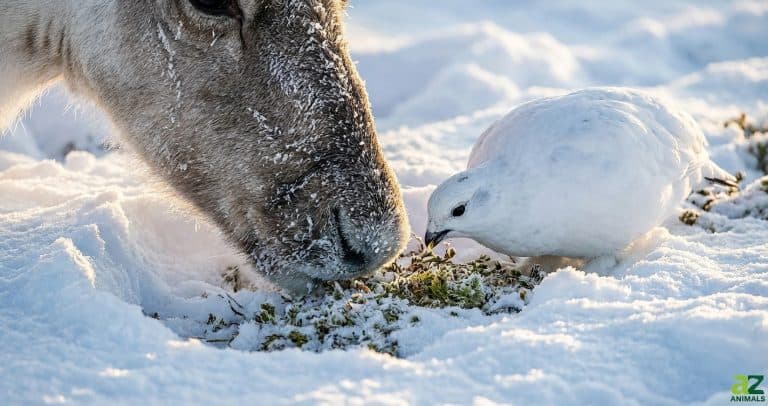
Reindeer are suited for Arctic conditions while most other deer species aren’t.
©doliux/Shutterstock.com
Reindeer undertake annual migrations between their winter and summer ranges to feed, calve, and take shelter. These migrations are believed to be the longest annual migrations of any land animal, with over 3,000 miles between their winter and summer ranges. Huge herds consisting of hundreds of thousands of individuals have been observed.
Some deer species also migrate, such as the mule deer and the Sitka black-tailed deer. However, their migrations cover only hundreds of miles, not thousands. Most deer species are more sedentary, especially those living in temperate climates, such as white-tailed deer in the southern U.S.
Size
Reindeer are one of the larger deer species, generally ranking about fifth among deer species in terms of weight. They stand about 4.5 feet at the shoulder and reach up to 6.5 feet long. Reindeer typically weigh from 140-550 pounds. However, the largest subspecies, the North American woodland caribou (Rangifer tarandus caribou), can reach up to 700 pounds.
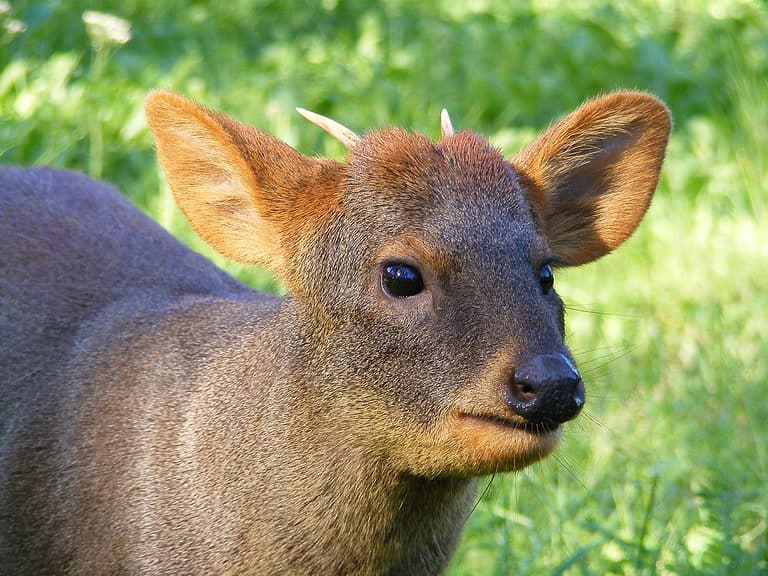
Deer species vary widely in size, from the smallest northern pudu (Pudu mephistophiles) at 13 pounds to the largest moose (Alces alces) at upwards of 1,500 pounds. The most common deer species in the world is the white-tailed deer, which can reach 3.5 feet tall, 6 feet in length, and weigh up to 300 pounds.
Antlers
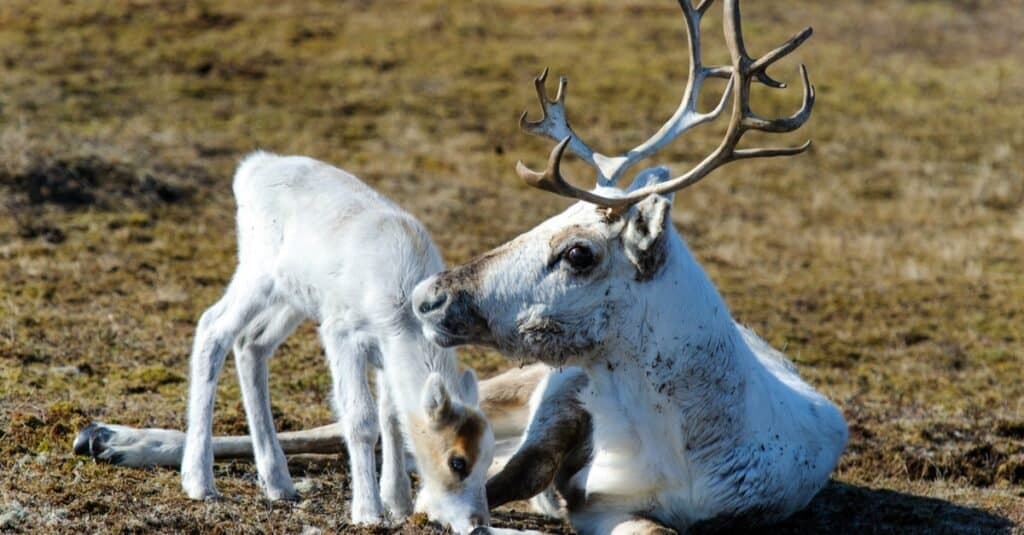
Female reindeer are the only female deer that have antlers.
©V. Belov/Shutterstock.com
In other deer species, only males grow antlers. However, both male and female reindeer grow antlers. In relation to their body size, reindeer have the largest antlers among all deer species. Males can grow antlers up to 51 inches wide, while females’ antlers reach up to 20 inches wide. Like most deer species, they shed their antlers annually and grow new antlers in the spring. Male reindeer shed their antlers after the mating season, called the rut, in the late fall, typically in November or December. However, females keep their antlers until after they calve in the spring so they can protect their access to crucial resources for their developing calf. Males start to grow new antlers in February, while females begin to grow their new antlers in May.
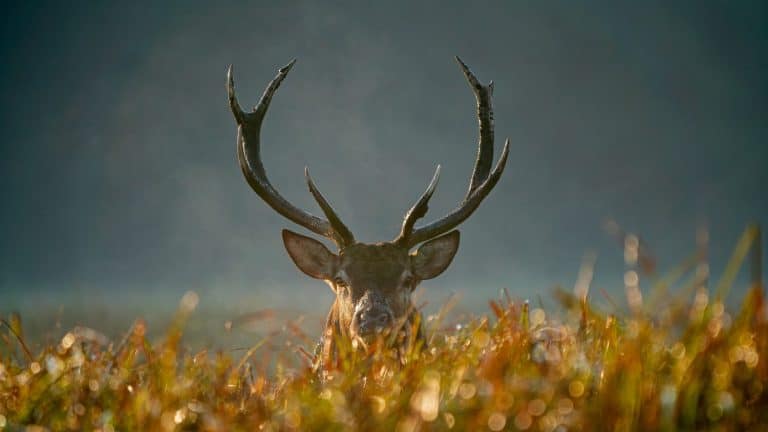
Most, but not all, male deer grow antlers. In North America, some of the native deer species that grow antlers include moose, elk, mule deer, and white-tailed deer. Moose have, on average, the largest antlers of any deer species. The largest antlers ever recorded on an extant animal were the antlers of a bull moose, which measured over 80 inches, or 6.7 feet, wide. Deer also shed their antlers annually after the fall mating season, growing a new set each spring.
Physical Adaptations
Reindeer have a number of physical adaptations due to their cold habitats. They are covered from nose to hooves in fur. Their double coat is dense, coarse, and thick. The undercoat is soft and woolly, while the longer guard hairs are hollow to trap air for insulation and buoyancy. They have long, stocky legs with widely cloven hooves. Their hooves have spongy, hairy pads to help distribute their weight and grip the frozen ground. The pads expand in the summer to aid in walking on softer ground and shrink in the winter to expose the harder edges for better traction on the hard, icy terrain.
Deer have shiny, moist noses, not furry noses like reindeer. However, deer have double coats with hollow outer hairs, but their fur is thinner and softer. They generally have longer, thinner legs for better agility and speed. Deer also have smaller, harder hooves. Some deer have hooves that expand to become softer and more padded in the summer, but their pads are not as spongy and broad as those of reindeer.
Physiological Adaptations

Deer have a countercurrent heat exchange in their legs to prevent heat loss and maintain their core body temperature.
©Andrea Izzotti/Shutterstock.com
Reindeer also have unique physiological adaptations to help them survive in the cold. They have an extensive countercurrent heat exchange in both their legs and nasal passages. Warm arterial blood flowing from their core to their limbs warms colder venous blood returning from their limbs to their core. This prevents heat loss and helps them maintain their core body temperature. A network of blood vessels, along with specialized bones in their nasal passages, warms the air they breathe in and retains moisture in the air they breathe out.
Reindeer in the Arctic also have a tapetum lucidum, a reflective layer in many animals’ eyes, that changes seasonally to improve their vision. This layer changes from a golden color during the summer to a dark blue in the winter. This allows them to reflect more light out of their eyes during the long summers and less light during the winter, enhancing their night vision so they can spot predators.
Deer also have a countercurrent heat exchange mechanism in their legs to prevent heat loss and maintain their core body temperature. However, the countercurrent heat exchange systems in other deer species are not as extensive as those in reindeer. Other deer do not have an elaborate countercurrent vascular system in their noses. Other deer also lack the ability to change the tapetum lucidum.
Domestication
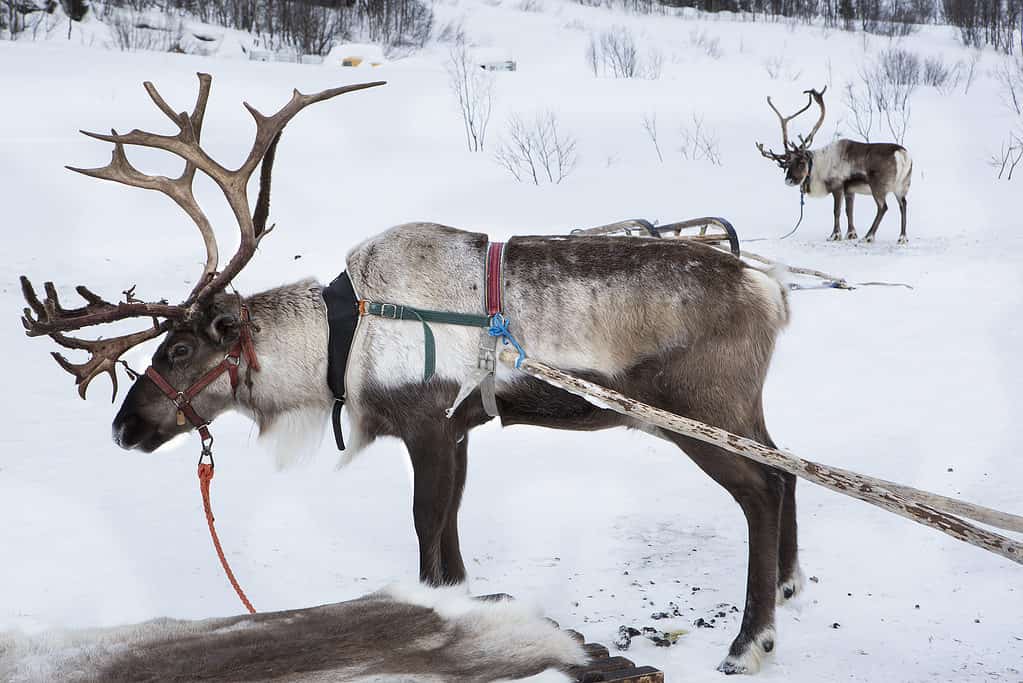
Reindeer are the only deer species that are widely domesticated.
©MARISINA/Shutterstock.com
Reindeer domestication is believed to have begun 2,000-3,000 years ago in Siberia and Fennoscandia, which includes Norway, Sweden, Finland, Karelia, and the Kola Peninsula. The Sámi people in Northern Fennoscandia are thought to have developed reindeer herding as their livelihood by around 1,400-1,600 A.D. Reindeer herding is still culturally and economically important to the people in the region. Reindeer are not only used for transportation or other labor, but they also provide meat, milk, and hides that are used to make clothes, boots, and home goods.
Reindeer are the only deer species that are widely domesticated or semi-domesticated. However, other deer species are raised on farms for commercial purposes. However, other deer species are raised on farms for commercial purposes. Sika deer, red deer, and fallow deer are often farmed for meat, the velvet from their antlers, hides, and breeding stock.