




Voles are small rodents that heavily resemble house mice, lemmings, and shrews. They are burrowing creatures and live in a wide range of habitats. These chunky little animals might be adorable, but they can cause a great deal of stress for gardeners.
Quick Vole Facts
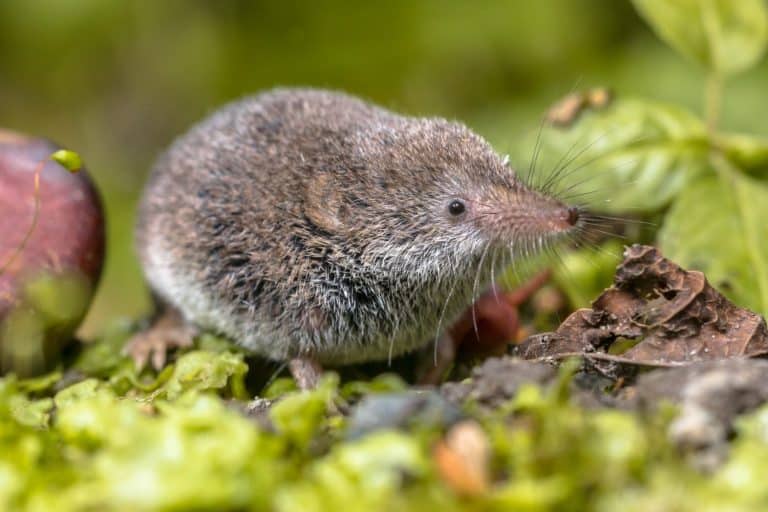
- Voles look almost exactly like mice and often get mistaken for them. They also closely resemble lemmings, shrews, and moles.
- Voles are poor climbers so you don’t necessarily have to worry about them climbing into housing complexes or apartments.
- Voles have been referenced widely in pop culture. These furry creatures were mentioned all the time in the television series Star Trek: Deep Space Nine as pests aboard the space station DS9.
- According to a recent study, voles are very empathetic animals. They exhibit levels of empathy to one another formerly thought to only exist in animals with higher intellect such as humans and elephants.
- Voles have shorter tails than mice, and this can be used to tell them apart. A vole’s tail is usually much shorter than its body.
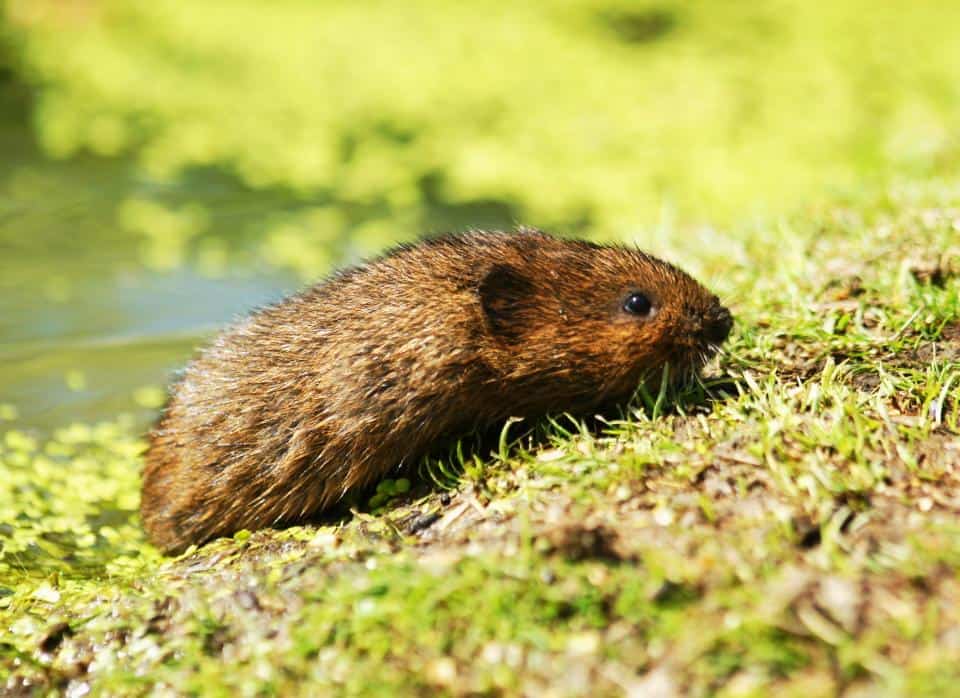
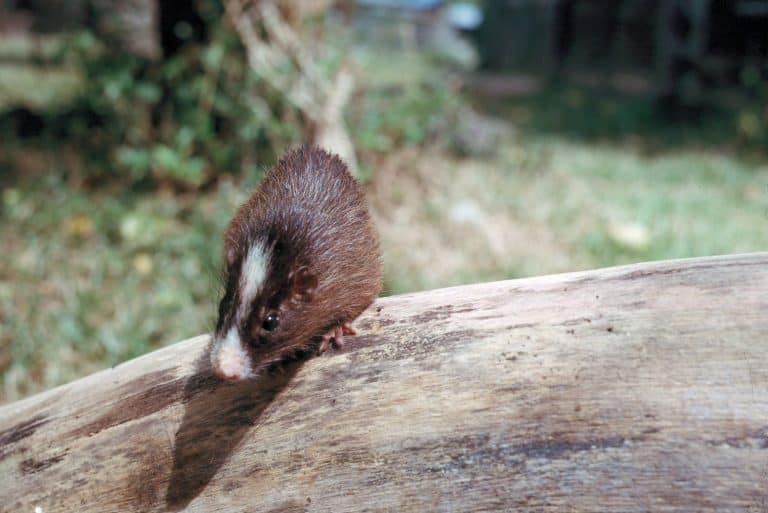
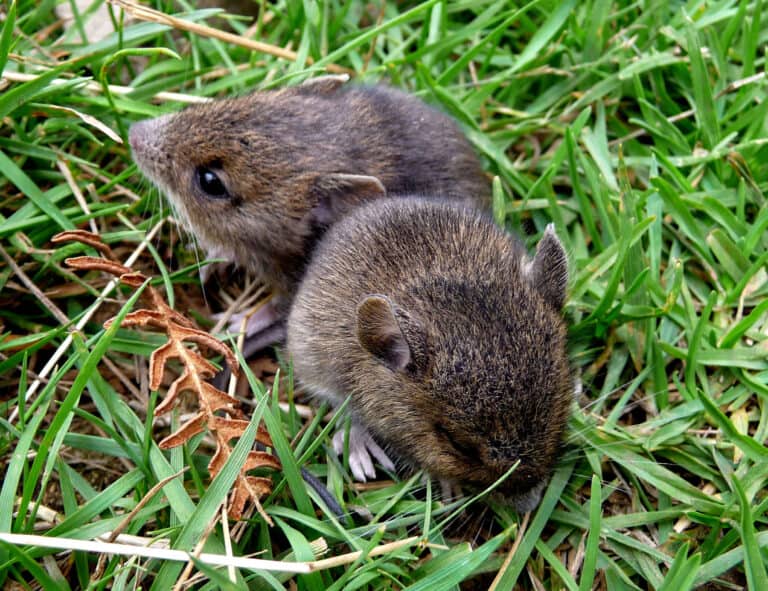
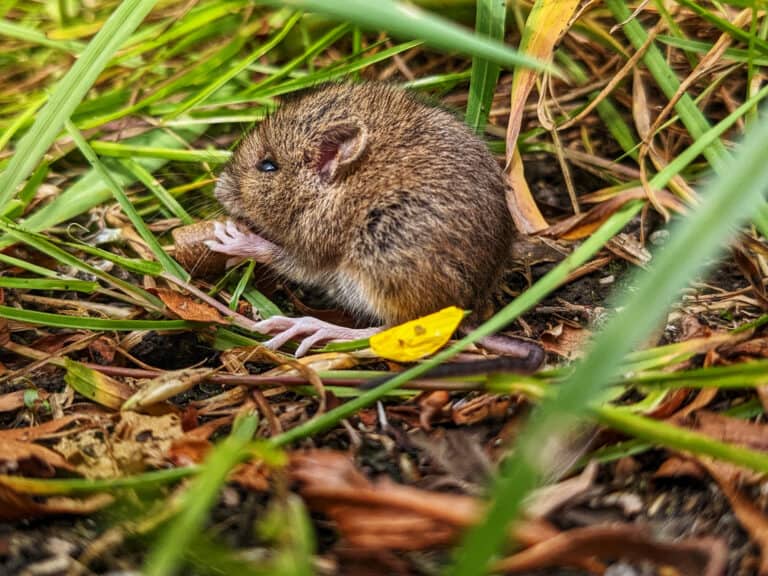
Voles look very similar to mice and also resemble lemmings, shrews, and moles.
©Peter Trimming / Flickr – Original
Vole Scientific Name
The term vole refers to any species of tiny mouse-like rodents that belong to the family Cricetidae and subfamily Arvicolinae. Genetically, voles are related to lemmings and hamsters. There are about 155 species of voles. They are also called field mice or meadow mice.
Vole Evolution and History
Voles belong to the Arvicolinae subfamily of the Cricetidae family and contains about 155 species.
Cricetidae started to evolve during the early Oligocene period 33.9 million to 23 million years ago. Subsequently, they began to undergo modifications as they adapted to different habitats and regions. During the Pliocene period which occurred 5.3 million to 2.59 million years ago, the first voles started to emerge along with lemmings. These animals started to diversify about 2.58 million to 11,700 years ago during the Pleistocene Epoch.
Voles have long since adapted well to their various habitats and behaviors. They are burrowing creatures and have made physiological modifications to suit this trait. Vole species such as the woodland vole has short, silky fur that is similar to that of the mole. They also have bigger front feet and claws than other vole species. In addition to these, they have small eyes and short ears almost completely hidden away by their fur.
Vole Appearance
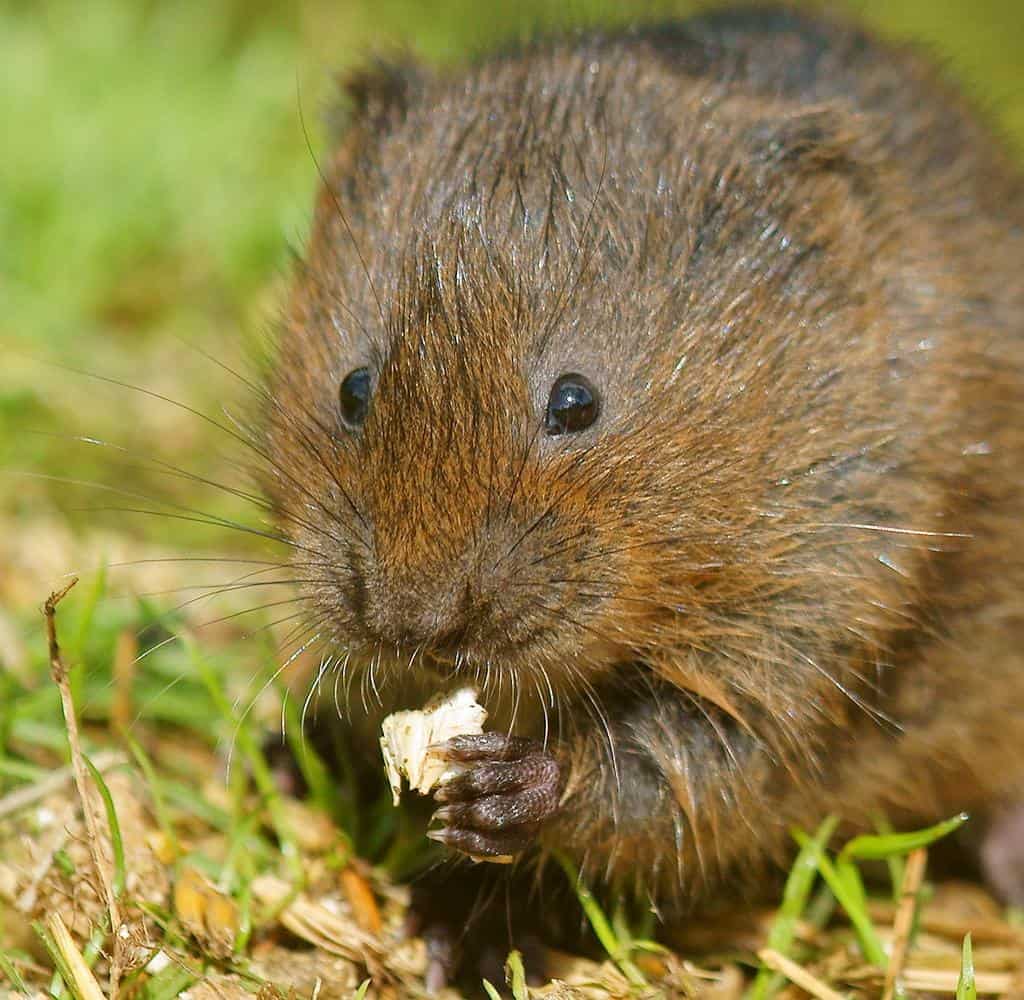
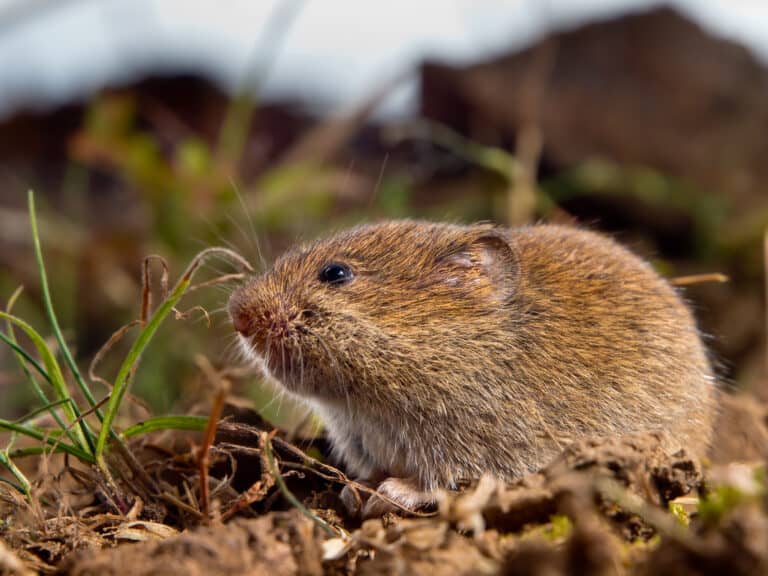
Voles look almost exactly like mice and often get mistaken for them. They also closely resemble lemmings, shrews, and moles. Voles are chubbier than mice and have slightly rounder heads and smaller ears and eyes. They also have shorter tails compared to mice. The snout or muzzle of the vole is blunt and not narrow like most other mice.
Voles have fur which varies in colors like gray, chestnut, brown, reddish-brown, or even multicolored with reddish-brown on the top and gray on the sides. They have paler undersides that are usually white, brown or gray.
The vole’s molars are formed differently from the common mouse and the lemming. Instead of being high-crowned with angular cusps, the molars of voles are low-crowned and have rounded cusps instead. A lot of voles have molars that grow continuously throughout their lifetime, and all of them have incisors that do the same.
Depending on the species, voles grow to be between three to nine inches in length with its tail being shorter than its body. The vole’s tail length usually averages 1 to 2.4 inches in length.
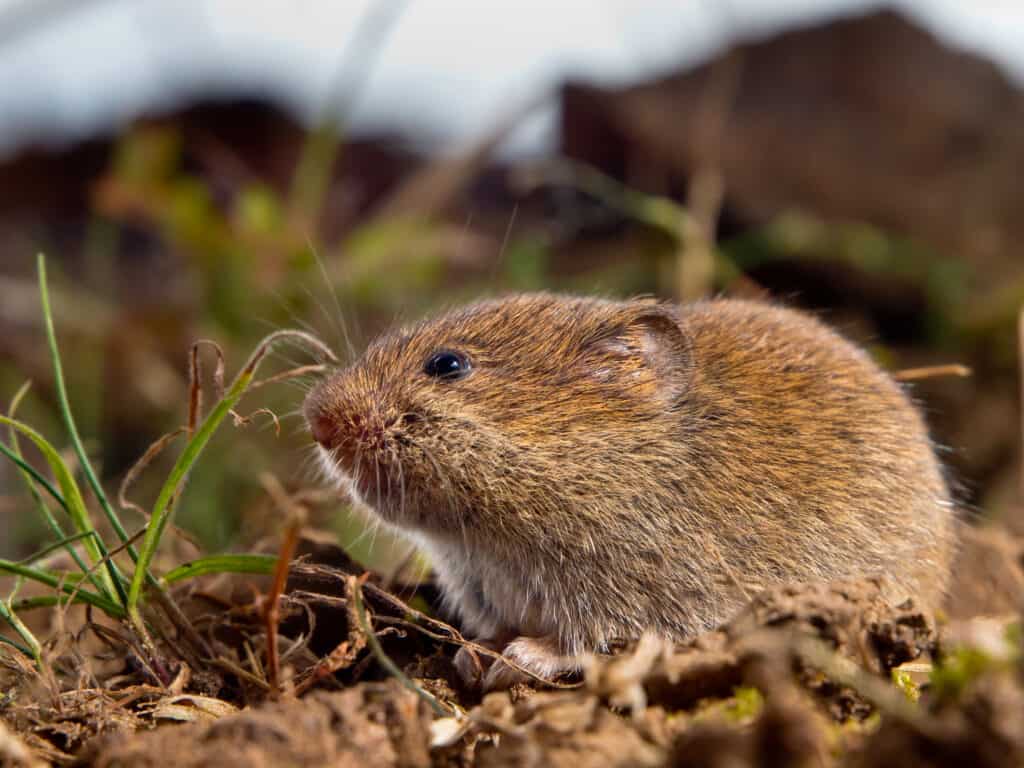
Voles are chubbier than mice and have slightly rounder heads and smaller ears and eyes.
©iStock.com/CreativeNature_nl
Vole Behavior
Because of the wide number of vole species, there is slight variation in their behaviors. Some species of voles are nocturnal, some diurnal, while others are active throughout the day and the night. They are usually active year round. In the winter, voles will burrow through the snow back out onto the surface.
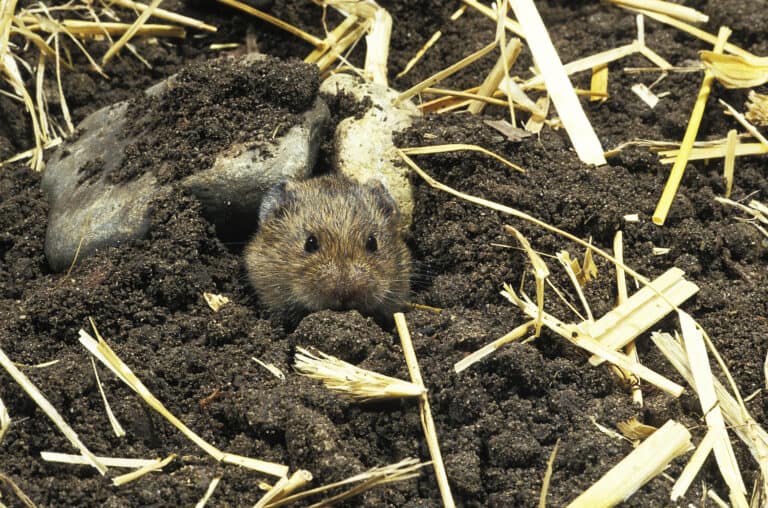
Voles are burrowing and tunneling animals and most of the species are terrestrial with few exceptions, such as the arboreal red vole (Arborimus longicaudus) and the Sonoma tree vole (Arborimus pomo) which reside in treetops and eat conifer needles. Voles have storage chambers within their burrows where they keep food like seeds and plants for safekeeping. A burrow system can be inhabited by many voles of all ages in groups known as colonies. Burrows usually don’t exceed a few hundred square feet in length. Mole voles of the genus Ellobius burrow complex tunnels as far as 20 inches into the ground.
Some voles are semiaquatic. The American water vole (Microtus richardsoni) are excellent swimmers and build their burrows at pond margins or close to streams. These burrows have entrances that tend to be submerged or at the water level.
Their underground activities make a lot of the vole species agricultural pests in their inhabited areas. They target the root systems and stems of plants, killing them in the process. They also girdle trees, which means that they damage the life of trees by severing the connection between the roots and the leaves. This makes the trees unable to supply photosynthetic nutrients from the root to the rest of the tree, hence killing the plant.
Because voles are so little and live underground most of the time, it is difficult for property owners to realize what is happening until the damage is already done.
Vole activity can also be beneficial to the environment because their burrowing distributes the soil nutrients to the upper layers of the ground.
Voles are poor climbers so you don’t necessarily have to worry about them climbing into housing complexes or apartments. If you live near voles, then you will typically find them in croplands or gardens.
A very interesting fact about voles is that they are very empathetic. Studies show that they comfort each other when distressed or mistreated and exhibit levels of empathy thought to only be possible with higher level animals like humans and elephants.
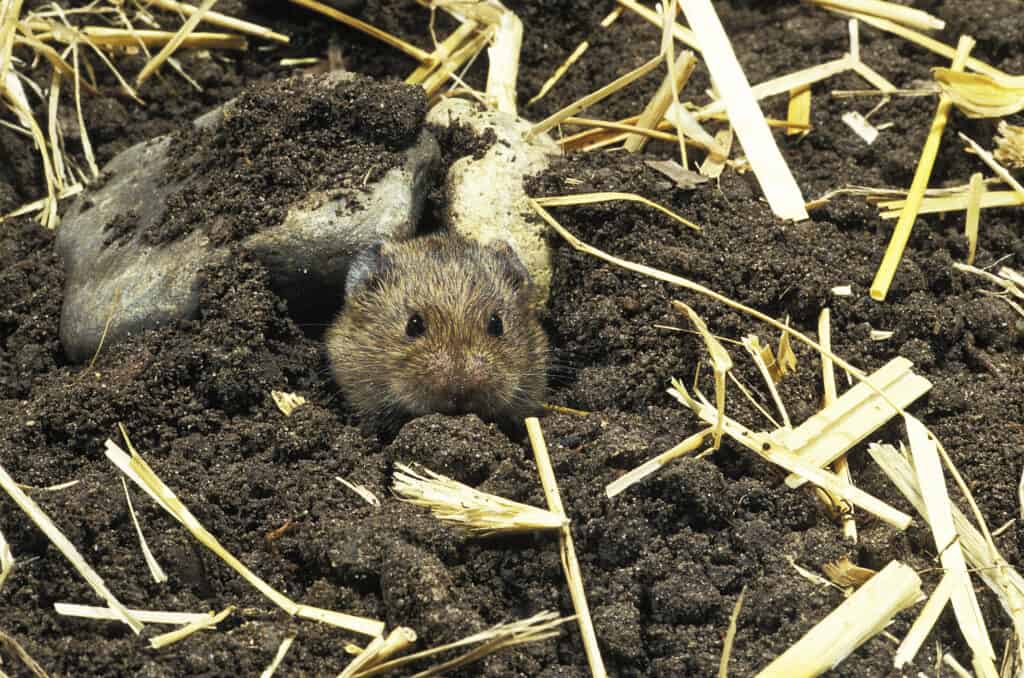
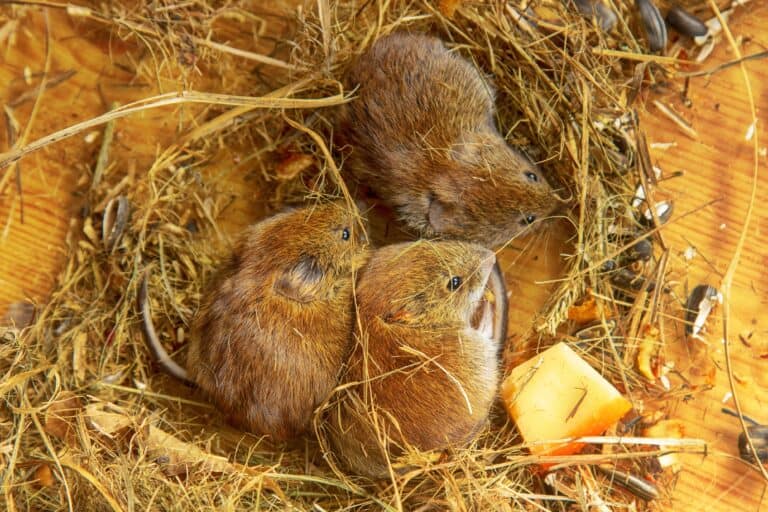
Voles are burrowing and tunneling animals and use storage chambers within their burrows to store seeds and plants for safekeeping.
©iStock.com/slowmotiongli
Vole Diet
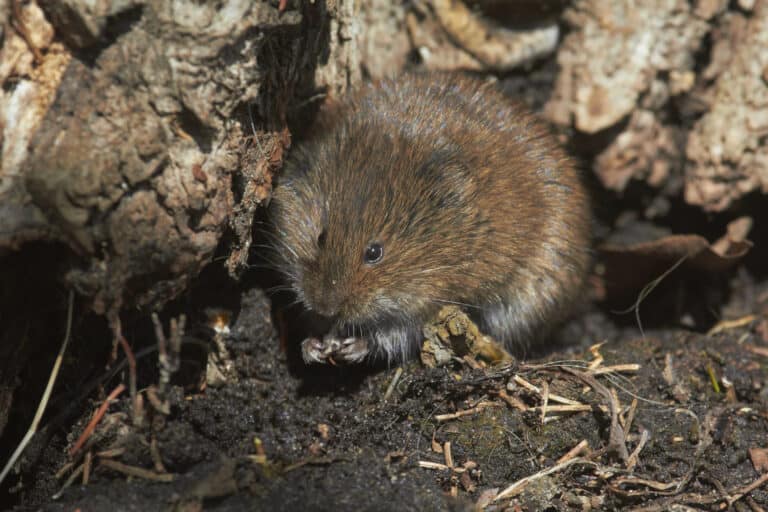
Voles are mostly herbivorous and foliovorous creatures and their staple diet is made up of tubers, fruits, nuts, conifer needles, bark, seeds, succulent roots, bulbs, and green plants such as grass and clover. However, they are actually omnivores because they prey on insects. They also have scavenger tendencies and will eat dead animals.
Voles that attack gardens like to eat plants like carrot, cauliflower, artichoke, tomato, sweet potato, lettuce, celery, and turnip. They also girdle tree bark such as apple, almond, cherry, avocado, and citrus trees.
Voles have advanced burrowing and tunneling abilities. It is very hard for landowners to be able to tell that their property is infested with voles. By the time they usually realize it, it is too late and the voles have left runways of dead plants in their wake. While the vole’s burrowing habit does benefit the land by distributing soil nutrients more widely, they do a lot of damage to the plants by eating their stems and roots.
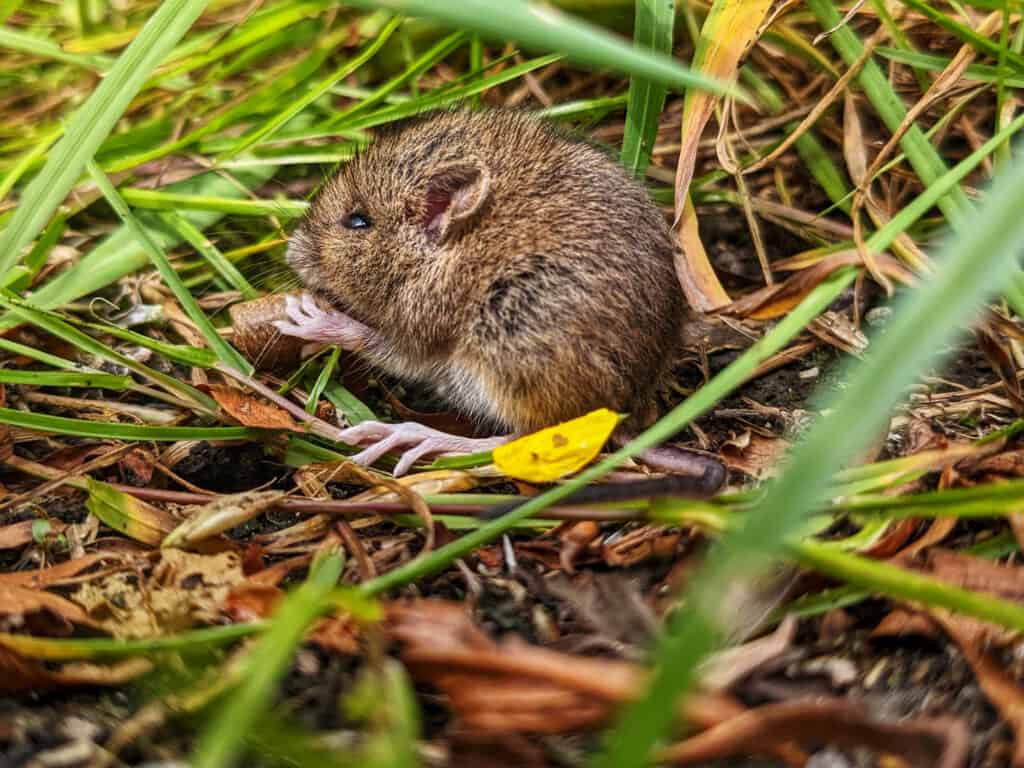
The staple diet of voles is made up of tubers, fruits, nuts, conifer needles, bark, seeds, succulent roots, bulbs, and green plants.
©iStock.com/Dejae ODell
Vole Habitat and Population
Voles can live just about everywhere. They can be found on many continents such as North America, Africa, Asia, and Europe. The countries they inhabit include the United States, the United Kingdom, China, Taiwan, Japan, Libya, Mexico, Guatemala, India, Afghanistan, and Pakistan. About 70 species of voles can be found within these ranges.
Voles live in many diverse habitats and elevations. They can be found at sea-level habitats, underground, and even in lofty mountain ranges. Voles prefer regions like steppes, alpine and subalpine meadows, prairies, tundras, deciduous, coniferous, and cloud forests. Some species of voles are semiaquatic and prefer to inhabit regions with a significant and still water source.
Due to their prolific nature, voles are very common animals and most are listed as Least Concern on the IUCN Red List of Threatened Species. However, the Southern water vole (Arvicola sapidus) is listed as vulnerable.
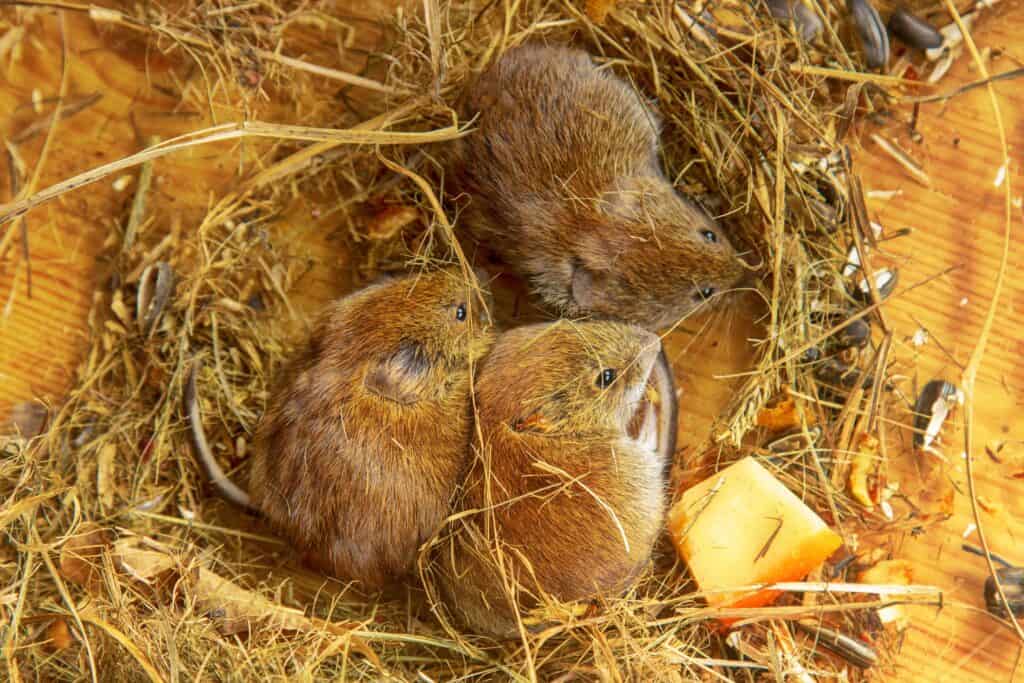
Studies have shown that voles are empathetic animals comforting each other when distressed or mistreated.
©Maximillian cabinet/Shutterstock.com
Vole Reproduction and Lifespan
Voles tend to have different mating behaviors depending on the species and environmental conditions. Some species are monogamous while others practice polygamy and are known to be promiscuous.
The prairie vole (Microtus ochrogaster) practices sexual exclusivity wherein the male vole stays loyal to one female and also takes on parental duties in raising the young. Some other species in the Microtus genus can be monogamous if there are enough resources to go around, if the number of males are enough for mating, and if the population density of the colony is relatively low.
Male voles are very territorial, and they can be aggressive when defending their spaces. This is mostly because females tend to choose mates based on who has the most recent territory markings.
Voles can breed throughout the year, but the peak period for this occurs in spring. Female voles mature sexually in about 35 to 40 days old.
The gestation period for female voles lasts three weeks after which the female gives birth to a litter of three to six blind and hairless pups. Female voles can technically give birth to five to ten litters in a year, but since they usually don’t survive that long, the average number of litters they have is two. Voles are incredibly prolific animals. Because their age of sexual maturity is quite low, a male and female vole can produce a hundred descendants within the space of a year.
Voles have a very short lifespan of just three to six months. They seldom ever live past a year. 88% of voles die within their first month of life. The oldest known vole was 18 months old.
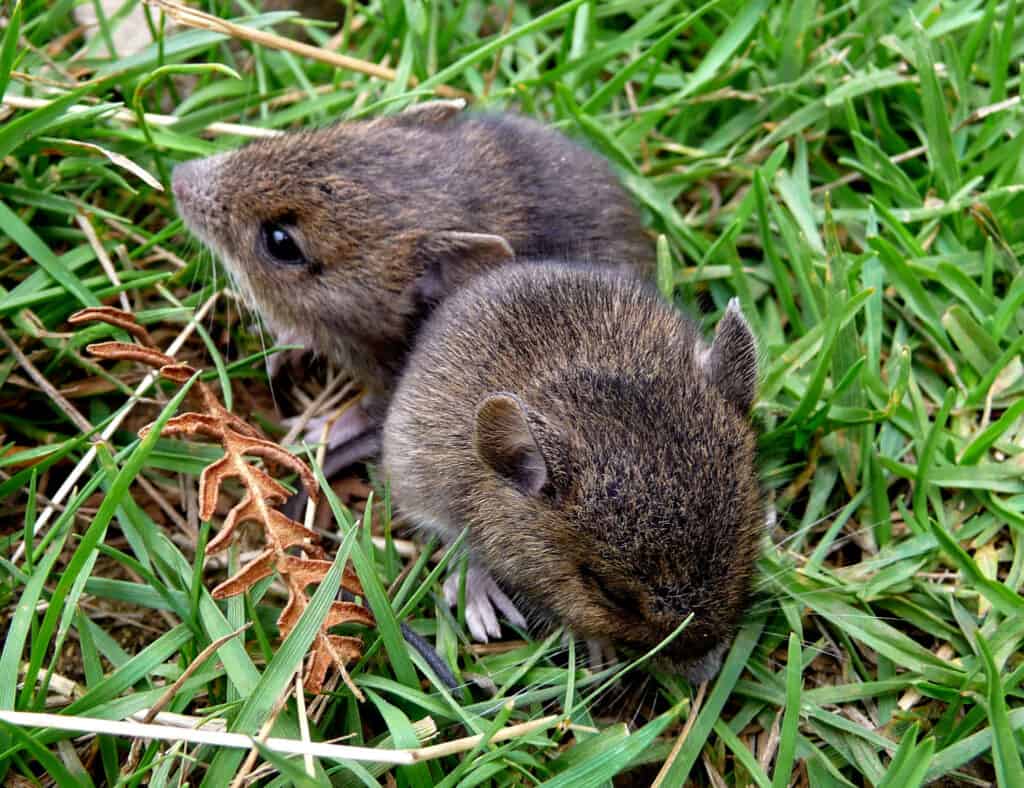
Because their age of sexual maturity is quite low, a male and female vole can produce a hundred descendants within the space of a year.
©gailhampshire from Cradley, Malvern, U.K, CC BY 2.0 <https://creativecommons.org/licenses/by/2.0>, via Wikimedia Commons – Original / License
Vole Predators and Threats
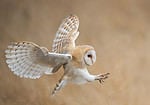
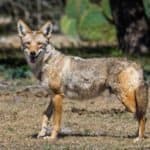
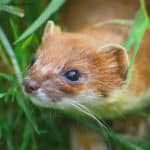
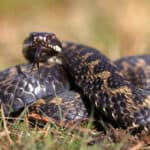
Voles are predated upon by large carnivores who typically hunt rodents such as owls, hawks, weasels, coyotes, cats, martens, falcons, bobcats, raccoons, snakes, fish, wolves, boars, and lynxes.
Some species of voles such as water voles suffer from habitat loss due to urbanization, fragmentation, and poaching for their fur.
How To Get Rid of Voles
Voles can be troublesome pests and difficult to get rid of once they have invaded your home garden or territory in large numbers. The keys are early prevention and action while their population is still small.
There are several ways to overcome a vole infestation. First, you have to be alert and aware of any signs of an infestation. Voles often leave runways and droppings in their wake so these are good signs. Also, you can spot vole burrow openings in the soil. Voles love areas with dense vegetation so watch out for these areas and remove unnecessary vegetative cover to make them easier to spot.
Vole populations can be controlled by using chemical repellants, mouse traps, safe baits such as anticoagulants, and introduction of natural predators.
Related Animals
Vole Pictures
View all of our Vole pictures in the gallery.

Sources
- University of California Agriculture & Natural Resources / Accessed November 27, 2022
- Wikipedia / Accessed November 27, 2022
- Wikipedia / Accessed November 27, 2022
- Britannica / Accessed November 27, 2022
- People's Trust for Endangered Species / Accessed November 27, 2022