
Quick Take
- Bull elk have a bizarre grooming ritual that cows find irresistible, and it has nothing to do with what you'd expect. See the urine ritual →
- Winning a fight over a harem doesn't guarantee a bull survives the season, because a cruel trade-off is hiding inside rutting success. See the physical toll →
- Before a single antler clashes, bulls run through a surprisingly structured playbook to settle a rivalry. See the rivalry playbook →
In the late 1800s, elk were hunted to near extinction in the Rocky Mountains. Thanks to conservation efforts, including relocating elk from Yellowstone to other regions in the Rocky Mountains, elk populations rebounded. Today, managed populations of thousands roam these valleys, making the species one of the most revered in both national parks.
With September right around the corner, the elk rut is the main attraction at both Yellowstone and the Rocky Mountains. Nothing is quite as dramatic as a rutting buck, especially when his biological clock rules his behavior. Come fall, decreasing photoperiods set off the alarm that shorter daylight hours mean mating season. Bulls build harems, and the entire herd commits the next two months to the survival of their species.
Au de Perfume, AKA Urine, Attracts Females
By early September, elk bulls are already ramping up the charm to impress cows, or females. The first step is smelling good, but this doesn’t fall under any human definition. For elk, this means covering themselves in their own urine. Because males have a urethra that points vertically, they’re able to cover themselves from head to chest in their own pee.
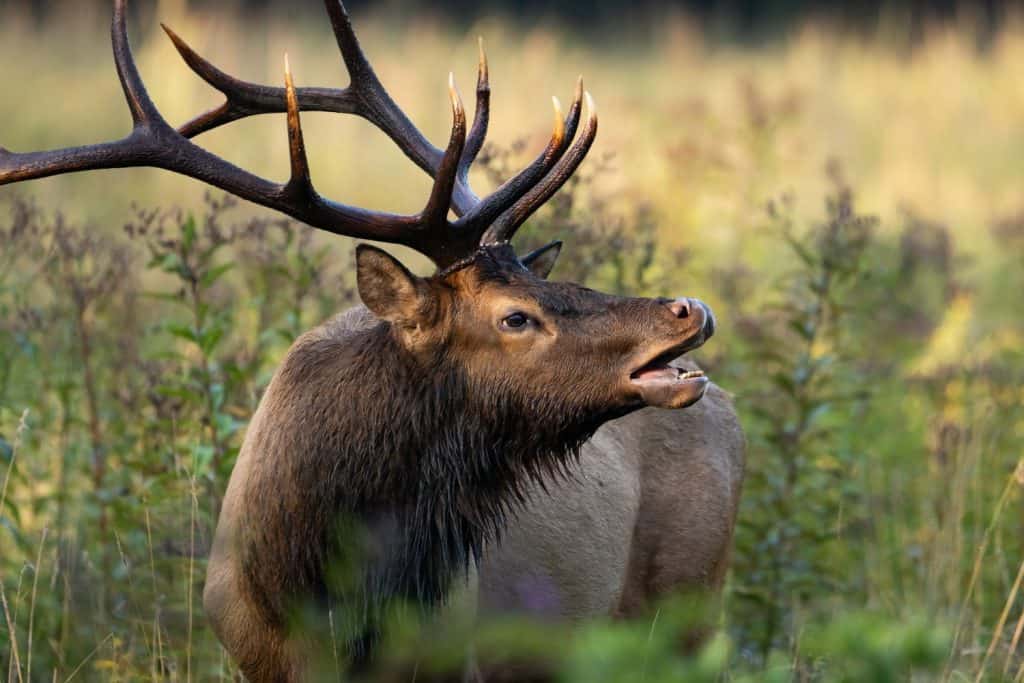
By September, elk urine also becomes the most attractive thing to a female.
©Cavan-Images/Shutterstock.com
This process, called self-anointing, is a sign of dominance within the herd. Bulls also dig holes for urination, which they use to roll in and completely cover themselves in the liquid. And while it’s foul-smelling to us, it serves as an important signal to nearby cows.
Elk urine contains pheromones that are chock-full of testosterone. This signals to females that they’re ready to mate. The more potent the scent is after wallowing in urine-soaked mud, the better the chances a bull has to mate. To a bull’s rivals, this pheromone-tinged urine is a warning to back off. However, if a fellow bull doesn’t abide, a bull’s raging hormones usually do the trick.
Elk Sound the Alarm If Another Male Threatens Them
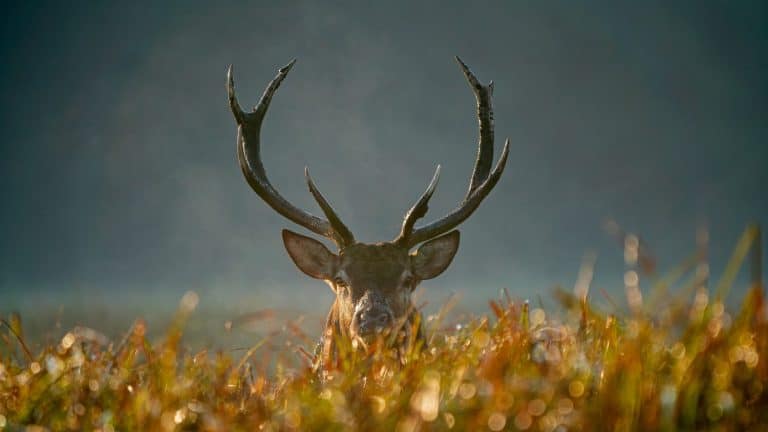
When elk bulls are fully covered in their natural cologne, the game begins. Males who don’t keep their distance are in for a fight, and there’s enough testosterone raging through them to fuel a sparring match. But before that happens, most elk let out a loud, bellowing sound, known as bugling. This sets the stage for violence and tells other bulls to steer clear. The sound is unmistakable, and it’s common to hear this throughout the Rocky Mountains and Yellowstone from September through October.
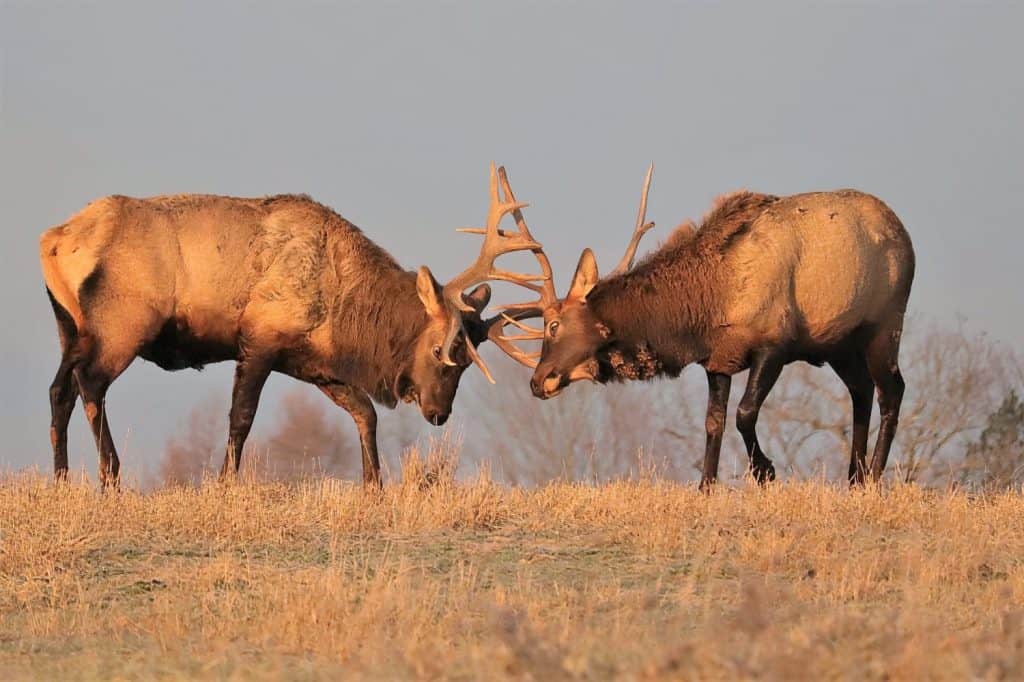
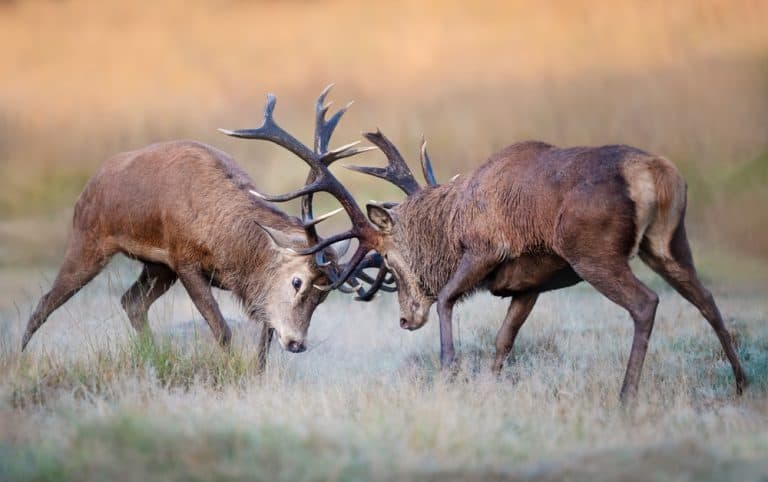
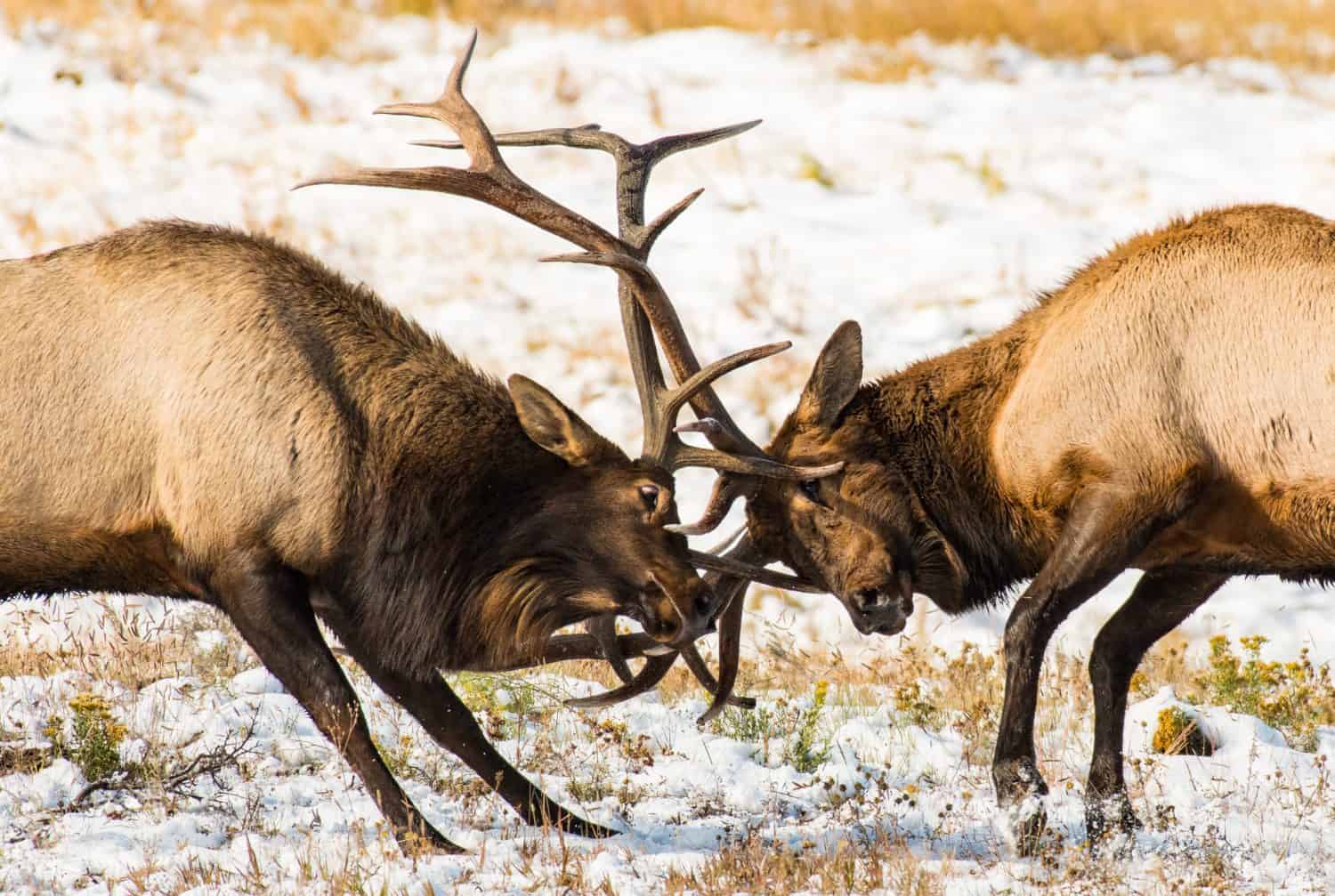
Rutting battles don’t last long but can have serious consequences.
©onewildlifer/Shutterstock.com
If bugling doesn’t work, then bulls begin circling one another. As in old-fashioned Wild West fights, this is a way of sizing up the competition. They might engage in parallel walking, close-range bugling, or posturing and bluffing.
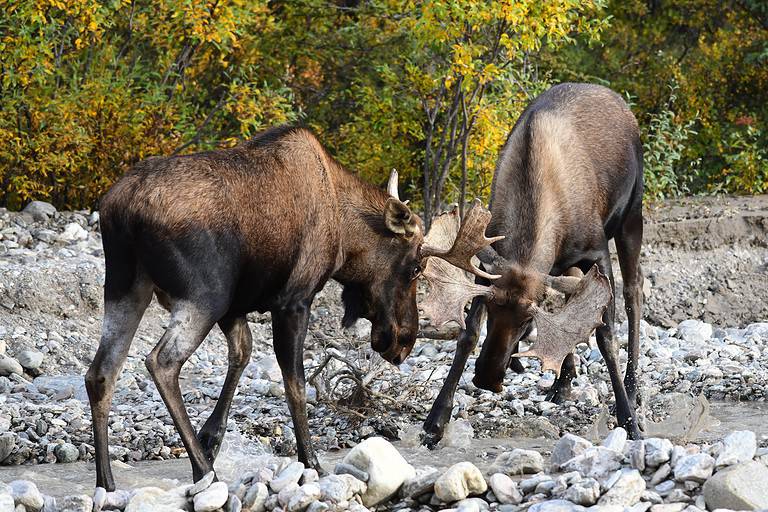
In the event that neither bull backs down, a fight ensues. This quick but intense fight always includes the locking of horns and clashing of hooves. The fight might last only minutes, but it usually leaves one elk either injured or exhausted. At that point, the winner walks away with the harem. Unfortunately, this also leaves the losing elk vulnerable to other attacks, decreasing his chance to find a mate, even after all the effort.
Each Harem Can Reach Up to 30 Females
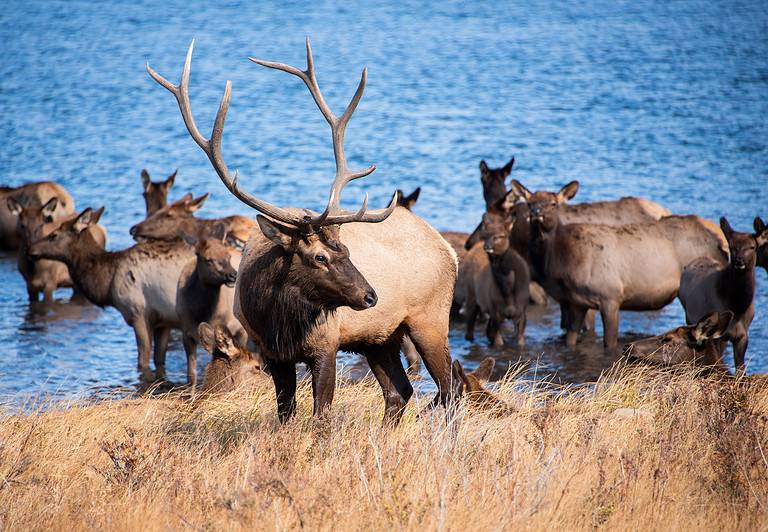
Bulls are not often territorial, but they do defend their harems. By the end of the rutting season, males may have up to 30 cows in their reproductive herd. These harems are gathered and protected by a dominant bull, who attempts to keep as many females as possible. Within his group, the bull with the greatest strength and stamina often maintains the largest harem during the rut.
Before rutting season begins, a bull goes from cow to cow, using his extraordinary sense of smell to determine if she’s ready to mate. Similar to males, females also have pheromones in their urine. This signals to a bull that a female is in estrus, or ready to reproduce. From this point on, bulls spend the next two months defending, protecting, and guarding their harem while mating.
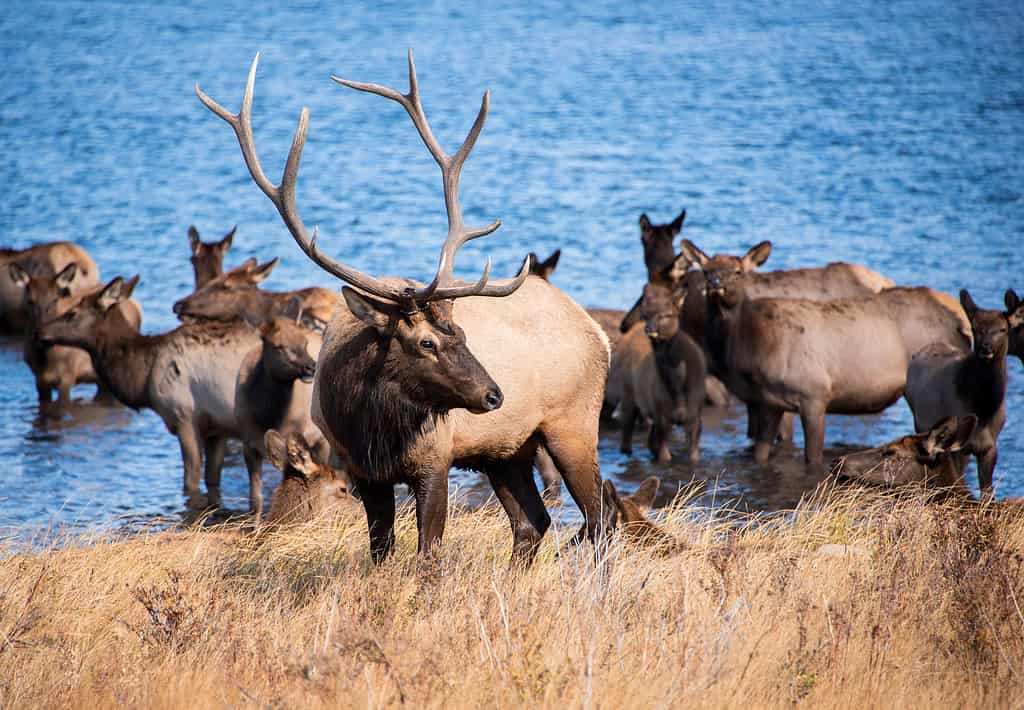
During rutting season, elks stand guard over their harems.
©Georgia Evans/ via Getty Images
As a result, bulls become exhausted by the end of October. The bulls with the largest harem are victorious in the sense that they have the best chance at mating. However, they also walk away with the lowest energy reserves, as many lose weight due to physical activity and stress. Throughout the winter, some struggle to survive, despite how successful they were during the rutting season. The trade-off is Mother Nature’s way of ensuring balance so that the species can survive.