
Quick Take
- A babirusa's tusks can grow long enough to curl back and pierce its own skull, though males never use them to fight. See the tusk details →
- This barrel-shaped animal looks like it could barely waddle, but its actual top speed will surprise you. Explore the anatomy →
- Rana's birth at Chester Zoo is cuter than it sounds, though it is also far more urgent than it looks. Find out why it matters →
- Babirusas are classified as pigs, but their insides tell a very different story. Discover their ancient history →
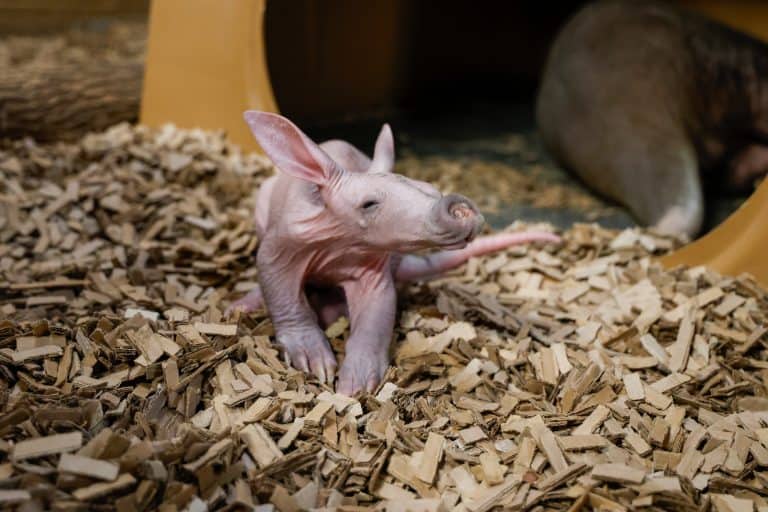
Chester Zoo’s newest addition may look almost like a grapefruit on legs, but this cute creature is actually a tiny babirusa piglet. Born to 11-year-old mother Matano, Rana’s arrival is a big deal, as babirusas are one of the world’s rarest wild pig species.
What Is a Babirusa?
The babirusa — whose name means “pig-deer” in Malay — is a unique member of the pig family. Standing about 2 feet tall and 3 feet long, these barrel-shaped animals weigh up to 220 pounds and have dull gray or brownish, nearly hairless skin. Newborn piglets are born with a faint ginger fuzz that gradually fades as they mature.
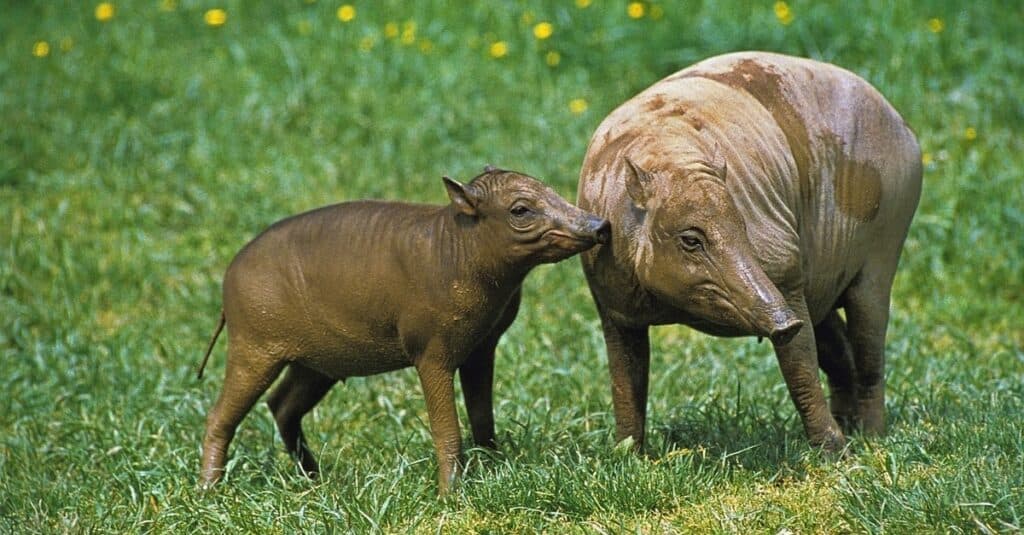
Rana is the fifth piglet that Matano has had at Chester Zoo.
©slowmotiongli/Shutterstock.com
Despite their bulky look, babirusas are surprisingly agile. Their long, slender legs allow them to run up to 30 mph, as well as swim, dig, and navigate tough terrain. Babirusas also have some rather unusual anatomy. Unlike other wild pigs, they lack a thick rostral bone, making their snouts too weak to root into hard soil. They also have a specialized, two-chambered stomach more similar to that of a sheep or a cow than typical pigs.
Those Incredible Tusks
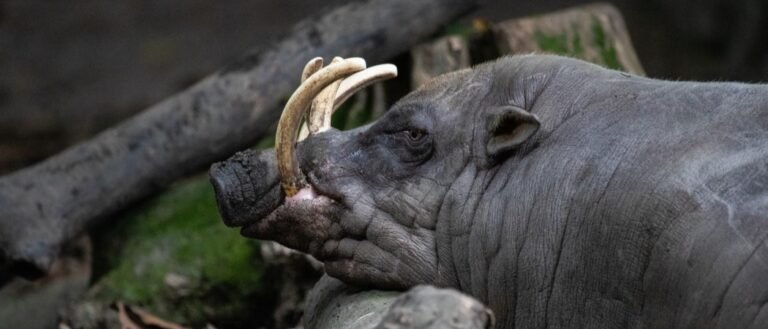
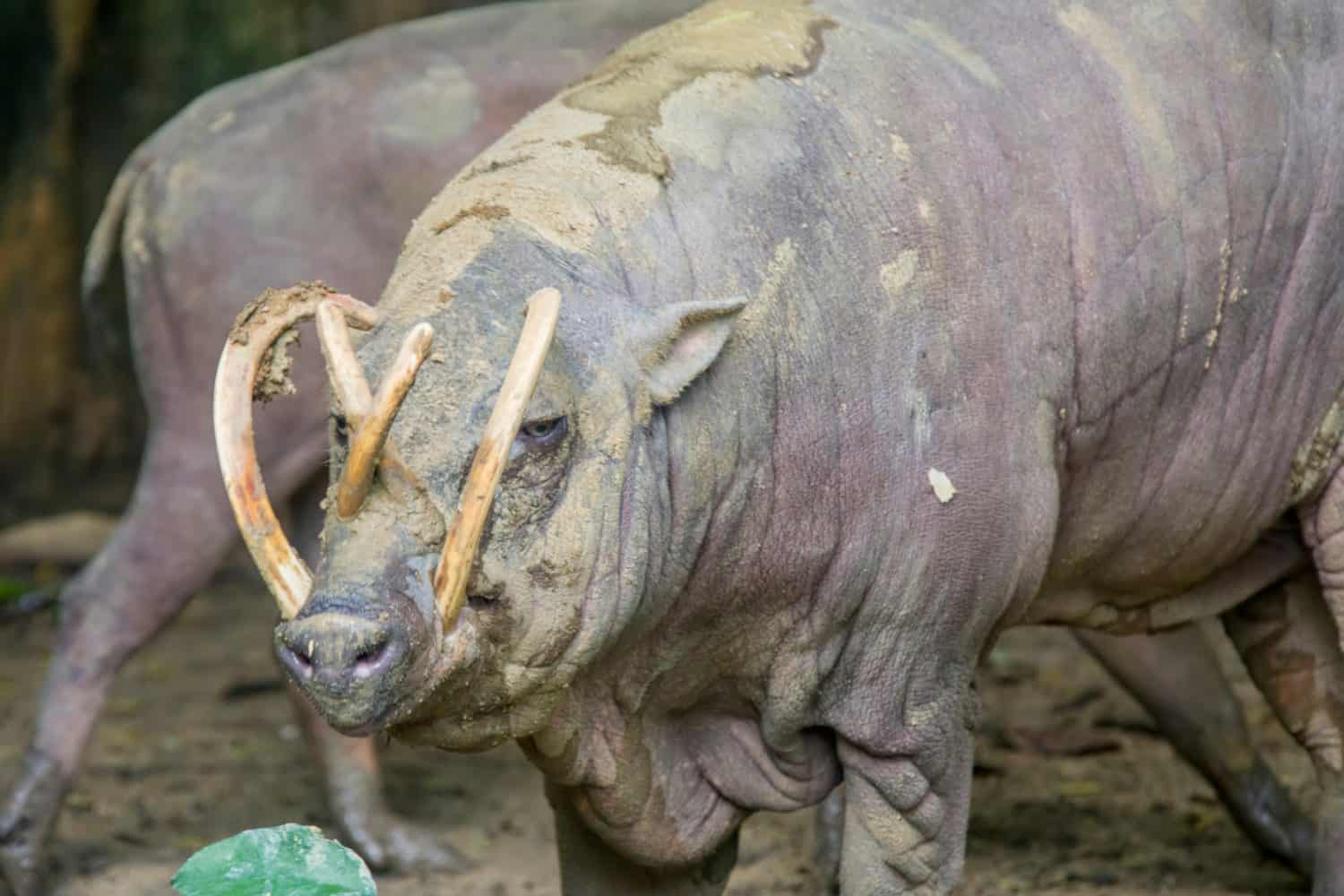
Babirusas are best known for their striking canine teeth. While both sexes have lower tusks, males grow extraordinary upper tusks that erupt directly through the skin of their snouts and curve backward toward their foreheads. These tusks grow continuously up to 12 inches long. If they don’t wear down or break, they can eventually curl far enough to pierce the male’s skull.
Despite their intimidating look, the tusks aren’t used as weapons. When males fight, they rise onto their hind legs and “box” using their front hooves. Researchers believe the upper tusks serve as a display of genetic fitness or act as a shield to protect the eyes and face during boxing matches.
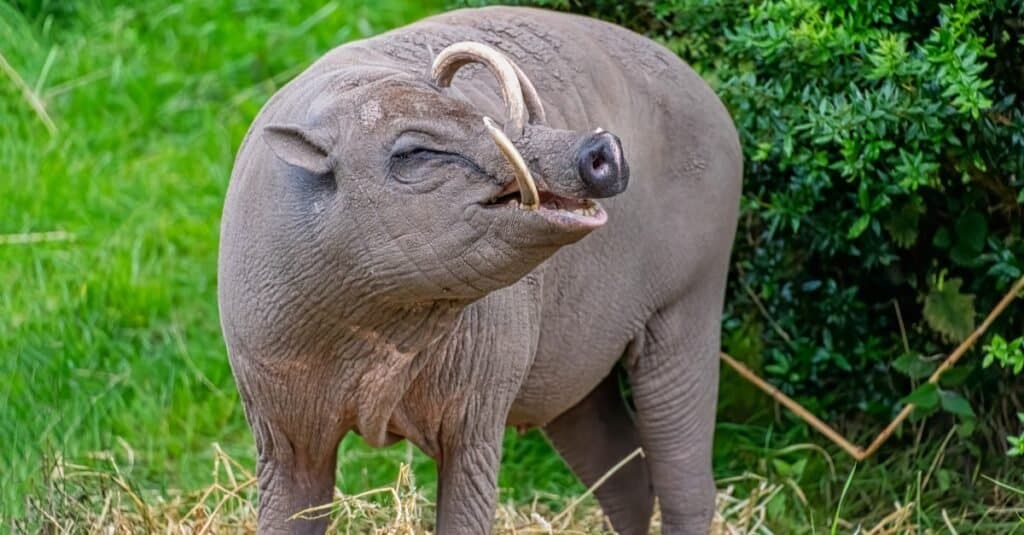
Babirusas can run up to 30 miles per hour.
©Craig Russell/Shutterstock.com
Where Do Babirusas Live?
Babirusas are found exclusively in the rainforest swamps and wetlands of four Indonesian islands: Sulawesi, Togian, Sula, and Buru. As forest omnivores, they feed on leaves, fruits, berries, nuts, insects, fish, and small mammals. Females and their young live in small herds of up to eight, while adult males are typically solitary or form small bachelor groups.
These ancient animals may have diverged from other pigs 10 to 19 million years ago. Their evolutionary history is even reflected in Indonesian cave art that dates back 35,000 years.
Why Rana’s Birth Matters
Despite their ancient lineage, babirusas face an increasingly uncertain future. Fewer than 10,000 individuals remain in the wild, threatened by illegal hunting, logging-driven habitat loss, and African swine fever. Currently classified as Vulnerable on the IUCN Red List, the species is expected to soon be reclassified as Critically Endangered.
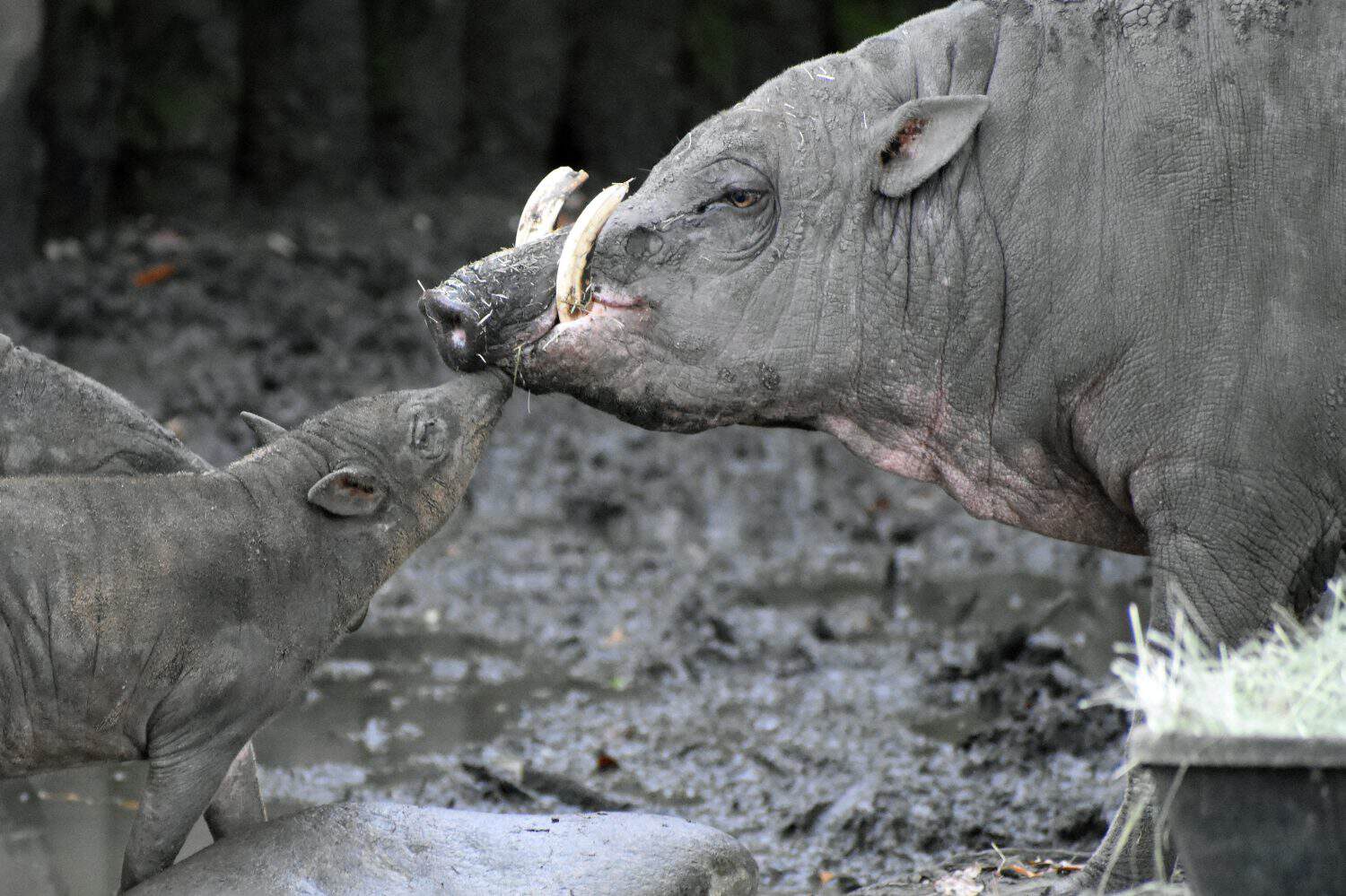
Newborn babirusas weigh 11 to 32 ounces, while adults can weigh up to 220 pounds.
©KillNFuel/Shutterstock.com
Recovery is also difficult because babirusas reproduce slowly. Females give birth to only one or two piglets at a time after a 155- to 158-day gestation period. This makes each birth important to the species. Rana’s arrival at Chester Zoo is not only a welcome addition to the zoo’s babirusa family, but also an important success for the Action Indonesia Global Species Management Plan, which supports efforts to safeguard the remaining wild populations.