
Pigs are unique animals with distinctive characteristics. However, few male vs. female pig differences exist when the pigs are young. The term “pig” typically describes immature swine that are less than 180 pounds. Pigs grow into hogs, with the females being called gilts until they have their first litter of piglets. After the female gives birth, they are called sows. The males are called boars unless they have been castrated. A castrated male is a barrow. But aside from the obvious anatomical differences, how do male and female pigs differ? Keep reading to learn the factors that distinguish male vs. female pigs.
1. Size
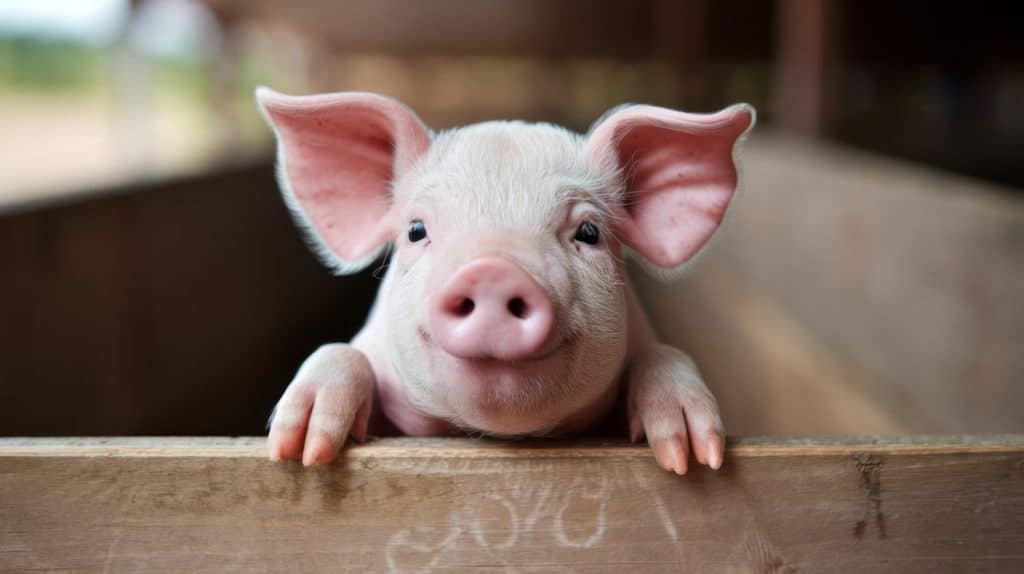
Male pigs, both wild and domestic, tend to be larger and heavier than females.
©dewa syah putra/Shutterstock.com
Female pigs are normally smaller and weigh less than male pigs, although these differences are much smaller in domestic pigs than in wild pigs due to human intervention. However, even at birth, male piglets tend to be slightly heavier, averaging 3.3 pounds compared to 3.08 pounds for females. There are even some indications that female fetuses grow more slowly than their male counterparts, possibly due to competition in the uterus.
The weight differences become more obvious as the pigs mature, as males typically have higher daily weight gains than females. Males can reach weights of over 500 pounds, while females generally weigh from 300-500 pounds. However, weight differences can vary by breed. Wild boars in the southeastern U.S. were found to weigh an average of 220 pounds, while the females weighed an average of 155 pounds.
2. Anatomy
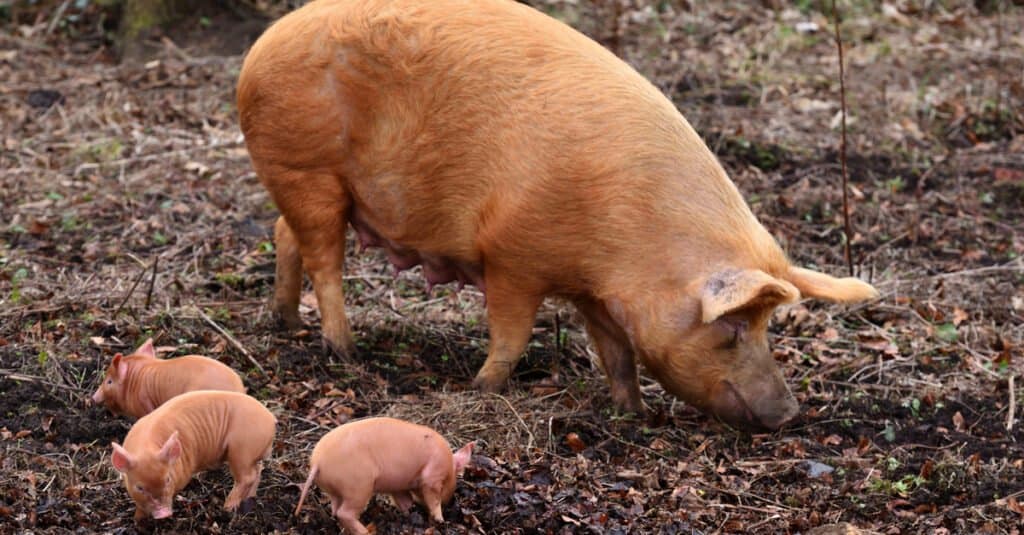
Female pigs have the urethral opening under the tail.
©Mike Russell/Shutterstock.com
Of course, some of the most obvious differences between male and female pigs are anatomical differences. For example, in females, the urethral opening is located under the tail. So females will urinate behind them. This means their urogenital opening is closer to the anus.
Males have their urethral openings on their undersides. So males urinate beneath themselves, rather than behind like females. Their urogenital openings are therefore closer to where their umbilical cords were located.
3. Physical Characteristics
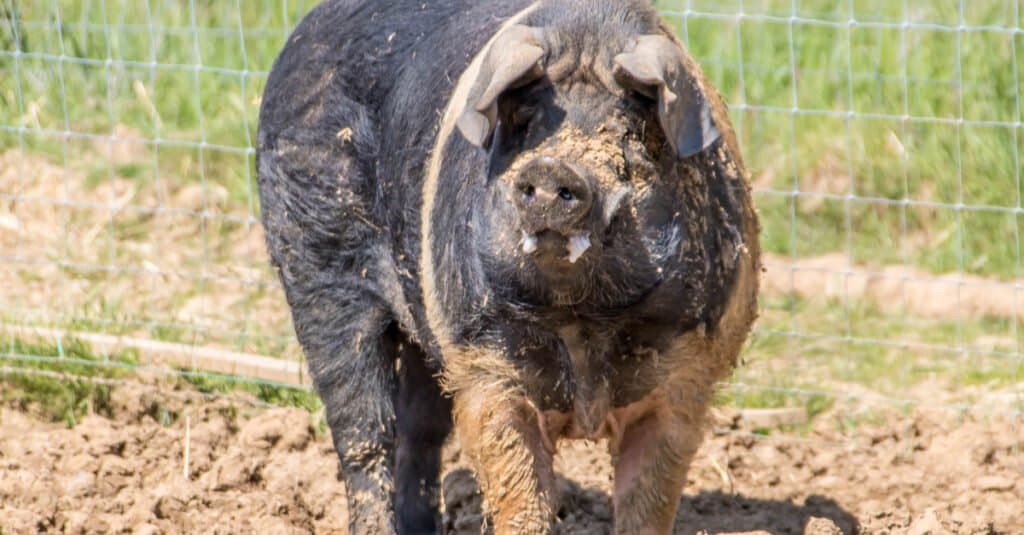
Intact male pigs are normally taller, longer, and more muscular than female pigs.
©Penny Hicks/Shutterstock.com
Male and female pigs start to show their physical differences by about 12 months of age. By 12 months old, the males tend to be taller, longer, and more muscular than the females of the litter. However, female pigs have longer backbones. Female pigs also have shorter legs than the males, which aids in the mating process.
At two to three years, pigs may also begin to grow tusks. Both males and females may grow tusks, but the tusks of males are longer, thicker, and more pronounced than those of females. Both males and females also have nipples, but some studies have shown male pigs tend to have more nipples than females.
4. Temperament
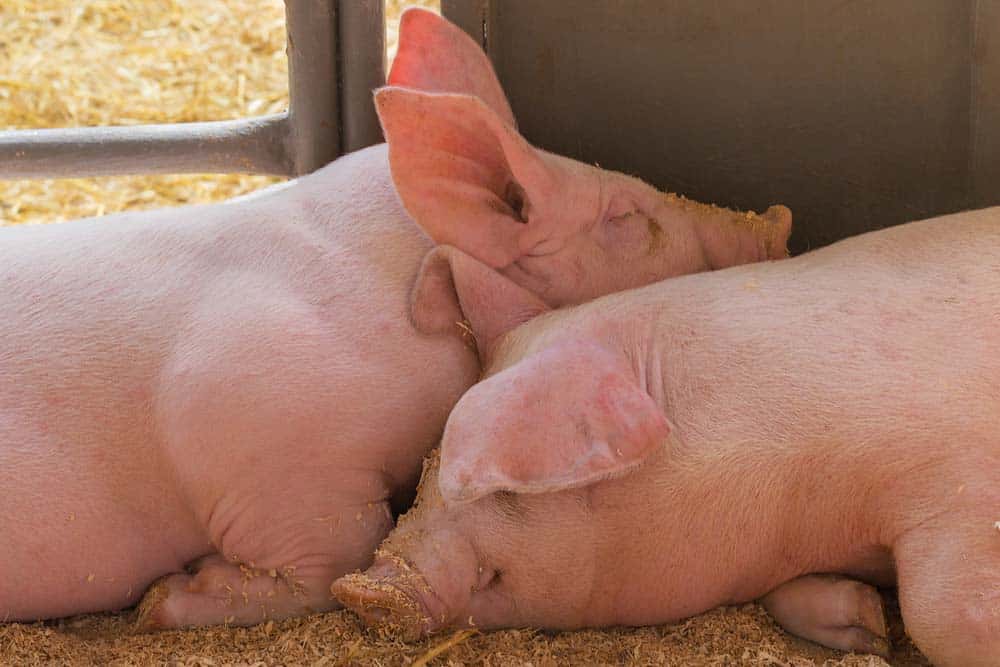
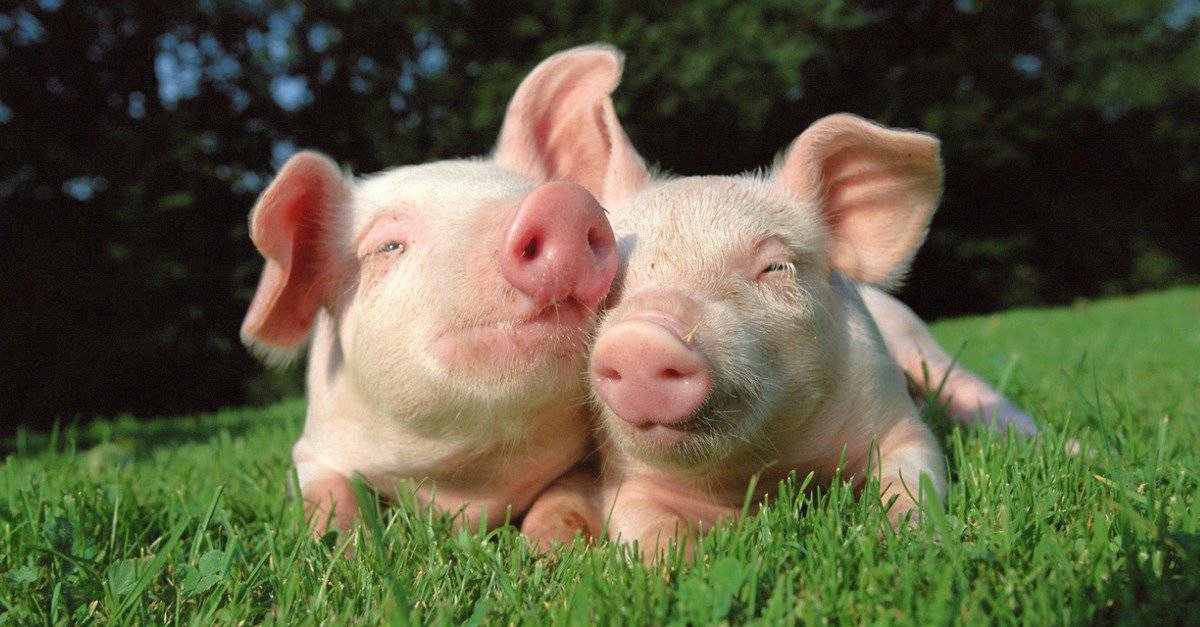
Female pigs are more social and will snuggle with other pigs.
©YRABOTA/Shutterstock.com
Males are more aggressive and unpredictable than females. Although they are more likely to engage in ritualistic displays before engaging in fights, their fights are invariably more damaging and result in more injuries. Males are also less social. They may follow the herd but often remain at a distance from the other animals. Wild male pigs typically leave the herd to live alone or in bachelor groups.
Female pigs are generally more docile than males. However, they have been shown to attack sooner in a fight than males. Females also terminate aggressive encounters more quickly and with fewer injuries. Female pigs have been documented to enjoy being petted and snuggling close to other pigs. Females are also less destructive than males.
5. Roles
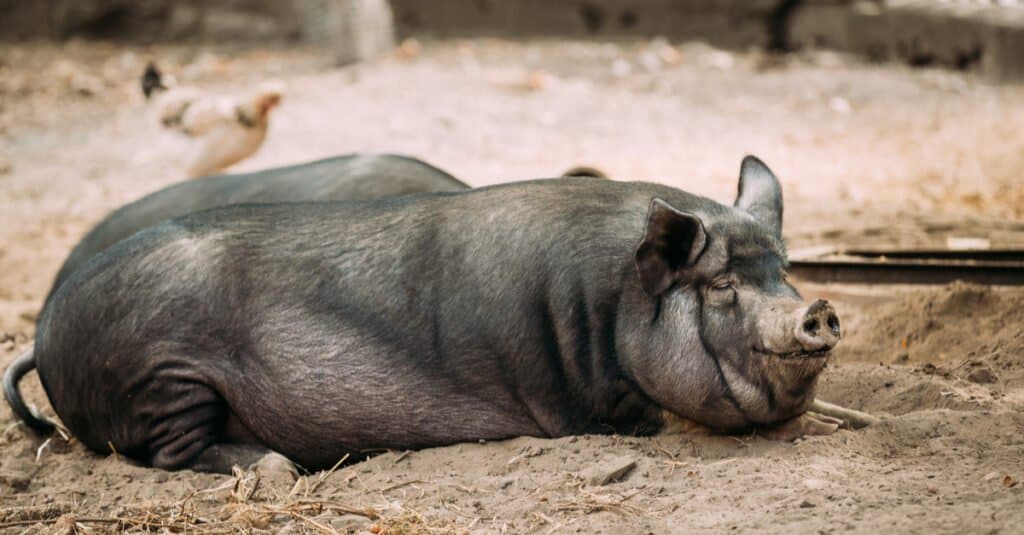
Intact male pigs are primarily used for breeding.
©Grisha Bruev/Shutterstock.com
In domestic operations, castrated male pigs are primarily raised for meat. After a boar reaches puberty, he develops an unpleasant odor due to hormone production, which gives the meat a bad flavor. As a result, intact males are rarely used for meat. Intact males are used for breeding.
Females are generally used for breeding, and are highly valued for their ability to produce more piglets. Females that will not be bred may be raised for meat. Pig social structures are typically matriarchal, even in domestic swine, so female pigs may also be valued for their abilities to form and maintain stable herds.