
Quick Take
- Cuttlefish passed a self-control test designed for children, and their performance forced scientists to rethink which animals belong in the same cognitive league as chimps. See the cuttlefish study →
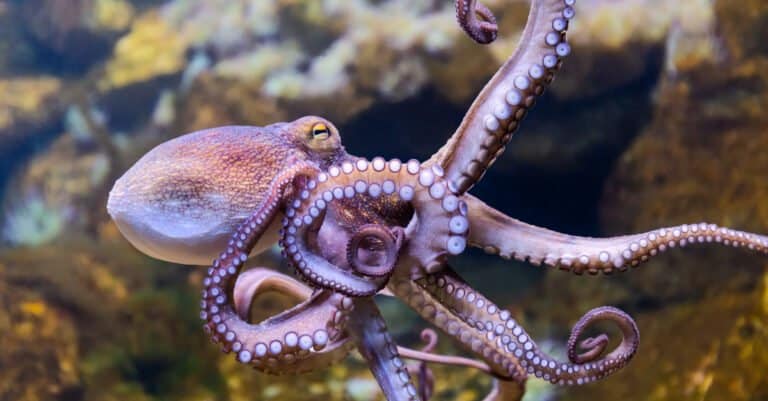
- Two-thirds of an octopus's brain cells aren't in its brain at all, a strange architectural fact that explains abilities still baffling to researchers. Explore the alien neurology →
- Octopus farming has quietly become a crisis, and the reason it cannot scale has nothing to do with logistics or cost. Why farming fails them →
- A scientist's cuttlefish learned to recognize her personally, and what they do when she ignores them reveals just how wrong our assumptions about invertebrate awareness have been. Meet Schnell's cuttlefish →
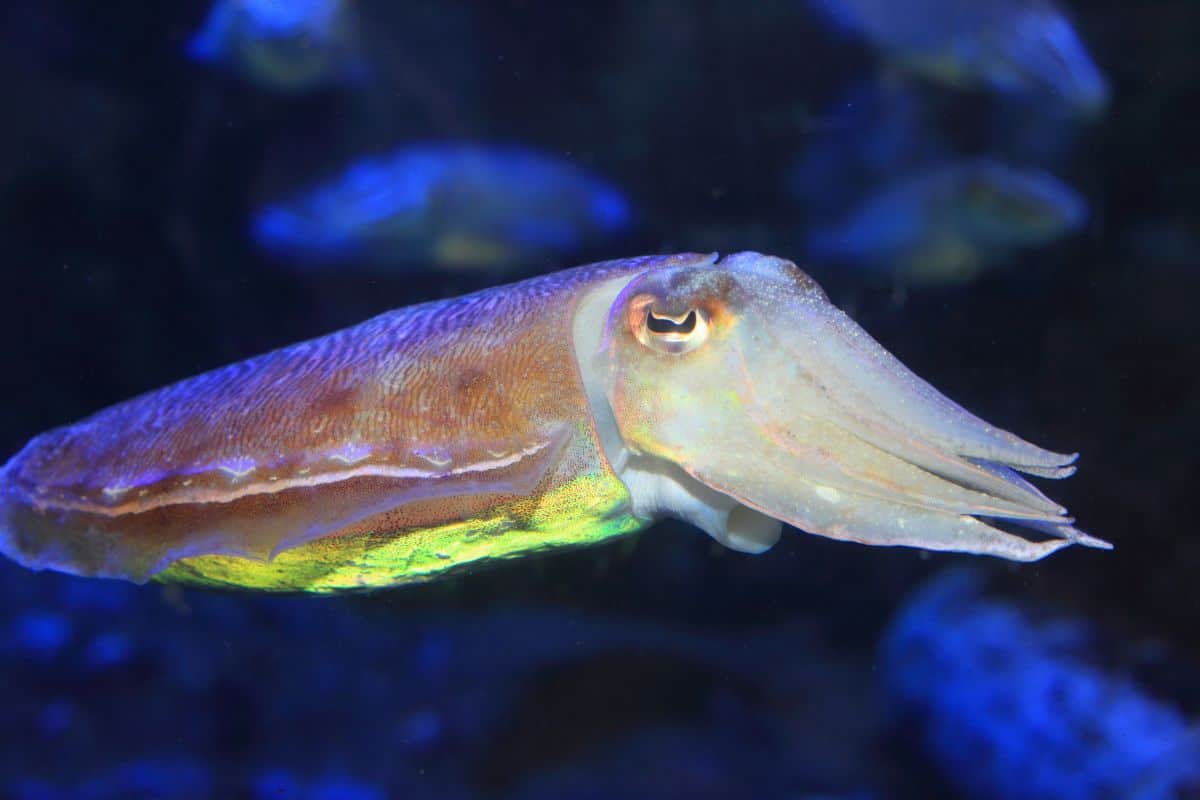
When marine biologist Alex Schnell walks into her lab, her cuttlefish come up to meet her. They bob their heads out of the water to greet her, she told National Geographic. If she takes too long to respond, they squirt water at her.
Schnell is a comparative psychologist and National Geographic Explorer who has spent her career testing what cephalopods can do. Her account is an observation from years of daily contact, not a formal experiment. Still, it fits with what controlled studies have shown about these animals.
What Cuttlefish Have Proven in the Lab
Schnell’s best-known study, run at the University of Cambridge with Roger Hanlon of the Marine Biological Laboratory in Woods Hole, adapted the “marshmallow test” used on young children. Six common cuttlefish could eat a piece of king prawn right away or wait for a live grass shrimp, which they prefer. The most patient waited up to 130 seconds. That is in the same range as chimpanzees, crows and parrots on comparable tests.
The study found a second result that surprised the researchers. The cuttlefish that learned fastest in a separate task were also the ones with the most self-control. It was the first time that link had been shown outside primates.
Other work has shown that cuttlefish remember what they ate, where and when, a kind of memory once thought to be limited to mammals and birds. Recognizing individual people is a separate question. Earlier aquarium research found that giant Pacific octopuses reacted differently to two people dressed identically: one who fed them and one who poked them with a bristly stick. A cuttlefish that waits at the glass for one familiar person, and squirts the slow ones, fits that pattern.
A New Way to Look Inside a Cuttlefish Brain
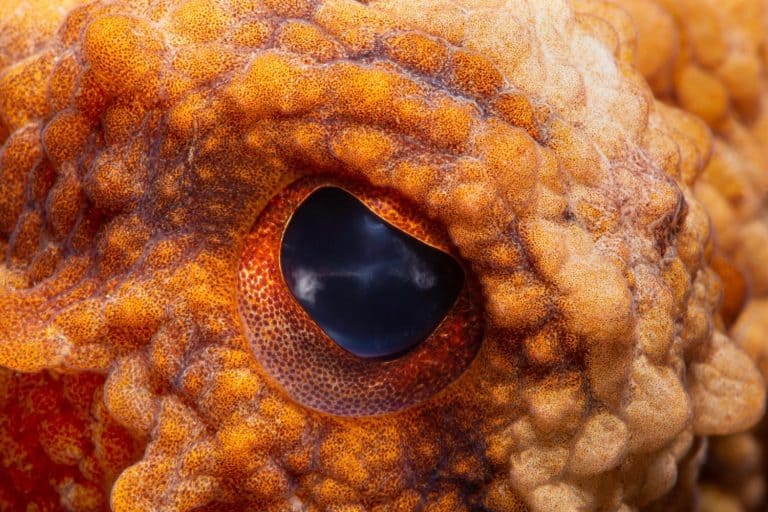
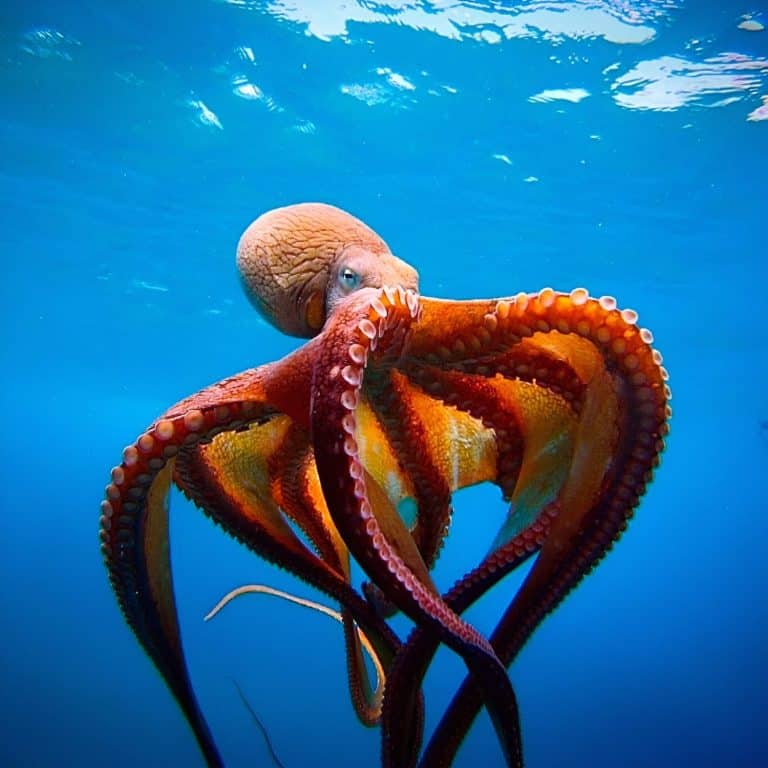
Studying these minds has always been hard. Cephalopod brains are built very differently from ours. In an octopus, about two-thirds of the nerve cells sit in the arms rather than the head, and the suckers can taste what they touch.
That may be starting to change. This fall, Columbia University neuroscientist Tessa Montague and colleagues posted a preprint describing the first transgenic cephalopod, a cuttlefish carrying an added gene that makes it glow. Reports on the work say it took more than 4,000 embryo injections over six years. The study has not yet been peer-reviewed.
The aim is to build cuttlefish whose neurons light up as they fire. That would let scientists watch the brain at work while the animal changes color, hunts or, perhaps one day, reacts to a familiar face at the tank.
Why It Matters Beyond the Lab
Schnell’s work has had effects outside science. She was part of a London School of Economics team whose review gathered evidence that cephalopods can feel pain, distress and fear. That review fed into the United Kingdom’s decision to recognize octopuses, squid and cuttlefish, along with crabs and lobsters, as sentient under animal welfare law.
The same evidence has shaped the fight over octopus farming. In July, Spanish seafood company Nueva Pescanova withdrew its plan for the world’s first commercial octopus farm in Gran Canaria. The farm would have held about one million animals, and the decision ended a five-year campaign against it. Critics had argued that solitary, intelligent animals kept in crowded tanks would fight and suffer.
The wild picture is less clear. No cephalopod species is listed as endangered, but Schnell has warned that this may reflect a lack of population data rather than real security.
For Schnell, the greeting at the tank captures the point of her research. An animal with three hearts, blue blood and a brain wrapped around its throat can still tell who walks into the room, and it lets you know when you are late.