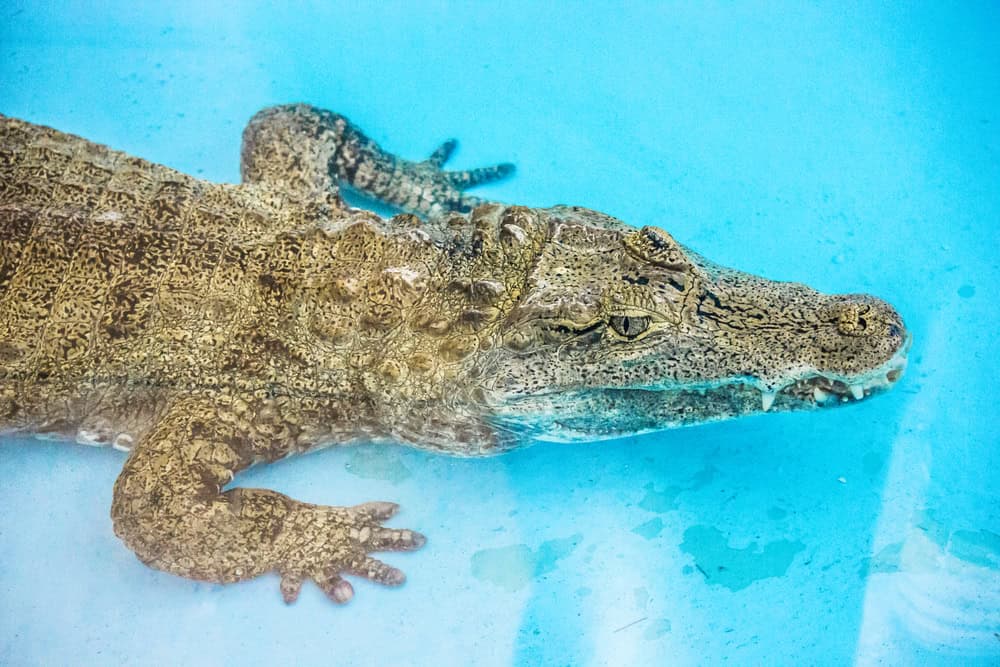

A Florida family had an unexpected guest making the most of their pool this summer. A small American alligator was taking a dip – at least until the cops turned up. In this bodycam footage, you can see the cop from St Johns County Sheriff’s Office make an expert removal of the gator. The officer then placed the reptile in the back seat of his car and even fastened the seatbelt! The alligator was later relocated to a pond far from any residential area. Hopefully, it stayed there and did not return to anyone else’s pool.
What Attracts Gators to Pools?
This particular gator was trespassing at a home in St. Augustine, just south of Jacksonville, Florida. The officer had clearly handled gators before. He speaks calmly to the stressed animal and says, “Oh, I got you and you’re fine. I know you’re super mad.”
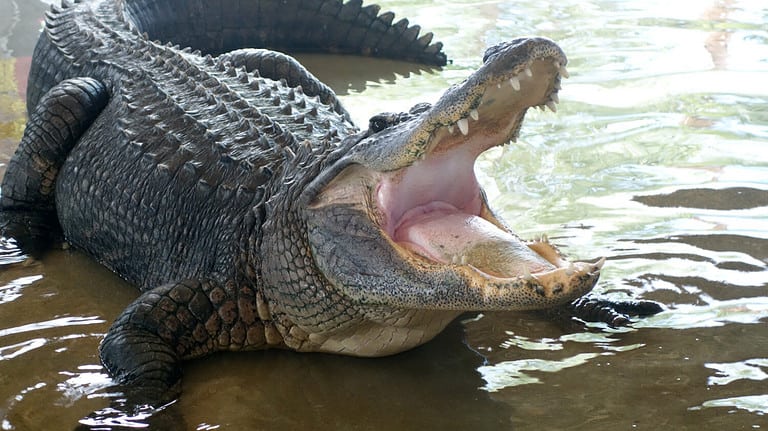
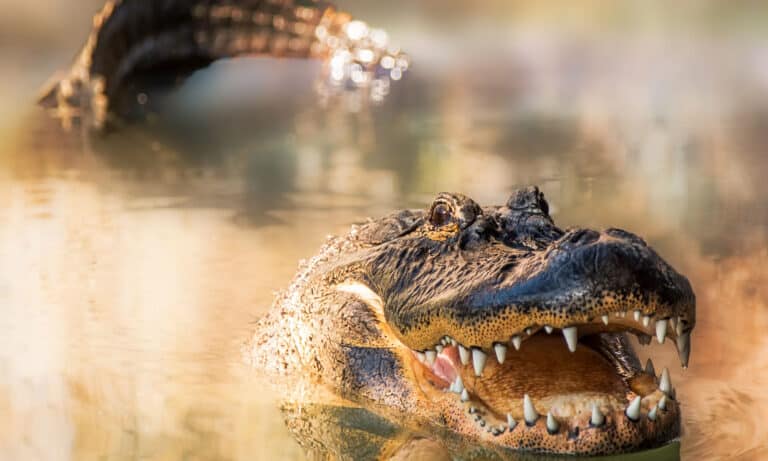
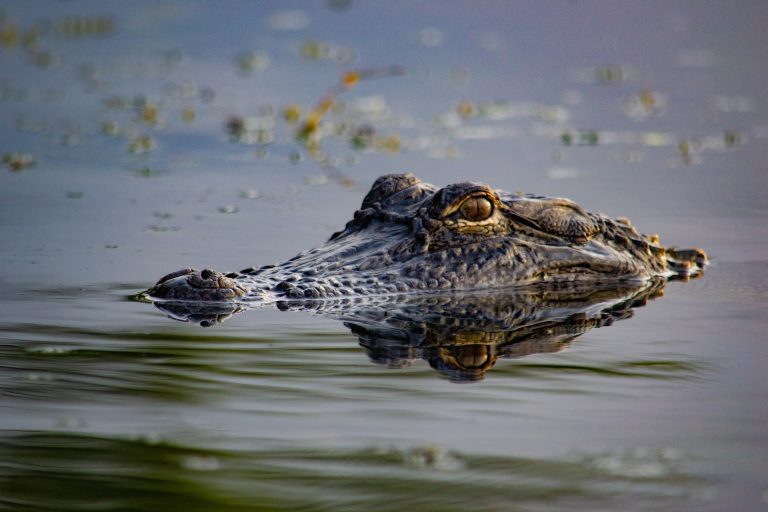
Finding gators in a swimming pool in Florida is not unusual. Every year, there are several reports of gators being hauled out of pools. They prefer freshwater lakes and slow-moving rivers, so a swimming pool can seem like a suitable alternative.
Alligators are ectothermic. This means that they rely on the sun to warm them up and on cool water to cool them down when they get too hot. They are dormant through most of the winter and active during the summer. During this time, they may enter pools in search of a refreshing dip.
What to Do If You Encounter an Alligator
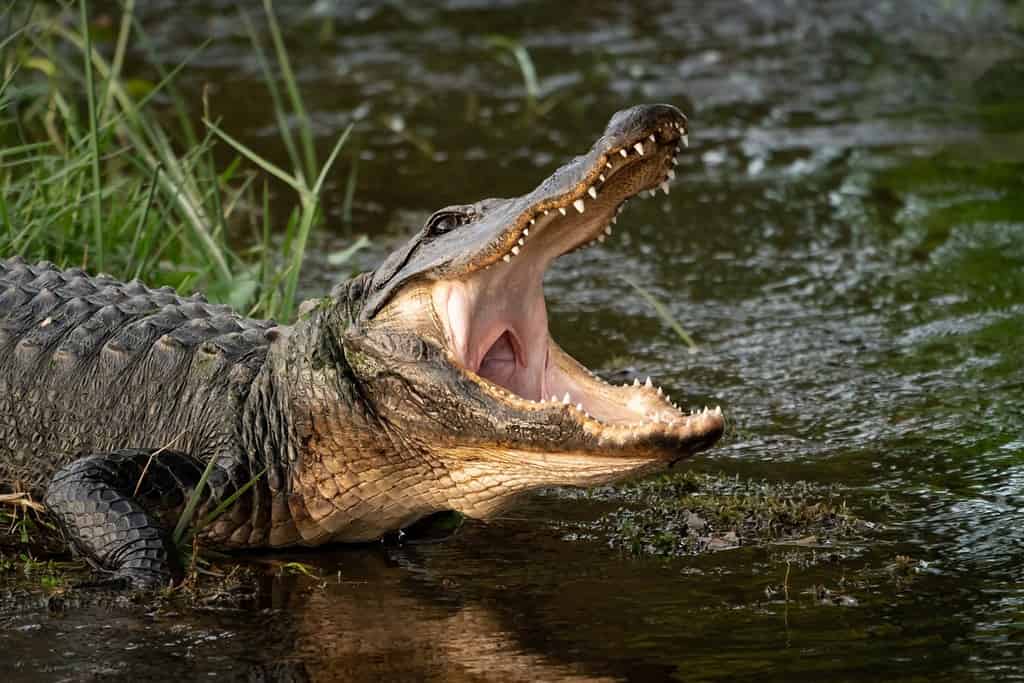
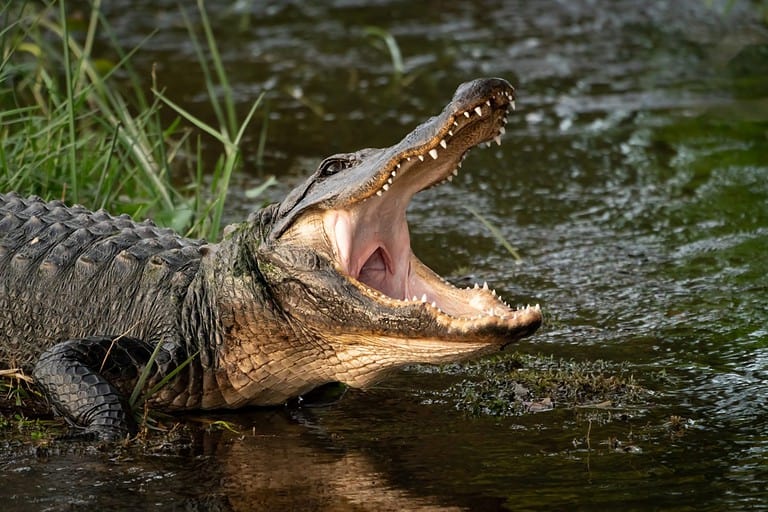
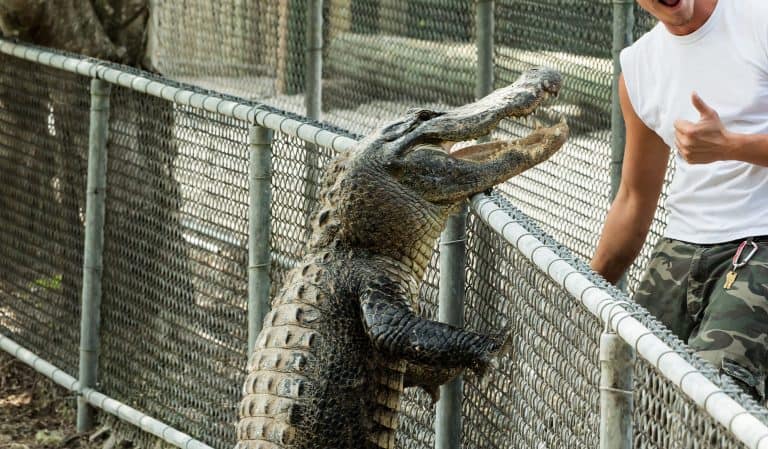
Large alligators are dangerous.
©Deborah Ferrin/Shutterstock.com
The individual in this report was a small gator, probably a juvenile. It was only three or four feet long. Many grow a lot bigger. Females rarely exceed 10 feet in length, but the Florida record for a male is 13 feet 10.5 inches! Alligators are opportunistic feeders and will eat whatever prey is most abundant and easiest to catch. Younger alligators feed mainly on insects, small fish, and amphibians. Adults feed on larger fish, snakes, birds, turtles, and small mammals.
If you see an alligator in Florida, you should contact the Nuisance Alligator Hotline. Generally, alligators under four feet long are not considered a major issue. However, if it is in a pool, it may be deemed to pose a threat to people, pets, or property and will be removed. Larger gators must be removed for public safety. According to the latest data provided by the Florida Fish and Wildlife Conservation Commission, there have been two recorded alligator bites on people in Florida in 2025. Tragically, one of these was fatal. To put this in context, there are an estimated 1.3 million alligators in Florida.