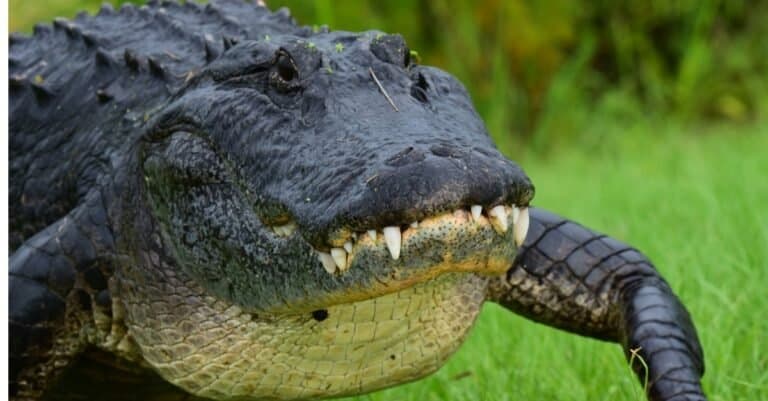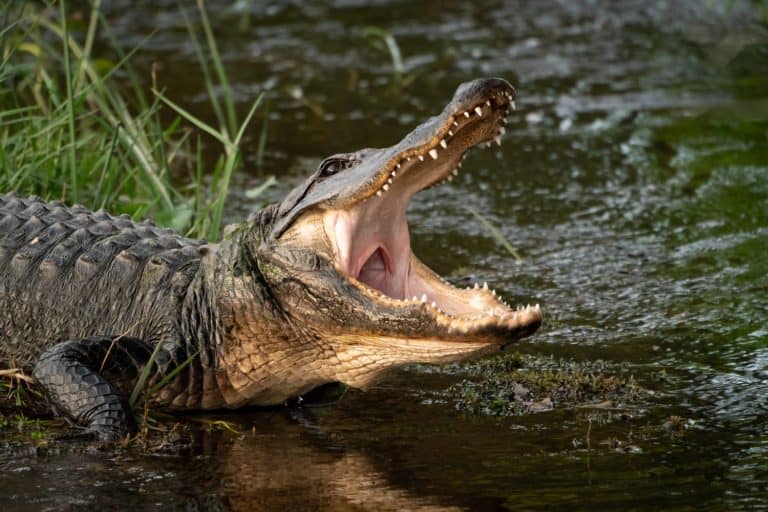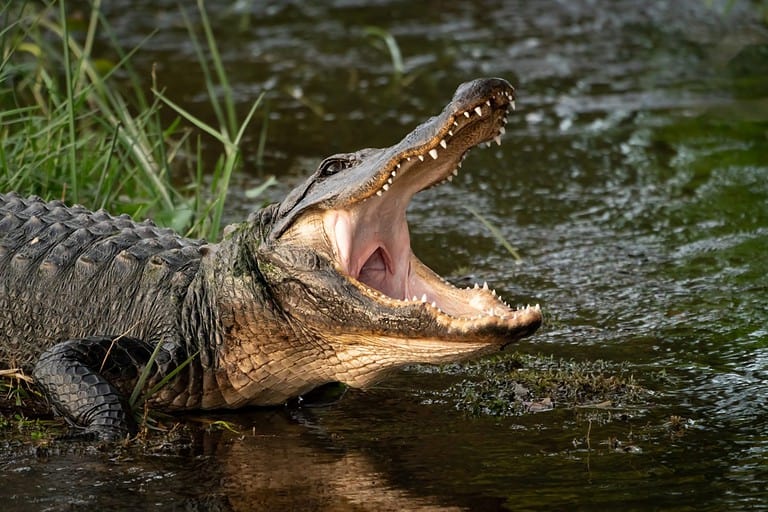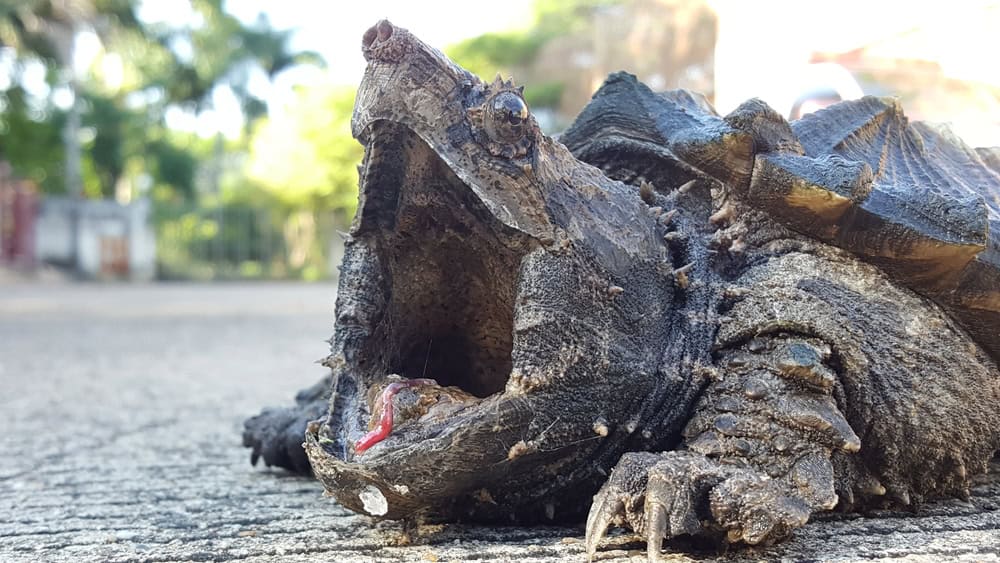

The alligator snapping turtle in this clip has everything he needs to go fishing. The bait is a part of his body, and his lightning-quick ‘snap’ is too fast for most prey to escape from. All he has to do is stay very still and wait. Watch the clip for yourself, then read on to discover more about these incredible creatures.
All About Alligator Snapping Turtles
You can come across an alligator snapping turtle (Macrochelys temminckii) from northern Florida to southern Georgia and through the Gulf states into Texas. However, the most stable populations are found where this footage was captured – large rivers such as the Mississippi River. They prefer deeper waters in large rivers, lakes, streams, and canals.
These snapping turtles look like a throwback from a bygone age – with dinosaur-like, primitive features. They are the largest freshwater turtles on the planet (they can be 39 inches long) with large heads and powerful jaws. They also have three large, pronounced ridges that run from the front to the back of their carapace. In the wild, they can live up to 45 years, though the average lifespan is closer to 23–26 years. Captive individuals have been known to live up to 70 or even 80 years.
Formidable Hunters
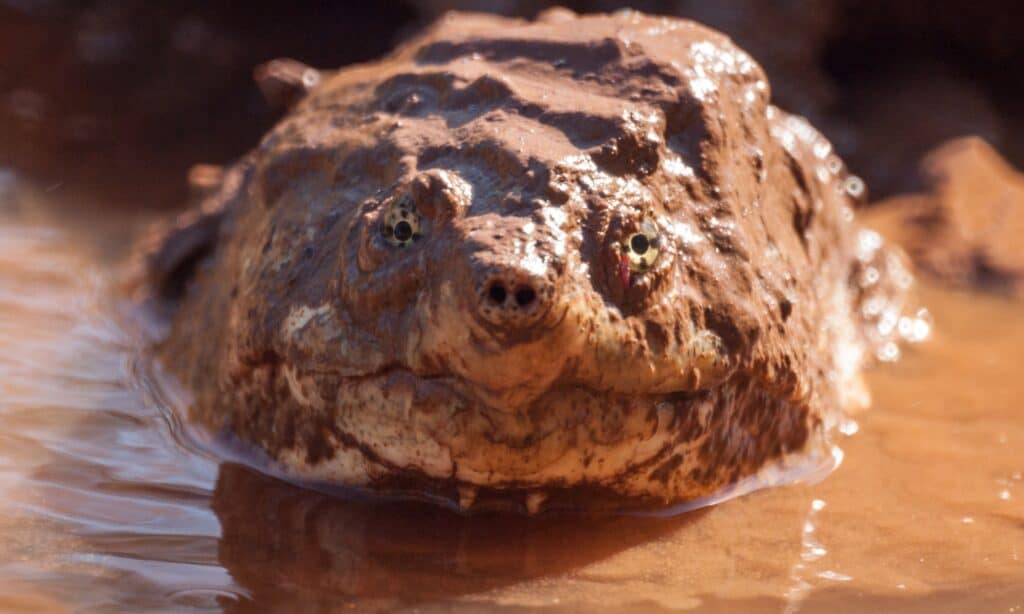
Alligator snapping turtles stay as still as a rock when hunting.
©iStock.com/thomasmales
These are solitary creatures who spend most of their time on the riverbed alone. They can stay under the water for around 50 minutes at a time and only surface for air. Under the water, they remain completely motionless and look like another rock, as you see in the clip. Sometimes, algae even covers their backs!
From this position, they use chemosensory cues to detect prey. They pump their throats to move water in and out of their mouths, allowing them to detect chemicals released by fish. Their hunting method is to stay still in the murky water and slowly open their mouth. This reveals the small, pink, worm-like lure inside. To a passing fish, this looks just like the real thing. Once the prey is within striking distance, the turtle snaps its jaws shut. The unfortunate fish is either swallowed whole or impaled by the turtle’s sharp jaws.
Most of their diet consists of fish, but they have also been recorded eating frogs, snails, worms, and even small rodents! They are also scavengers and will eat whatever meat is available to them. This includes opossums and raccoons that happen to have fallen into the water. In this way, they help to clean up the rivers and streams where they live.