
Quick Take
- Fred's bite force tops a grey wolf's, which is exactly why a simple nail trim turns into a full medical operation. See Fred's bite force in context →
- Wild alligator snapping turtles never need a pedicure, but why do captive ones absolutely require one? See why captive turtles need trims →
- A nail trim gone wrong on one of these turtles doesn't just risk the keepers. It can seriously harm the turtle itself. See the risks of overgrown claws →
- Getting Fred ready for his pedicure required steps most people would associate with major surgery, not grooming. See the full sedation process →
It’s not every day that you see an alligator snapping turtle get a pedicure, so be sure to check out this extraordinary YouTube clip from Taronga Zoo in Sydney. It looks more like a medical procedure, but read on, and we’ll explain why all these precautions are necessary.
How Do You Give an Alligator Snapping Turtle a Pedi?
Giving a huge animal like an alligator snapping turtle a nail trim can be a dangerous experience for everyone involved. As the narrator in this clip explains, they have to take some precautions.
The pedicure client is called Fred, and he was booked in for what the zoo calls a ‘monster pedi’. This involved trimming all his nails with a mechanical file. Included in the turtle pedi package was a complete health check. Fred had blood samples taken, X-rays performed, and underwent an endoscopic exam (with a tube down his throat).
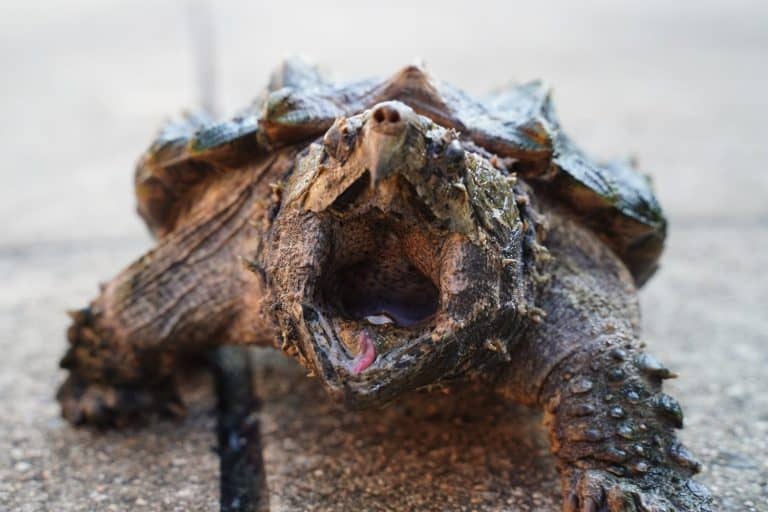
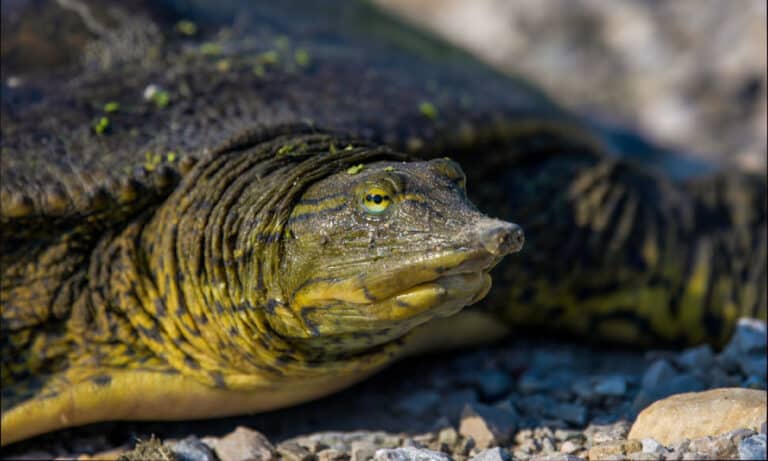
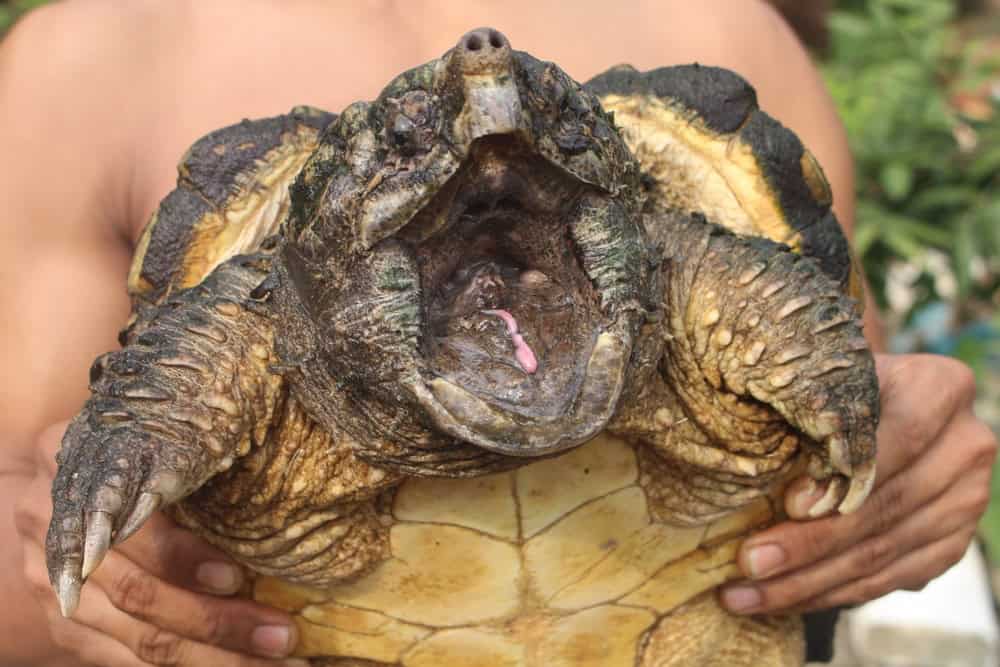
Alligator snapping turtles have a very strong bite.
©iStock.com/rustyfox
To protect all the people giving Fred his pedi, the turtle had to be sedated. Fred is a large animal, and bite force tests have revealed that these creatures can bite down with up to 1872 newtons of force. That’s greater than the bite force of a grey wolf!
First, a group of experts with experience handling these turtles safely positioned Fred and secured him with straps. Then, he was given an anesthetic so that the procedure could be carried out in a calm and controlled way. After recovering overnight, Fred returned to his habitat the next day.
Why Do Alligator Snapping Turtles Need Nail Trims?
Alligator snapping turtles have ‘snapper claws,’ which are long, strong, and continually growing. Turtles use their claws for climbing, digging, and swimming. Females in particular need them to climb up the steep river banks and excavate a chamber to lay their eggs.
In their natural habitats, their nails are worn down by friction as they climb over logs and dig into the deep, loose sand and gravel of the river bottom. In captivity, however, this does not happen. The claws can grow too long and curl over, causing damage to the limbs. Time for a monster pedi!