
Quick Take
- Yellow garden spiders do not pose a threat to humans.
- Female yellow garden spiders are significantly larger than males.
- The web of the yellow garden spider can have a 2-foot diameter.
Are yellow garden spiders poisonous or dangerous? Yellow garden spiders (Argiope aurantia), also known as writing spiders, are not poisonous or dangerous to humans. They are not aggressive and are more likely to retreat than fight. Yellow garden spiders are vital to maintaining a healthy garden environment, so they should be welcomed as natural pest control, protecting plants by consuming harmful insects like aphids, flies, mosquitoes, and grasshoppers without the need for chemical pesticides. Continue reading to discover more about this fascinating arachnid.
Do Yellow Garden Spiders Bite?
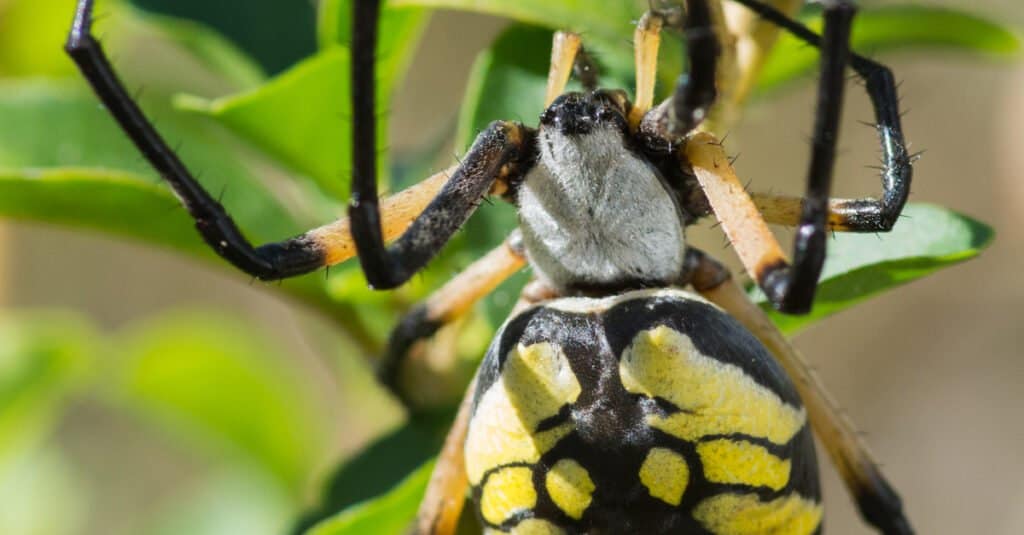
Yellow garden spiders only bite if provoked.
©Tom Franks/Shutterstock.com
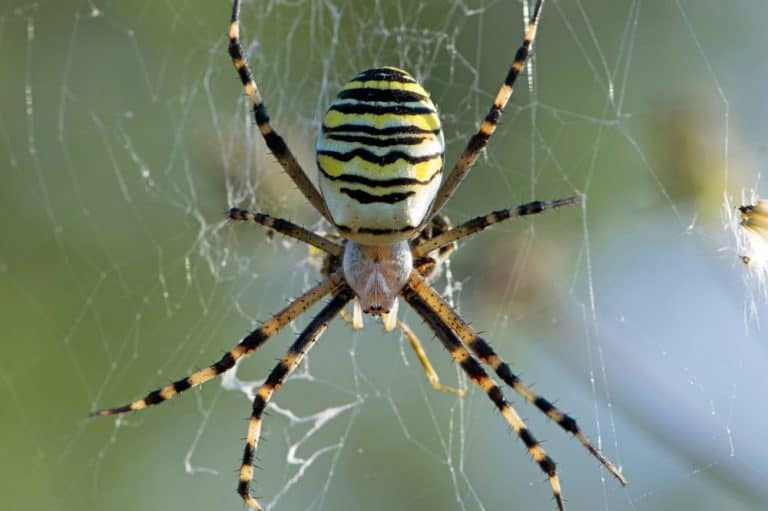
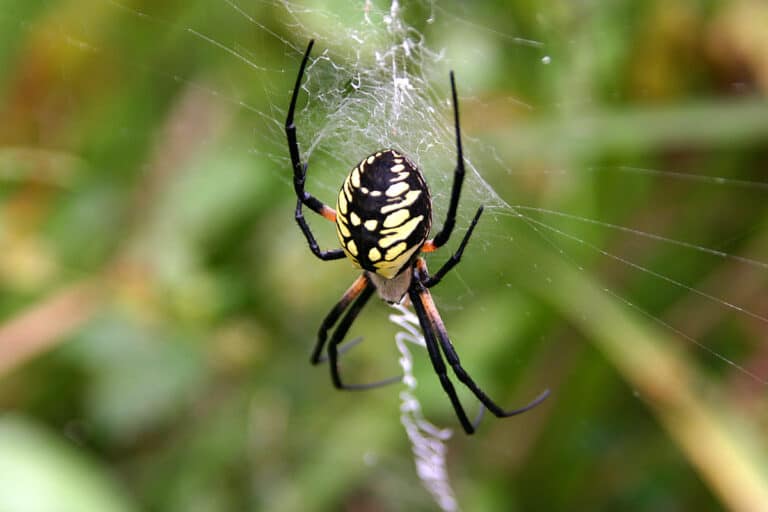
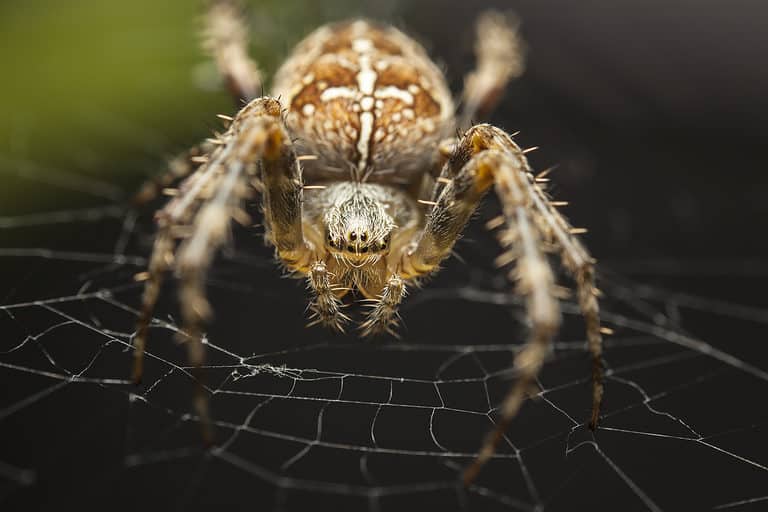
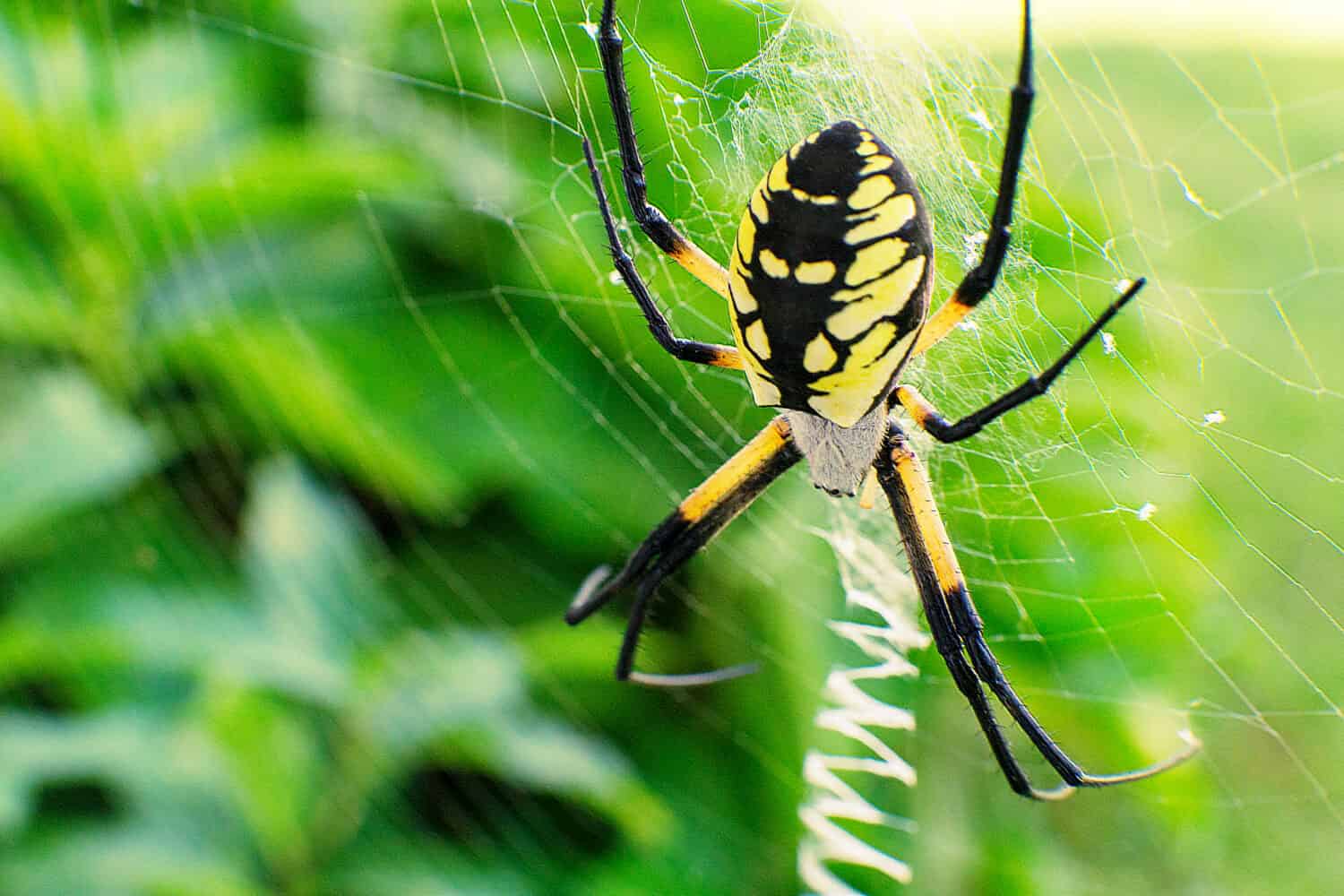
The yellow garden spider (Argiope aurantia) is a large, striking orb-weaver with a black abdomen featuring bright yellow or orange patches and a silver-haired head. Females are much larger than males, with bodies that measure 0.75 to over 1 inch long, and legspans of up to 4 inches. Male garden spiders are small and brown with 0.25-inch bodies and legspans that rarely exceed 1 inch.
Despite their intimidating size, yellow garden spiders do not pose a threat to humans. While they are venomous, their venom is used only to paralyze small prey such as flies and mosquitoes.
Their venom is not potent enough to harm a human. Although bites are rare, a yellow garden spider bite is similar to a mild bee sting and may cause minor pain, redness, or swelling.
Are Yellow Garden Spiders Poisonous?
Some animals are venomous, while others are poisonous. The primary difference between poisonous and venomous animals is how they deliver their toxins. Poisonous animals deliver toxins through ingestion, touch, or inhalation. Venomous animals convey toxins by actively injecting them into prey or predators through specialized apparatuses like fangs (snakes, spiders), stingers (scorpions, bees), or spines (fish). The yellow garden spider is venomous, but its neurotoxic venom is not strong enough to affect a healthy human.
Where are Yellow Garden Spiders Found?
The yellow garden spider is widely distributed across North America, ranging from Southern Canada through the contiguous United States to Mexico and Central America. They are most common in the Eastern United States and favor sunny, open areas like gardens and fields.
Nature’s Pest Control
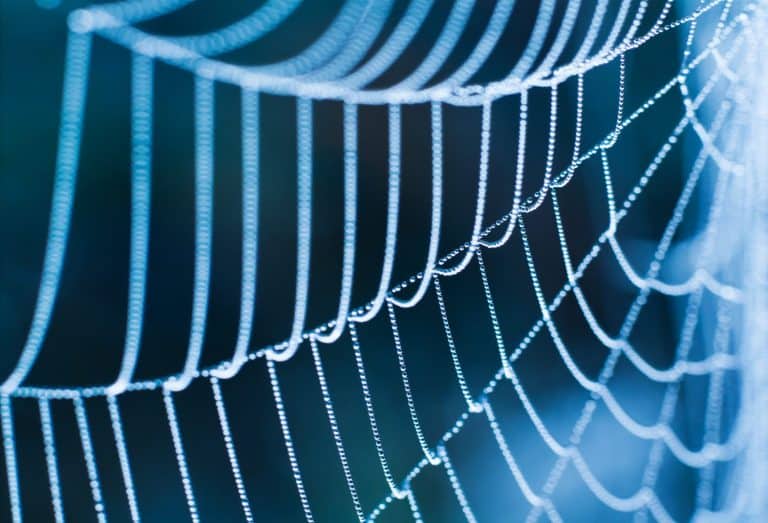
Yellow garden spiders are large, harmless orb-weavers that spin two-foot-wide circular webs featuring a signature vertical zig-zag, or stabilimentum. These spiders act as natural pest control by consuming mosquitoes, flies, aphids, and grasshoppers that get trapped in their webs.
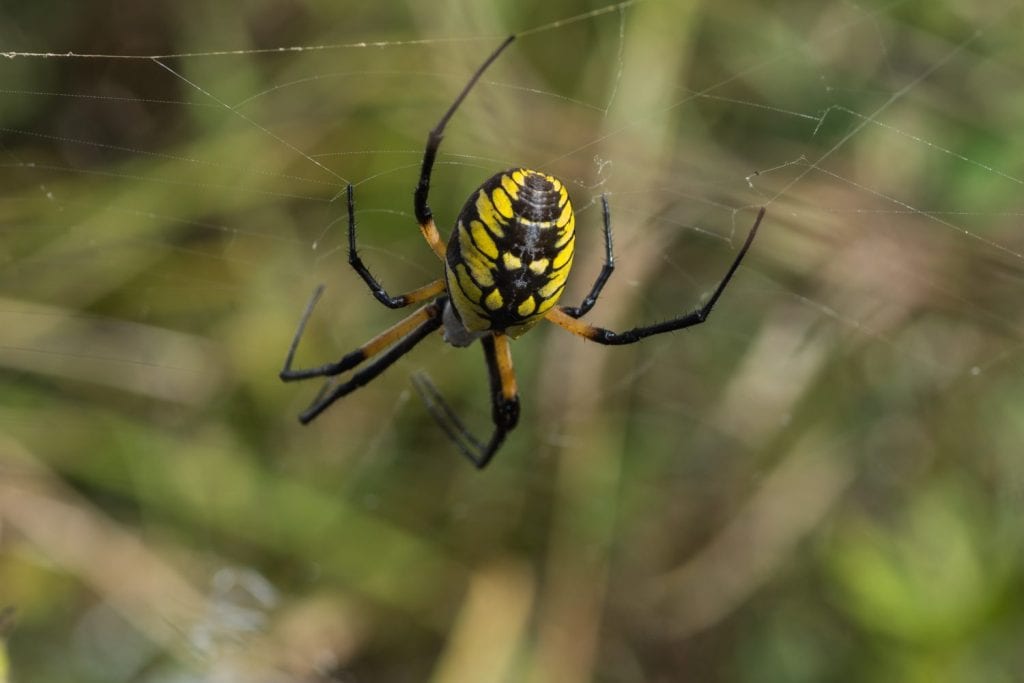
Yellow garden spiders are native to North and Central America.
©Tom Franks/Shutterstock.com
Research is ongoing regarding the purpose of the stabilimentum, the zig-zag pattern that runs through the center of the web. The most strongly supported theory is that the highly visible structure warns birds and large animals to avoid the web, which helps prevent destruction.