
Quick Take
- Those tiny leg hairs aren't just for show. They serve a dual sensory purpose most people would never guess. Discover the leg hair function →
- This spider has eight eyes and still can't see you, and what's actually going on with its vision is stranger than it sounds. Explore its unusual vision →
- Its fangs aren't always visible, and what they do when triggered is more dramatic than you'd expect from a garden spider. See how the fangs work →
- Those spikes on its body aren't random. There's a specific reason this spider is built the way it is. See its physical markings →
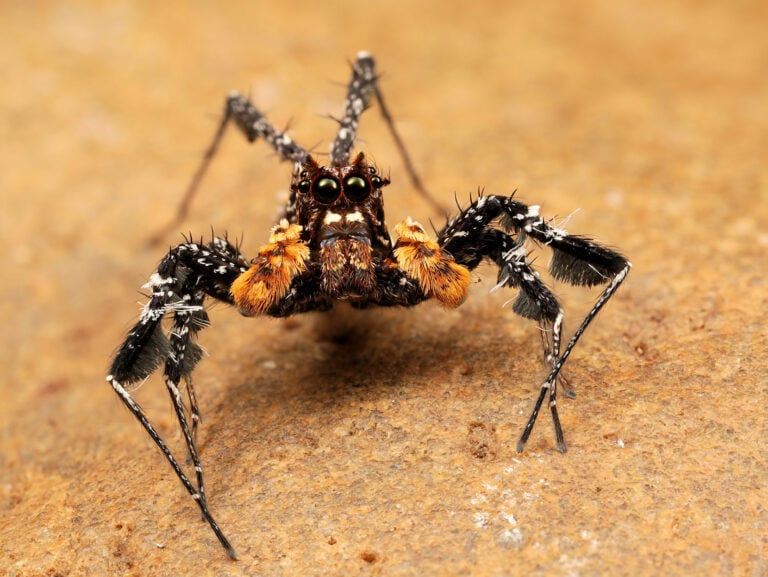
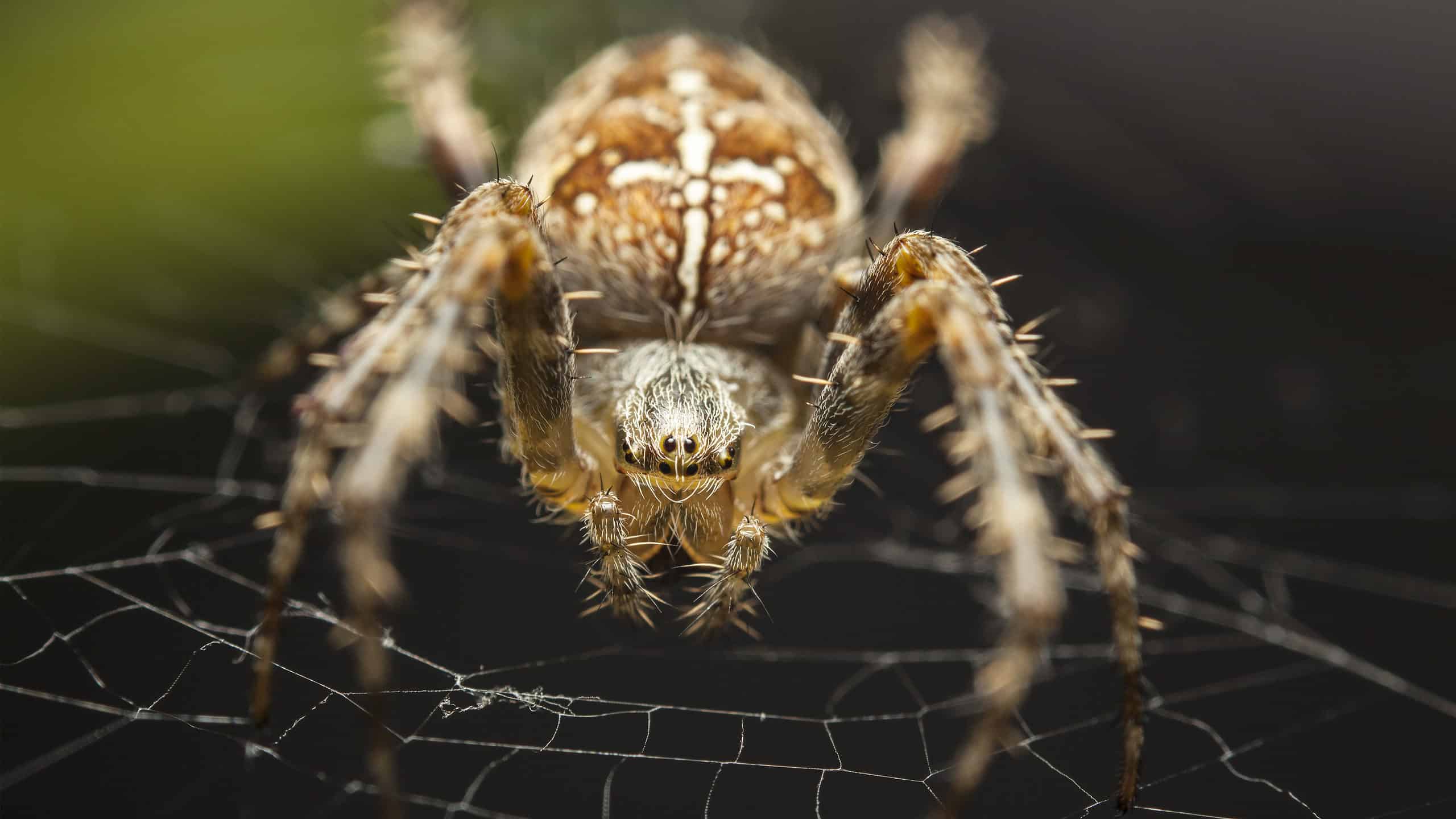
Orb-weaving spiders linger in the corners of gardens, largely ignored. But if you take a macro view, as shown in this Instagram post, they are truly fascinating. Beady eyes stare back at you, and this particular spider even has spikes on its body. Let’s find out why.
Orb Weavers in the UK
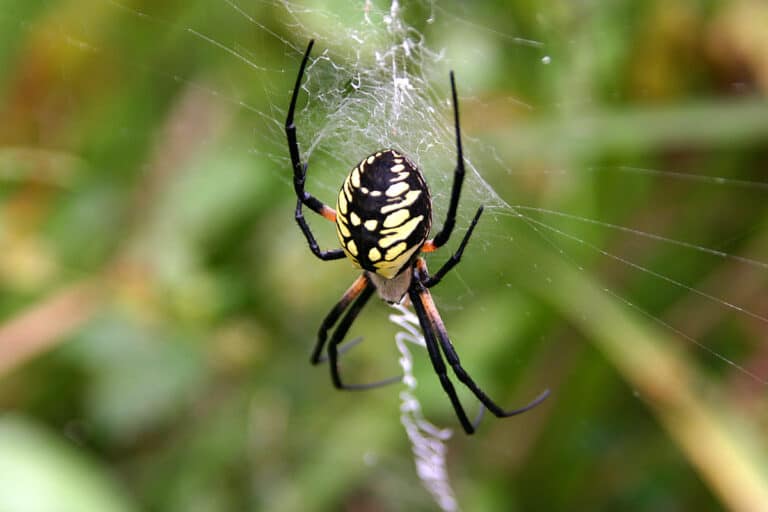
The fabulous arachnid in this post was spotted in Shropshire, UK. It’s a garden spider (Araneus diadematus), which is the most common orb-weaver in Britain. They are also found in Europe, much of Asia, and across to Japan. What’s more, they have also found their way to parts of North America. These spiders are easily recognizable by the large white cross made up of pale spots and streaks on their abdomen. They are often seen in gardens, which explains their common name. However, their natural habitats also include grasslands, wetlands, heathlands, and moorlands. These widespread spiders are most commonly seen from late summer through autumn, typically between August and October.
Hairy Legs and Multiple Eyes
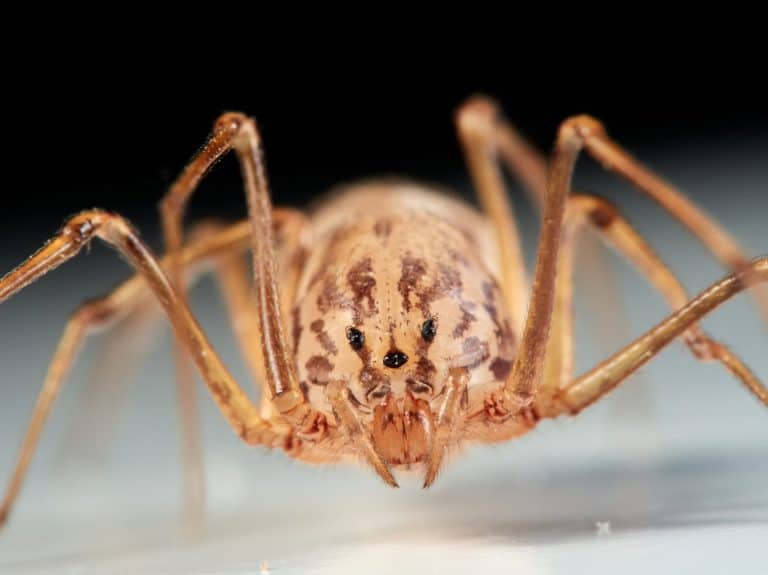
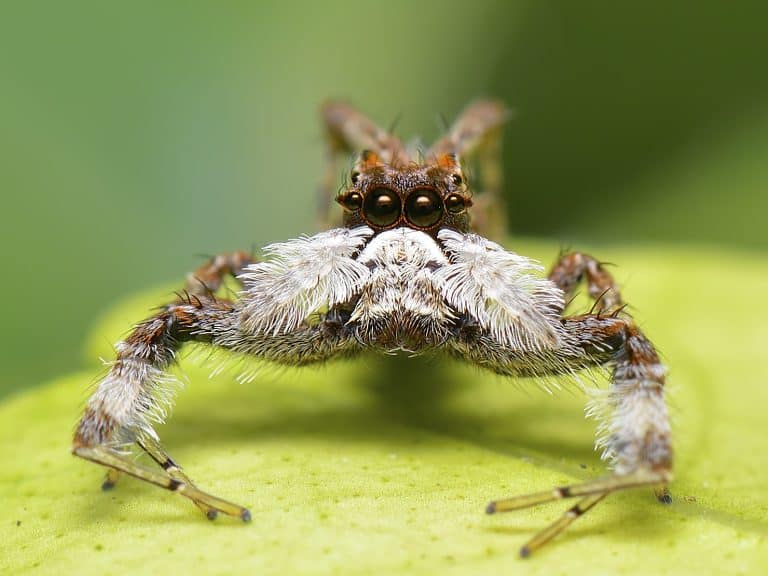
One of the most eye-catching features of the picture is the spider’s hairy legs. Spiders have hairs on their legs to help them sense when they are touching something. When the hairs bend, it triggers a nerve, and the spider knows something is touching it. They also use the hairs on their legs to detect sounds. Sounds make the tiny hairs vibrate, and the spiders can detect this.
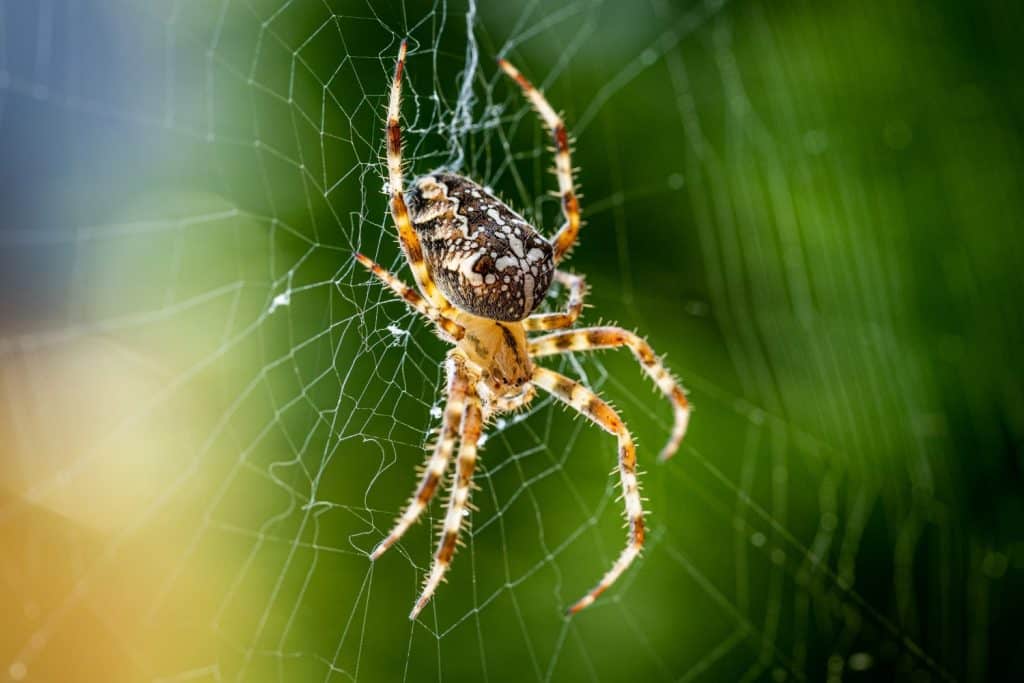
Garden spiders can ‘listen’ with their legs.
©novama/Shutterstock.com
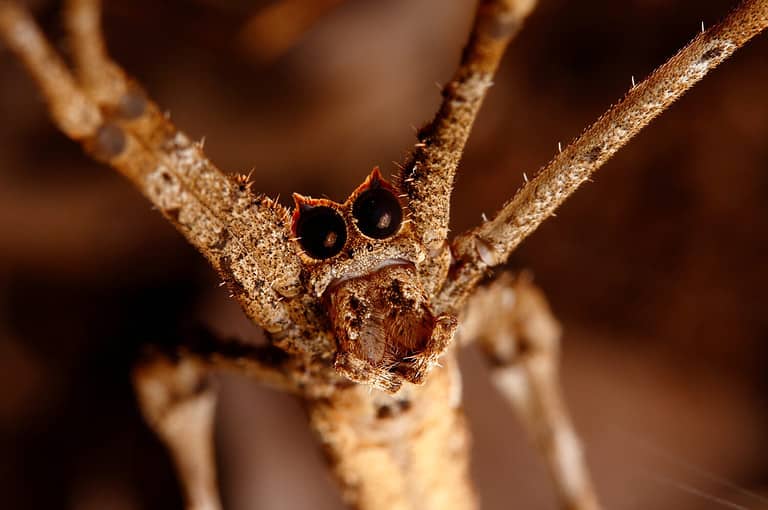
Garden spiders have a body length of between 0.3 inches and 0.7 inches. They also have two body parts, four pairs of legs, and eight simple eyes! Despite this, their eyesight is not great. At the most, they can detect changes to light and dark intensities, so at least they know when it is day or night.
Near the eyes are the spider’s chelicerae, or jaws. This includes their movable fangs, which are folded away when in a resting position. When the spider wants to bite, the fangs extend from their groove and inject venom into the prey. Below the eyes, you can see the pedipalps, which are specialized appendages used for capturing and holding prey.
Garden spiders are very rarely aggressive towards humans. They prefer to stay away from humans. The largest individuals have fangs capable of penetrating the thinnest parts of human skin, but unless you are allergic, their venom is harmless to humans.