
Quick Take
- One spider family builds webs so well-disguised they're almost impossible to spot in the wild, and the hunting trick hidden inside them is even stranger. See purseweb camouflage →
- One type of spider web uses the same adhesive physics that lets geckos walk up walls, and it does so without a single drop of glue. Explore Van der Waals silk →
- The spider webs you've probably walked through your whole life aren't all built the same way, and that difference changes everything about how they catch prey. Compare web construction →
- Some orb weavers destroy their own webs every single day, and it turns out there is a surprisingly practical reason they simply cannot afford not to. Discover daily web recycling →
Every spider can spin silk; it’s one of the defining characteristics of the order Araneae, alongside venomous fangs, two-part bodies, and 8 legs. Silk has many purposes: it is used in creating protective egg cases, lining spider burrows, laying down safety draglines, wrapping prey, and building webs to catch prey. Though not every species of spider builds webs, most spider webs fall into six categories; we’ll explore each of them!
Spiral Orb webs
©Rav Kark/Shutterstock.com
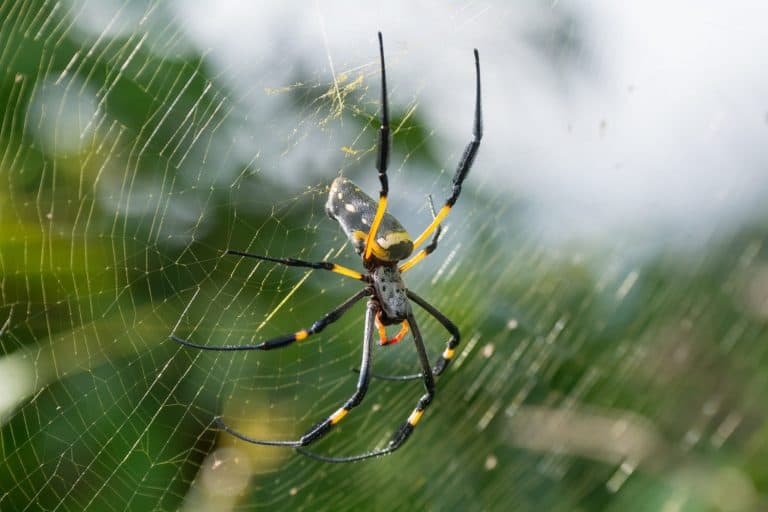
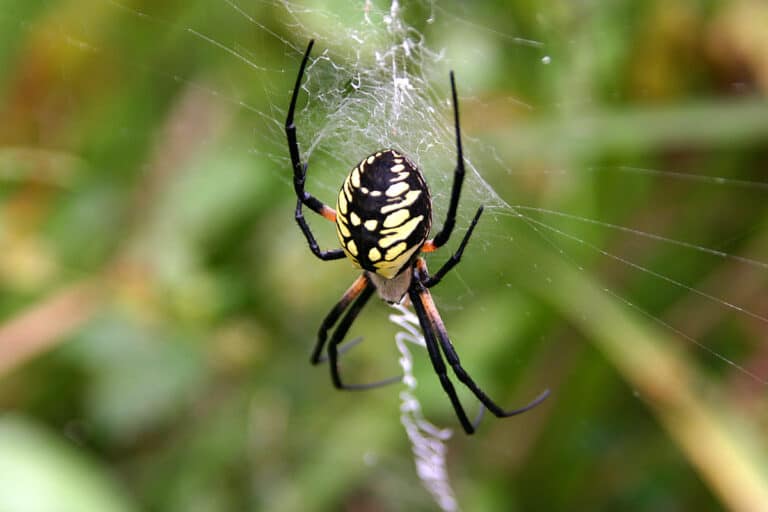
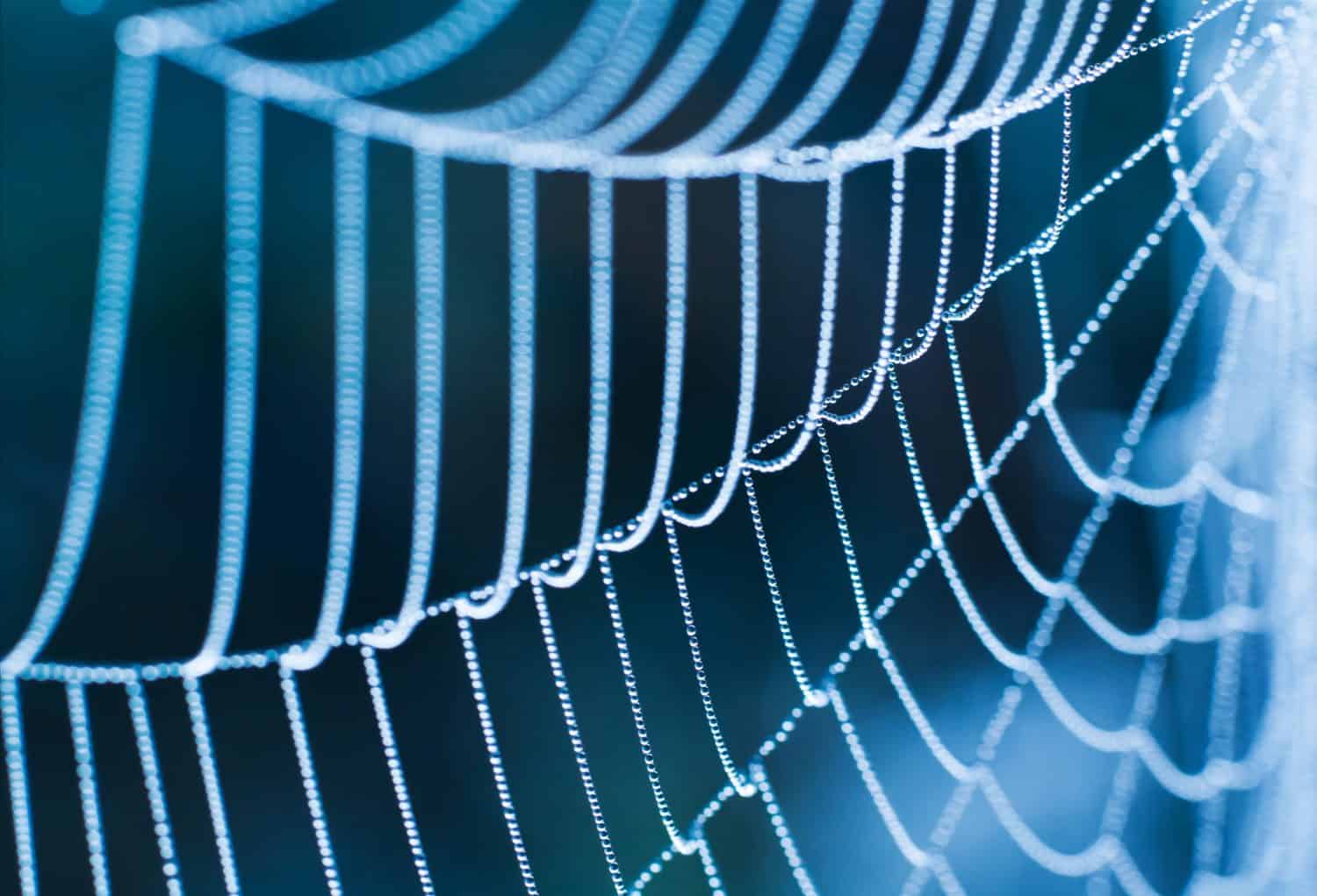
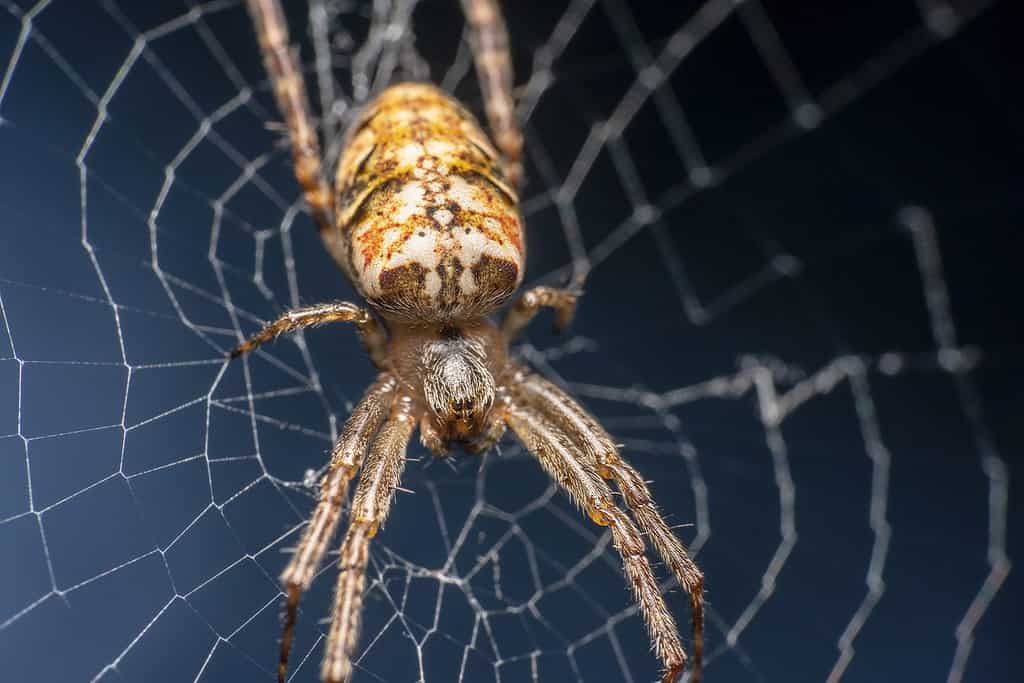
The iconic spider web — think Charlotte’s Web —is the spiral orb web. These circular webs are largely vertical and covered in sticky silk, designed to trap and entangle flying insects. Orb-weaver spiders are common in forests, fields, and gardens worldwide. The spider will wait inside the web or along one of its edges until prey blunders in–then it will scurry towards the prey, stun it with a paralyzing bite, and wrap it up using a combination of the web’s silk and special entrapment silk. Spiral orb webs are made with two kinds of silk: long, strong, structural silk fibers that radiate from the center of the web like the spokes of a wheel, and sticky silk that spirals out from the center in concentric rings. By stepping only on the structural silk, orb weavers can avoid becoming trapped in their own webs. Most orb weavers consume their own webs daily, using the recycled proteins to rebuild a new web at dawn or dusk.
Tangle webs, or Cobwebs
©anutr tosirikul/Shutterstock.com
Tangle web spiders build messy-looking, three-dimensional webs in places that insects are likely to congregate; you may have seen them in corners of rooms. Unlike orb weavers, cobweb spiders do not consume their webs, but maintain them over long periods of time, often living inside the web and laying their egg cases in its tangles. Tangle webs are made of a combination of sticky and non-sticky silk. Its upper trellis is anchored by high-tension, sticky, catching threads that are designed to adhere to prey. The webbing then snaps the victim up into the trellis, where the spider awaits.
Sheet webs
©Tatyana Mi/Shutterstock.com
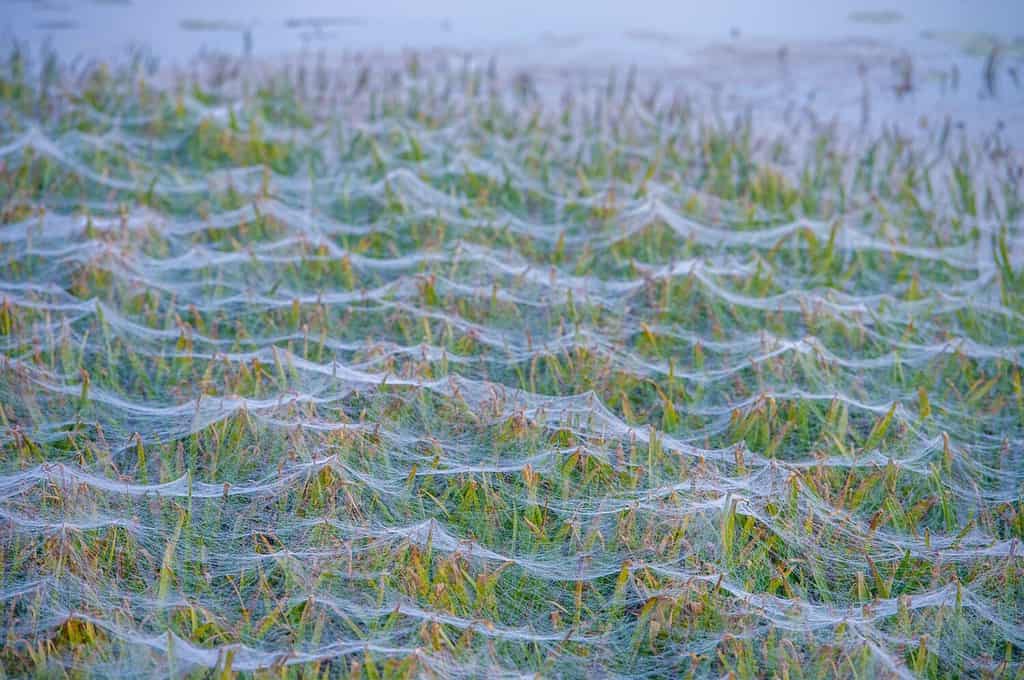
Sheet webs are horizontally constructed webs that sag slightly, like a sheet draped in the center of two objects. Spiders build them between blades of grass, on shrubs, or across tree limbs. The trapping strands of silk associated with sheet webs are built above the sheet, to knock down flying insects into the sticky silk below. When a sheet web spider senses movement in its web, it springs from its hiding place underneath the web and sinks its fangs through the web and into its prey, before wrapping it in trapping silk. Some sheet web spiders build protective tunnels of webbing, into which they drag their prey; these tunnels resemble the structures built by our next group of web builders, funnel web spiders.
Funnel Webs

©Mark Breck/Shutterstock.com
Webs are not just traps: they are a part of a spider’s sensory system. An orb weaver will often hold onto its web with just one foot, hiding in safety on an adjacent plant, waiting to feel movement in the web before seeking out a catch. Funnel-weaving spiders take this strategy to a new level, building a long funnel-shaped web, sometimes extending underground, where they hide. At the entrance of such webs is often a sticky sheet; when prey walks across it, the quick-moving funnel-web spider runs out and strikes with a venomous bite, dragging its victim into the tunnel to wrap and consume it.
Though American and Eurasian funnel-weaving spiders (Family Agelenidae) are harmless to humans, an Australian family of spiders called funnel-web spiders (Family Atracidae) builds similar webs. They are a particularly venomous group: 6 of the 35 species of spider in this family can cause severe injuries to humans with their bite.
Woolly Webs

©Anas Lahoui/Shutterstock.com
Woolly web spiders, sometimes known as lace-weavers or cribellate spiders, are a primitive species that use a different mechanism to spin webs than other spiders. Lacking the spinnerets that most spiders use to weave silk, they have a cribellum, consisting of plates covered with thousands of tiny spigots that extrude a silk much thinner in diameter than that of other spiders. As it is extruded, these spiders use specialized hairs on their back legs to weave their web’s strands. This silk is thin enough to take advantage of Van der Waals forces, the same adhesive quality of nanostructures that geckos use to cling to walls. Because woolly webs lack the liquid adhesives other spiders use, they are resistant to drying out, and web fibers can even fuse with waxes on an insect’s exoskeleton to create a powerful adhesive.
Woolley webs have a blueish-gray appearance and appear fuzzy, giving them their popular name. Rather than being well-organized in spirals or tunnels, these webs are typically messy-looking, similar to tangle webs. Some species that weave webs using a cribellum create snares with their silk and hold it in their forelimbs, lunging at passing prey to throw the web over it.
Purse Webs
©Tobias Hauke/Shutterstock.com
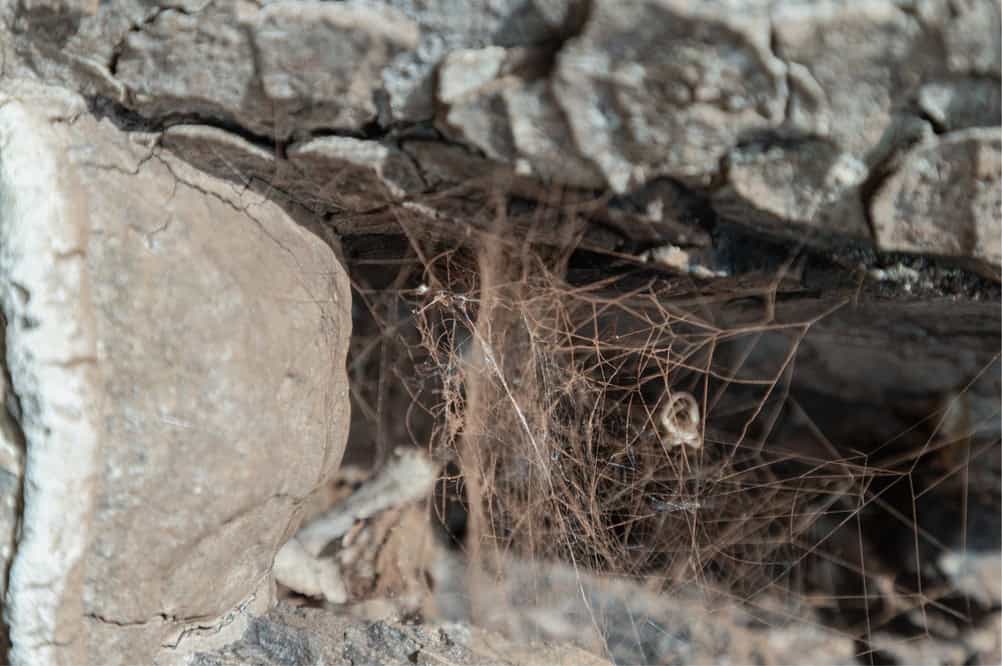
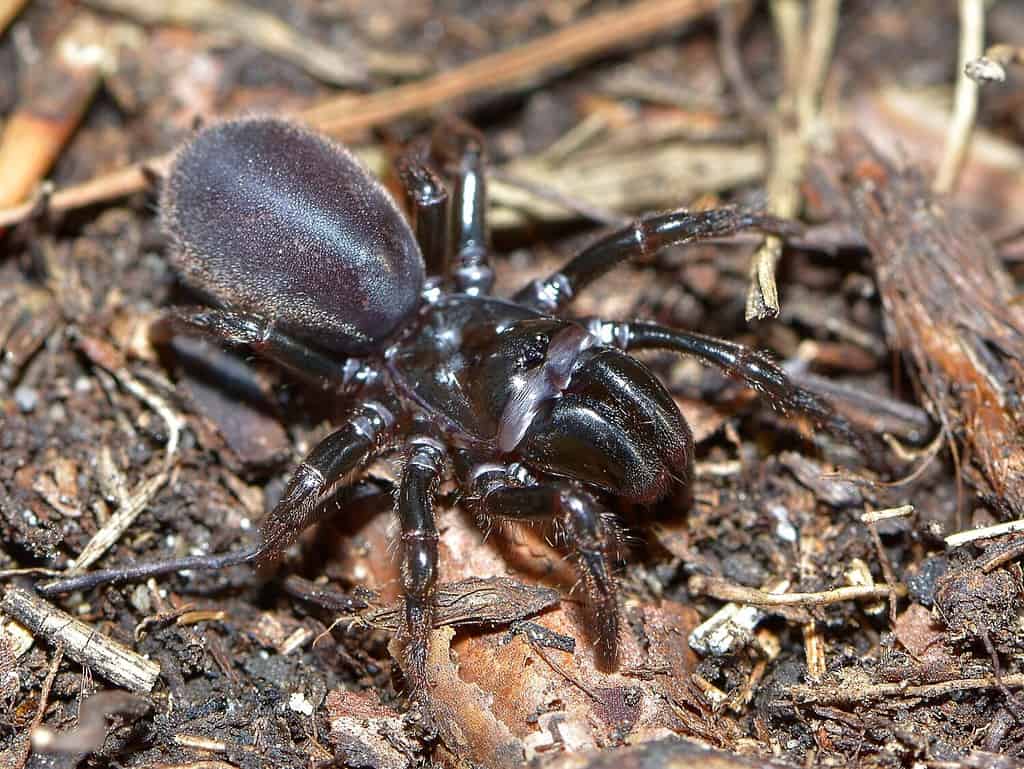
Purseweb spiders (Family Atypidae) are related to tarantulas and funnel web spiders, and their webs are uniquely disguised. They build tubular webs, partially underground and partially above, and they meticulously cover all exposed parts of the web with detritus, camouflaging it. In North America and Europe, members of this family build their webs against tree trunks, banks, or stones, resembling leaning sticks. The webs are named for their resemblance to old-fashioned coin purses, but contemporary naturalist liken their appearance to brown, soiled socks.
This dirty disguise is a part of the spider’s hunting strategy. Hiding inside the tunnel-like web, they wait until they sense the vibrations of prey wandering along the web’s exterior, then they run to the disturbance and bite through the web, pulling their unlucky meal inside. Purseweb spiders can be distinguished by their comically oversized chelicerae, appendages that take the place of jaws and help guide the spider’s fangs. Some purseweb spiders have chelicerae that are the same size as their cephalothorax, the fused head and thorax body segment that comprises the forward part of an arachnid, giving them the power they need to bite through their webs and pull their prey inside. Soon after, the spider meticulously repairs the damaged web.