Quick Take
- A baby elephant doesn't have days or even hours to figure out walking. Why speed is critical →
- At 200+ pounds, a newborn elephant faces a physics problem that makes its first steps almost unbelievable to witness. See the staggering size →
- That adorable clumsiness has a specific biological cause, one that has everything to do with a single body part containing thousands of muscles. The trunk's role explained →
- The whole herd stops what it's doing when a calf is born, and their role in those first steps goes far beyond standing watch. How the herd helps →
There are few things more heart-melting than watching a baby elephant take its first steps as it wobbles its way into the world. In the video above, you can see a newborn calf struggling to balance, its legs shaky and uncertain, yet determined to stand.
But beyond the cuteness, this moment is actually a matter of survival. A baby elephant’s first steps aren’t just adorable—they’re essential. Within an incredibly short window after birth, these massive newborns must accomplish something that takes human babies many months: standing up and walking.
How Soon Do Baby Elephants Start Walking?
These wonderful creatures don’t have the luxury of staying still for long, so you’ll find it’s typical for an elephant to take its first steps quickly. In the wild, herds are constantly moving in search of food and water, and a newborn that can’t keep up is at serious risk. Because of this, elephant calves are what scientists call “precocial,” meaning they are relatively well-developed and mobile almost immediately after birth.
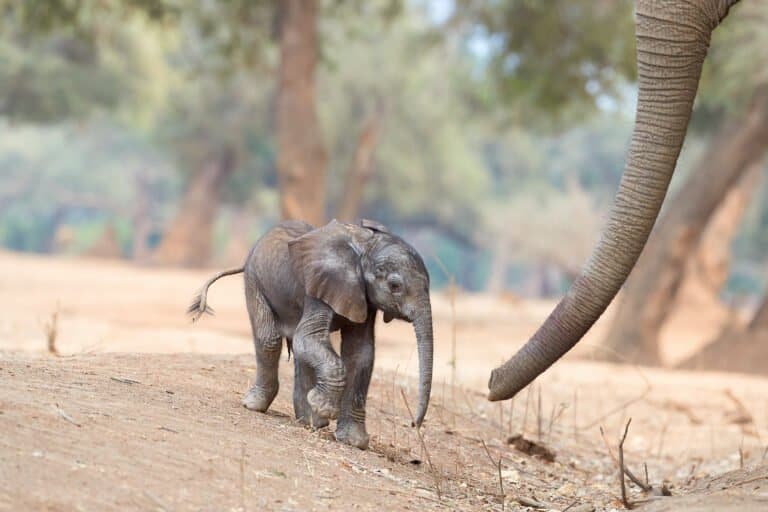
Most calves begin trying to stand within minutes. It’s not graceful. Far from it. But the effort starts almost right away. Within about an hour, many are able to get their feet under them and take their first wobbly steps. Not long after, they’re already moving alongside their mothers as they slowly build confidence and coordination.
If you watch the video closely, you’ll notice just how unsteady those first attempts are. The calf sways, stumbles, and sometimes collapses back to the ground. But each attempt gets a little stronger, a little more controlled. Eventually, you’ll see the elephant take its first steps.
Instinct vs. Learning
So do baby elephants instinctively know how to walk? In a sense, yes. But it’s not automatic. They’re born with a powerful instinct to stand and move, driven by the need to survive. Almost immediately after birth, the calf begins trying to push itself upright. The mother and other herd members often help by nudging or encouraging it along.
Still, instinct only gets them so far. Walking requires coordination, balance, and strength, all of which take time to develop. That’s why the first hour of life is often filled with repeated attempts—standing, falling, trying again. It’s a rapid learning process, and the calf improves noticeably with each effort.
Just How Big Is a Newborn Elephant?
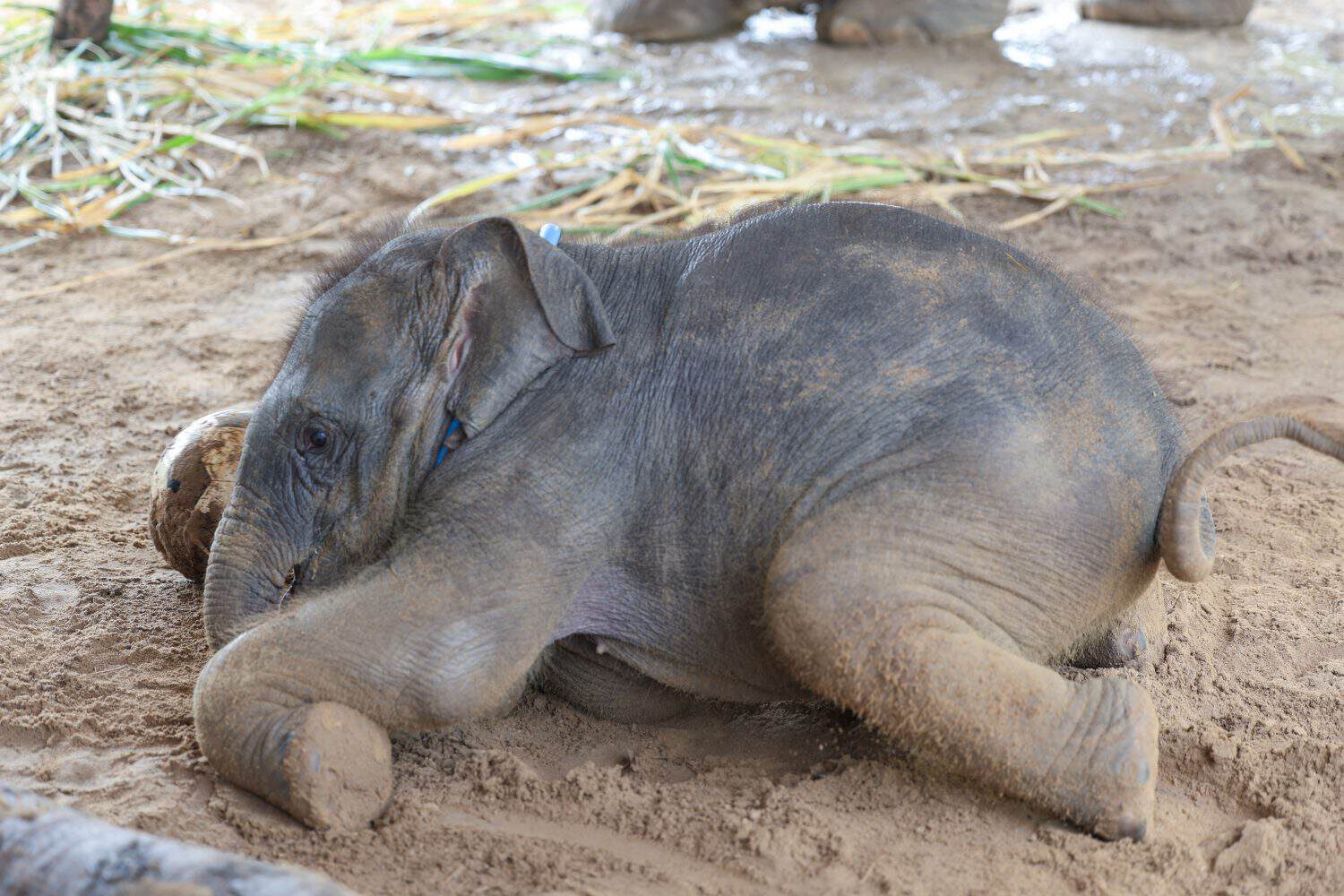
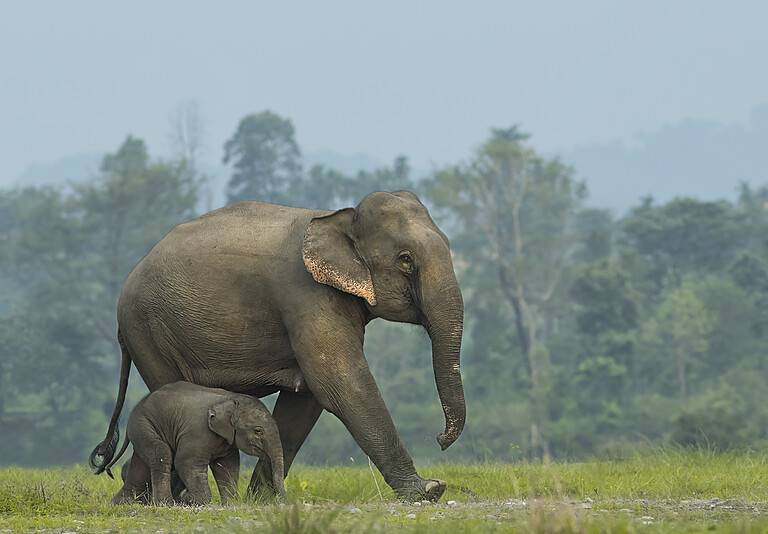
A newborn elephant starts out big and can weigh as much as 250 pounds.
©Nukoon/Shutterstock.com
What makes witnessing an elephant take its first steps even more impressive is the newborn’s size. A baby elephant typically weighs between 200 and 250 pounds at birth and stands about three feet tall at the shoulder.
That means the calf in the video is essentially learning to stand and walk while carrying the weight of a full-grown adult human. Unlike many smaller animals, elephants are born large and relatively developed, which helps them become mobile so quickly. However, their large size also makes those first steps even more dramatic to witness.
Why Those First Steps Matter So Much
In the wild, standing and walking quickly isn’t optional. It’s critical. Elephant herds don’t stay in one place for long, and predators like lions or hyenas are always a potential threat, especially to vulnerable newborns.
A calf that can’t get up and move risks falling behind or becoming an easy target. It also needs to reach its mother to nurse, which is essential for its survival in those early hours and days. This urgency is why nature has shaped elephant calves to develop so quickly. The sooner they can move, the better their chances of surviving those first fragile days of life.
The Power of the Herd
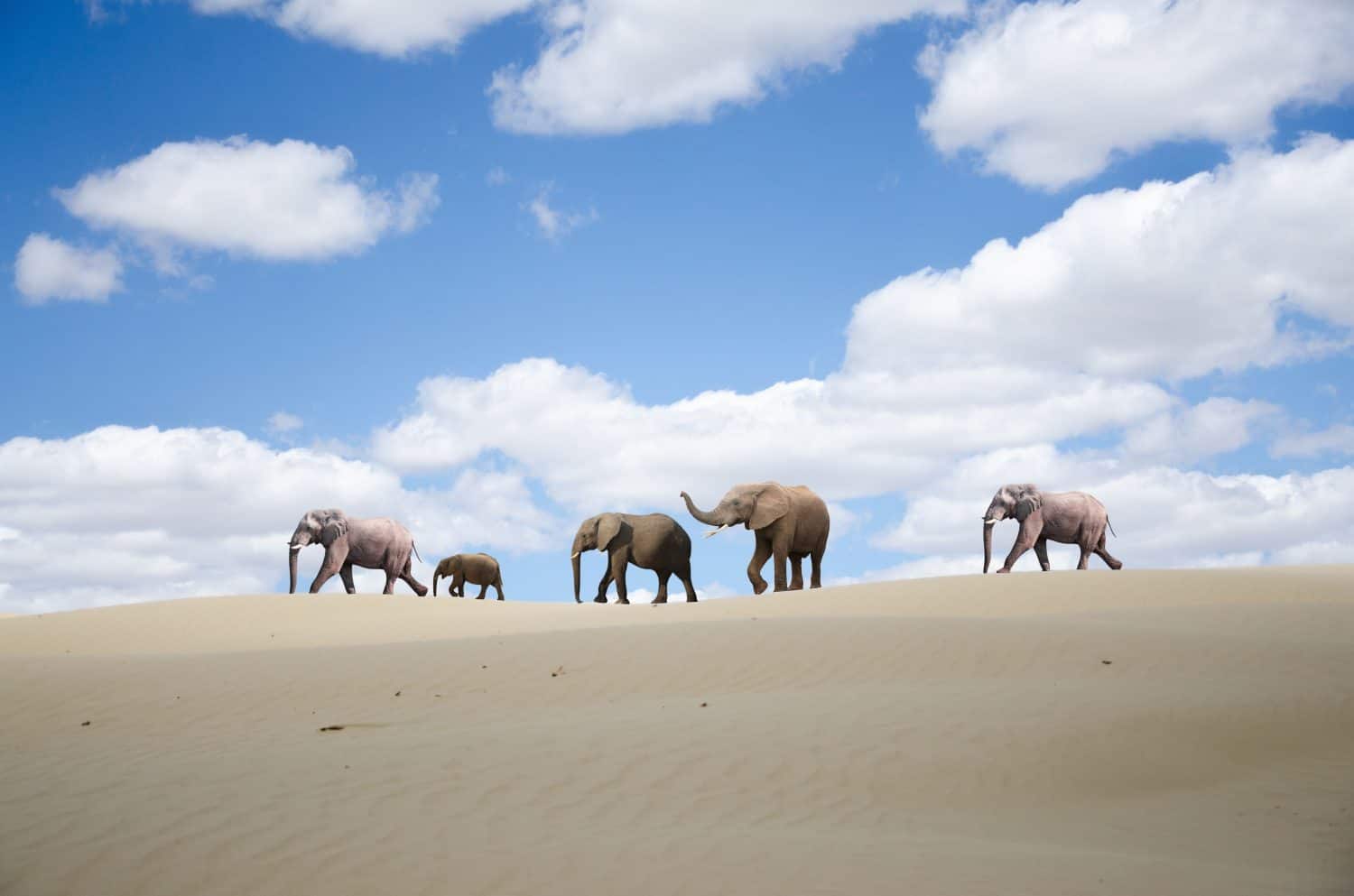
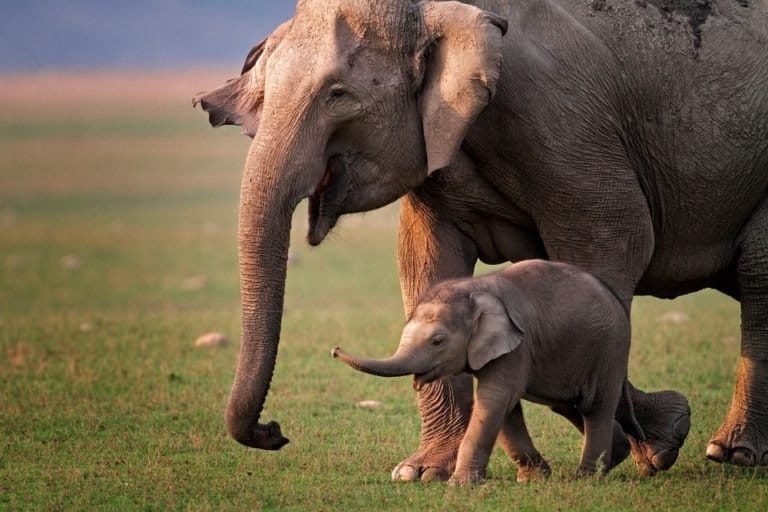
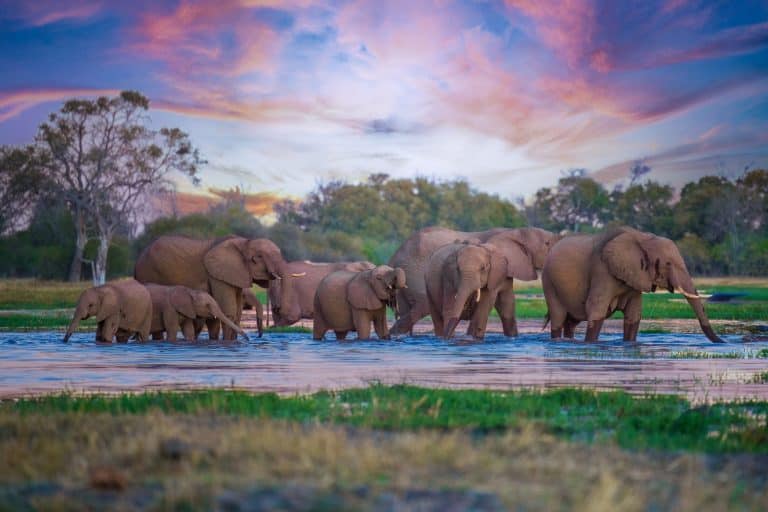
Elephants travel as a herd, and the infant joins them within days after birth.
©Wirestock Creators/Shutterstock.com
One of the most fascinating aspects of a baby elephant’s early life is the support it receives. Elephants live in tight, matriarchal family groups, and when a calf is born, it’s not just the mother who steps in to help.
Other females in the herd often gather around, forming a kind of protective circle. They may gently guide the calf, help it stay upright, or simply stand guard while it learns to balance. The herd may even slow its pace temporarily, giving the newborn time to adjust.
This cooperative care plays a huge role in the calf’s success. It’s not learning to walk alone—it’s doing so with an entire family looking out for it.
Why They Look So Clumsy
When watching a baby elephant take its first steps, it’s hard not to notice how awkward they seem. Their legs appear too long, their movements uncoordinated, and their trunks swing around as if they have a mind of their own.
That clumsiness has a simple explanation. At birth, calves are still developing muscle control and coordination. Their trunk alone contains thousands of muscles, and learning how to use it takes time. In fact, young elephants often seem confused by their trunks at first, occasionally tripping over them or swinging them aimlessly.
All of this adds up to those endearing, wobbly movements seen in the video. However, it’s also a sign of progress, rapid growth, and development.
A Rapid Transformation
What’s remarkable is how quickly things change. Within a day or two, most calves are already noticeably steadier on their feet. They begin to move more confidently, follow the herd more easily, and explore their surroundings with growing curiosity.
That transformation—from a shaky newborn to a mobile member of the herd—happens at an astonishing pace. And it all begins with those first uncertain steps.
More Than Just a Cute Moment
At first glance, the video is simply adorable. A baby elephant stumbles, tries again, and slowly finds its footing. But underneath that moment is something much deeper.
Those first steps mark the beginning of life for one of the most intelligent and social animals on Earth. They represent survival, adaptation, and the strength of instinct combined with learning. Watching that tiny giant take its first steps isn’t just entertaining. It’s a glimpse into one of nature’s most incredible beginnings.