
Quick Take
- There's a window so narrow in a seal pup's life that missing it means death, with the ice itself serving as the clock. See the melting-ice deadline →
- A harp seal mother abandons her pup after less than two weeks, leaving the youngster to survive on its own. Understand the abrupt weaning →
- Before a young seal ever touches the ocean, it enters a phase with a strange nickname. What happens during that phase determines whether it lives or dies. Discover the beater phase →
In the frozen, windswept reaches of the North Atlantic, life begins in one of the harshest environments on Earth. Here, on drifting sheets of sea ice, harp seal pups are born into a world defined by cold temperatures, shifting ice, and constant vulnerability. Yet despite these challenges, the earliest days of a baby seal’s life are marked by one of the most remarkable growth spurts in the animal kingdom. In just under two weeks, a newborn pup can nearly triple its body weight, fueled by one of the richest milk sources found in nature.
A Fragile Beginning on the Ice
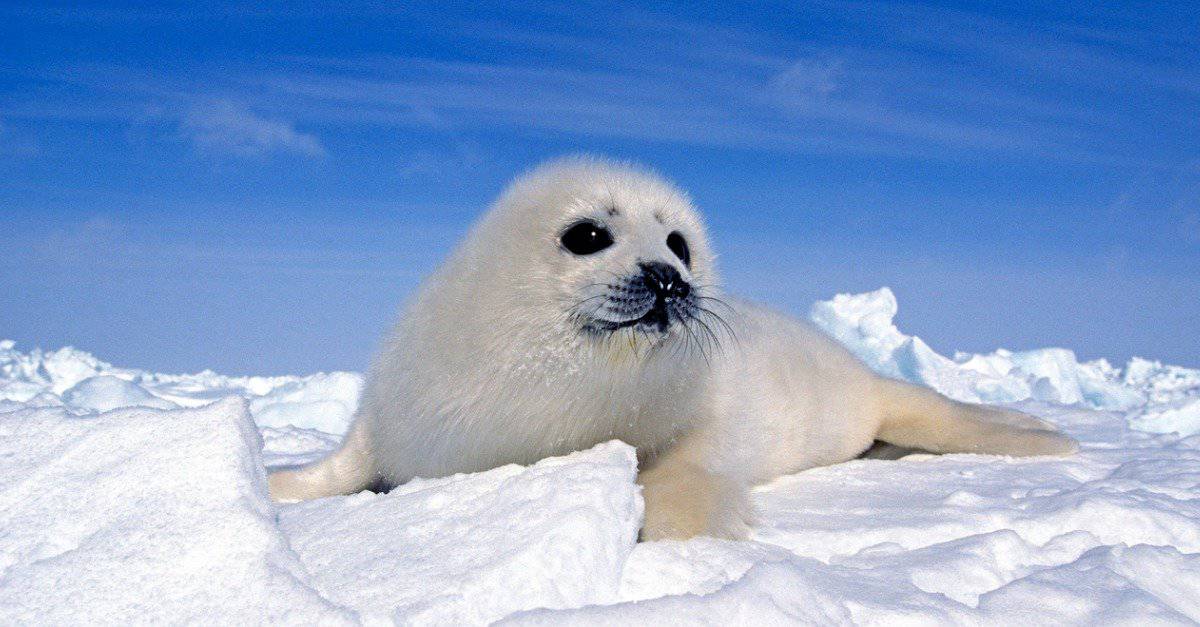
Harp seals typically give birth between late February and early March, when the sea ice is still thick enough to support mothers and their newborns. A mother seal gives birth to a single pup, rarely twins, on the surface of the ice. At birth, the baby seal weighs about 20 to 25 pounds (9 to 11 kilograms) and is covered in a thick, fluffy white coat called lanugo.
This white fur isn’t just adorable. It serves as camouflage against the snowy landscape, helping protect the pup from predators such as polar bears and large seabirds. However, the coat is not waterproof, which means the pup cannot enter the water immediately. For the first days of its life, it remains entirely dependent on the ice and its mother.
Unlike many land mammals that build nests or dens, harp seals rely on timing and instinct. The mother must nurture her pup quickly before the ice begins to melt or break apart, which could separate them or force the pup into the freezing ocean before it is ready.
The Richest Milk in the Marine World
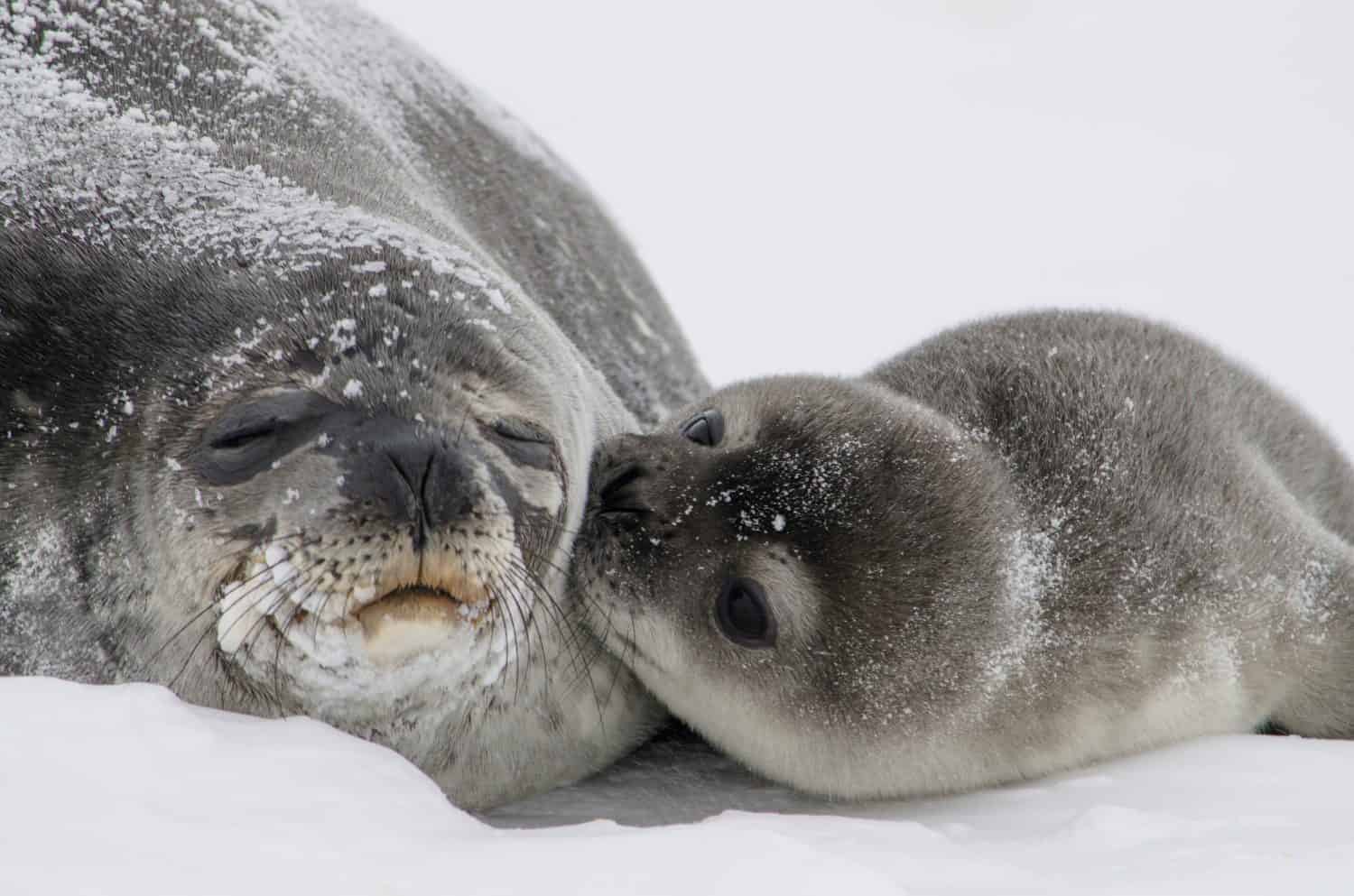
A baby seal’s relationship with its mother is adorable but brief, often lasting only 12 days.
©Saengmarn/Shutterstock.com
From the moment it is born, the baby seal begins nursing almost continuously. This is where the true marvel begins.
Harp seal milk is extraordinarily rich, typically containing up to 50% fat. For comparison, human milk contains about 3–5% fat, while cow’s milk averages around 3–4%. This high-fat content allows the pup to gain weight at an astonishing rate of about 4 to 5 pounds (2 kilograms) per day.
Every feeding session is a powerful transfer of energy. The pup drinks eagerly, and its body converts this rich milk into thick layers of blubber. This blubber will soon become its lifeline, insulating it against the icy waters it will eventually enter.
During this nursing period, which lasts only about 10 to 12 days, the mother rarely leaves her pup’s side. She does not hunt or feed herself. Instead, she relies on her stored body fat to produce milk. This intense commitment comes at a cost. By the time she weans her pup, she may have lost up to 80 pounds or more.
A Race Against Time
The speed of the pup’s weight gain is not just impressive. It’s a matter of survival. The Arctic environment is unforgiving, and the window of opportunity for raising a baby seal on stable ice is brief.
In less than two weeks, the pup may grow from around 25 pounds to as much as 80 pounds. Its once-slim body becomes round and padded, with thick blubber forming beneath its skin. This transformation prepares it for the next critical phase of life: independence.
Unlike many mammals, harp seal mothers do not gradually wean their young. Instead, the process is abrupt. After about 12 days, the mother simply leaves, returning to the ocean to feed and recover her strength. She does not return. For the pup, this sudden separation marks the beginning of a challenging new chapter.
The “Beater” Phase: Living Off Fat
Once weaned, the baby seal enters what is often called the “beater” stage. At this point, it has not yet learned how to hunt or even swim effectively. Instead, it relies entirely on the thick layer of fat it accumulated during its nursing period.
For several weeks, the pup remains on the ice, gradually losing weight as it metabolizes its stored energy. During this time, it undergoes another important change: it sheds its white lanugo coat and develops a sleeker, waterproof, grayish fur. This new coat is essential for life in the ocean.
The pup may also begin to experiment with movement—wriggling, flapping its flippers, and eventually making its way toward the water. However, entering the ocean is a risky step. The water is frigid, and predators lurk below.
Still, the pup has little choice. As the ice continues to shift and melt, it must adapt or perish.
First Swim and First Hunt
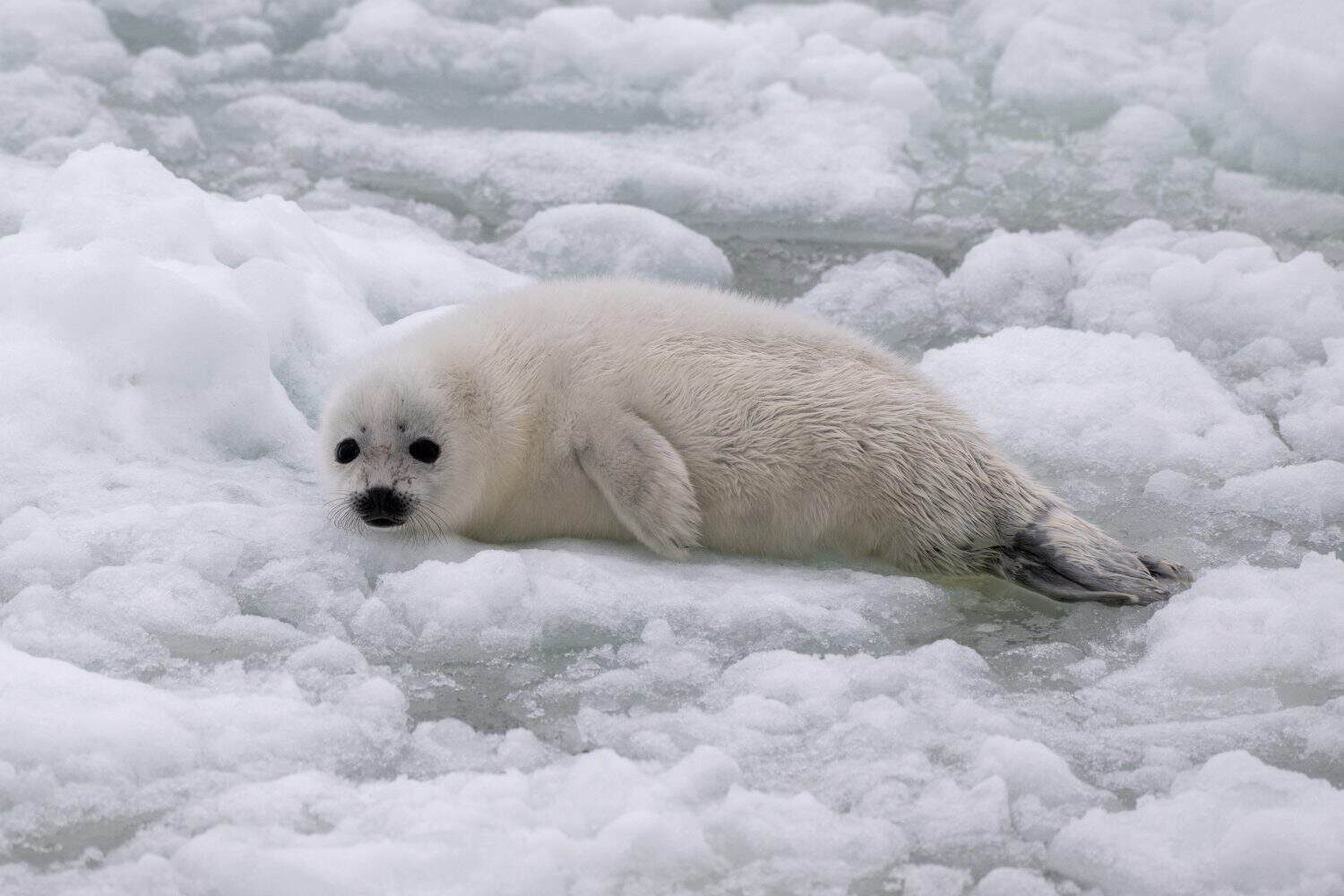
A baby harp seal must begin to fend for its life mere days after its birth.
©Dolores M. Harvey/Shutterstock.com
When the young seal finally enters the water, its earlier weight gain proves invaluable. The thick blubber not only provides insulation but also serves as an energy reserve while the pup learns to swim and eventually hunt.
At first, the pup is clumsy and inexperienced. It may struggle to coordinate its movements or dive effectively. But instinct and necessity drive rapid learning. Over time, it begins to catch small fish and crustaceans, gradually transitioning from reliance on stored fat to active feeding.
This stage is perilous. Many young seals do not survive their first year due to predation, starvation, or environmental changes. However, those who do make it through this critical period will grow into strong, capable adults and repeat the cycle in years to come.
Why Such Rapid Growth Matters
The harp seal’s extraordinary early weight gain is a direct adaptation to its environment. In a place where time is limited and conditions are extreme, efficiency is everything.
By delivering such rich milk, the mother ensures that her pup can develop the insulation and energy reserves it needs as quickly as possible. This strategy reduces the duration of maternal care, allowing the mother to resume feeding and increasing her chances of survival and future reproduction.
For the pup, the benefits are equally clear. Rapid weight gain provides a buffer against the uncertainties of early independence, increasing its chances of surviving the critical weeks after weaning.
Nature’s High-Speed Nursery
The story of a harp seal pup’s first days is one of urgency, efficiency, and resilience. In just under two weeks, a tiny, helpless newborn transforms into a robust, blubber-rich young seal ready to face the challenges of the Arctic.
This incredible growth is made possible by one of nature’s most potent nutritional systems, a mother’s milk so rich that it fuels one of the fastest weight gains seen in any mammal. Yet beyond the numbers and biological facts lies something more profound: a glimpse into how life adapts to even the harshest conditions.