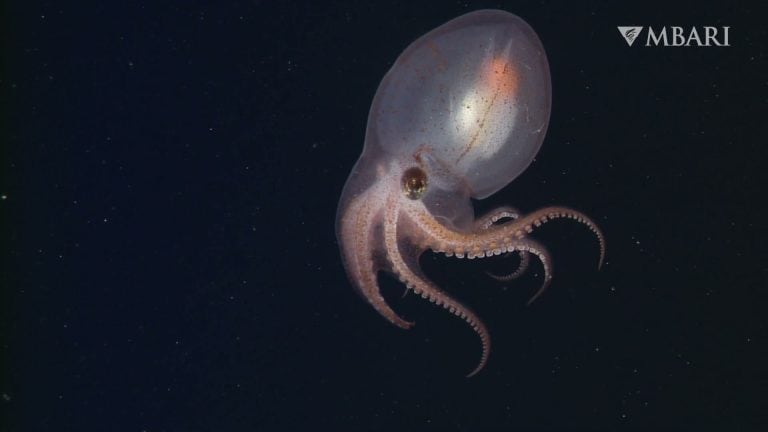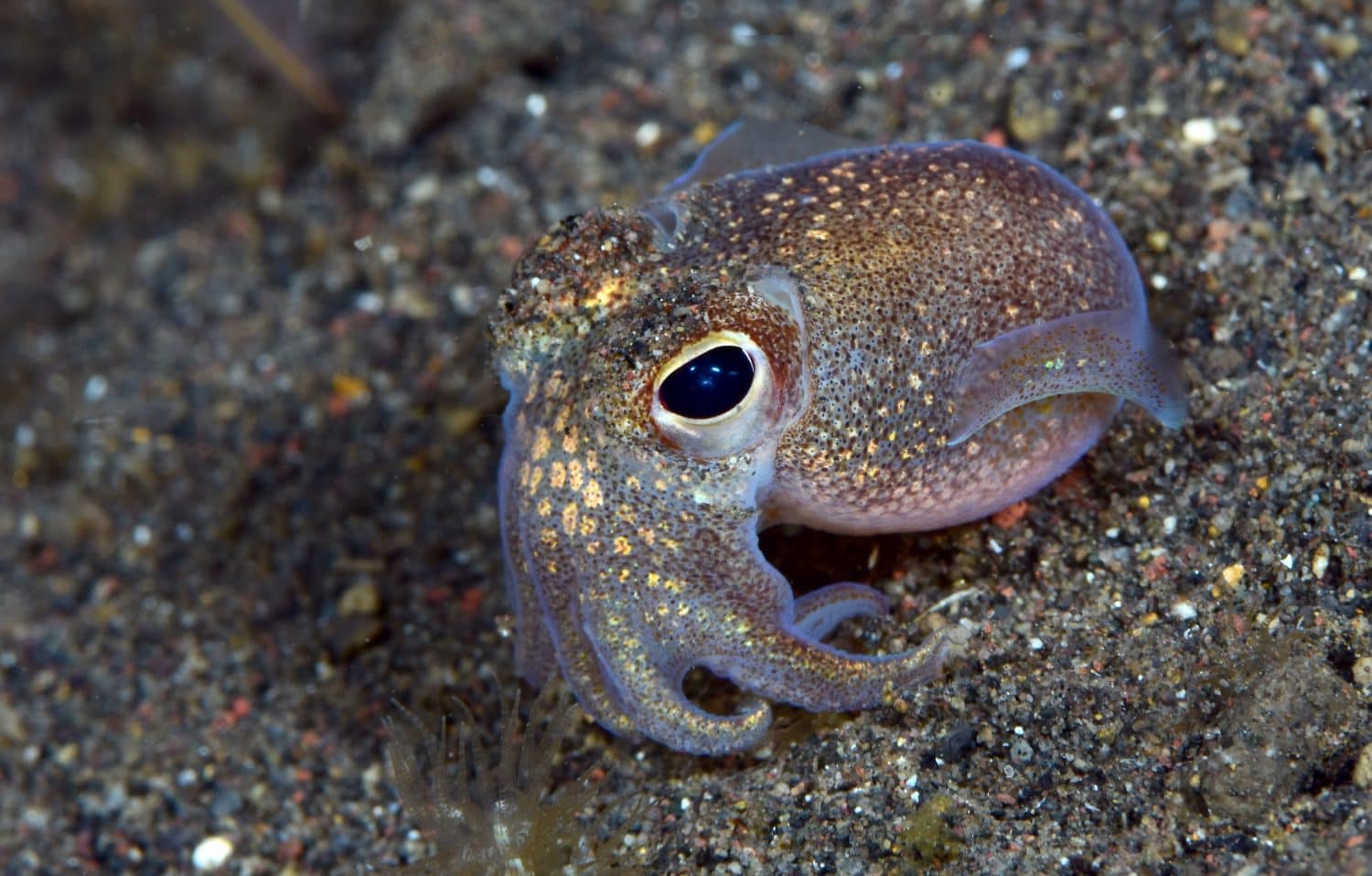

Squids are extremely intelligent animals with plenty of tricks to help them get out of dangerous situations. Some of these tricks seem to be instinctive, helping them survive from birth into adulthood. One example is their amazing camouflage. This Instagram post by @explainingoceans shows a baby squid camouflaging and doing an excellent job despite its young age. Read here to learn more about how squids learn to camouflage!
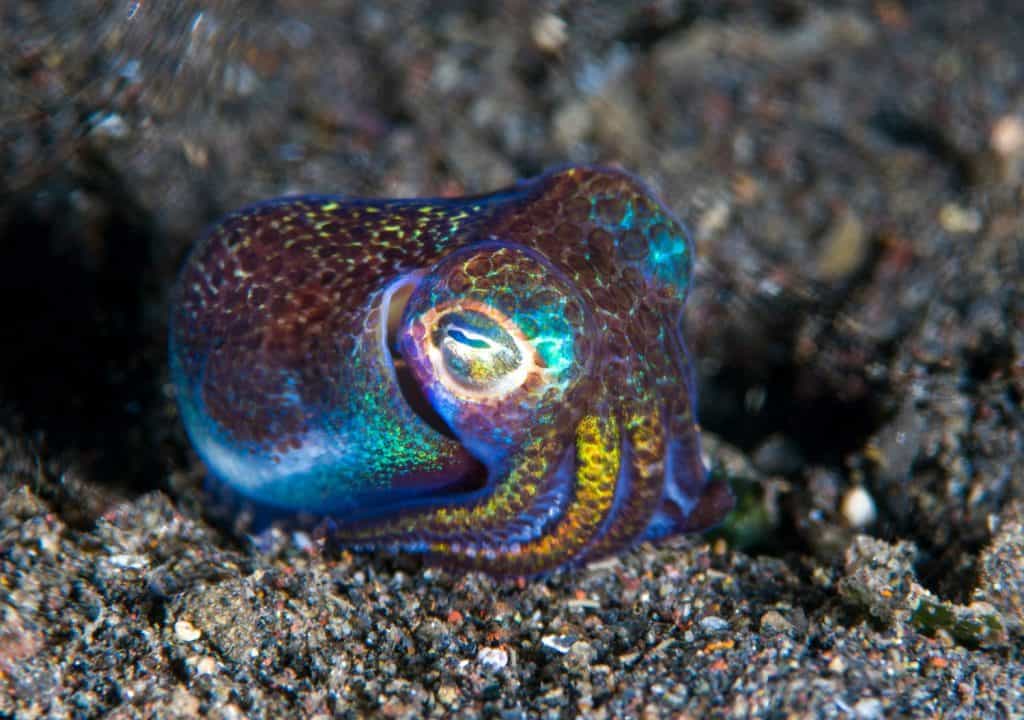
Squids have special skin cells, like octopuses, that allow them to alter their appearance.
©DiveIvanov/Shutterstock.com
How Do Squids Camouflage?
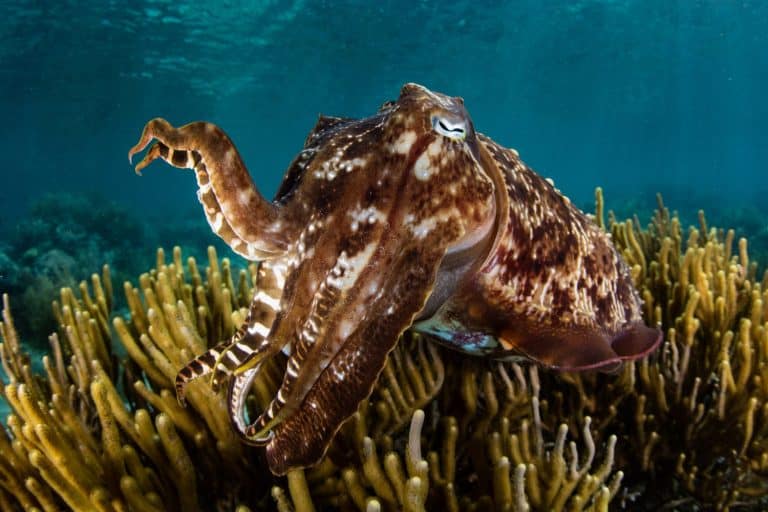
Squids, just like octopuses, have special skin cells that allow them to change color and appearance. These cells include chromatophores, iridophores, and leucophores. Chromatophores are what control color. These cells are like little sacs of pigment, and when the muscle around them contracts, the pigment spreads and becomes visible. By continuously expanding and contracting their pigment sacs, squids can shift between colors such as red, brown, black, and yellow.
Iridophores are a layer below chromatophores and are in charge of reflecting light. This creates the iridescent and metallic greens, blues, and silvers that you can see in the video above. Leucophores reflect light to create a white or neutral tone, adding to the color range of the squid’s camouflage. By using all these cells together, squids can create the stunning camouflage displays shown in the Instagram post.
The process of camouflage is complex. To start, the squid must understand the environment it is in. The squid’s eyes will take in the color, brightness, and patterns to understand how to blend in. Next, the brain sends signals to the body to contract the muscles around the chromatophores, helping to change its colors and texture.
Squids mimic not only the appearance of their surroundings but also the behavior of other organisms or environmental features. By aligning with patterns, hiding in shadows, or adjusting their tentacles, squids can truly mimic the background environment, making it difficult for even humans to spot them. Even when sudden changes occur in lighting or movement, the squid can adjust in the blink of an eye, making them exceptional at hiding.
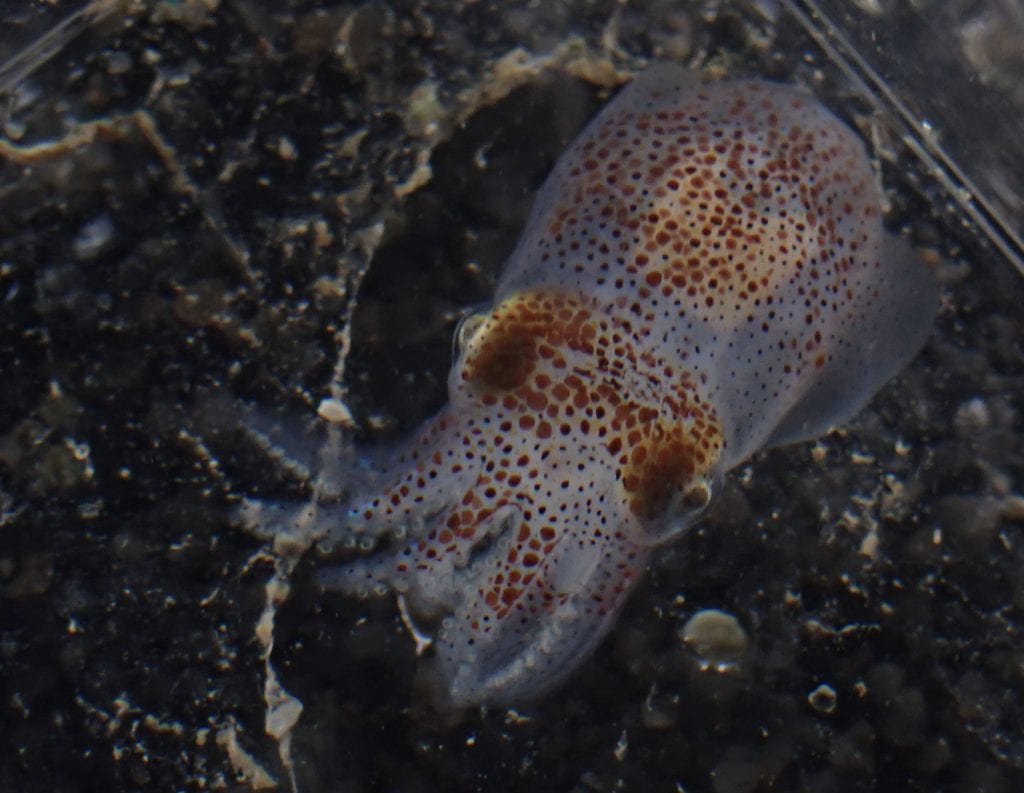
Squids are born with the biology needed to camouflage.
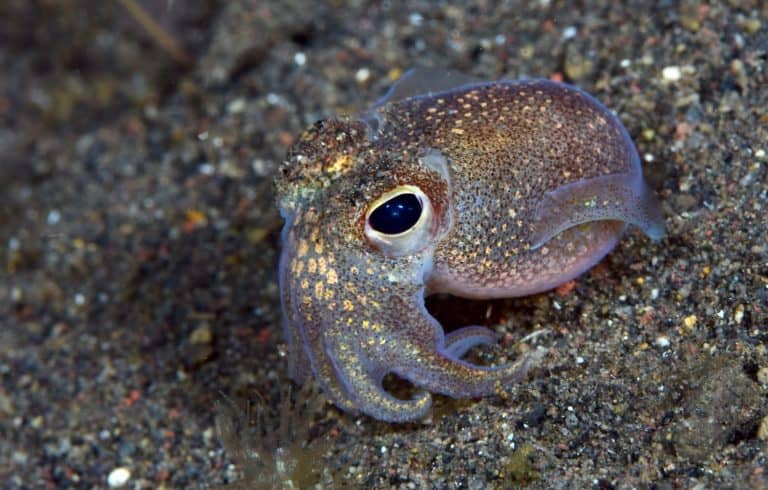
©"ボウズイカ, north pacific bobtail squid, pacific bob-tailed squid, pazifische rossie, россиа тихоокеанская" by Matthew Koons is licensed under BY-ND 4.0. – Original / License
When Do Babies Learn?
When baby squids ‘learn’ to camouflage is debated and may differ by species. However, the biological mechanisms required for camouflage are universal and present from birth, allowing baby squids to change their appearance at a very young age. Baby squids are born with the innate ability to camouflage almost immediately after hatching and can effectively use this skill from a very young age as a survival mechanism. However, the post above demonstrates that baby squids are already highly skilled at camouflaging shortly after hatching.