
Quick Take
- Survival in high-altitude regions requires mastering live birth rather than traditional egg laying.
- The cloaca serves as a single exit point, causing unique complications during birth membrane emergence.
- Contrary to typical reptile traits, Jackson’s chameleons bypass the soil incubation phase entirely.
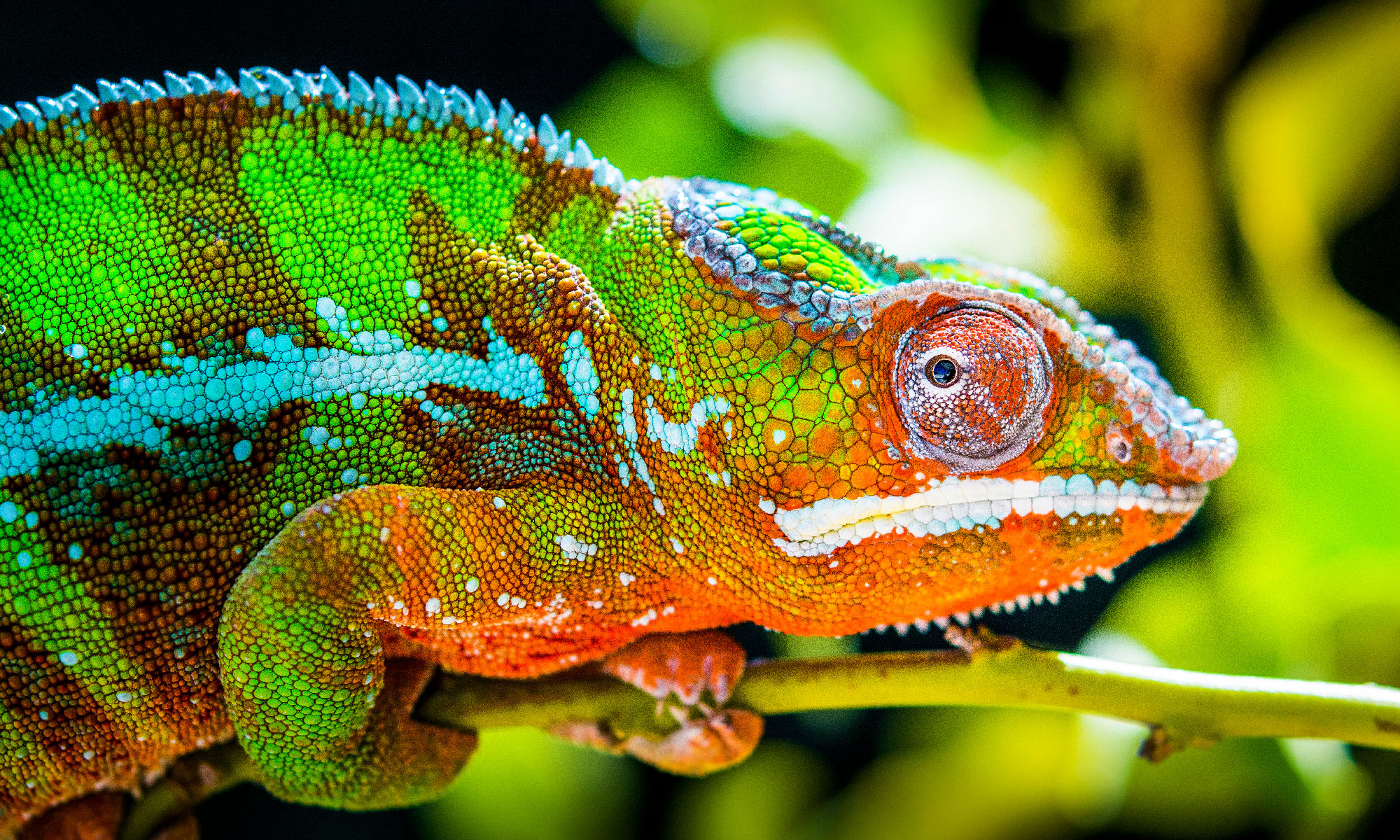
Chameleons are very fascinating creatures. Their most famous feature is their ability to change colors and blend in almost anywhere. A lesser-known fact is the different ways they give birth. Depending on the species, chameleons have two main ways to give birth, and it’s a fascinating sight. This Instagram post by @livingartbyfrankpayne shows chameleons born by live birth. Read here to learn more about how chameleons give birth.
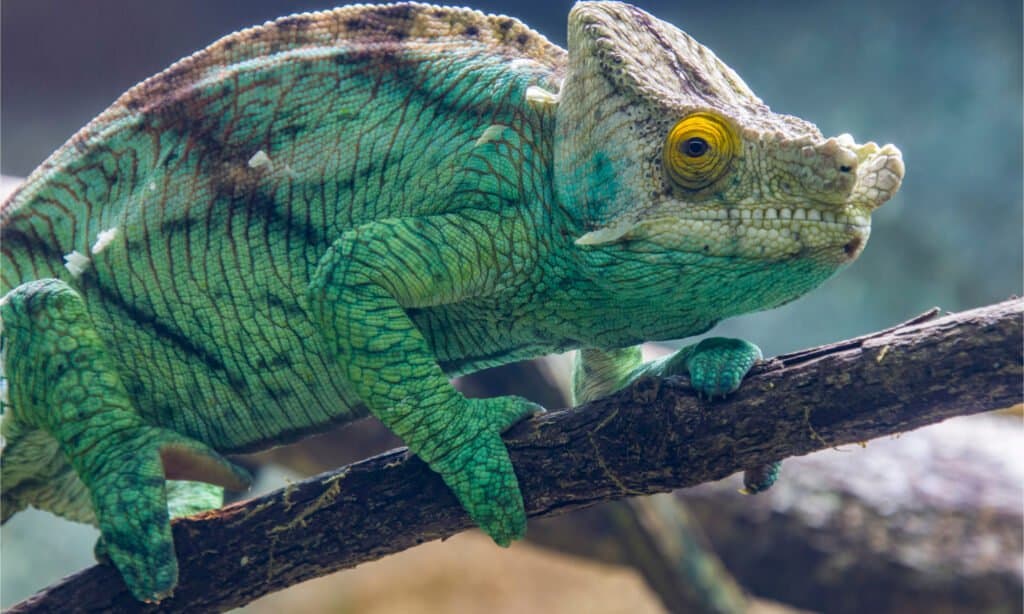
The way chameleons give birth depends greatly on the climate in which they evolved.
©Danny Ye/Shutterstock.com
Adaptive Birthing Processes
Chameleons give birth in two different ways, depending on the species. The first is through laying eggs. Oviparous chameleons lay eggs after mating. The female digs a nest in the soil and lays clutches of eggs. After being laid, the eggs incubate in the ground for months on end before hatching. Depending on the temperature and climate, the incubation may be quicker or slower. Eggs in warmer climates often incubate more quickly, and vice versa for colder climates.
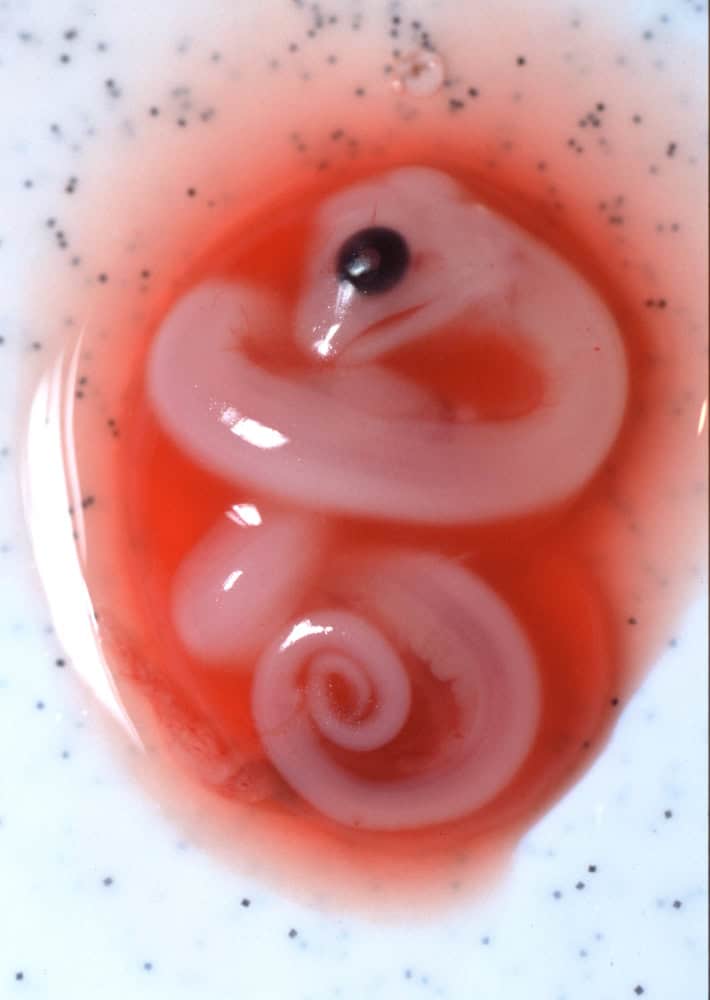
The second way chameleons give birth is through live birth or live hatching. Only a few chameleon species give birth through viviparous or ovoviviparous methods, meaning they do not lay eggs. In viviparous birth, the female gives birth to young that develop via a placenta. In ovoviviparous birth, the baby develops inside an egg within the female’s body and hatches internally before being born. After this, the mother gives birth to live young.
Oviparous chameleons are the most common type. Some species in this category include veiled, panther, and common chameleons. Viviparous and ovoviviparous births are rare and occur more often in species that inhabit cooler, high-altitude climates. Keeping the eggs inside the body allows the mother to regulate the temperature internally, rather than relying on the external environment. Some species in this category include Jackson’s, Hoehnel’s, and Werner’s chameleons. The video shows a dozen chameleons born via live birth, ready to explore the world.