
Quick Take
- Being see-through sounds like the perfect disguise, but certain deep-sea predators can turn that transparency into a death sentence. See the survival switch →
- Turning orange in the dark seems pointless, yet it's one of the most effective vanishing acts in the ocean. Discover the orange disguise →
- With no seafloor, no den, and nothing to hold onto, a Japetella mother still finds a way to guard her eggs for months. Meet the sacrificing mother →
Most octopuses are homebodies of the ocean floor. If you’ve ever seen one on a nature show, it was probably tucked neatly into a rocky crevice, draped over a coral reef, or buried up to its eyes in the sand.
But out in the wide-open ocean, a tiny, remarkable octopus named Japetella diaphana lives a completely different life.
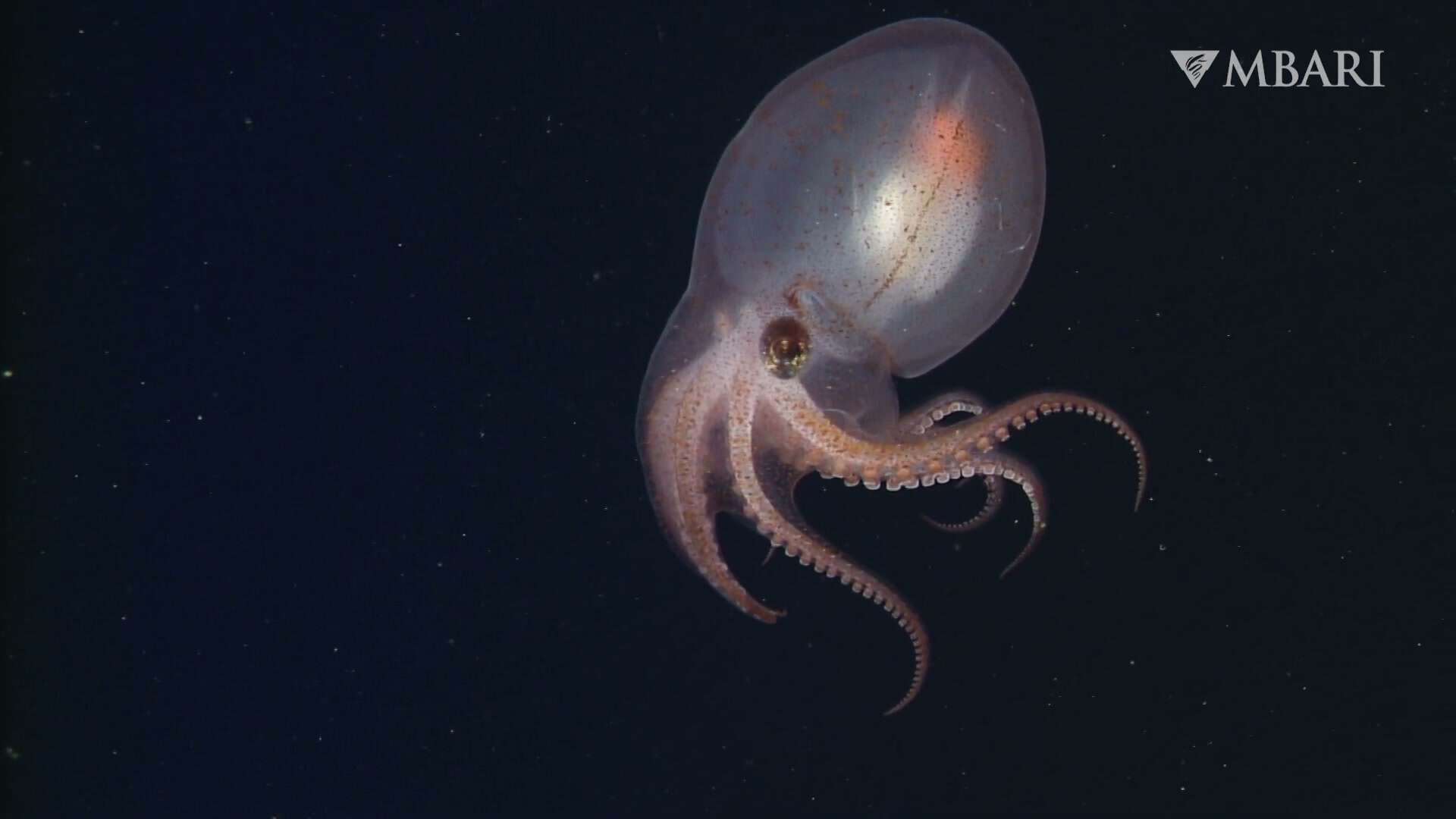
Thanks to high-tech underwater cameras from the Monterey Bay Aquarium Research Institute (MBARI), scientists have been able to spy on this little creature as it drifts through the ocean’s “twilight zone,” a dimly lit layer of water between 600 and 3,300 feet down, and the pitch-black “midnight zone” even further below.
Japetella is one of only a handful of octopuses adapted to spend its entire life in the open water. Because there is no seafloor to rest on, it has evolved a squishy, jelly-like body that helps it float effortlessly on underwater currents. Life in the deep ocean is a waiting game where food is scarce, so Japetella survives by running on a low-energy battery. It has an incredibly slow metabolism and, much like the famous vampire squid, takes its time growing and living at a much slower pace than its shallow-water cousins.
Master of the Magic Trick
Living in the open ocean means there is nowhere to hide. No rocks, no kelp, no caves. So, how does a tiny, soft-bodied octopus avoid becoming another creature’s lunch? Its first line of defense is a classic magic trick: it disappears.
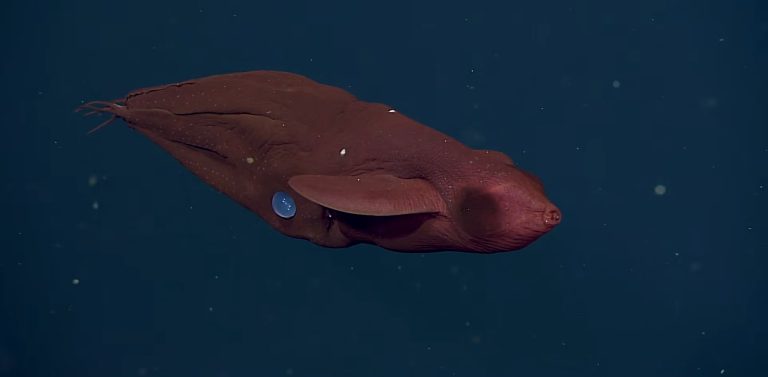
When it is just relaxing, Japetella is almost entirely see-through. This is a brilliant survival strategy used by many open-ocean animals. Because its body is clear, the faint light filtering down from the sun passes right through it, preventing the octopus from casting a shadow. To a predator swimming below and looking up, the octopus is completely invisible.
But transparency has a major flaw. It works great against predators hunting for shadows, but it’s useless against predators that bring their own flashlights.
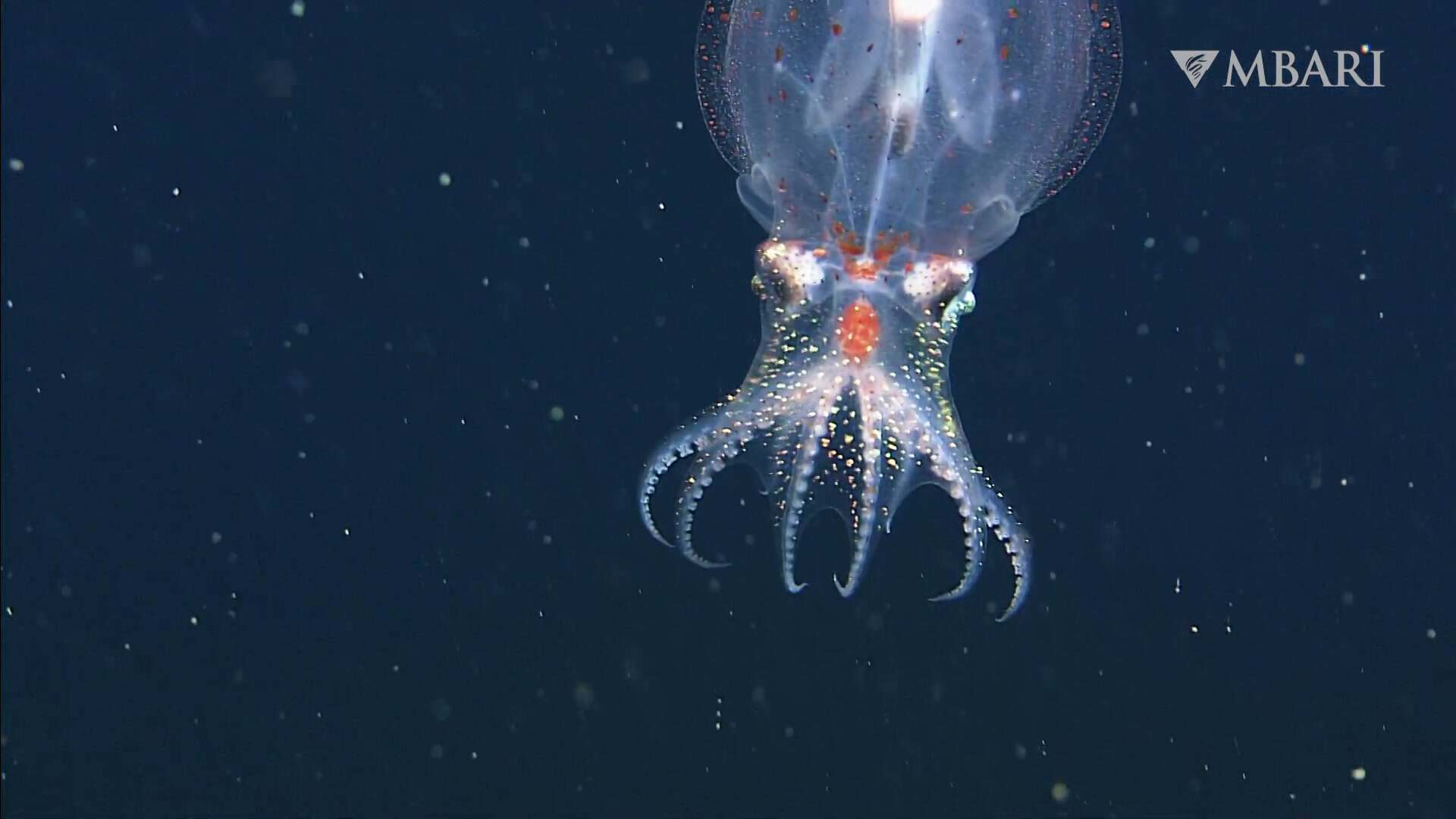
Japetella is transparent while in a relaxed state.
©MBARI (Monterey Bay Aquarium Research Institute) via YouTube — used under fair use – Original / License
Deep-sea hunters, like certain fish and squids, can produce their own light, a process called bioluminescence, beaming light through the dark water to spot prey. If that light hits a clear octopus, it reflects right off the tissues and exposes the animal’s outline.
That’s when Japetella triggers its second trick. Its skin is packed with tiny, pigment-filled cells called chromatophores. You might know these as the color-changing cells that shallow-water octopuses use to camouflage with reefs. When Japetella senses a predator’s flashlight or feels a sudden movement in the water, it instantly expands these color cells, switching from completely transparent to a solid, vibrant orange.
Why orange? In the deep ocean, red and orange light wavelengths are absorbed by the water almost immediately, meaning red light doesn’t exist down there. By turning orange, the octopus essentially turns pitch-black against the dark water, instantly baffling the hunting predator.
A Mother’s Ultimate Sacrifice
Perhaps the most touching footage captured by researchers shows Japetella’s incredible dedication to parenthood, a task made much harder by living in the open ocean.
Octopus mothers are famous for being fiercely devoted. In shallow waters, a mother will attach her eggs to a rock, fan them with oxygenated seawater, clean them, and protect them without ever leaving to eat, eventually dying through a hormonal self-destruction triggered when they hatch.
But a deep-sea octopus has no rocks. There is no den.
Instead, the Japetella mother cradles her entire cluster of eggs in her own arms. Holding them close, she sinks down into the even colder, darker, and safer depths of the ocean where fewer predators hang out. She will carry this heavy bundle for months, likely never eating a single bite. Just like other octopus mothers, she gives everything she has to her offspring and dies shortly after they hatch.
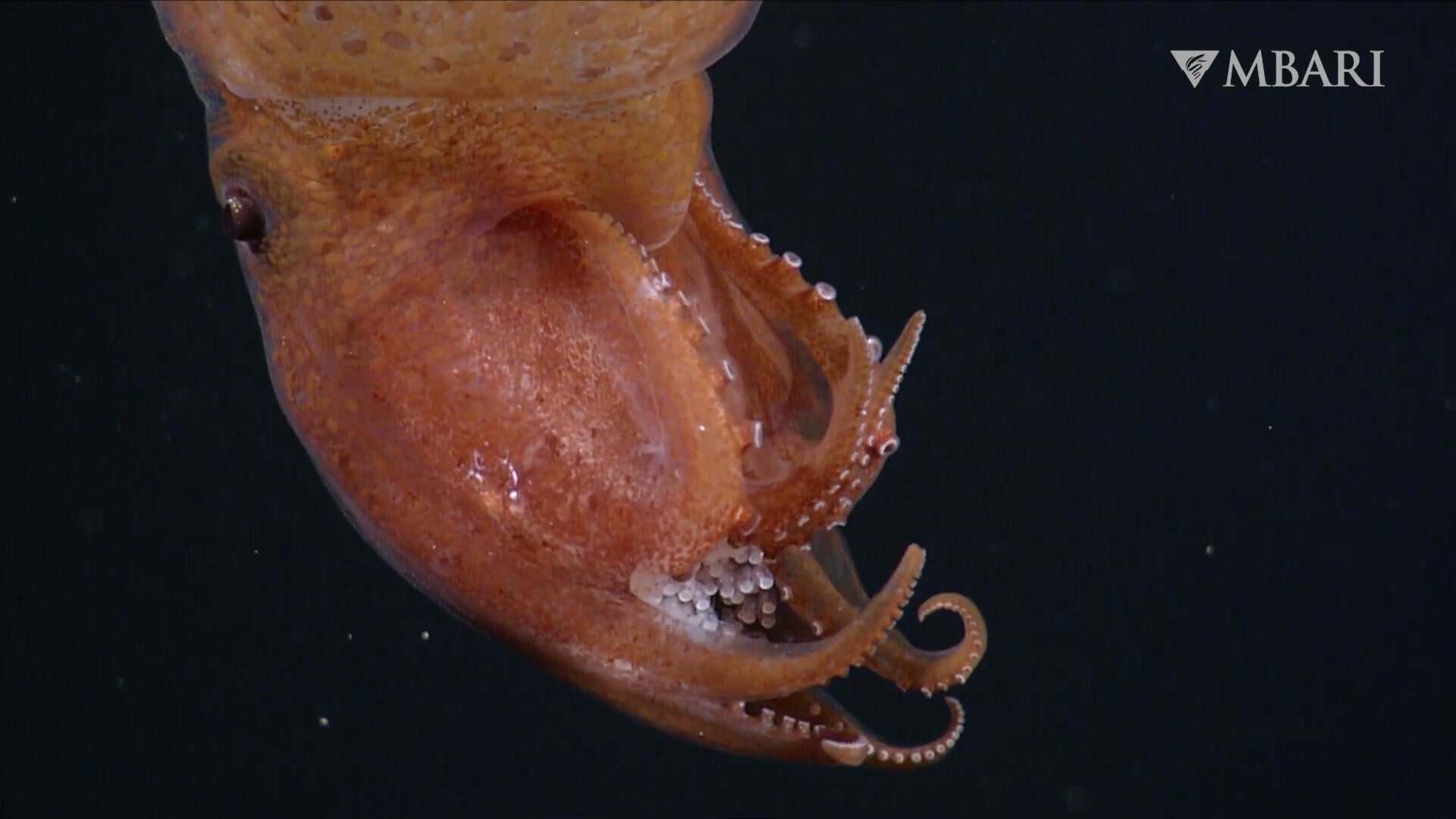
Here, Japetella is seen cradling her eggs in her “arms.”
©MBARI (Monterey Bay Aquarium Research Institute) via YouTube — used under fair use – Original / License
The Changing Twilight Zone
Once the babies hatch, the mystery deepens. Scientists believe the young octopuses float back up to the twilight zone to grow up and start the cycle over again. However, because these creatures live so far out of human sight, we still don’t know exactly how long they live or how many of them are out there.
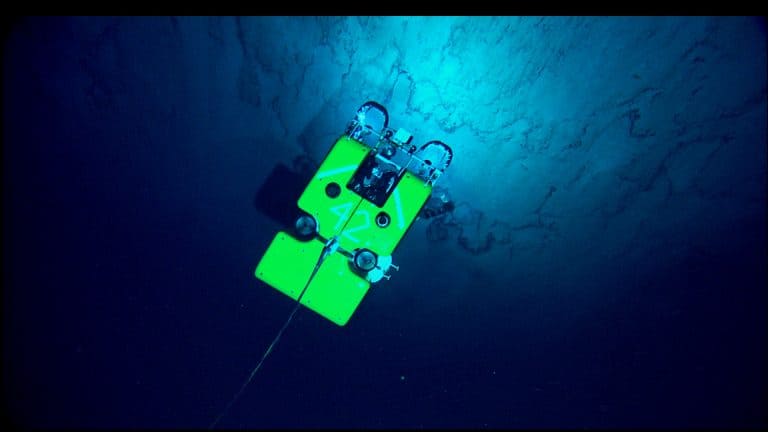
We only know about them at all thanks to advanced underwater robots equipped with high-definition cameras. In the past, scientists used nets to sample the deep ocean, but delicate, jelly-like creatures like Japetella were usually destroyed in the process. These robotic cameras have revealed that the deep ocean isn’t a vast, empty desert. Instead, it’s a complex, bustling neighborhood where life changes dramatically with every foot you descend.
But this mysterious neighborhood is changing. Human impacts, like warming waters, shrinking oxygen levels, and microplastic pollution, are now reaching deep into the twilight zone. Understanding how slow-moving, slow-growing creatures like Japetella will cope with these changes is the next big puzzle scientists are trying to solve.