
Quick Take
- Dwarf seahorses give birth in a way that would be physically impossible for other species, and their small size is the reason this is possible for them. See how size shapes birth →
- The number of babies a dwarf seahorse produces would shock anyone who's watched a larger species give birth. See the offspring count →
- The mother is not the one carrying these babies to term, and the reason goes deeper than most people realize. Explore male pregnancy biology →
- Surviving just one year in the wild forces dwarf seahorses into some surprisingly clever survival strategies. Discover their survival strategies →
Seahorses are some of the most unique animals in the sea. With species of all different shapes and sizes, these animals have many amazing traits. One dwarf seahorse species has an unusual manner of reproduction. This Instagram reel by @nickdavis.00 shows a male seahorse slowly birthing babies one by one. Read on to learn more about how dwarf seahorses are born.
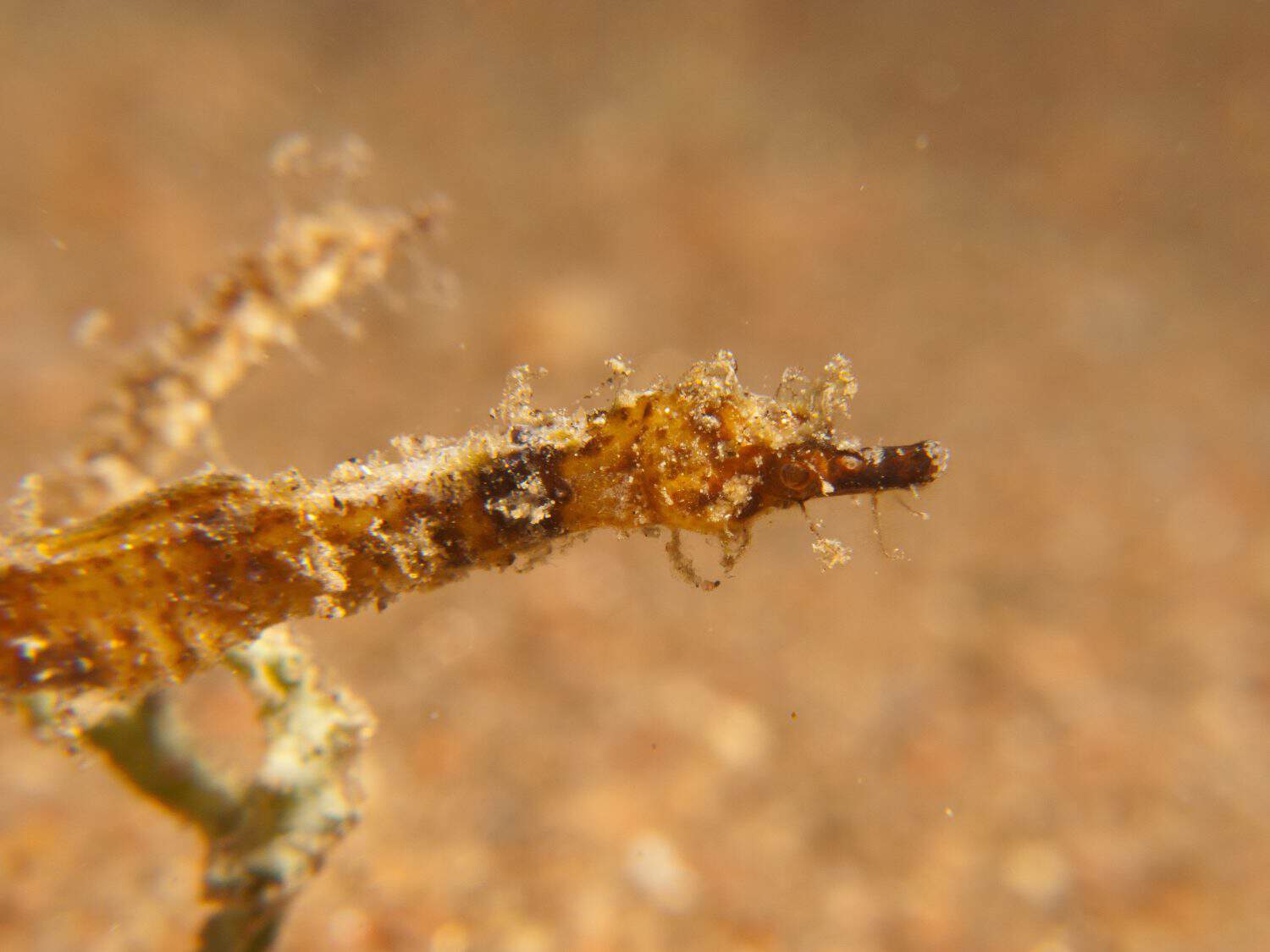
Adult dwarf seahorses only grow to about one to to inches, making them extremely difficult to see underwater.
©Silke Baron/Shutterstock.com
Dwarf Seahorse Birth
Dwarf seahorses are among the smallest species of seahorses on Earth. Adults typically grow to around one to one and a half inches, with most barely bigger than a human thumb. At this size, babies are incredibly small, only growing to a few millimeters long. Dwarf seahorses are native to the western Atlantic Ocean, including the east coast of Florida, the Gulf of Mexico, and the Bahamas. They inhabit seagrass beds that offer great protection from predators. Dwarf seahorses have a short lifespan of only around one year. In their single year, they survive by ambushing prey like tiny crustaceans, small shrimps, and zooplankton. They sit in the seagrass and wait for their food to drift by before sucking it through their long snouts. Their light green coloring helps act as camouflage in the seagrass, making them surprisingly good hunters.
Dwarf seahorses’ birth differs significantly from that of other common species. Larger seahorse species release hundreds of babies in one burst. However, dwarf seahorses birth babies slowly, with each individual emerging one by one. Males give birth to anywhere between five and 40 babies, depending on the adult seahorse’s size. Because their bodies are less robust than those of larger species, a slow birth is essential. One constant remains across all true seahorse species: the males are responsible for carrying the babies and giving birth. After the female deposits her eggs into the male’s brood pouch, the male then fertilizes them and carries them for approximately 10 days before giving birth. Dwarf seahorses often form pair bonds and will continue to mate with each other.