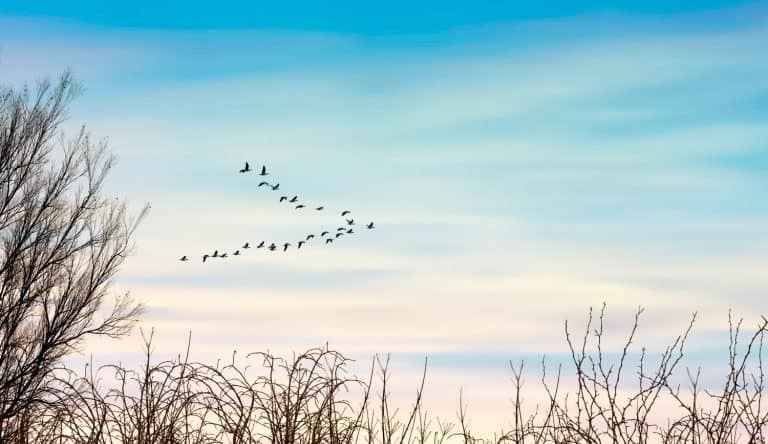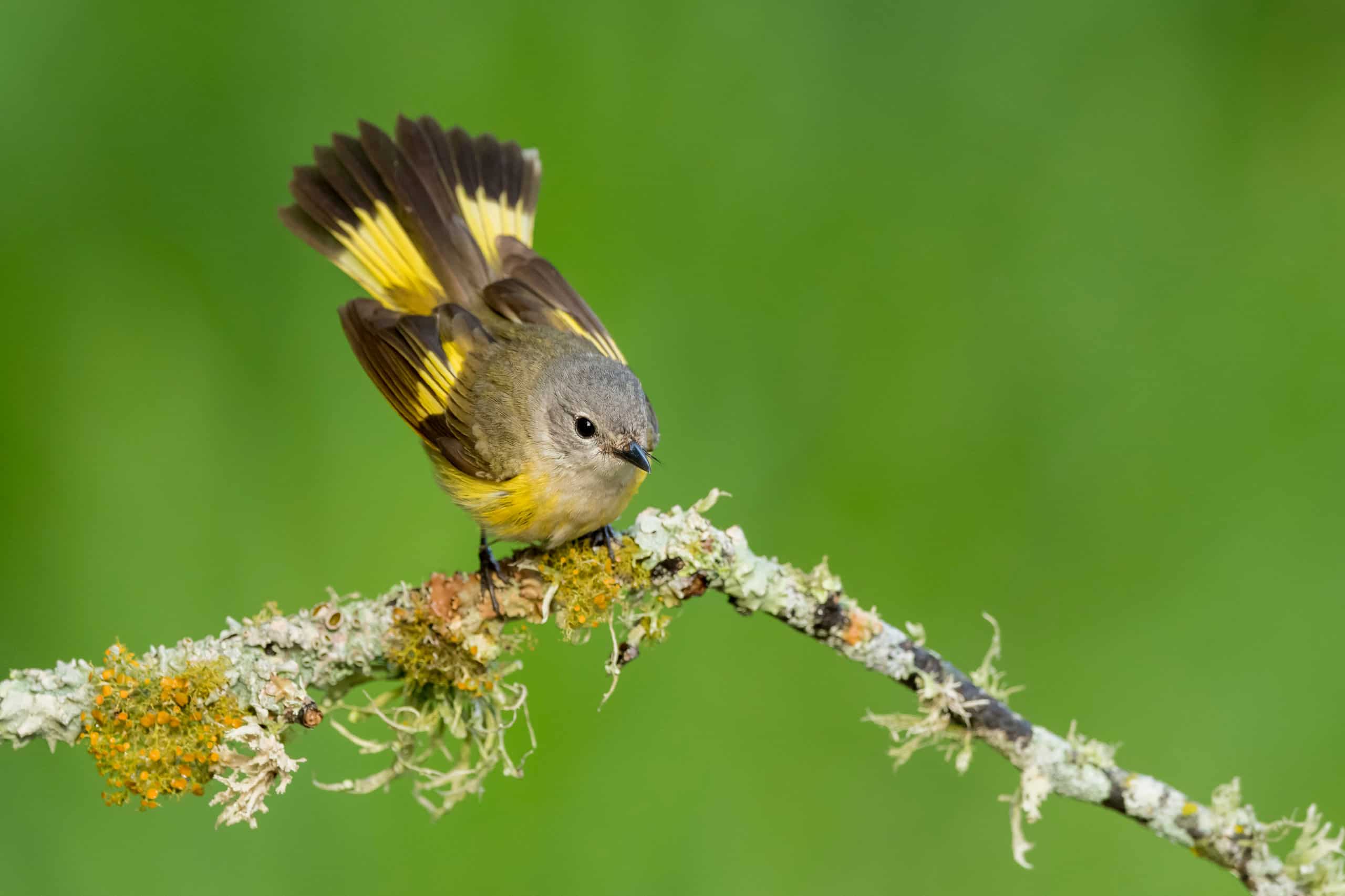

Birds across North America follow regular routes for their annual migrations. In North America, there are four “avian superhighways.” These are known as the Pacific, Central, Mississippi, and Atlantic flyways. In the spring, many migratory birds that use the Central flyway make pit stops along the coast of the Gulf of Mexico as they head northward up the middle of the country. In the fall, the birds return south, retracing their spring migration paths. Many warblers use the Central flyway in their annual migration route. These colorful songbirds are a highlight for bird watchers along the Central flyway.
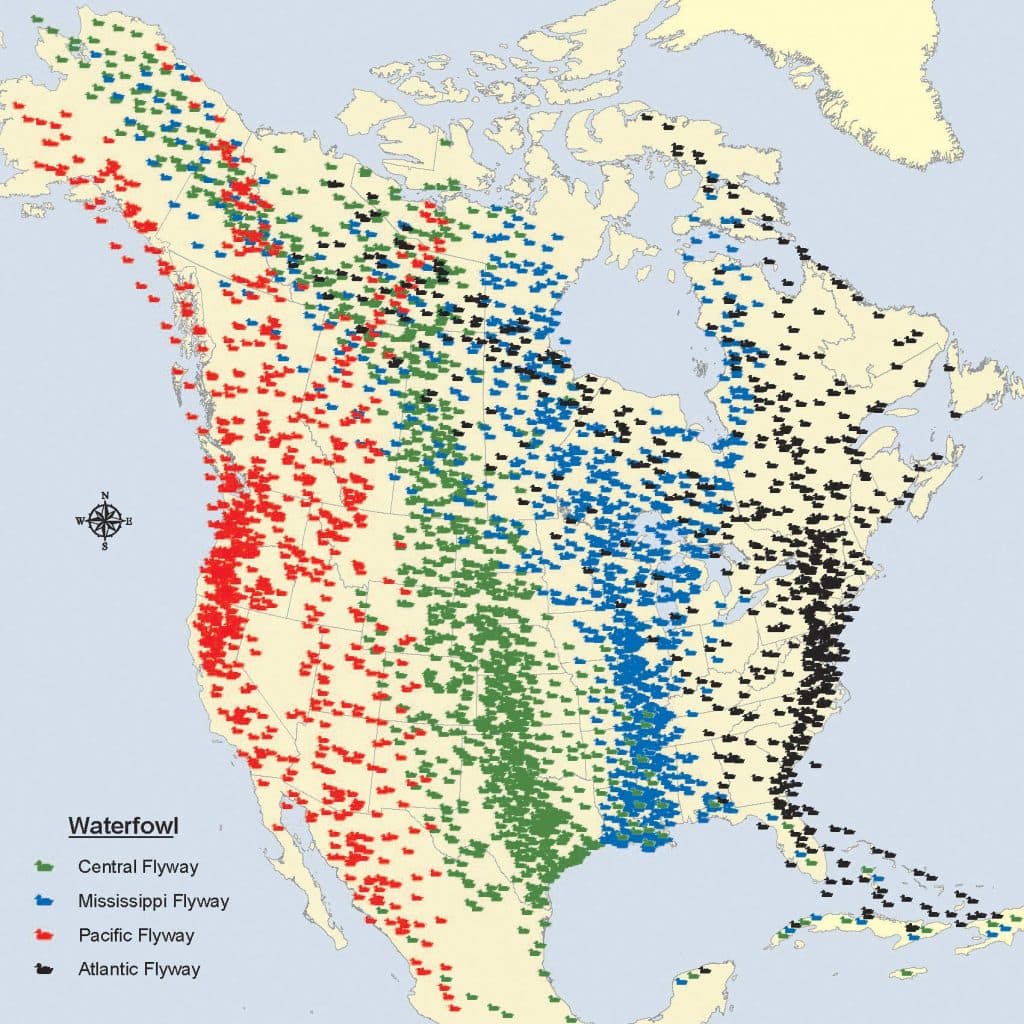
There are four major flyways in North America: the Pacific, Central, Mississippi, and Atlantic flyways.
©U.S. Fish and Wildlife Service Headquarters / Public Domain – Original / License
What Is the Central Flyway?
The Central flyway is a migration path for birds that stretches over 5,000 miles, generally beginning in Texas in the south. As birds travel north, they may pass through Oklahoma, New Mexico, Kansas, Colorado, Nebraska, South Dakota, North Dakota, Wyoming, Montana, and parts of Canada. The birds use the eastern edge of the Rocky Mountains on one side and the American prairie on the other as navigational guides.
Note that birds are not aware they are following ‘superhighways’ during migration. The four North American flyways are human-defined regions, not strict routes that all migratory birds follow. However, understanding the flyways can help anyone interested in learning about bird migration, including when and where to find certain species.
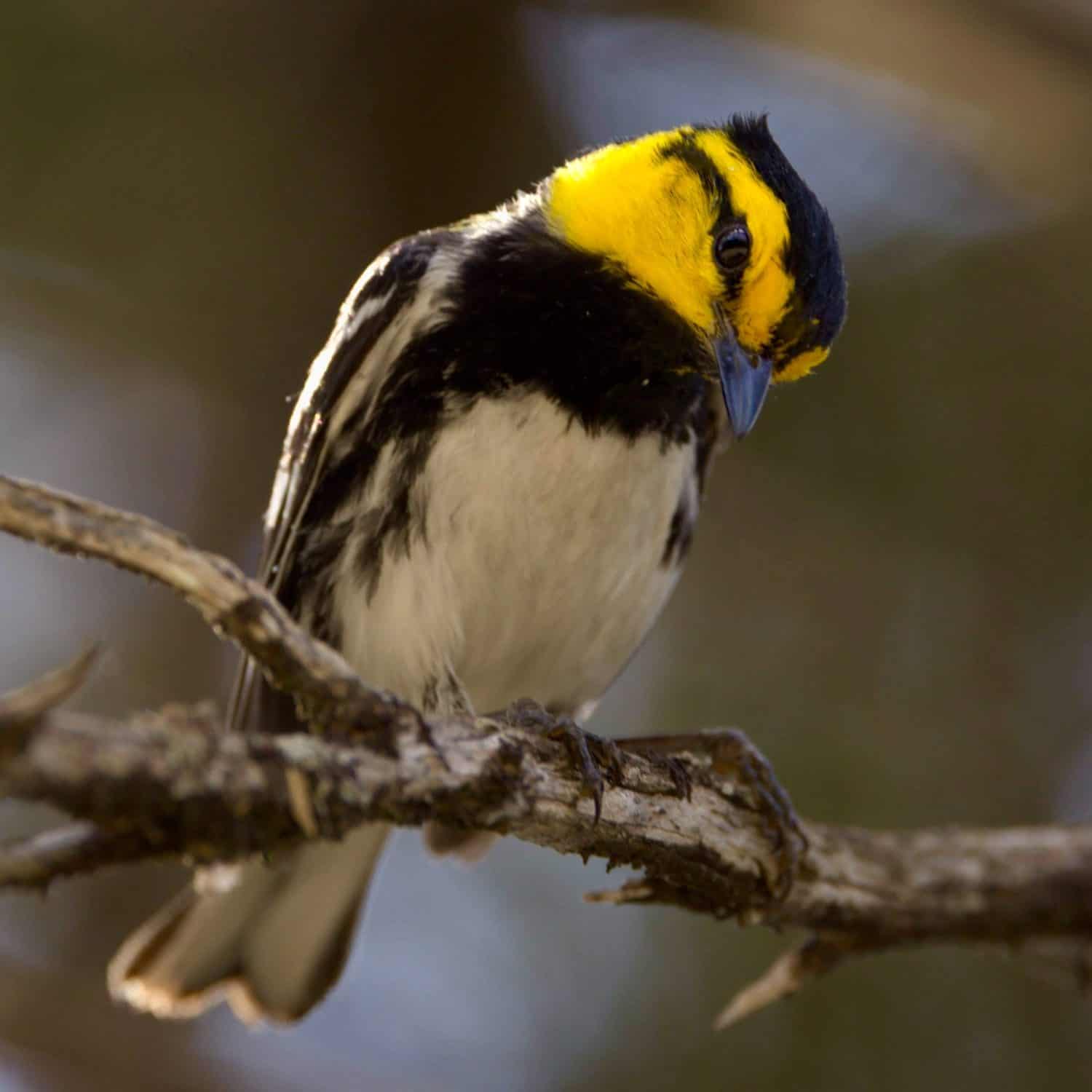
Golden-cheeked warblers are vibrantly colored songbirds that only nest in Texas.
©Wirestock Creators/Shutterstock.com
According to Audubon, over 400 different species of birds travel along the Central flyway each year. Many waterfowl use the Central flyway, including sandhill cranes and snowy plovers. However, songbirds, such as warblers, also migrate up the middle of the U.S.
What Are the Most Common Warbler Species You May Encounter Along the Central Flyway?
Warblers are colorful, small to medium-sized songbirds in the family Parulidae. There are over 50 species of warblers in the U.S. Most species of warblers spend their winters in the Neotropics and migrate north to the U.S. and Canada for the summer.
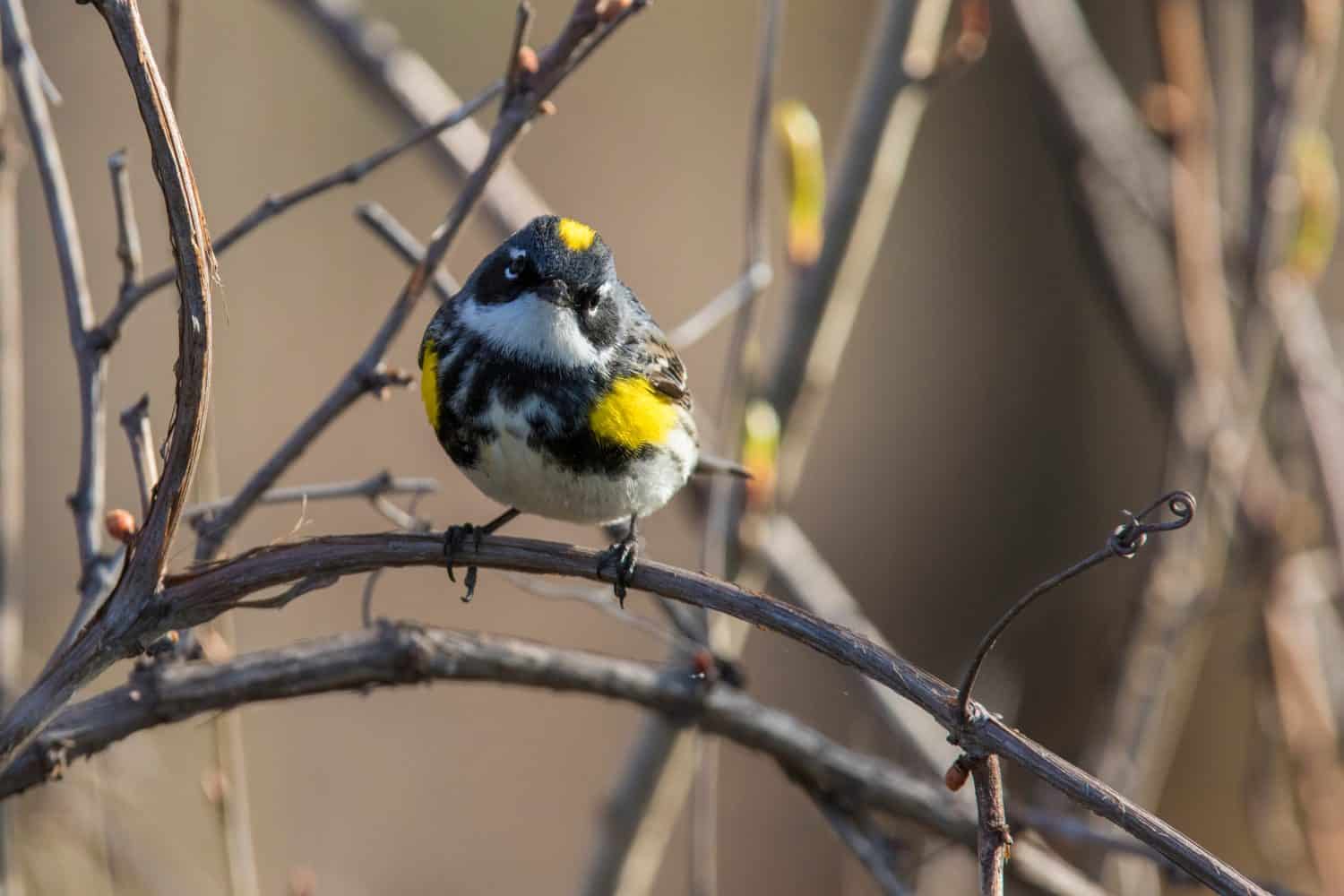
The yellow-rumped warbler is a welcome sight for birdwatchers observing the fall bird migration.
©Mircea Costina/Shutterstock.com
Dozens of different warbler species fly along the Central flyway, but some of the most common species you may encounter include the following.
American Redstart
The American Redstart (Setophaga ruticilla) is a small black songbird with bright orange colored feathers on its sides, wings, and tail. The American redstarts that migrate along the Central flyway tend to arrive in spring between late April and mid-May. Their fall journey is usually between September and early October.
Yellow-Rumped Warbler
The yellow-rumped warbler (Setophaga coronata), named for its bright yellow patch on its rump, is an abundant North American warbler species. It begins its spring migration in March through April, and leaves for the south in October.
Palm Warbler
The palm warbler (Setophaga palmarum) is a brownish-olive bird that is one of the northernmost breeding species of all warblers. Palm warblers migrate early in the spring and return to the south in late August.
American Yellow Warbler
The American yellow warbler (Setophaga petechia), or Northern yellow warbler, is a bright yellow songbird that can be commonly found across the U.S. Yellow warblers migrate north in the spring, and begin their southern migration as early as August.
Golden-Cheeked Warblers
The golden-cheeked warbler (Setophaga chrysoparia) is an endangered bird that nests only in Texas. A highlight for Texas birdwatchers, it arrives in Texas in March. By August, this small songbird departs south for Mexico.
Common Yellowthroat
The common yellowthroat (Geothlypis trichas) has different migration behaviors based on populations. Some populations live in certain areas year-round, some migrate short distances, and others undertake very long migrations. Some journey all the way to Canada and return to Central America via the Central flyway in the fall.
Best Spots to Watch Birds on the Central Flyway

The Quivira National Wildlife Refuge in Kansas is a popular spot for birdwatching.
©Jerry Segraves/Shutterstock.com
Billions of birds migrate throughout North America each spring and fall. There are so many birds overhead that meteorologists can spot them on weather radar maps. According to the Washington Post, half a billion birds can be spotted flying south each night this fall. Although birdwatching can be as simple as stepping into your own backyard, we’ve highlighted a few of the most iconic stopover sites for observing birds during the annual fall migration.
- Smith Oaks Rookery in Texas
- Salt Plains National Wildlife Refuge in Oklahoma
- Quivira National Wildlife Refuge in Kansas
- Barr Lake State Park in Colorado
- Bosque del Apache National Wildlife Refuge in New Mexico
- Freezeout Lake Wildlife Management Area in Montana