
Quick Take
- April is often prime time for spring bird migration.
- Migratory birds use “weather windows” to help conserve their energy during their travels.
- There are plenty of tools to help you track spring bird migration.
April has officially arrived, and in many regions, this month marks the peak time for spring bird migration. After a long and cold winter, many migratory birds are now embarking on their travels north.
Wondering why migration intensifies in April and how to track the journey in your area? We speak with an ornithologist about spring migration patterns and tools to stay informed.
Why Bird Migration Intensifies in April
In many parts of the U.S., the main wave of spring bird migration typically peaks in April, though it varies by region.
“Spring bird migration intensifies in step with the continent-wide spring green-up, sometimes referred to as the ‘green wave,’” says Bob Mulvihill, lead ornithologist at the National Aviary. “As days lengthen and warm, the leaf buds of deciduous trees and shrubs begin to swell and open, slowly but steadily from south to north.”
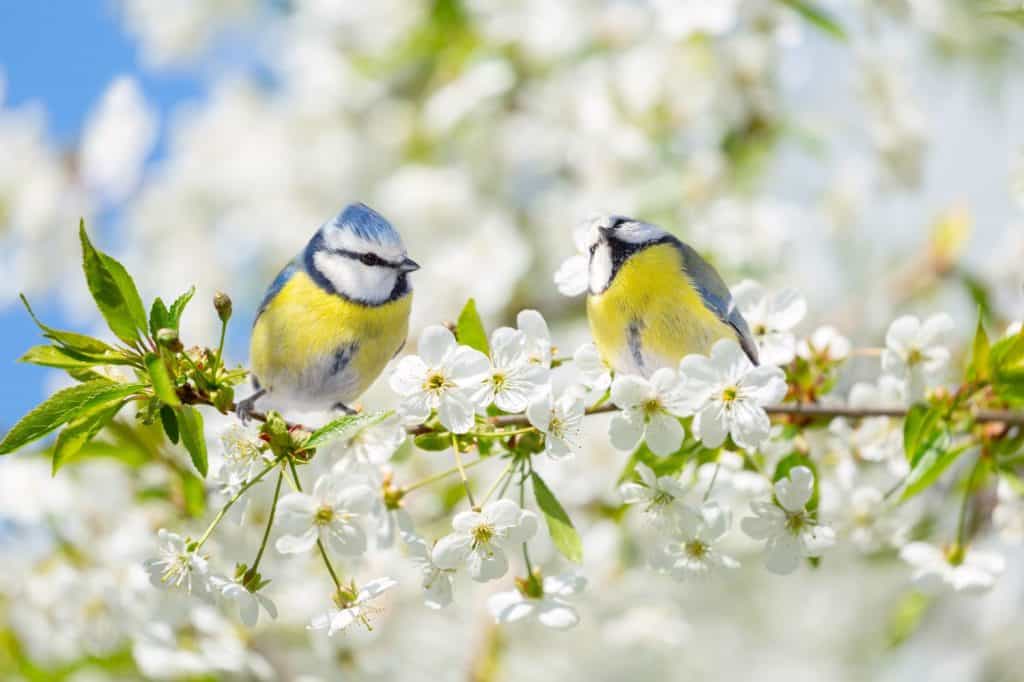
As spring arrives, so do many migratory bird species.
©Nitr/Shutterstock.com
“In step with the green wave, phytophagous (leaf-eating) insects emerge, such as the hundreds of kinds of caterpillars and other insect larvae that begin to hatch from overwintering egg masses as soon as temperatures begin to warm and the first leaves begin to unfold,” he adds.
This “green-up” typically occurs between March and June, depending on location. This makes April the peak migration time for many birds.
“It’s not just the unfolding leaves that spark migration,” Mulvihill continues. “Some trees, like willows, maples, birches, and alders, put out their flowers even ahead of their leaves, and the flowers attract newly emerged insects that feed on pollen or nectar. And once the green-up begins, migrating birds are never far behind!”
Types of Birds That Migrate in April
Depending on the species, migratory birds reach their destinations at different times during the spring season.
“In general, shorter distance migrants, i.e., those returning from wintering areas in the southern U.S. or Mexico, and perhaps not going farther north than New England, return first,” says Mulvihill. “Those that overwintered in Central America come in the next wave. The longest distance migrants, species that wintered in South America and which may be heading to northern Canada and even Alaska, are last in line.”
In April, many parts of the U.S. begin to see birds like the blue-gray gnatcatcher, small wood warblers, thrushes, and vireos return to their respective locations.
It is important that they pace their migration so that they do not arrive in northern areas too early, before food is widely available, and when freezing weather may still occur.
Bob Mulvihill, lead ornithologist at the National Aviary
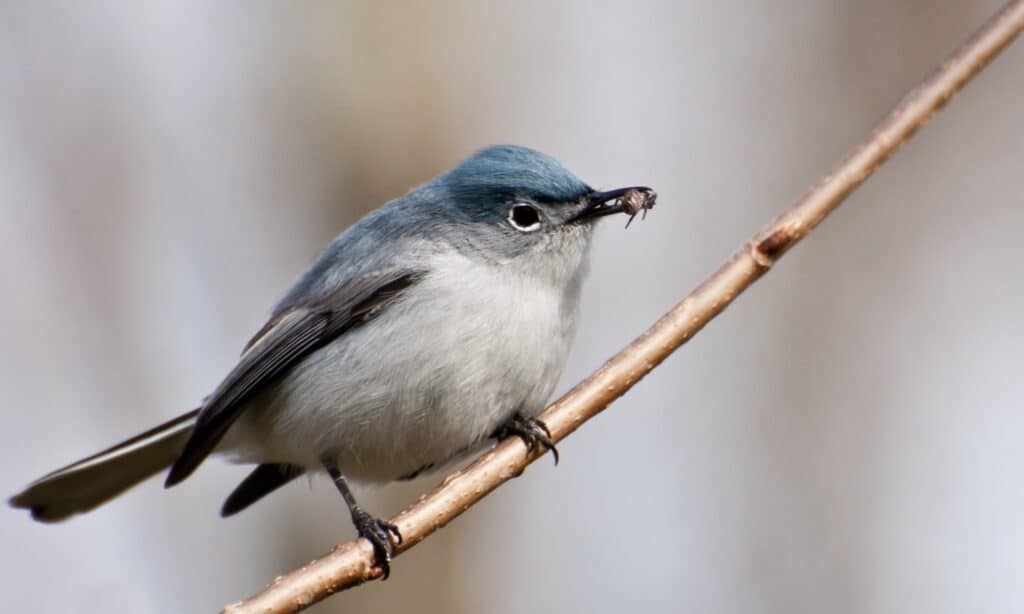
In April, the blue-gray gnatcatcher arrives in many parts of the U.S.
©iStock.com/JasonOndreicka
“North American breeding grounds fill up from south to north—so birds that nest, for example, in western Pennsylvania arrive earlier than birds of the same or different species that breed farther north in New England and Canada,” Mulvihill adds. “Because the breeding season is shorter the farther north you go, birds that breed farther north not only arrive later but also leave earlier in fall.”
Additionally, in some migratory bird species, male birds arrive before female birds to establish their territories.
“You can make a study of this yourself,” says Mulvihill. “Put your hummingbird feeder out early, say by April 10, then wait and see if the first hummingbird to visit it is a male. If it is, then see how long it is before you see the first female.”
How Migrating Birds Use ‘Weather Windows’ to Optimize Energy
Birds are highly adapted for migration and take advantage of optimal weather conditions when traveling. Also referred to as “weather windows, these periods of favorable weather help birds conserve energy and journey farther.
“It is important that they pace their migration so that they do not arrive in northern areas too early, before food is widely available, and when freezing weather may still occur,” says Mulvihill. “But they do need to arrive early enough to ensure they can find a territory, attract a mate, and have enough time to raise a brood of young, leaving enough time to undergo a complete molt of all their feathers before heading south again to their wintering grounds.”
Why Is Nighttime Migration Invisible to Most People?
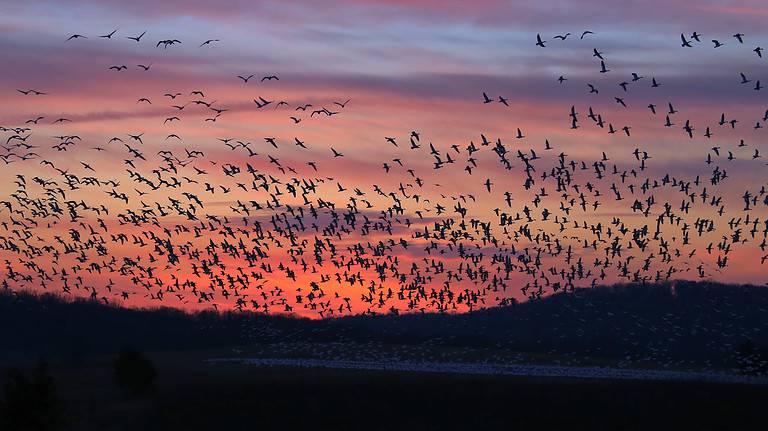
According to Mulvihill, for many birds, spring migration occurs at night. Most songbirds will travel after dark, using stars as navigational cues. They also tend to fly at high altitudes. As a result, their migration is often invisible to the naked eye.
“Although we cannot see small birds migrating hundreds of feet up in the nighttime sky with our eyes, their nocturnal migrations actually are not entirely invisible to us,” Mulvihill notes. “On nights during the migration season when there is minimal noise pollution, you may be able to hear their migration in the form of a wide variety of faint chips, tweets, whistles, and buzzes raining down from hundreds of feet above you in the starry sky.”
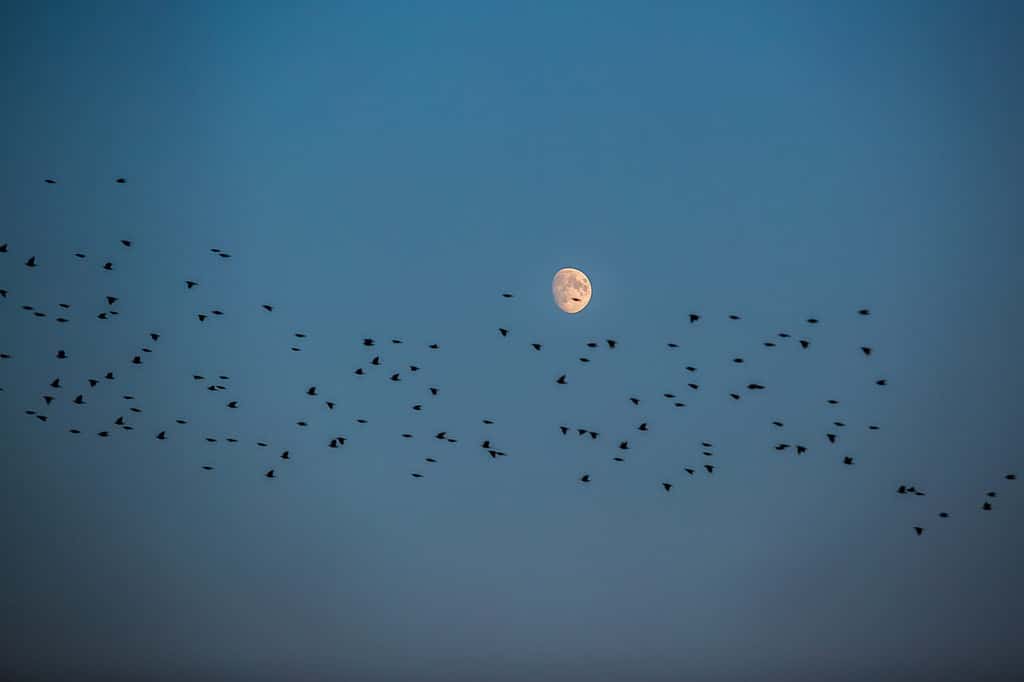
Songbird migration often occurs during the night.
©Lioneska/Shutterstock.com
These are called “nocturnal flight calls,” often high-pitched and distinct to each species, he adds.
“Ornithologists have learned how to listen to them using specialized microphones pointed at the sky,” Mulvihill continues. “They can view the nocturnal flight calls as spectrograms on a computer attached to the microphone. Scientists can also detect unseen nocturnal bird migration on radar!”
Tools to Help Keep Up with Migrations Near You
As Mulvihill suggests, many ornithologists and scientists use tools to track and study bird migration.
“In fact, ornithologists have gotten so good at using radar to study bird migration that they can even provide birders with the equivalent of weather forecasts, for example, letting birders in a given area know when it may be ‘raining’ migrant warblers the next morning,” he explains.
One such tool is called BirdCast (via Cornell Lab of Ornithology), which enables experts to identify migratory bird species and densities. You can access it yourself for your own migration forecasts. Additionally, consider programs like the National Aviary’s Outdoor Birdwatching & Ecotourism Trips, field trips by your local Audubon, or other birding clubs and organizations, says Mulvihill.
He also recommends downloading Cornell’s Merlin bird identification app, which will “listen” to bird sounds around you and identify the species. You can add photos or descriptions to reap the same results.
However, sometimes the best birding experiences can be enjoyed from the comfort of your own home.
“Go birding in your backyard or local park as often as you can on spring mornings, because the remarkable nocturnal migration of millions of birds night after night means that the cast of feathered characters will be different just about every day!” Mulvihill says.