
Quick Take
- Most bite-mark fossils leave key questions unanswered, but this one identifies both the victim and the attacker. Read about the skull discovery →
- This skull sat in a museum collection for decades before revealing its secret, and it took an unexpected tool to finally crack it open. Discover the CT scan findings →
- The exact location of the tooth in the skull paints a terrifying picture of the Edmontosaurus's final moments, and it also raises a darker question. Explore the attack's fatal details →
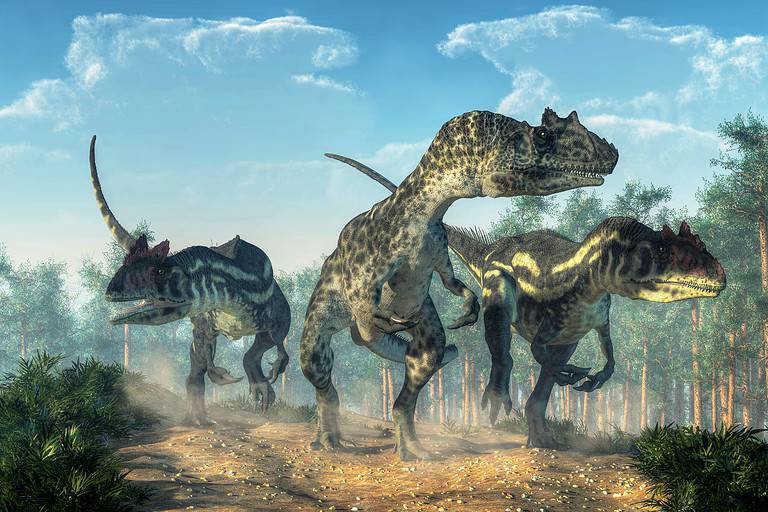
Millions of years ago, the state of Montana was dominated by one of the most famous dinosaurs to ever live. Near the end of the Age of Dinosaurs, around 66 million years ago, Tyrannosaurus Rex ruled the area. It was the biggest dino on the block. Tyrannosaurus also shared its environment with other massive creatures like horned Triceratops and the duck-billed herbivore Edmontosaurus. Until recently, scientists did not know exactly how these creatures interacted.
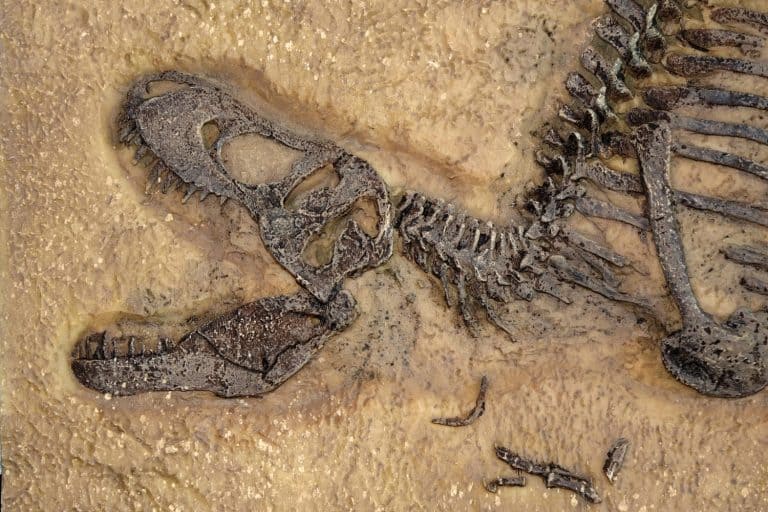
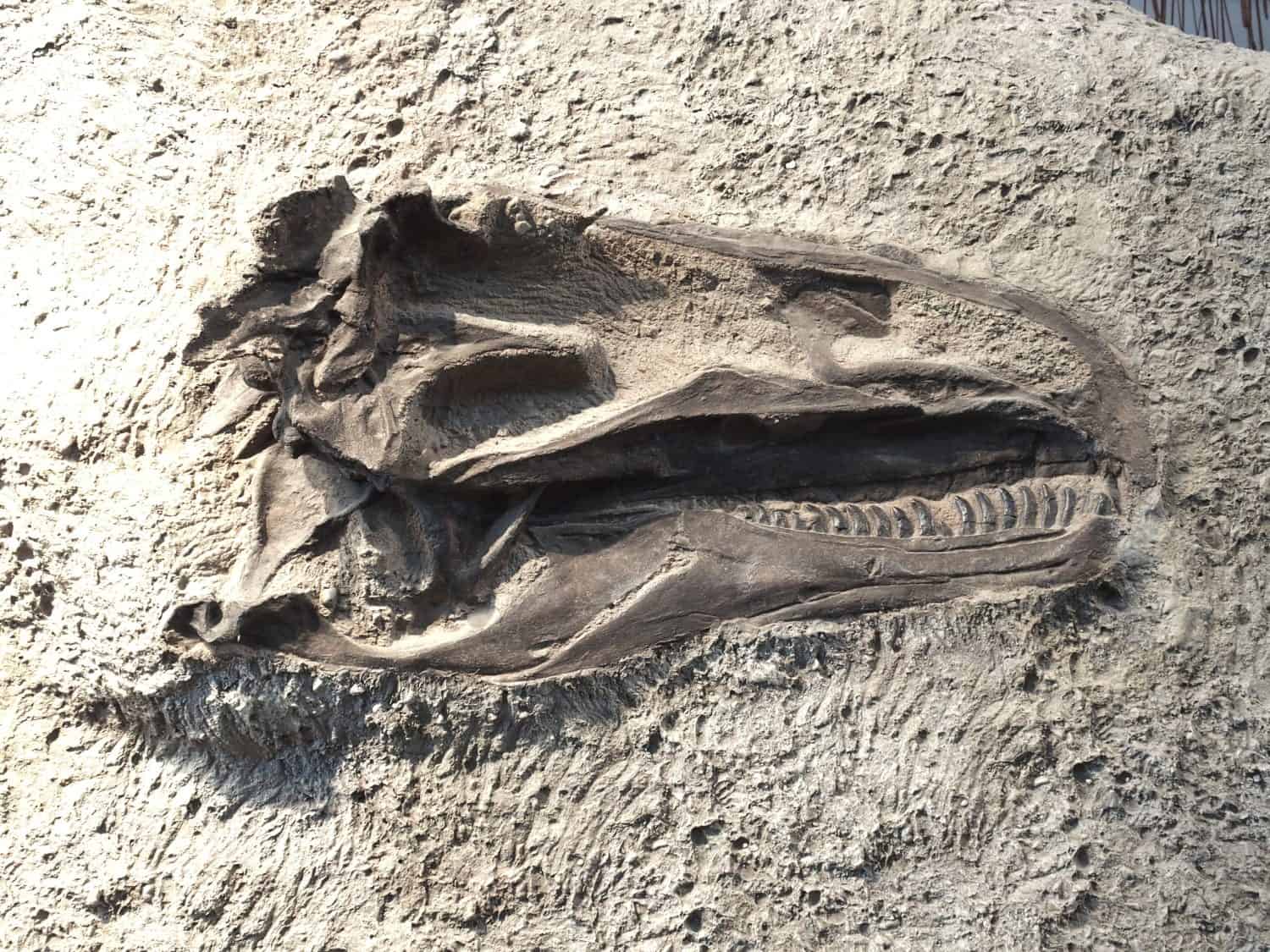
A new study by researchers from Montana State University and the University of Alberta in Canada presents an incredible finding: the fossil of an Edmontosaurus skull with a broken tyrannosaur tooth still lodged in its face. It was undoubtedly a violent end, but this fossil also offers an incredible glimpse into a time when massive dinosaurs roamed the land. Let’s explore this fascinating fossil, its discovery site, and what it reveals about the interactions between some of the largest creatures ever to walk the Earth.
Hell’s Creek
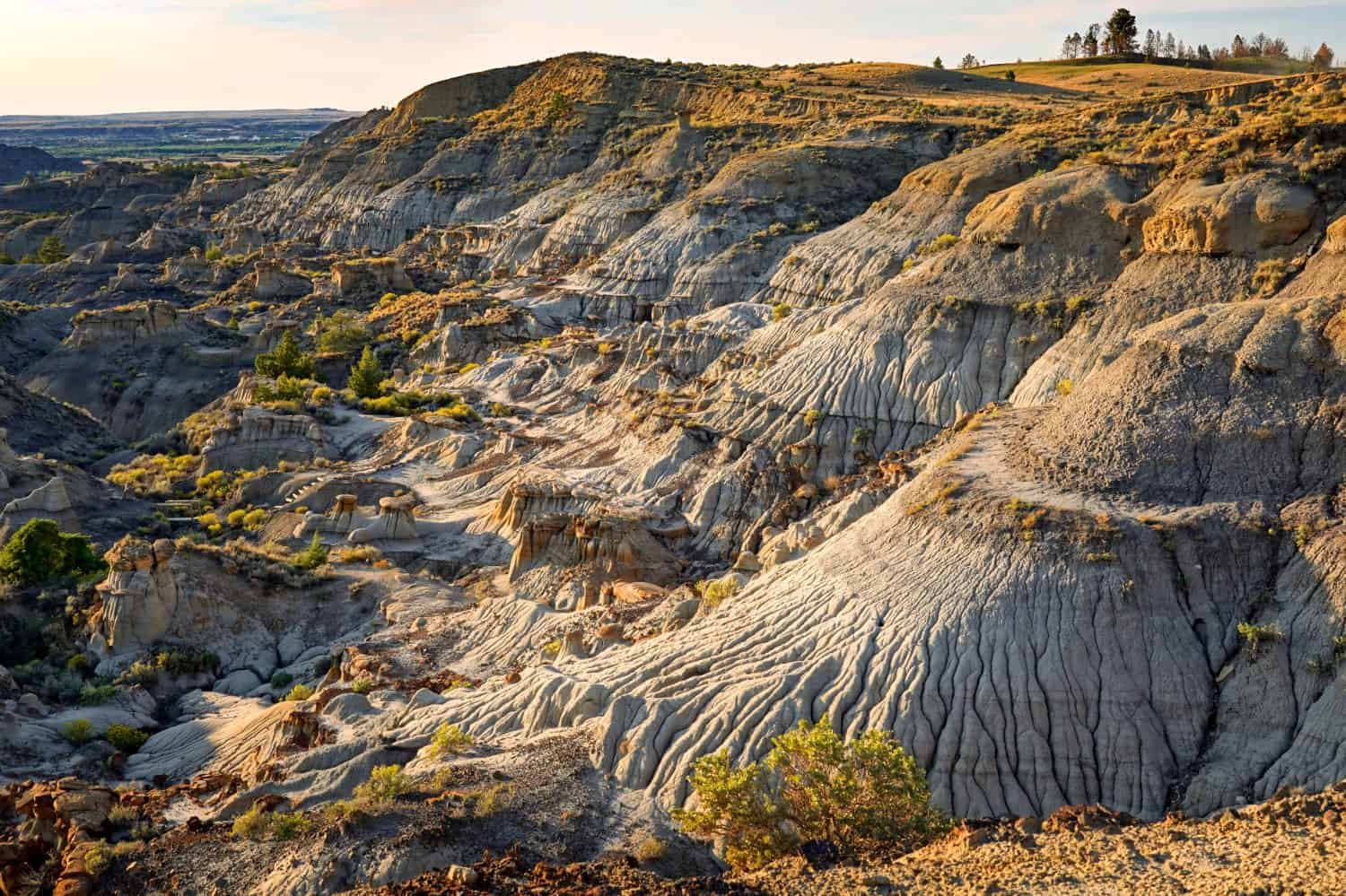
Hell’s Creek Formation contains the largest deposit of dinosaur fossils yet found in North America.
©PT Hamilton/Shutterstock.com
In eastern Montana, in an area managed by the Bureau of Land Management, sits an unassuming expanse of badlands and grasslands. However, this area is a veritable goldmine of fossils. It remains one of the regions most intensely studied by paleontologists in the world. Called the Hell’s Creek Formation, it contains an incredible breadth of deposits from roughly 66 million years ago.
The once-great Western Interior Seaway left behind layers of clay, mudstone, and sandstone. Although the region is more temperate today, 66 million years ago it was warm and humid, filled with tropical trees and animals. This makes it North America’s most diverse ancient boneyard. It contains fossils of everything from early mammals and ancient plants to crocodiles. It also holds some of the secrets of the Age of Dinosaurs.
In 2005, researchers uncovered one of the more fascinating dinosaur fossils on record: the skull of an Edmontosaurus with a broken tyrannosaur tooth still stuck inside. A new study from researchers at Montana State University and the University of Alberta in Canada illuminates the behavior of these two ancient, mighty creatures and how they may have interacted. As researcher and doctoral student Taia Wyenberg-Henzler explained, such findings are rare. She said, “Although bite marks on bones are relatively common, finding an embedded tooth is extremely rare. The great thing about an embedded tooth, particularly in a skull, is it gives you the identity of not only who was bitten but also who did the biting. This allowed us to paint a picture of what happened to this Edmontosaurus, kind of like Cretaceous crime scene investigators.”
Fascinating Findings
Published in February in the Journal of Paleontology, the study provides further evidence of how Edmontosaurus and Tyrannosaurus interacted. The skull with a tooth lodged in it sat in the Museum of the Rockies’ paleontology collection for decades. Luckily, researchers decided to take a second look at it. While researchers had some idea of what the fossil represented, advances in technology helped reveal what was really happening.
Researchers first compared the embedded tooth with those of every known meat-eating dinosaur found in the Hell Creek Formation. This pointed to the famed and feared Tyrannosaurus. Next, they initiated CT scans of the skull at Advanced Medical Imaging at Bozeman Health Deaconess Hospital. This gave researchers insight into the sequence of events that led to the tooth being embedded in the skull.
As the Museum of the Rockies Curator of Paleontology, John Scannella, explained, “A fossil like this is extra exciting because it captures a behavior: a tyrannosaur biting into this duckbill’s face. The skull shows no signs of healing around the tyrannosaur tooth, so it may have already been dead when it was bitten, or it may have died because it was bitten.”
Understanding Behavior
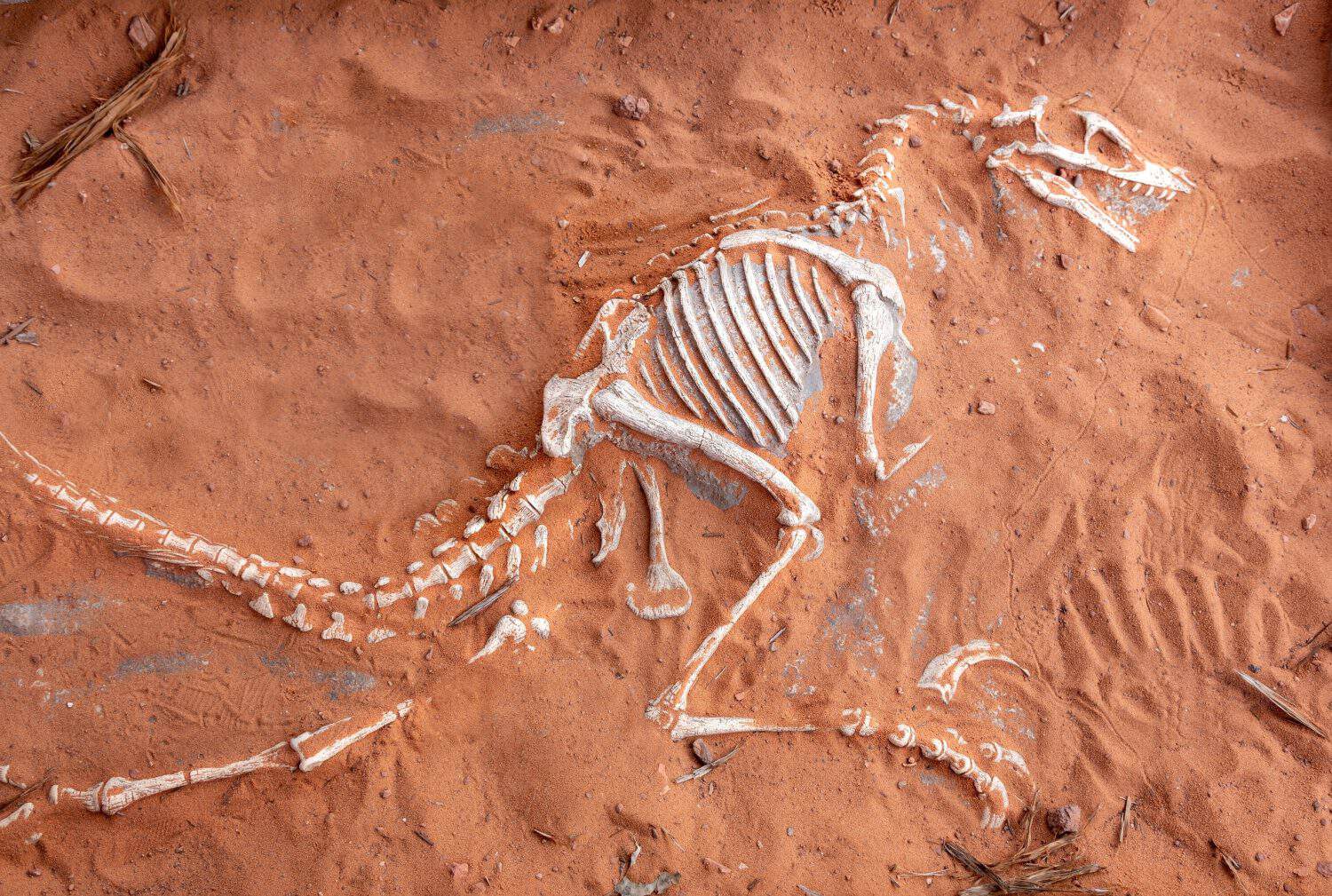
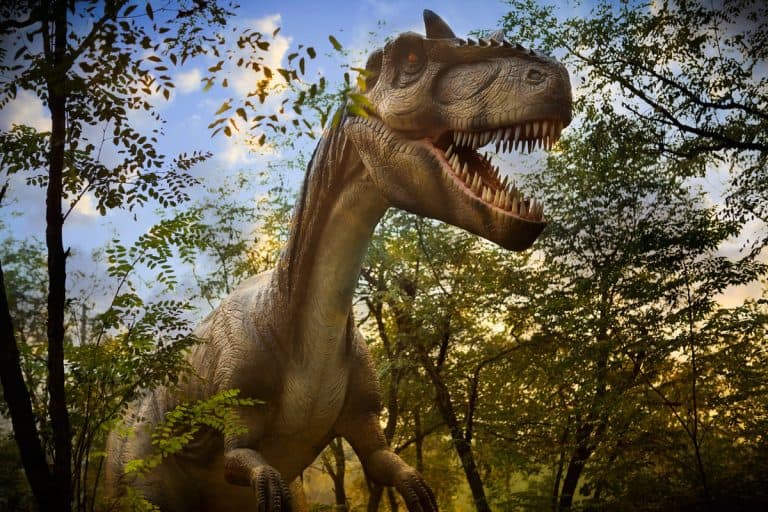
The fact that the T. Rex tooth was lodged in the front of the Edmontosaurus skull suggests that the predator attacked its prey face-to-face.
©Autumn Sky Photography/Shutterstock.com
Paleontology requires a great deal of inference and, at times, outright guesswork. This is especially true when it comes to creatures that lived 66 million years ago. However, the Edmontosaurus skull with a T. Rex tooth lodged in it provides researchers with new insights into the behavior of each dinosaur. This fossil has helped paint a picture of the feeding habits of Tyrannosaurus.
The placement of the tooth in the Edmontosaurus skull can tell researchers quite a lot. Researcher and doctoral student Taia Wyenberg-Henzler said, “Looking at the way the tooth is embedded in the nose of the Edmontosaurus suggests that it met its attacker face-to-face, something that usually happens to an animal that was killed by a predator. The amount of force necessary for a tooth to have become broken off in bone also points to the use of deadly force. For me, this paints a terrifying picture of the last moments of this Edmontosaurus.”
Such findings improve our understanding of how one of the largest predators ever to walk the Earth hunted its prey. They also clear up some longstanding debates in the paleontology community. Given the vast size of the Hell’s Creek Formation, there is no telling what other discoveries await.