
Quick Take
- There are three distinct ways to filter a fish tank, but beginners only need one piece of equipment to handle all of them. See the all-in-one filter →
- A preset heater sounds like the easier choice, but there are several reasons beginners are usually better off with an adjustable heater. Avoid this heater mistake →
- The substrate at the bottom of your tank does more than set the mood. The wrong choice can quietly work against your fish. Choose the right substrate →
If you’re considering a fish tank, the process might seem overwhelming. Aside from the actual act of keeping a fish alive, there’s an entire setup to worry about. The good news is this: You don’t need a fancy aquarium with all the bells and whistles. In fact, most people start out with only four main essentials. These are easy to find, even easier to set up, and require little maintenance throughout your future fish’s life.
The Tank
Aquarium tanks are made of two materials: acrylic and glass. Choosing one depends on your needs and the type of fish you’ll be housing. Glass tanks are the most common and are popular among first-time fish owners. They’re scratch-resistant, cheaper, and longer-lasting. This is the best option for a standard setup.

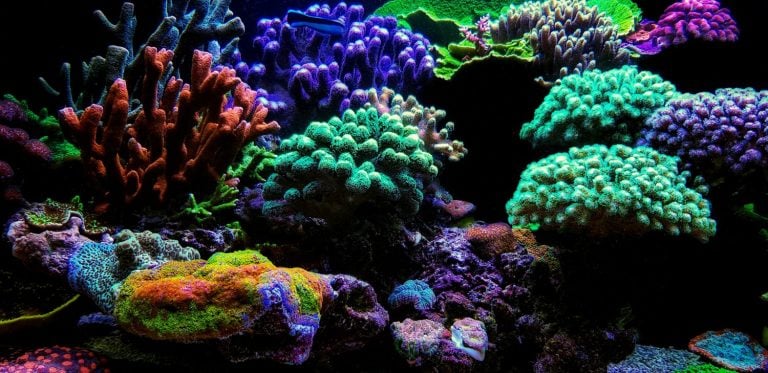
The type of tank you choose also affects the quality of your aquarium.
©Theera Disayarat/Shutterstock.com
For those who want to expand or customize their tank, acrylic is a better option. Although acrylic tanks are more prone to scratches, they can be molded into various shapes and are both stronger and lighter than glass. Depending on your display preferences and the number of fish you plan to keep, acrylic may be the better choice for larger habitats.
Filtration System
When it comes to filtration, you’ll find there’s an entire world of filtering systems. Rather than getting overwhelmed, stick with what works for your tank.
| How It Works | |
| Mechanical | Traps physical debris and uneaten food using sponges or filter floss. |
| Chemical | Uses activated carbon or resins to remove odors, discoloration, and impurities. |
| Biological | Provides a surface for beneficial bacteria, which colonize and break down toxic waste. |
For a first-time fish tank owner, the best type of filtration system is an HOB (hang-on-back). This filter does it all: mechanical, chemical, and biological filtration. It’s also extremely easy to attach, and simply hangs on the back edge of your fish tank. Large tanks may require a canister filter, but HOB filters are ideal for small- to medium-sized tanks.
Heater
It might seem easier to purchase a preset heater, but first-time fish tank owners are better off with an adjustable option. Whereas preset heaters are locked at a set temperature, adjustable heaters allow you to adjust the temperature based on the tank conditions. In the event one of your fish is sick or the tank has an overgrowth of bacteria, tweaking the temperature can do a world of good.
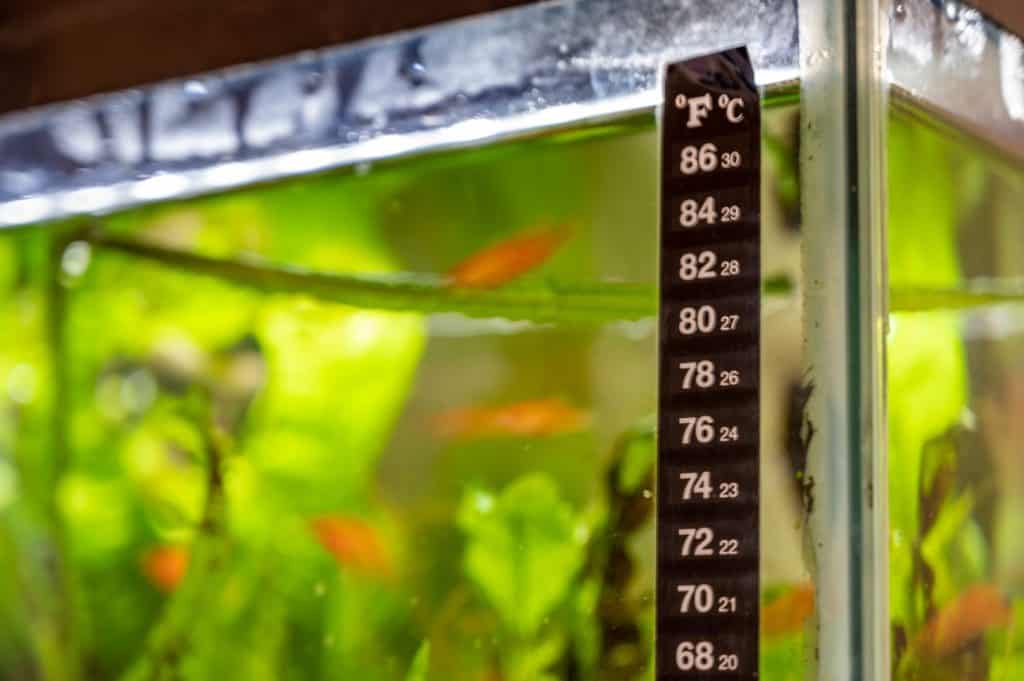
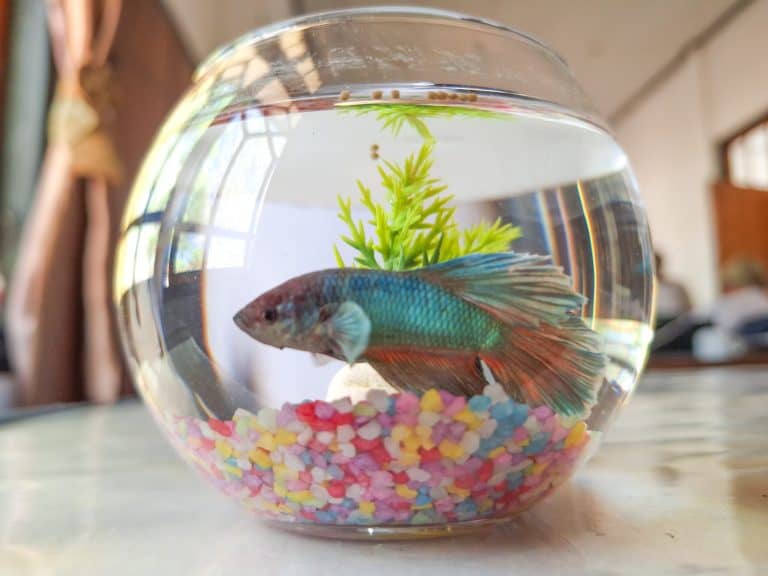
Heaters are essential to maintain consistent tank temperatures for your fish.
©Lost_in_the_Midwest/Shutterstock.com
Adjustable heaters can be placed directly into the tank without the need for complicated installation. It’s best to place heaters next to or near filters, so you may want to attach the heater to the side of the tank. You can also stand it up vertically. This will help circulate warm water, which keeps your tank healthy and consistent.
Substrate and Decor
For first-timers, there are three primary options for fish tank substrate: Aqua Soil, Aqua Gravel, and sand. Each has its own benefits depending on your tank setup and the species you plan to keep. If you plan to use live plants, Aqua Soil is the best option, as it provides firm anchoring for future plants. It’s also nutrient-rich, which provides sustenance for aquatic plants.
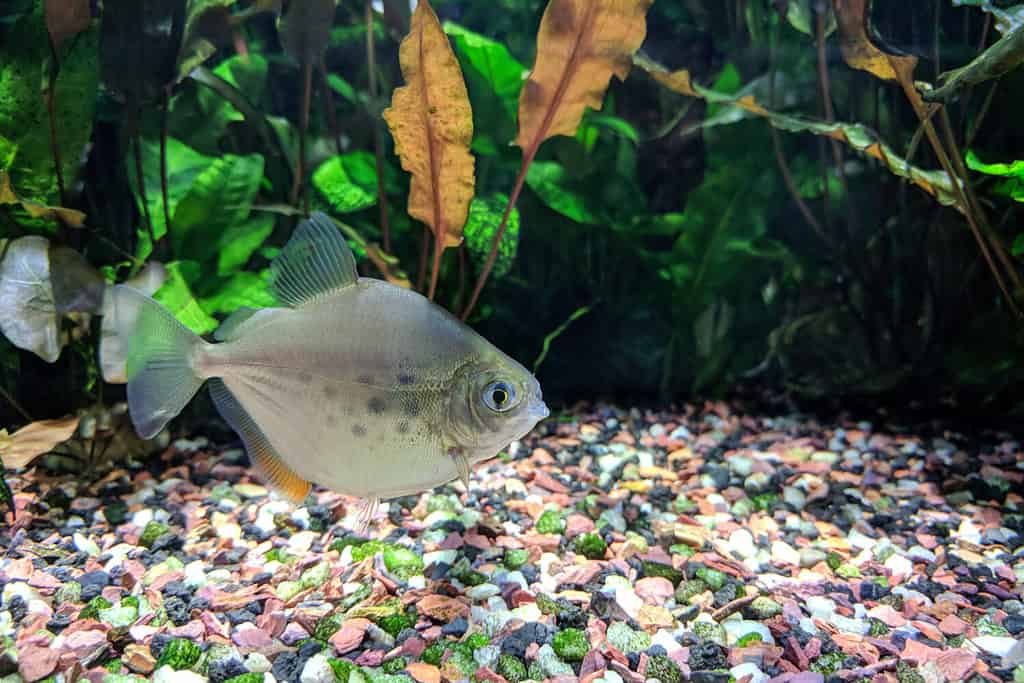
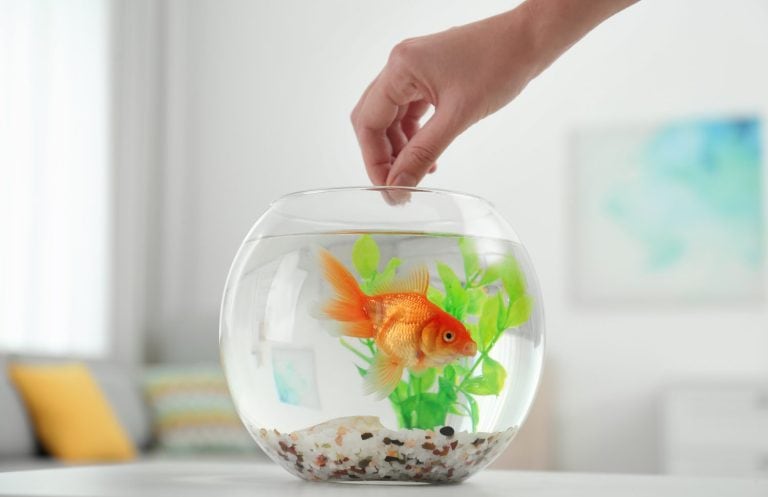
Gravel is a popular choice, especially for tropical fish.
©You Touch Pix of EuToch/Shutterstock.com
If you plan to use artificial plants, Aqua Gravel is a suitable choice. It is ideal for tropical fish and goldfish, and will keep the tank clean. It also comes in a variety of colors, which is great for those looking to have fun with their tank customization. While soil can get murky and require a little more TLC, gravel is typically low-maintenance. No matter which substrate you use, be sure to rinse it thoroughly before adding it to your tank!
Extras and Additions
While decor isn’t essential, it provides stimulation for your fish and gives fish tanks a unique look. There’s no end to the types of decor you can add to your tank. The sky — or in this case, the water — is truly the limit. Artificial decorations and plants are easier to maintain. They do not require ongoing care and do not produce byproducts that would necessitate frequent cleaning. For more playful fish, bubble-activated decor or hiding places are excellent additions.
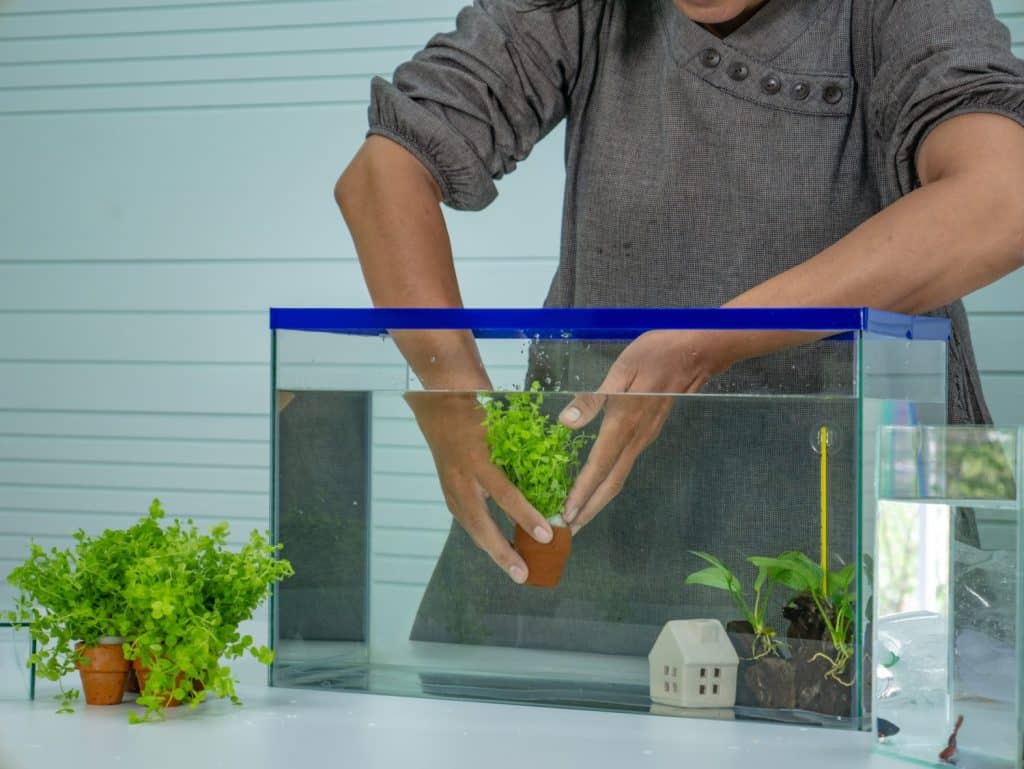
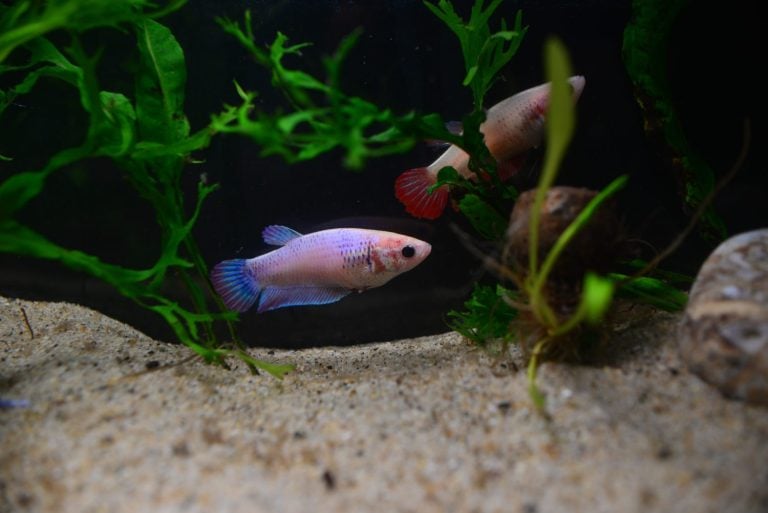
Live plants require TLC and extra care, but they make your tank look realistic.
©Sumeth anu/Shutterstock.com
It’s also not necessary to have an aquarium test kit, but it can save you a lot of heartache later on. Test kits are relatively cheap at roughly $12. They measure nitrite, nitrate, carbonate hardness, general hardness, and pH levels in both freshwater and saltwater aquariums. This helps you maintain the appropriate water parameters for the specific fish in your tank.