
Quick Take
- While prehistoric crocodilians were undeniably massive, many popular claims of 40- to 50-foot monsters are based on outdated or fragmented data. Modern paleontological modeling has refined these estimates, placing the largest giants like Sarcosuchus and Purussaurus at a more realistic but still terrifying 33 to 36 feet.
- Having a 5.5-foot skull creates massive structural complications for Sarcosuchus during high-speed attacks.
- The Mourasuchus defies predatory logic by utilizing a highly unusual duck-like face for survival.
- Analyzing Late Miocene fossil records was essential to identifying why Purussaurus faced almost zero predators.
Crocodiles already inspire fear at their modern size, but today’s saltwater crocodiles are only a shadow of what once lived in Earth’s rivers and wetlands. The fossil record shows that some prehistoric crocodile relatives grew to astonishing proportions, rivaling large dinosaurs in length and mass. Separating myth from measurable science, however, is essential—because many popular claims about “super-sized” crocodiles rely on outdated estimates or outright errors.

Here’s what scientists actually know about the largest crocodiles and crocodile-like reptiles to ever exist.
The Biggest Crocodile-Like Reptile Ever Discovered
Among all known crocodyliforms, Sarcosuchus imperator stands as the largest reliably supported giant. This massive predator lived during the Early Cretaceous period, roughly 112 million years ago, in what is now the Sahara region of North Africa.
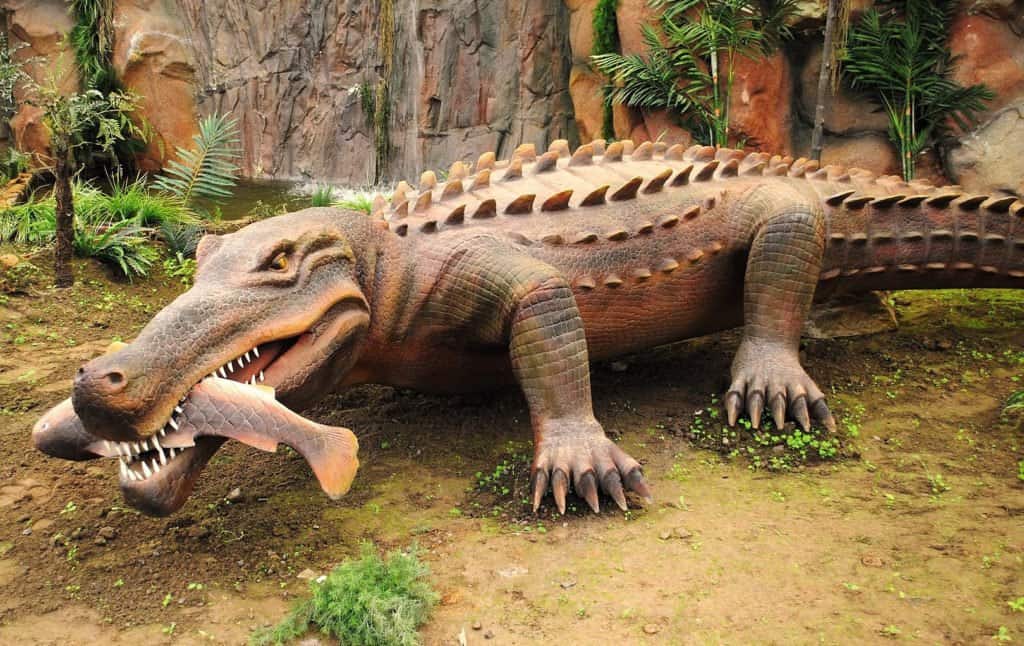
Sarcosuchus imperator (flesh-eating crocodile) is nicknamed “supercroc.” With an estimated body length of 40 feet and a skull over 5-and-a-half feet long, this is one of the largest crocodiles ever.
Based on skull measurements and comparisons with modern crocodilians, paleontologists estimate Sarcosuchus reached about 33 to 36 feet in length, with an estimated body mass between 9,000 and 17,000 pounds. Earlier claims that it exceeded 40 feet are now considered outdated and unsupported by current research.
Unlike modern crocodiles, Sarcosuchus likely continued growing for much of its life. Its long, narrow snout and tooth structure indicate that it primarily fed on fish, though it may have taken other animals opportunistically near water. Thick armor plates called osteoderms covered its back, adding protection and contributing to its immense weight. Studies of these plates suggest Sarcosuchus took several decades to reach full size.
Other Prehistoric Crocodile Giants
While Sarcosuchus holds the top spot, it was not alone in pushing the limits of crocodilian size.
In South America during the Late Miocene, Purussaurus brasiliensis dominated river systems in the Amazon Basin. Fossil evidence suggests this colossal crocodilian reached lengths similar to Sarcosuchus — around 33 to 36 feet — and may have weighed as much as 8 metric tons. Bite-force modeling indicates it possessed one of the strongest bites ever recorded, making it the undisputed apex predator of its environment. Claims that Purussaurus exceeded 40 feet, however, are no longer supported by modern analyses.
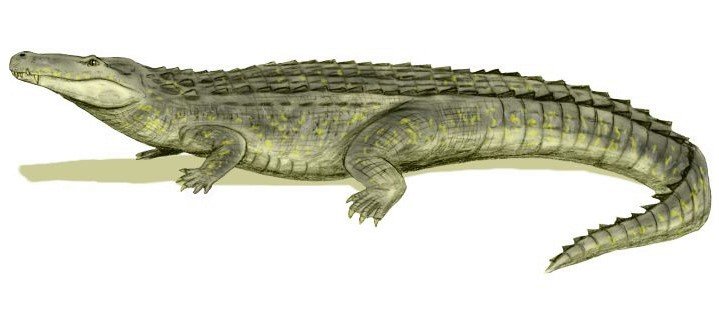
A pencil drawing of Purussaurus brasiliensis
©Nobu Tamura (http://spinops.blogspot.com) / CC BY 3.0 – Original / License
North America was once home to Deinosuchus, a massive crocodilian that lived alongside dinosaurs during the Late Cretaceous. Estimates place Deinosuchus at 30 to 33 feet long, with upper weight estimates approaching 10 metric tons. Fossilized dinosaur bones bearing Deinosuchus bite marks provide direct evidence that this animal preyed on—or scavenged—dinosaurs near waterways. Despite persistent internet myths, there is absolutely no evidence that Deinosuchus, or any crocodilian, could fly or glide at any stage of life.
Other large prehistoric crocodilians are often cited but were smaller than once believed. Rhamphosuchus crassidens, known from fragmentary fossils in the Indian subcontinent, was originally estimated at extreme lengths, but modern reassessments suggest it likely measured 20 to 26 feet, not rivaling the largest giants. Similarly, Gryposuchus croizati, a marine-adapted crocodilian from Miocene Venezuela, may have approached 30 feet, but claims beyond that remain speculative.
One frequently misunderstood species is Mourasuchus, which lived in South America during the Miocene. Despite older claims placing it near 40 feet, fossil evidence shows Mourasuchus was much smaller—around 20 to 23 feet long—and lightly built. Its broad, duck-like snout and weak jaws suggest it fed by scooping small prey from the water rather than hunting large animals. It was unusual, but not a super-giant.
The Largest Crocodiles in Modern Times
While prehistoric giants dwarf today’s crocodiles, modern records are still impressive.
The largest crocodile ever accurately measured was Lolong, a male saltwater crocodile captured in the Philippines. He measured 20 feet 3 inches long and weighed approximately 2,370 pounds. Lolong died in 2013 from health complications.
The largest living crocodile in captivity today is Cassius, an Australian saltwater crocodile measuring about 17 feet 2 inches long. Cassius’s exact age is unknown. While often claimed to be over 100 years old, scientists caution that such estimates cannot be verified; most place him somewhere between 70 and 90+ years.
Did Crocodiles Live With Dinosaurs?
Yes, crocodilians first appeared more than 230 million years ago during the Triassic Period, long before dinosaurs went extinct. Large crocodilians and dinosaurs shared ecosystems for tens of millions of years.
Evidence that crocodiles interacted with dinosaurs comes from multiple fossil sources, including bite marks on dinosaur bones, crocodilian teeth embedded in fossils, and preserved gut contents. These findings confirm that some prehistoric crocodilians preyed on or scavenged dinosaurs, particularly near rivers and coastal environments.
The Legend of the Deadliest Crocodile
Among living crocodiles, none is more infamous than Gustave, a large Nile crocodile from Burundi. Gustave has been linked to numerous attacks near Lake Tanganyika and the Ruzizi River. However, claims that he killed hundreds of people are unverified and based largely on anecdotal reports. Scientists stress that no confirmed death toll exists, and much of Gustave’s story exists at the intersection of local legend and real danger.
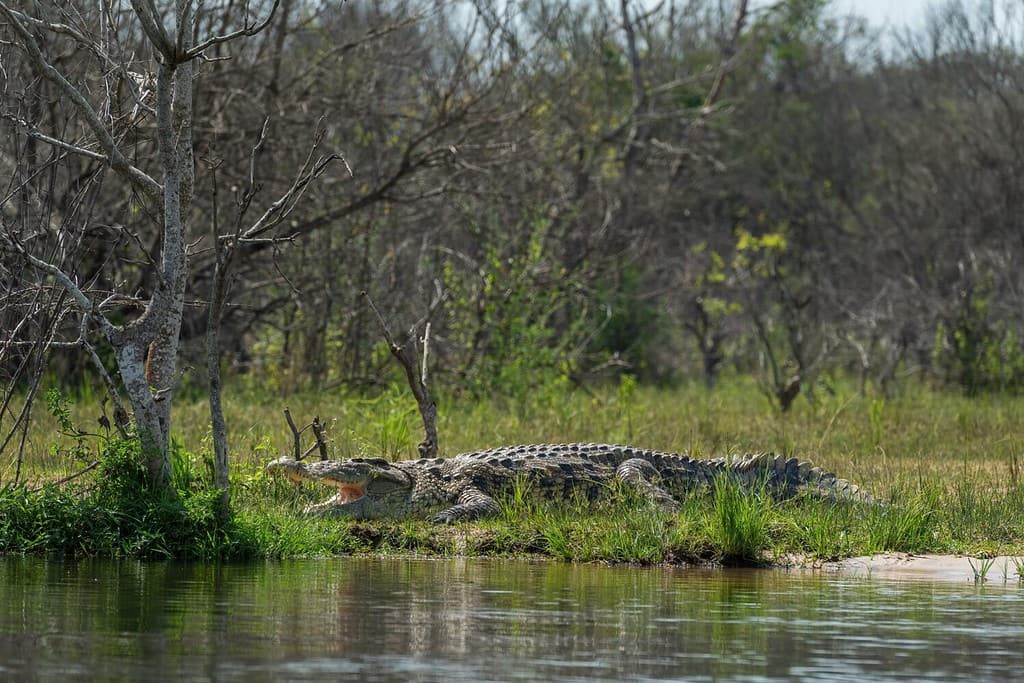
Gustave is an infamous crocodile that has killed many people.
©David Havel/Shutterstock.com
The Real Story Behind Crocodile is Giants
Crocodilians don’t need exaggeration to be impressive. The largest species that ever lived were already among the most formidable predators Earth has seen. Modern science has refined earlier size estimates, correcting myths while revealing a clearer picture of how these animals lived, fed, and dominated their environments.
From Sarcosuchus ruling Cretaceous rivers to today’s saltwater crocodiles still pushing the limits of size, crocodiles remain one of evolution’s most enduring and terrifying success stories.