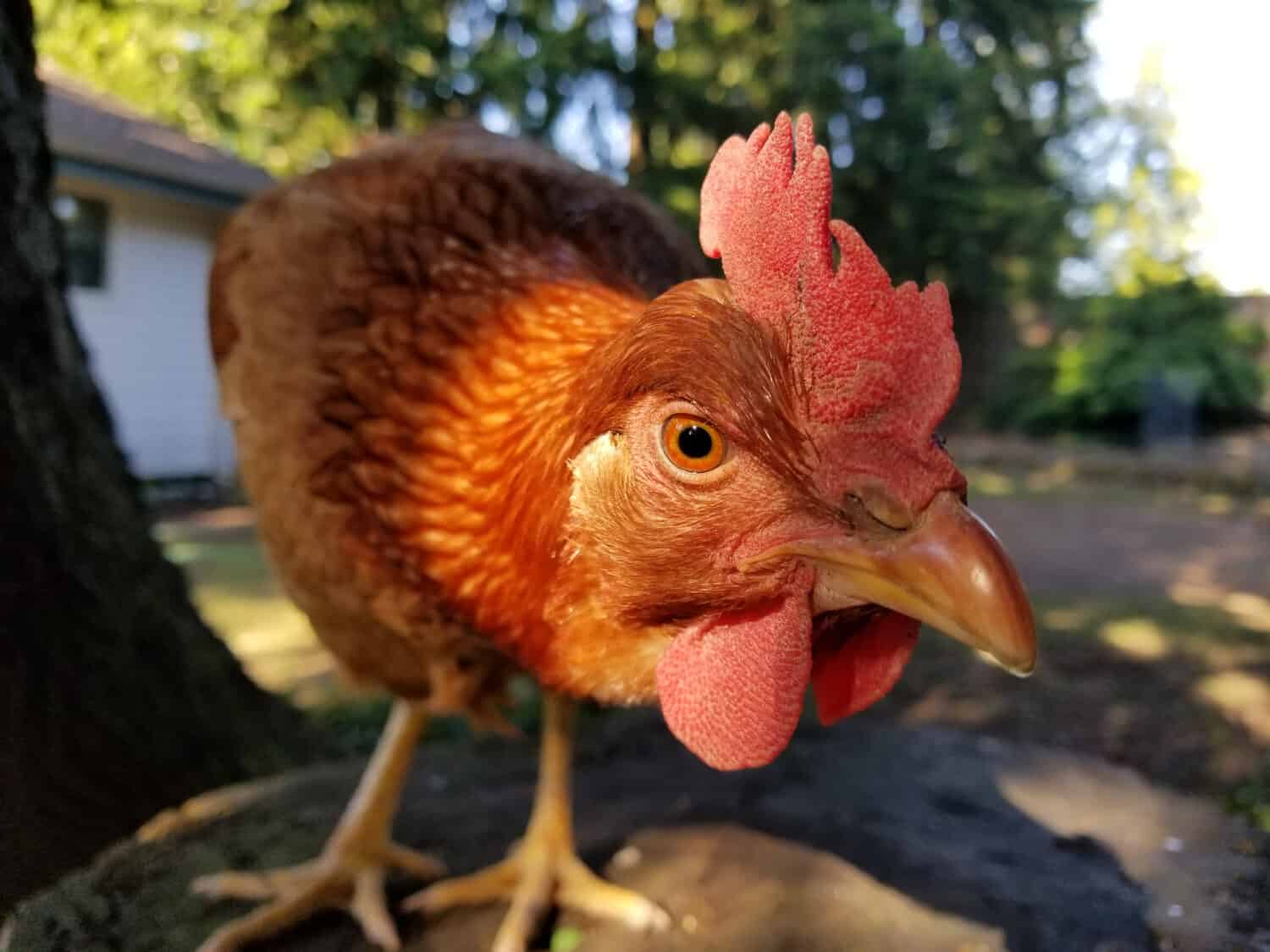

Contrary to popular belief, chickens are highly intelligent creatures. In fact, some can perform complex tricks and remember their own name. Research published in the journal Scientific Reports even found that domestic chickens can solve mirror-mediated spatial location tasks. Of course, such obstacles require strong cognitive abilities, which chickens naturally have. Wondering whether—and how—you can train a chicken? Keep reading for a step-by-step guide with tips and tricks from expert trainers.
Can You Train a Chicken?
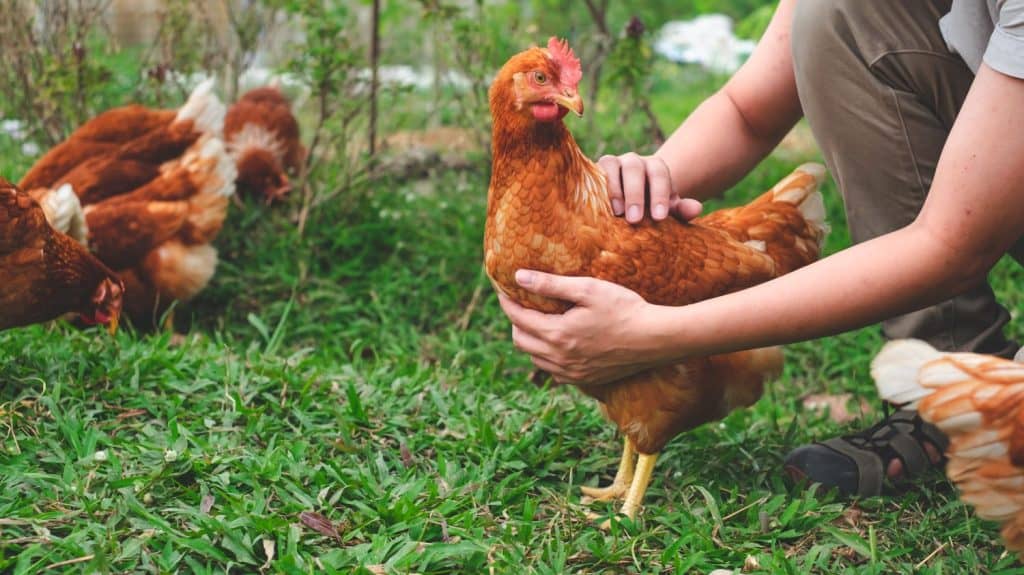
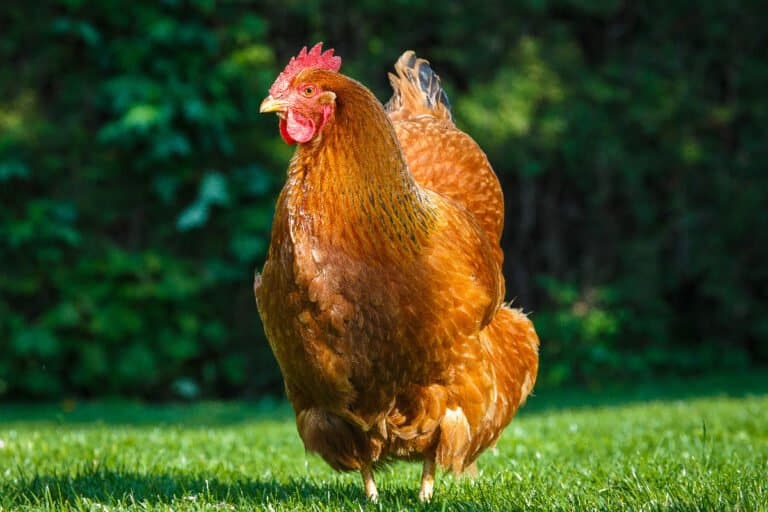
It’s relatively easy to train a chicken, especially with positive reinforcement.
©CardIrin/Shutterstock.com
In short: yes, you can train a chicken—and it’s actually quite simple to do so.
“Folks are always surprised how quickly they catch on,” says Dr. Nathan Alan Rakestraw of TelaVets.com. “Chickens learn by making connections between their cue and a reward. They really do remember routines pretty fast.”
Of course, this depends on the individual chicken. Like dogs, some learn more quickly than others.
“Chickens are very intelligent and learn quite quickly when given the opportunity, but don’t have a huge amount of common sense, giving them the nickname ‘bird-brained,'” says Joe Nutkins, a Kennel Club Accredited Dog Trainer in the UK who also has experience training chickens for commercials. “A chicken can learn their own name and recognise up to 100 people by their face.”
How to Train a Chicken
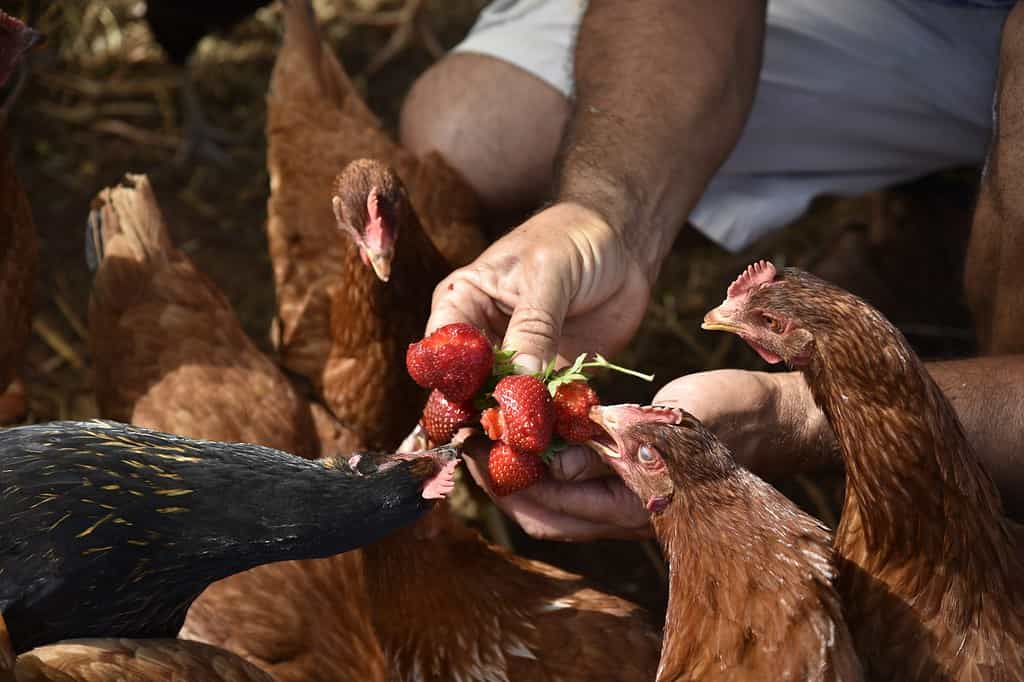
Chickens love eating various types of berries, which can be used as rewards during training sessions.
©Zavialstudio/Shutterstock.com
Here are some professional steps and tips for training a chicken.
Train One at a Time
While you might be tempted to train an entire flock of chickens, these animals require one-on-one teaching for the best results.
“When teaching chickens a trick, it helps to work with one or two at a time, not a whole flock, as it can become chaotic and they take much longer to learn,” says Nutkins.
Rakestraw also raises a valid point: If you do end up training a flock together, watch out for hostile outliers.
“If one bird is a bully, separate them for training time so the shy ones get a fair shot,” he says.
Use Positive Reinforcements
Positive rewards are key to training your chickens. Without them, the animals won’t be enticed to learn.
“Treats are key—chickens love eating!” says Nutkins. “For my own chickens, I use sweetcorn, blueberries, or a special chicken treat which contains goodies like sunflower seeds, dried corn, and dried flowers.”
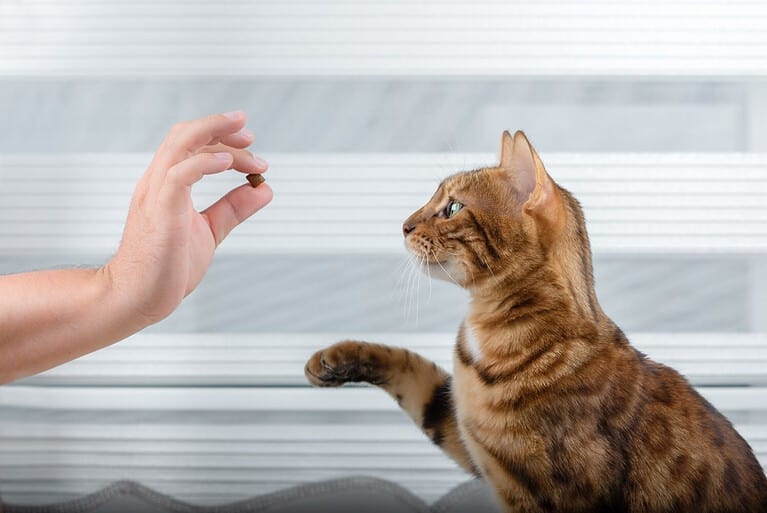
Once you have your positive reinforcement in hand, you can use it to teach the chicken to peck. Simply show them where the treat is and how to request it by pecking. You can then move your target to another item or location.
“I used this method to teach my chickens to ‘play’ a xylophone and a reception bell, and also one of my pet ducks to ‘play’ a piano!” Nutkins explains. “As with dogs, positive reinforcement and luring work really well to train chickens.”
Don’t Punish the Chicken
Many people assume negative reinforcement is as important as positive reinforcement, but the opposite is true. In fact, punishing the chicken might actually hinder their progress.
“Punishing or grabbing them only creates fear, and they won’t learn anything new,” says Rakestraw.
Instead of punishing negative behavior, continue to reward positive behavior. They will quickly learn to repeat the actions that earn them treats—especially since they’re mainly motivated by food.
Chickens are very intelligent and learn quite quickly when given the opportunity, but don’t have a huge amount of common sense, giving them the nickname ‘bird-brained.’
Joe Nutkins, a Kennel Club Accredited Dog Trainer in the UK
Host Short Training Sessions
Many trainers assume sessions should be long and arduous. However, short yet consistent training sessions typically do the trick for chickens.
“Short sessions, praise, clear guidance, and treats are the winning combination,” says Nutkins.
He adds that it took only about one month to train five of his chickens for filming. In that short period, they learned tricks such as jumping onto a shovel handle or landing on a person’s arm.
Keep It Simple
According to the University of Rhode Island’s College of the Environment and Life Sciences, when it comes to chicken training, simple is better, and timing is everything. In their research, students used mealworms as a positive reinforcement and found that the chickens responded best when given specific instructions. Additionally, they tended to learn well when positive reinforcement was timely and consistent.
Check On Your Chickens’ Health Throughout the Process
Your primary concern when training chickens should be the animals’ overall health and well-being.
“If a chicken suddenly stops caring about treats or gets tired too fast, they might be sick, so pause the training,” says Rakestraw. “Watch the feet after doing little obstacle courses since chickens get tiny foot injuries that can turn into bumblefoot.”
Additionally, he recommends keeping treats small so that positive reinforcement doesn’t lead to weight gain or problems with egg production.