
Quick Take
- Shark-tracking apps weren't built for what most beachgoers are using them for, and that gap has real consequences. Explore app limitations →
- Wildlife biologist Forrest Galante says there's a critical difference between where a tagged shark *was* and where it *is*, a distinction that most app users never consider. Understand telemetry snapshots →
- Checking a shark app before swimming is now as common as checking the weather, though one of those habits may be giving you false confidence. Unpack the false confidence →
With real-time tracking apps like Ocearch and local community alert pages at peak summer usage, beachgoers are checking shark pings as often as the weather. But are these apps really as accurate and helpful as they might seem?
In this article, we speak with Forrest Galante, a wildlife biologist, conservationist, and Shark Week host, about the limitations of shark-tracking apps, the psychology behind the modern tracked beach trip, and how to properly interpret shark telemetry. Let’s dive in (with the sharks).
Shark-Tracking App Limitations
According to Galante, shark-tracking apps can both fuel unnecessary paranoia and give a false sense of safety when tags go silent.
“The biggest misconception that users of said apps have is that a shark tracker is showing you every shark in the ocean. But it’s only showing you a small number of tagged animals that researchers and/or government officials have been able to tag for research purposes,” he explains. “If a shark appears near a beach, some people would immediately assume that it’s dangerous; and if nothing shows up, others assume they’re safe. Neither of these two thought processes is necessarily true.”
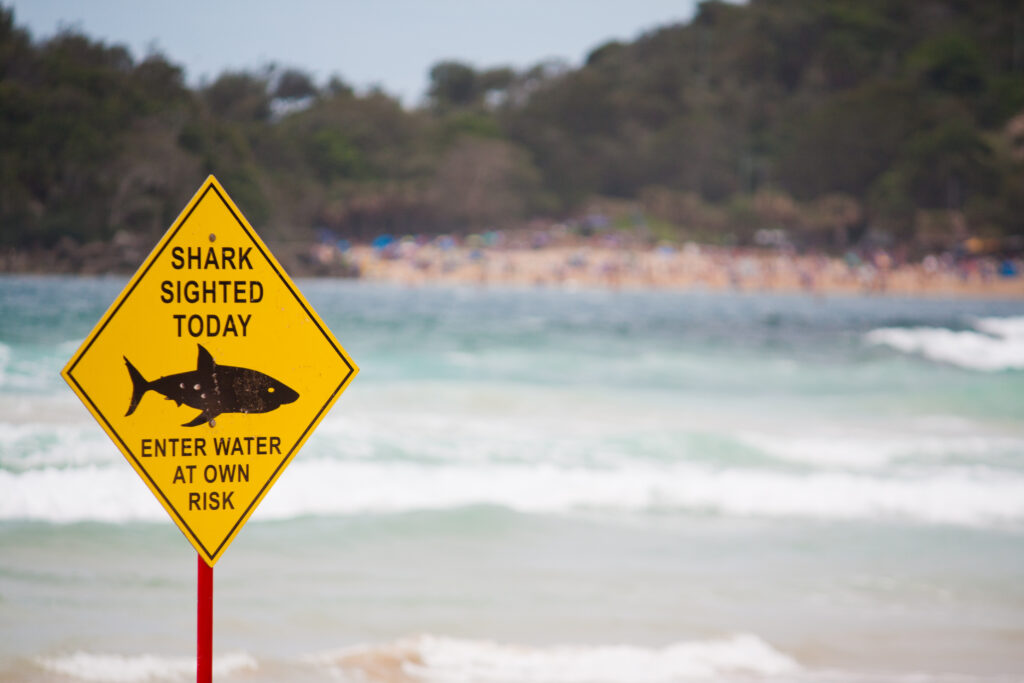
Shark tracking apps might help alert beachgoers to some sightings, but they’re not always reliable.
©iStock.com/mingis
While it might be fun or even helpful to use shark-tracking apps as an addition to other tools, you should never rely on them to provide an accurate, full picture.
“These apps are incredibly useful, but they’re not a crystal ball when it comes to tracking sharks 24/7,” Galante says. “A tag going silent could mean the shark has moved, the tag isn’t transmitting, or the shark has just simply moved outside the detection network.”
The Psychology Behind a Tracked Beach Trip
Acknowledging the limitations of shark-tracking apps, you might wonder why individuals and experts bother using them. However, it seems the modern beachgoer is still interested in these tools.
“People like certainty, especially when it comes to things that they know could pose a risk to their safety,” says Galante. “In the late 90’s or early 2000’s, you went to the beach and just accepted that the ocean was wild. But today, since we have all this amazing technology in place, many people check shark apps the same way they check the weather forecast.”
However, just because a shark-tracking app doesn’t show the presence of the apex predator in the water near your location doesn’t mean there isn’t one there. Even the best technology can’t possibly track every shark in the ocean.
“The challenge is that wildlife doesn’t operate on a schedule, or in the way that we would want them to operate sometimes,” Galante explains.
Downsides of Shark-Tracking Apps
As shark-tracking apps have grown in popularity, more beachgoers are using them to monitor their time in the ocean. What many people don’t realize is that it’s incredibly common to be in close proximity to sharks while swimming in the ocean. Even more important to note is that shark attacks are incredibly rare. In fact, there were only 65 unprovoked shark bites on humans and only 29 provoked bites worldwide in 2025, per the Florida Museum of Natural History’s International Shark Attack File.
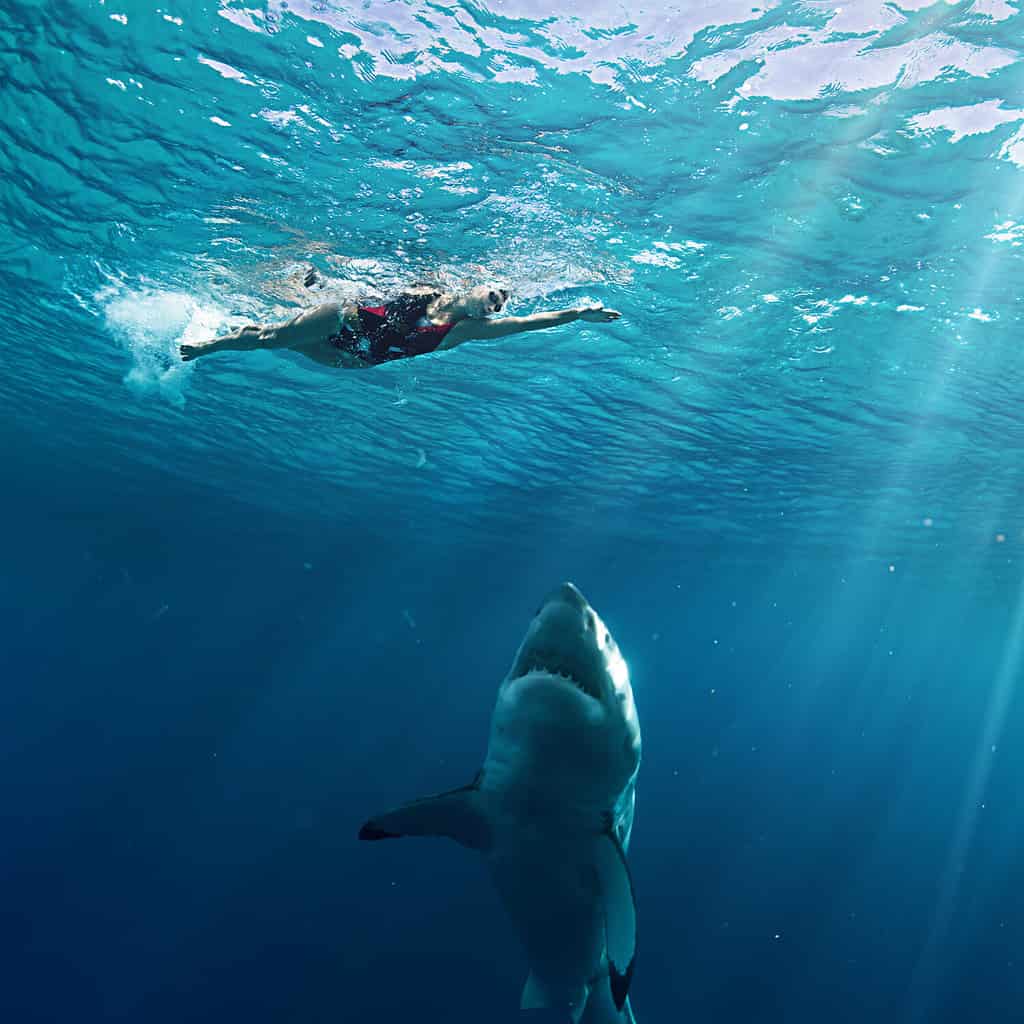
Thankfully, shark attacks are not as common as they might seem.
©Willyam Bradberry/Shutterstock.com
“These apps have definitely changed how people think about the ocean,” says Galante. “They may give people reassurance in some cases, but they can also make them focus on sharks far more than they otherwise would … The biggest downside is misinterpreting the data that these apps provide. A shark being detected doesn’t automatically mean there’s a problem, and a lack of detections doesn’t mean there aren’t sharks around.”
Another downside, as noted earlier, is the limitation of shark-tracking apps: they are not nearly as accurate as many perceive them to be.
“Sharks move, tags fail, batteries die, and most of the sharks in the ocean aren’t even tagged in the first place,” says Galante. “The only real concern is when people treat these apps as a safety guarantee, rather than what they are actually meant to be, which is a conservation and research tool that also provides useful information to the public.”
How to Properly Interpret Shark Telemetry
Does the above information mean you shouldn’t use shark-tracking apps? Absolutely not. However, it highlights the need for proper interpretation of shark telemetry.
“The best way to think about shark telemetry is as a snapshot, and not a live security camera,” Galante points out. “A positive detection tells a user where a tagged shark was at a specific moment in time and is incredibly valuable information for scientists who are studying migration, habitat use, and shark behavior.”
“People should use and interpret shark telemetry as a tool for public awareness,” he adds. “And of course, the most important thing is understanding its limitations whilst appreciating how much these programs have actually contributed to shark conservation and our understanding of these amazing animals!”