
Quick Take
- Even dogs bred specifically for service work fail at a striking rate, and the reason has nothing to do with obedience. See the failure rates →
- There's one trait trainers watch for in puppies as young as seven weeks, and no amount of training can build it from scratch. See the seven-week assessment →
- Brain imaging research revealed a specific neurological difference between dogs that pass service training and dogs that don't. See the brain imaging findings →
- A dog that fails a service program is not a failed dog, and understanding why it failed reveals just how extreme the job's demands really are. Understand what washing out means →
So much of the work that service dogs perform is happening within them, behind the scenes. Not every dog can be a service dog, as it requires an instinctive sensibility that cannot be taught. In fact, even dogs that are typically well-suited or from a particular breeder that specializes in service dogs can still fall short.
The service dog selection process begins at puppyhood, eliminating the majority of candidates before training is even complete. Because this line of work is vital for human health, service dog selection must be rigorous. But what actually makes for a good service dog, and what is the selection process like? What do trainers keep an eye out for early on, signals that point to successful service dog work as the pup ages?
We spoke with Teagan Coleman, a professional dog trainer and founder of NLR Explore Dog Training, who works directly with dogs across various stages of service dog training and assessment. “A dog doesn’t have to be obedient to be a wonderful dog,” Coleman reports. “But service dog work asks for so much more than obedience. Recognizing that early is one of the most important things a service dog trainer can do.”
How Many Puppies Become Successful Service Dogs?
According to research published in Frontiers in Veterinary Science, even among dogs specifically bred for assistance work, the success rate of puppies that become service dogs typically ranges from 30-50%.
At Canine Companions, the largest organization placing service dogs for children, adults, and veterans with disabilities in the United States, the average success rate over a 13-year period was 43%. Despite their intensely monitored and structured program, over half of CC’s dogs still do not make it through training.
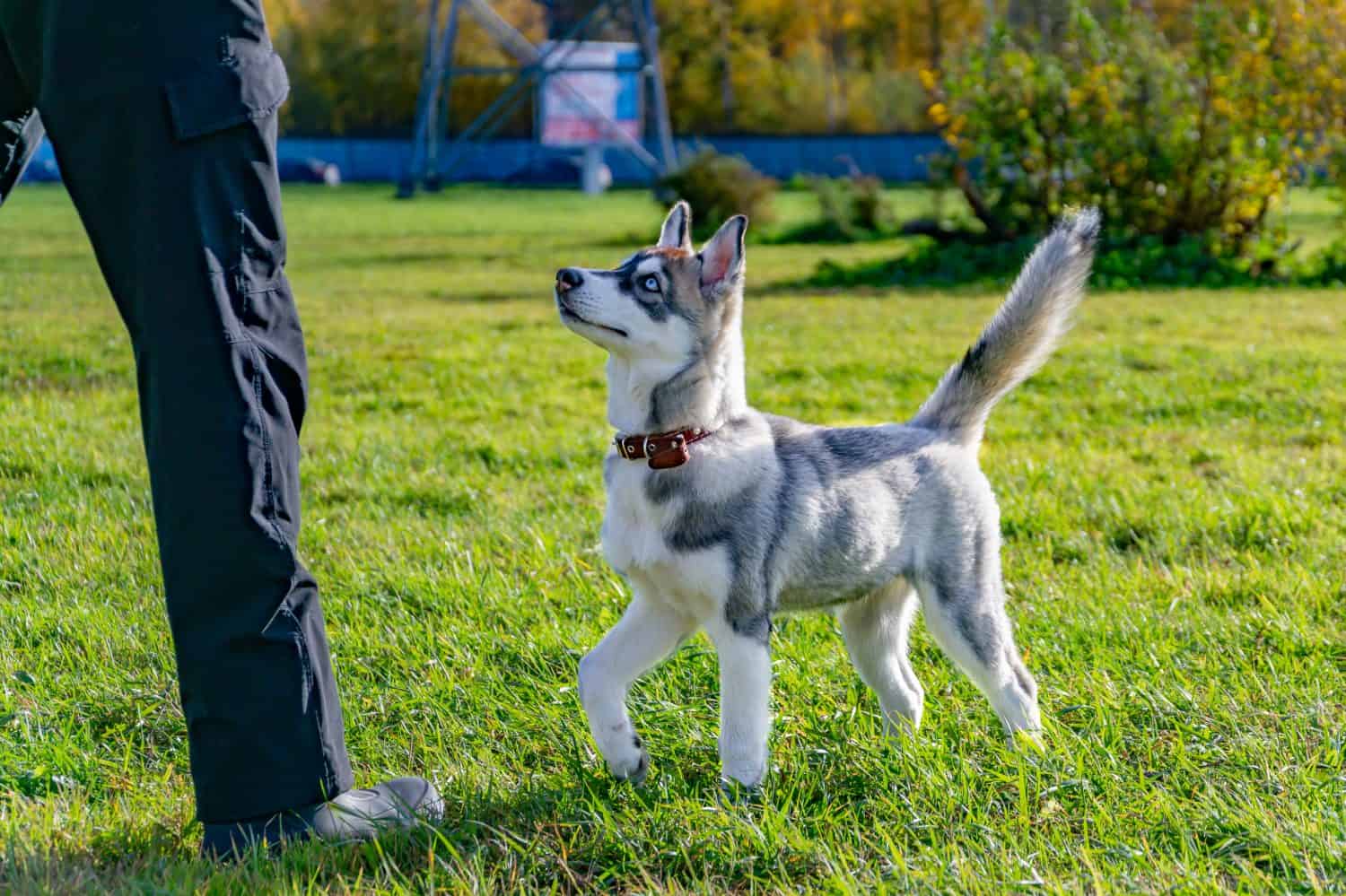
Puppies are often observed to see if they might make good service dogs, and training starts very early.
©SasaStock/Shutterstock.com
According to Coleman and scientific studies, a dog’s success in service training is rooted in temperament. Some of the most common causes for a dog failing out of service training are physical and behavioral reactions to stress, including fear responses, anxiety, over-excitability, and the inability to recover quickly from unexpected events, including loud noises.
“What you can’t train into a dog is the willingness to stay calm when everything around them is unpredictable. That has to be something in them from birth, in a lot of ways,” Coleman says.
What Trainers Look for in Potential Service Dogs
When trainers and service dog organizations evaluate young puppies for this line of work, they’re keeping an eye on many things. According to experts, here’s what skilled service dog trainers need to see in a potential puppy candidate.
Emotional Resilience and Recovery Rate
One of the most critical traits a service dog candidate can have is a fast recovery rate after being startled. The International Association of Assistance Dog Partners (IAADP) describes the ideal response as follows: a dog notices discomfort but readily moves on without anxiety or aggressive reaction. The ability to avoid lingering in a stressful, startled state can be an early indicator of a dog’s future suitability for service work.
There are multiple red flags that trainers identify in potential service dogs, including persistent fear responses.
©Biserka Stojanovic/iStock via Getty Images
Noise Tolerance and Environmental Confidence
Service dogs work everywhere: airports, hospitals, schools, theaters, and anywhere else their handler might go. Unfamiliar environments are a must for service dogs, and the IAADP recommends exposing candidates to multiple different high-noise settings specifically to test for reactivity. Puppies that explore new environments without anxiety, or that startle but recover quickly, demonstrate the kind of environmental confidence that’s nearly impossible to build from scratch.
A study published in NCBI found that puppies least reactive to noise were among the most likely to pass working dog certification, across assistance dog and police dog programs alike. Meanwhile, dogs prone to excitability were significantly more likely to fail service dog programs. Brain imaging research also showed that dogs with heightened amygdala activity (a direct link to excitability) were more likely to fail, while dogs with strong caudate responses (or responses tied to reward motivation) were more likely to graduate.
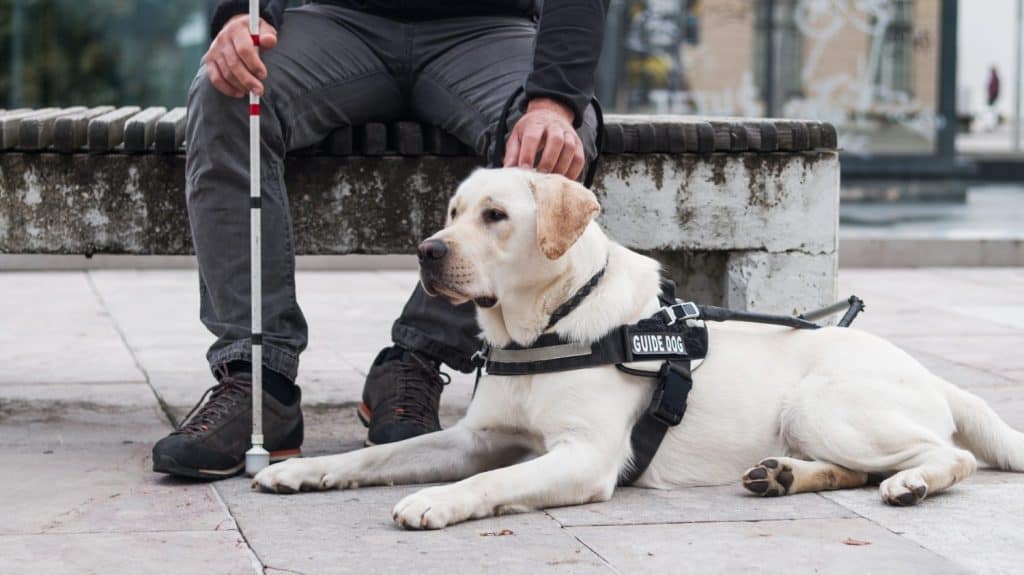
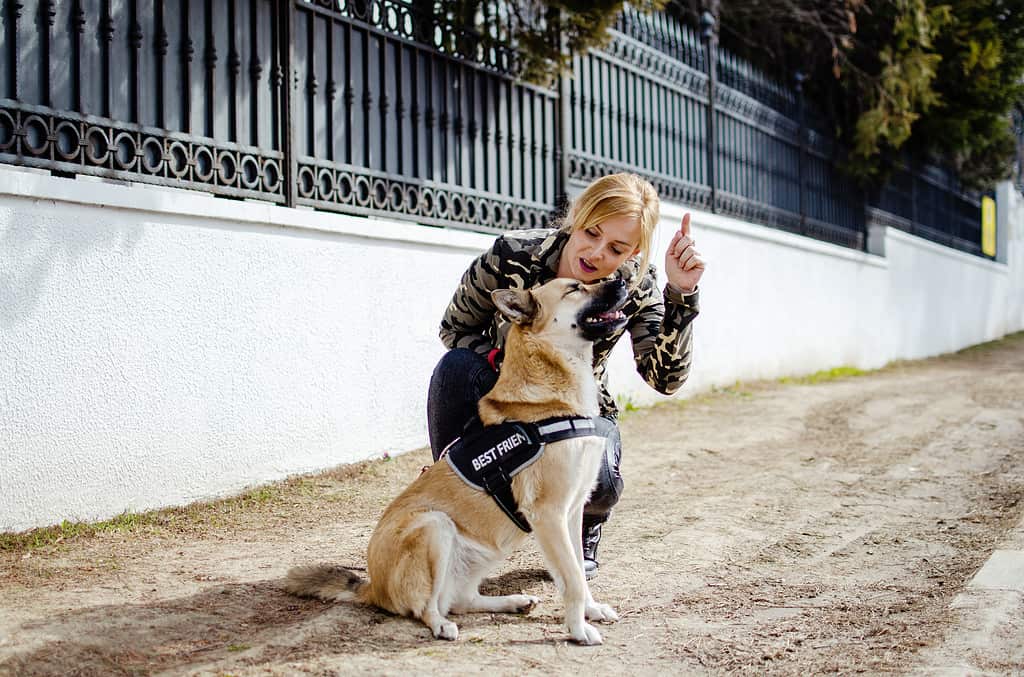
Experts suggest service dogs are highly motivated to please and work beside the human they’re assigned to.
©24K-Production/Shutterstock.com
“The dog has to want to work with you, and it’s different from wanting a treat,” Coleman says. “You’re looking for a dog who is naturally tuned in to a human, who finds the relationship itself rewarding.”
Social Stability and Appropriate Behavior
Although service dogs should not be distracted for the safety of their owners, they are often touched by strangers and approached unexpectedly while spending hours in public settings. Dogs that are uncomfortable around strangers or become overstimulated by other dogs are poor candidates for service animal work. According to research from Applied Animal Behaviour Science, stranger-directed aggression and social fear were among the most consistent predictors of failure in assistance dog programs.
You’re looking for a dog who is naturally tuned in to a human, who finds the relationship itself rewarding.
Teagan Coleman, professional dog trainer
Why Good Puppies Don’t Always Make Great Service Dogs
It’s important to remember that a dog that fails a service program is not a failed dog. The job of a service dog is simply one of the most demanding psychological and physical roles any animal can be asked to fill. Failed service dogs are often exceptional pets; it’s just that the bar for assistance work is set so high.

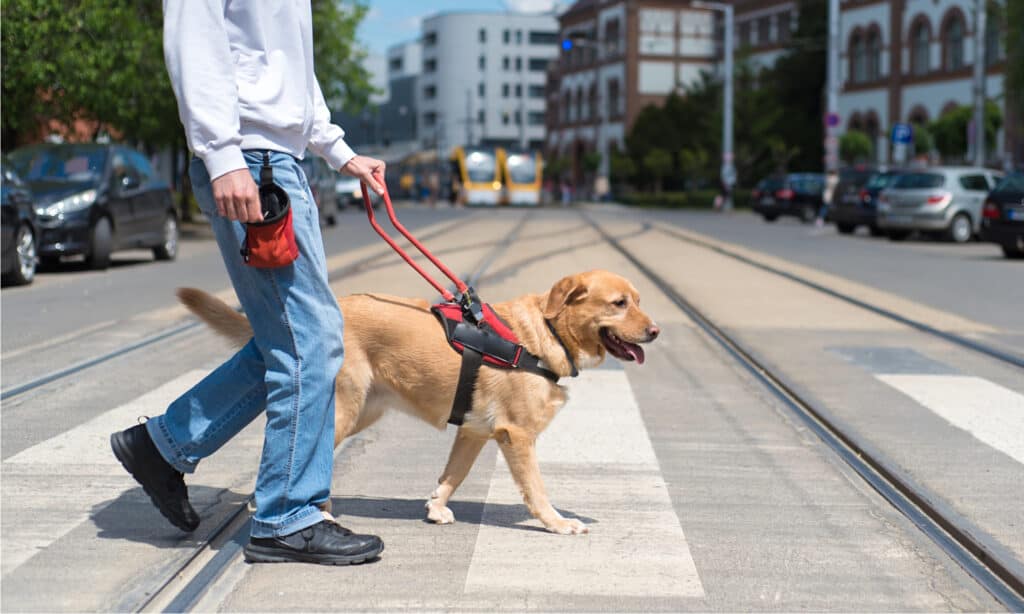
There is an incredibly low percentage of shelter dogs that become successful service dogs.
©New Africa/Shutterstock.com
The aforementioned IAABC research noted that the success rate for shelter dogs selected by professionals for service training is only 15-20%, as these dogs require “unflappable temperaments.” These dogs need high levels of emotional stability and physical endurance to tolerate daily stressors across a working life of eight to ten years, let alone the specific task of taking care of their owner’s needs.
“An anxious dog working in a high-stress environment every single day puts both the dog and their human at risk,” Coleman says. “Part of responsible service dog selection is being honest about what a dog is actually built for.”
When to Evaluate a Puppy for Service Dog Work
There are differing opinions on the ideal age for formal service dog temperament assessments, but many experts begin making observations as early as seven to eight weeks. Key early indicators can include willingness to make eye contact with humans and a comfort level with handling. Sustained engagement during play and a natural inclination to check back in with a handler are also positive signs, and curiosity rather than fearfulness is always a good sign.
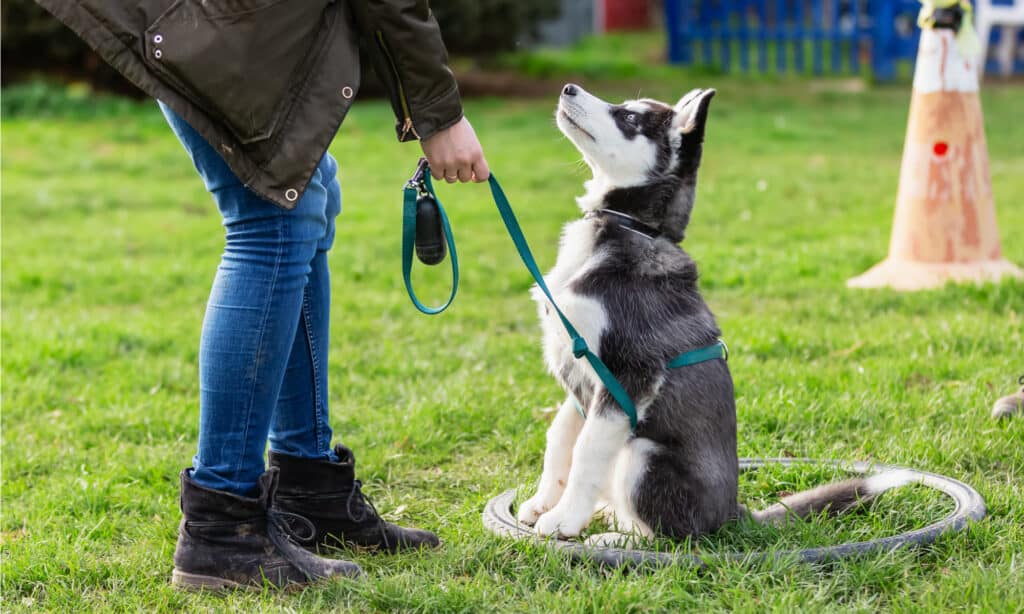
Not all puppies can be service dogs, because it’s incredibly demanding work.
©Christian Mueller/Shutterstock.com
“A lot of people come to me with a dog they love, and hope will become a service dog,” Coleman says. “My job is to assess their dog honestly, and if the dog isn’t the right fit, I have to help them find the right path, whether that’s a different role for the dog, or a different dog for their needs.”