
Quick Take
- No existing technology can replicate what these animals can do underwater, thanks to their biology. See the biology →
- Training a dolphin for Navy duty takes up to 7 years, and the hardest part is not finding mines. Follow their training →
- Critics worry that sending dolphins after unexploded mines is a death sentence, but the Navy clarifies the risk. Read the safety case →
- Navy dolphins outlive their wild counterparts by a striking margin, which speaks to the good care these captive animals receive. See the lifespan data →
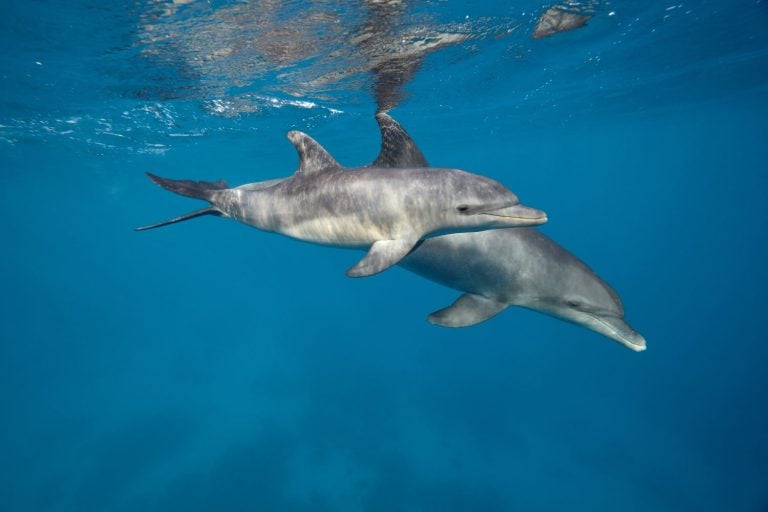
Dolphins are notoriously smart – expressing emotions like joy and grief; maintaining cooperative social networks; and solving problems in nature and laboratory settings. They are among just a handful of species that can pass “the mirror test” of recognizing their own reflection, a behavior that indicates self-awareness of a highly intelligent species, according to the nonprofit Whale and Dolphin.
Recognizing their unique intelligence, the U.S. Navy has trained dolphins to help in ocean reconnaissance since 1959. At the program’s inception, after testing the capabilities of many species, the Navy chose bottlenose dolphins (Tursiops spp.) and California sea lions (Zalophus californianus) as the best candidates for training.
What makes them good candidates?
Sea lions are known for their deep dives, holding their breath for as long as two hours as they descend to depths of 6,500 feet. Dolphins are experts in sound navigation and ranging, sending out “sonar” signals to locate objects in their watery environments, an ability still unrivaled by machines. Both dolphins and sea lions can see well underwater, even in low-light conditions, and their hearing is adapted to detect the direction of underwater sounds.
“Millions of years of evolution have given these animals exceptional skills and detection capabilities that cannot be replaced by any technology we have today and probably cannot be replaced by new technology we’re going to have for a long time,” said Drew Walter, deputy assistant secretary of defense for nuclear matters, in a news story.
This combination of characteristics makes dolphins excellent at finding undersea mines or subsurface vessels, while sea lions can learn to swim down and attach recovery lines to objects. But their abilities must be honed through an intensive training program. Dolphins and sea lions are housed at the large Naval Information Warfare Center Pacific in San Diego. Dolphins have been bred there since 1989, while adult sea lions arrive from rescue organizations or other sources. Sea lions must train for 2 to 5 years, while dolphins train for 5 to 7 years, to be ready for service.
How does their training proceed?
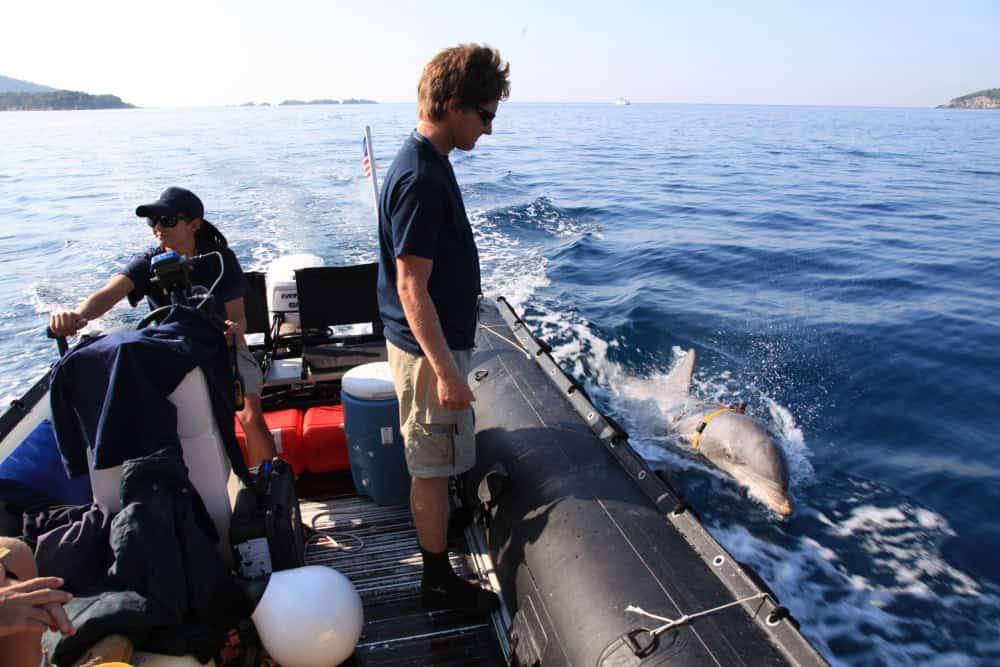
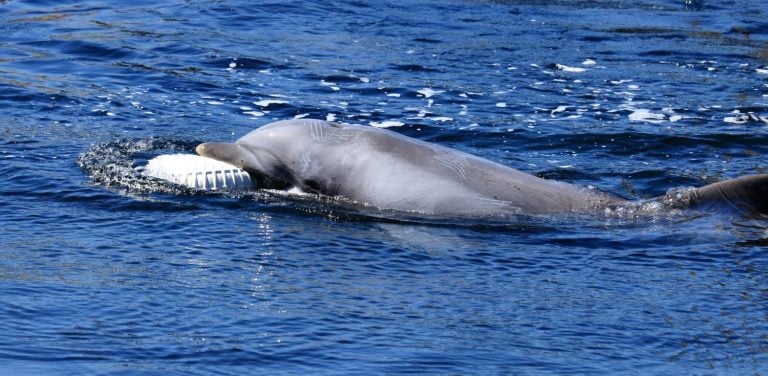
In a training exercise, a U.S. Navy Marine Mammal Program bottlenose dolphin searches for a sea mine in Southern California.
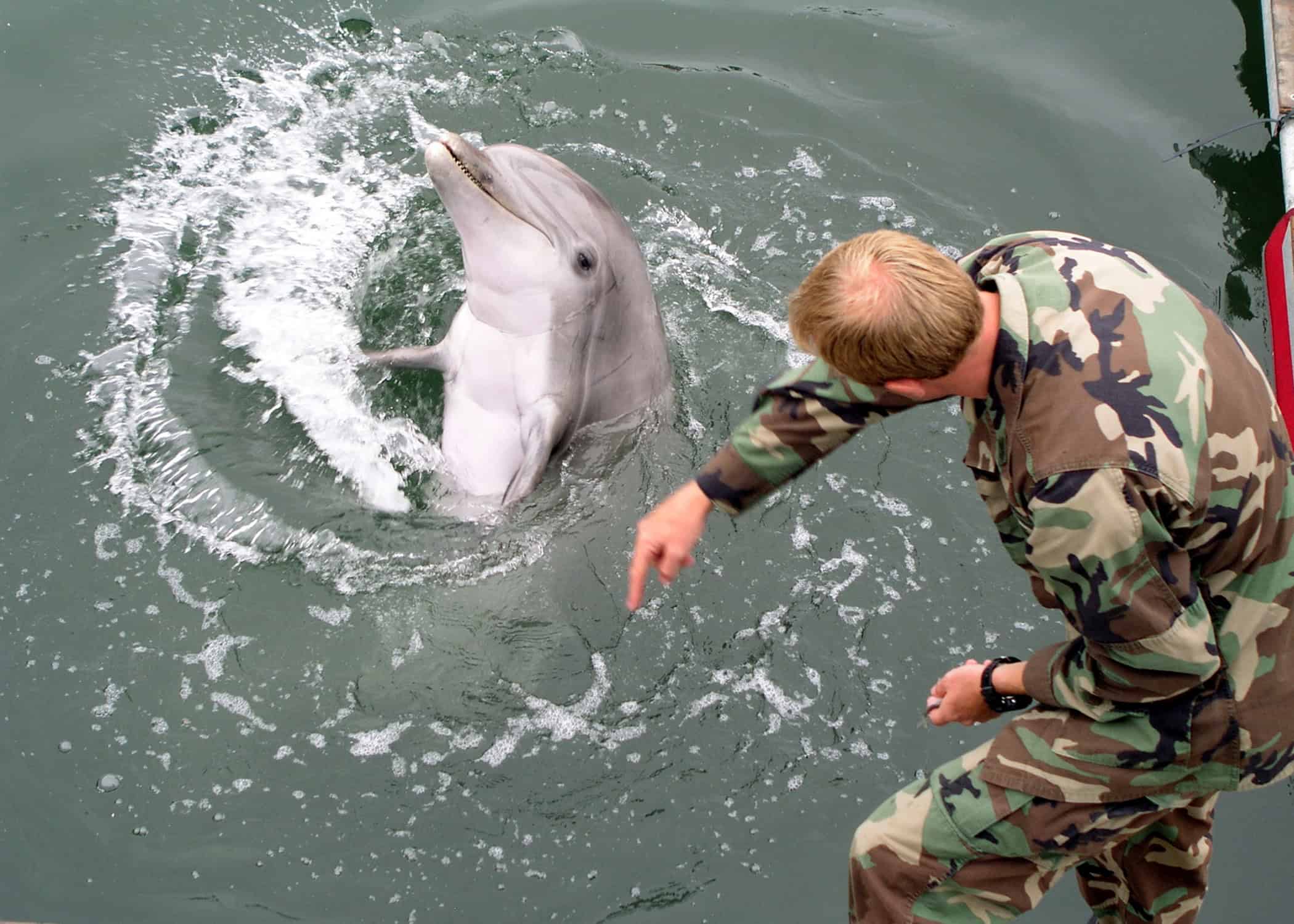
Through fish rewards and praise for desired behaviors, dolphins learn to swim alongside a boat or ride in a specialized, fleece-lined stretcher suspended in water to reach target locations. They’re trained to retrieve objects that their trainers place underwater or to alert the trainers if an object—such as unexploded ordinance—poses a threat. Sea lions travel in kennels onboard boats, where their skin is kept cool and damp until they’re ready for a task.
“Dolphins struggle with being transported so much,” said Mark Xitco, Director of the Navy’s Marine Mammal Program in a Military Times video, “so much of the work here involves training them to be comfortable with such disruptions.”
Once they are cleared for “duty,” these trained marine mammals might assist the Navy, Marine Corps, or Coast Guard in locating underwater threats in harbors or open ocean. Depending on the needs, marine mammals may be transported by plane or helicopter to the work locations, where they act as cooperative partners with military personnel.
The Navy’s marine mammal program was among the first to systematically study dolphin and sea lion physiology, diving biology, and health in a rigorous, long-term way.
Jim Dines, biologist and professor at Cal State Long Beach
For example, a trained dolphin swims down to check the seafloor for man-made objects. Using echolocation, it looks for objects that don’t have natural shapes. When a dolphin spots a suspicious object, it swims back up to the boat to be outfitted with an acoustic transponder that emits sounds. The dolphin swims back down and leaves the transponder next to the object so that human divers can later investigate and deactivate it as needed.
“The animals are natural hunters,” said Xitco in the video. “We just change what they’re hunting for.” Dolphins were used, for example, in the Persian Gulf during the Iraq War to locate mines that needed to be cleared.
What about the safety of these marine mammals?
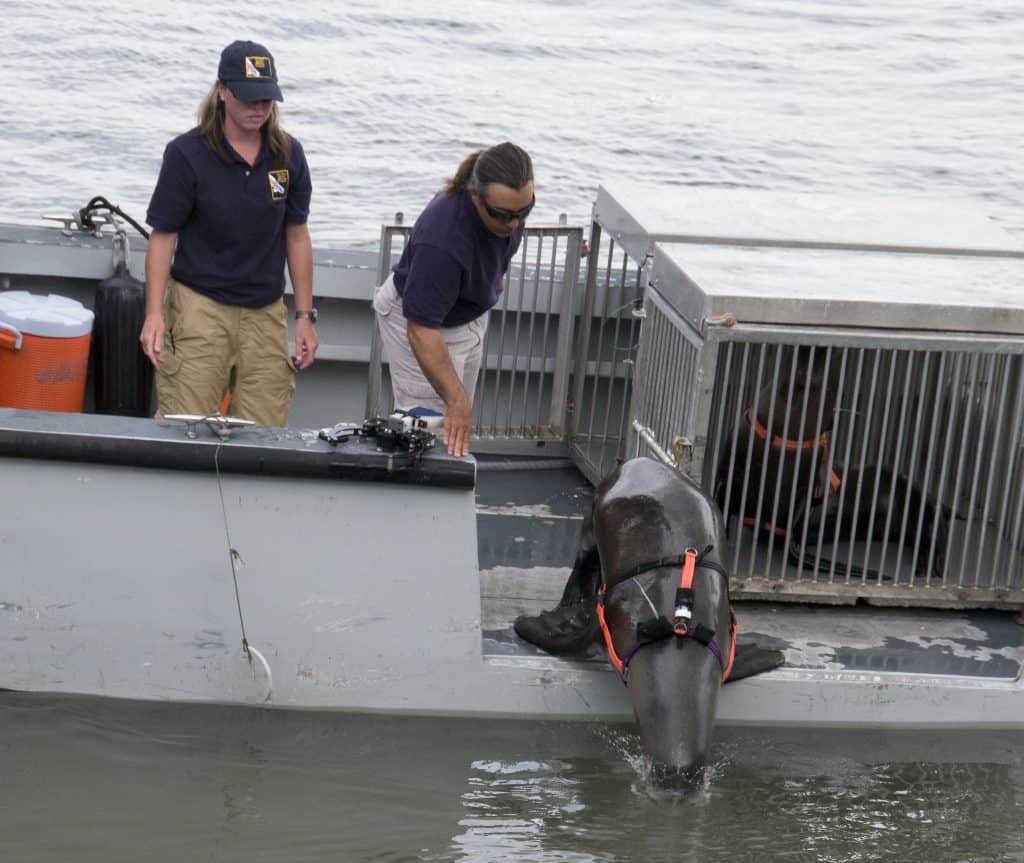
Members of the Navy Marine Mammal Program release a sea lion to perform anti-terrorist exercises for Golden Guardian 2010.
©2010 Brad Alexander / Cal EMA, https://creativecommons.org/licenses/by-nc/2.0/deed.en – Original / License
Citizens have raised an alarm about the safety of dolphins seeking out unexploded mines. The Navy argues that, thanks to their sonar, dolphins can spot such objects from a safe distance without ever contacting them. Furthermore, if the mines were sensitive enough to detonate upon disturbance by marine life, they would likely have already done so. Because they’re intended as a weapon against heavy enemy ships, the mines are built to detonate only when a massive ship passes overhead.
According to a U.S. Department of War news story, Navy dolphins live about twice as long as other dolphins, while Navy sea lions live about three times as long, though actual longevity varies by individual. A 2015 study showed that bottlenose dolphins in the U.S. Navy Marine Mammal Program lived ~10 years longer than wild bottlenose dolphins. A directive from the highest level (Secretary of the Navy) reportedly ensures that they receive the highest quality diet and veterinary care. A webpage for the U.S. Naval Undersea Museum describes how each animal is inspected daily for any signs of illness or injury. Regular physical exams are accompanied by blood tests and ultrasounds, and veterinarians accompany the animals on deployments.
Gradually, the marine mammal training program has shifted to be as responsive to the animals as possible. “Rather than a single event, one of the biggest shifts has been toward fully cooperative, positive-reinforcement-based training,” explains biologist Jim Dines, a professor at Cal State Long Beach. “Over time, the program’s research has shown that how willing an animal is to participate can actually tell you a lot. That’s led to more individualized approaches, where trainers pay close attention to changes in engagement and adjust training and care accordingly.
Advances in marine mammal research
In addition to advancing Navy goals, this Marine Mammal Program has enabled scientists to learn much more about these species and their close cousins, generating more than 1,200 peer-reviewed research papers since its inception. Initially, research focused on how dolphin swimming speed could inform engineering design to speed up ships and torpedoes.
“The Navy’s marine mammal program was among the first to systematically study dolphin and sea lion physiology, diving biology, and health in a rigorous, long-term way,” explains Dines in an email interview. “Many advances in the study of marine mammals since then, especially in physiology and veterinary care, were built on that early foundation.”
These days, research by Marine Mammal Program personnel and colleagues ranges from veterinary care to cognition. Xitco was the senior author of a recent paper in Animals describing the successful treatment of a serious medical condition — rumination syndrome — in a California sea lion. The program has been investigating dolphin aging, based on their higher longevity in captivity. The program also continues to study marine mammal hearing to assess the impacts of noisy human activities on wild dolphins and sea lions.
Ultimately, these animals trained by the Navy play vital roles in finding mines and equipment in difficult underwater environments.