
Capybaras are frequently named as the friendliest animal on Earth. These super laid-back mammals have even been spotted chilling with crocodiles. They don’t pose a threat to anyone’s safety, and some people have kept them as pets. The Colombian government is currently considering a proposal to allow commercial hunting of capybaras, sparking significant debate and controversy. Here we examine both sides of the debate.
About Capybaras
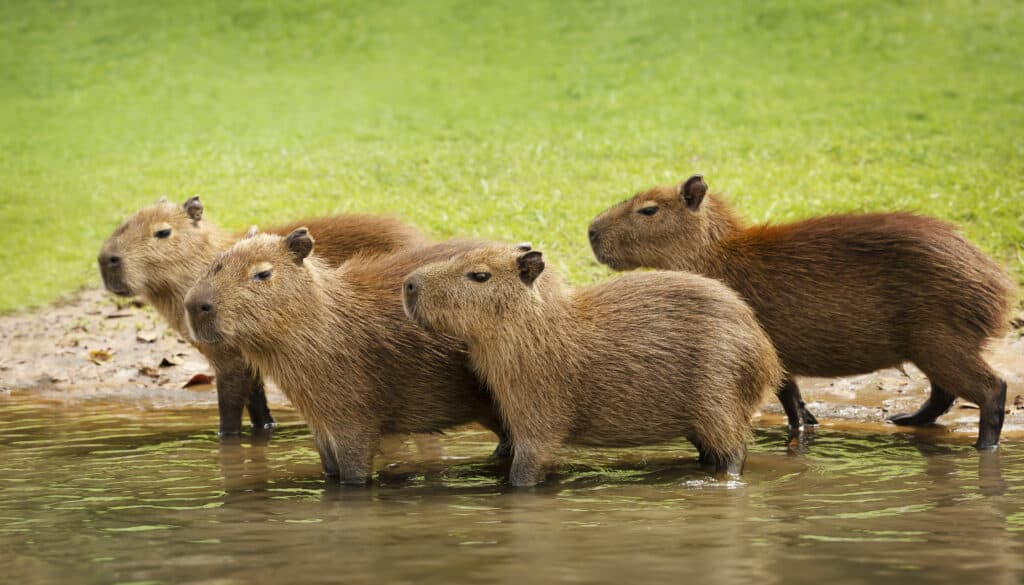
Capybaras live together in large groups of 10-20 members, although larger groups may have 40 individuals or more.
©Giedriius/Shutterstock.com
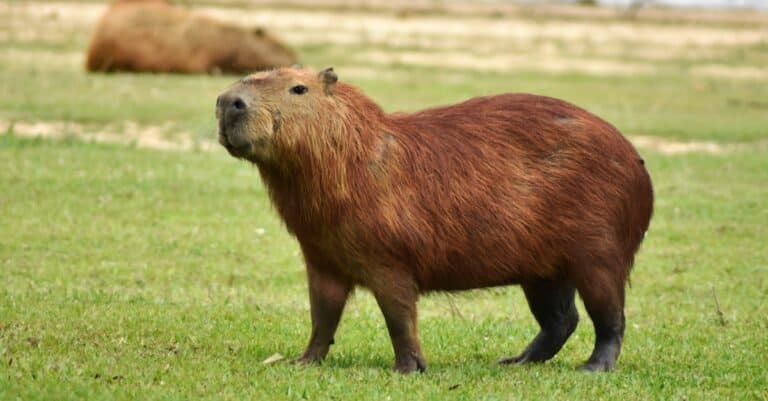
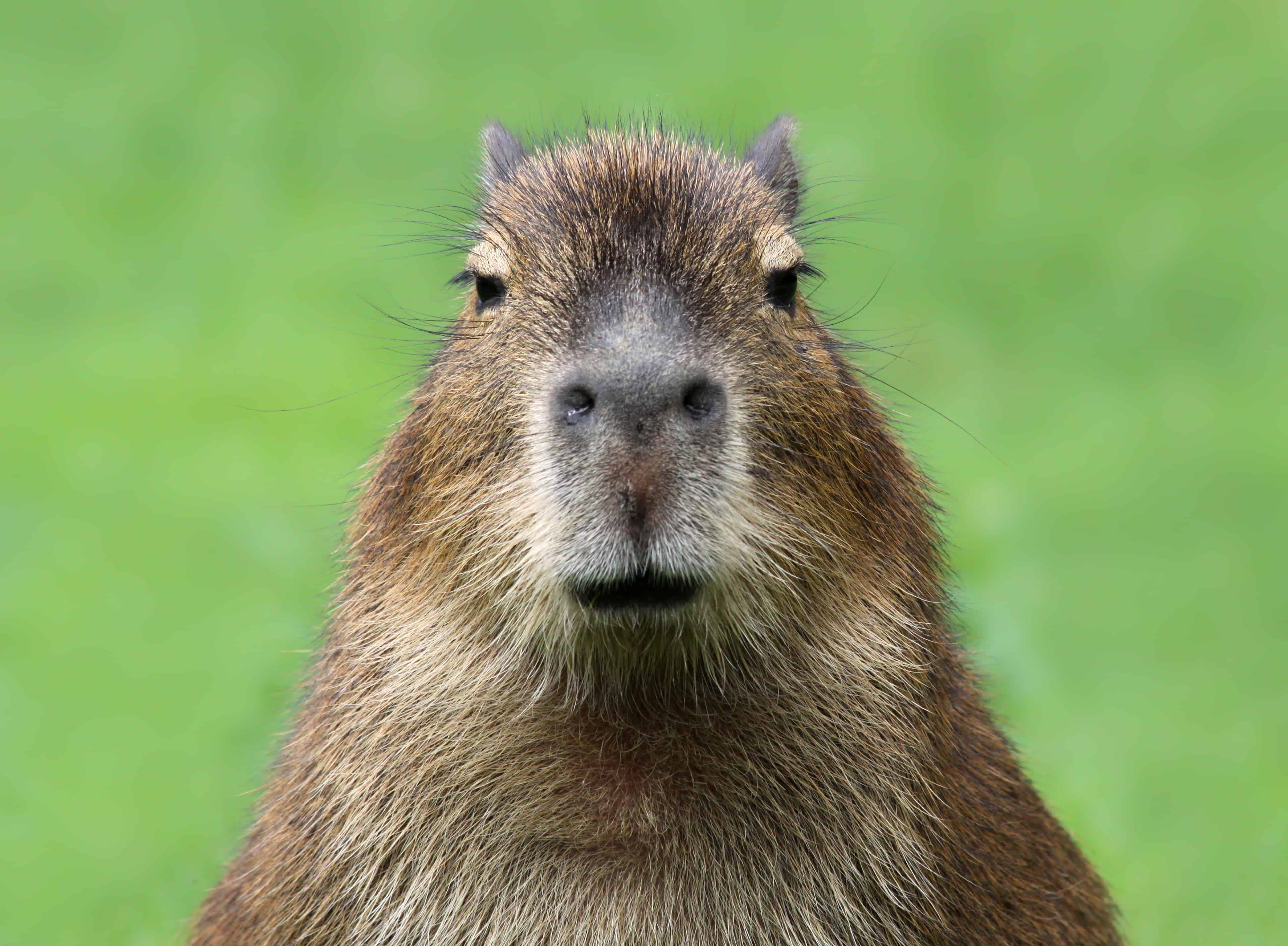
Capybaras are the largest species of rodent; adults can weigh as much as 132 pounds. They have stocky, barrel-shaped bodies and short, deep heads. In fact, their head shape closely resembles that of a guinea pig, which may explain why people often find them so cute.
Capybaras are native to South America and are considered semi-aquatic, so they are commonly found near ponds, rivers, and swamps. Perfectly adapted for living near water, they can hold their breath for five minutes and have webbed feet. They live in groups of 10 or more and feed on aquatic plants.
The Argument for Hunting Capybara
In some parts of South America, capybaras are consumed as meat. The Vatican has designated them as fish, and they can be consumed by Christians during Lent. There was a time when the demand for capybara meat in Venezuela became so great that they were nearly wiped out by illegal hunting.
Now, it seems that the commercial hunting of capybaras may be adopted in Colombia. Those in favor of the plan claim that limited hunting (5–10 percent) of the population could be sustainable. It is also argued that this complies with the Convention on Biological Diversity, which Colombia signed in 1992. There may also be economic benefits for local communities. Importantly, capybaras are considered pests in some parts of Argentina and Brazil. This is due to their rapid reproduction rate, which is typical of rodents. They mate all year round and have one or two litters a year, depending on the conditions. Female capybaras become fertile approximately every 7.5 days.
The Argument Against Hunting Capybara
Others argue that hunting capybaras will divert attention from the significant habitat threats they face. They point to the draining of previously flooded savannas, which forces capybaras to concentrate in smaller areas. These areas are drained for rice and soy production. Additionally, opponents claim that deforestation and pesticide use are making capybaras more vulnerable. As of September 2025, the debate over commercial capybara hunting in Colombia is ongoing, with no final decision reached.