
Quick Take
- The Largest Rivers in the world are also the longest.
- Large rivers provide unrivaled support to the communities that they serve.
- Researchers continue to debate what the number one longest river system in the world is.
For thousands of years, civilizations have been built on the banks of rivers, flowing bodies of water that provide access to water, food, security, and transportation. Rivers continue to be incredibly important to humans, and the bigger the river, the more people it supports. There are two ways to measure the longest rivers in the world: by the total length of major river systems or by the length of individual rivers. Our list ranks the largest rivers based on the total length of river systems, but we also include the lengths of individual rivers when relevant.
Defining a River
A river consists of numerous parts with special names, including:
- Headwaters (Source): the streams or lakes that provide water at the earliest part of the river.
- River Basin (Drainage Basin, Watershed): an area of land where precipitation accumulates and flows into a river.
- Flow: refers to the water comprising the river or to the water’s direction of travel.
- Tributaries (Affluent): sources of water that feed into a river.
- Channel: the confines of the body of water.
- River Mouth: the place where the river reaches its end, either flowing into a delta, becoming a tributary for another river, or the ocean.
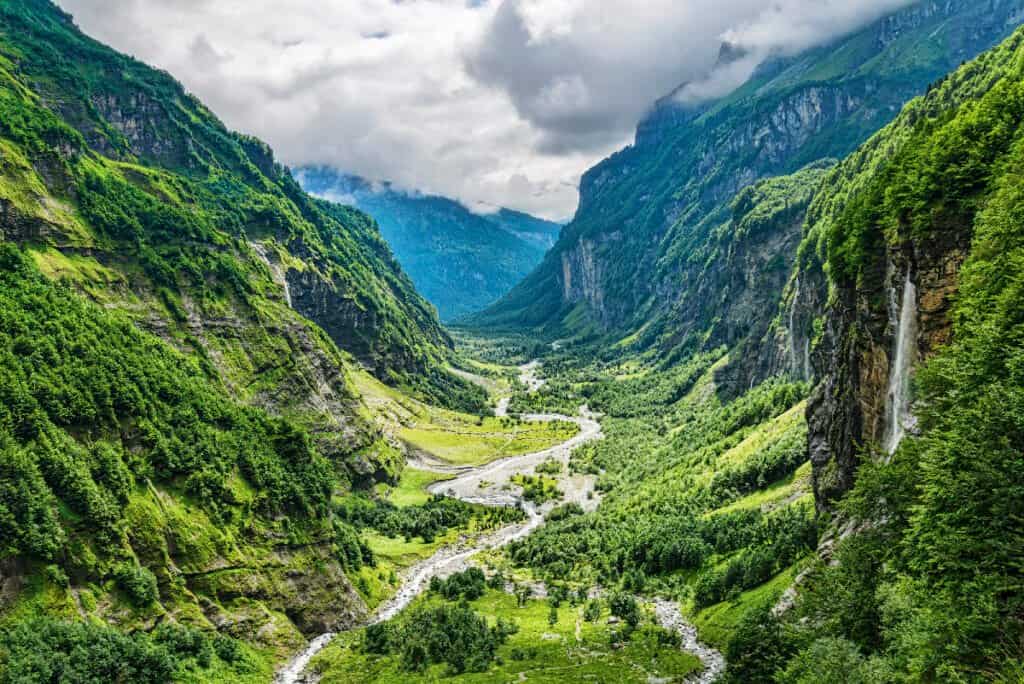
The largest rivers in the world are also the longest rivers.
©iStock.com/Ivan Aleshin
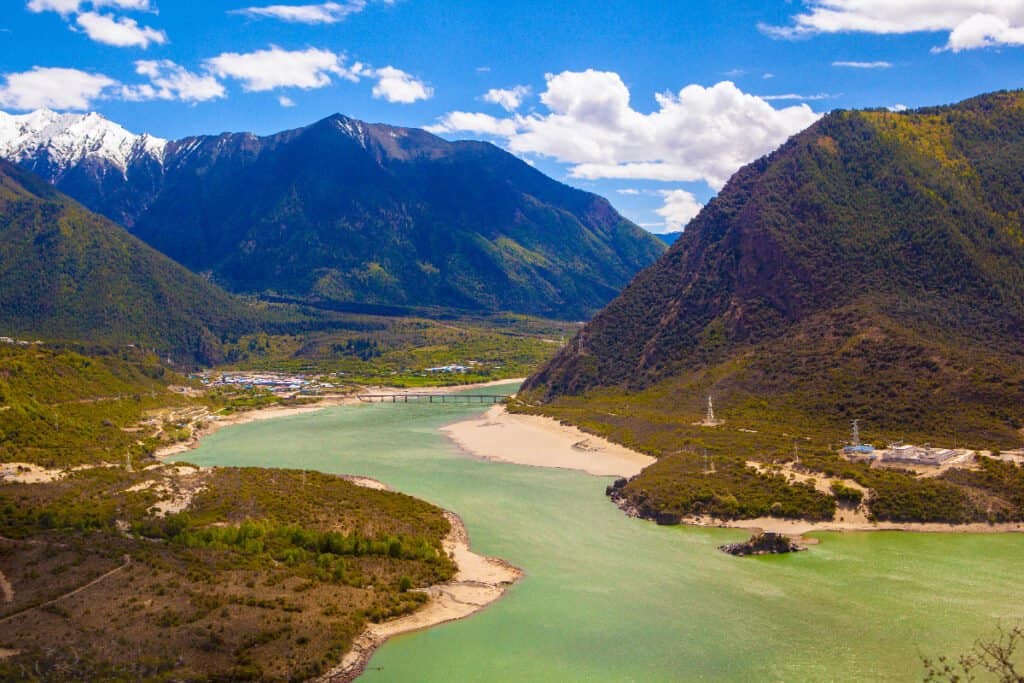
15. Brahmaputra-Yarlung Tsangpo River: 2,466 Miles
©Meiqianbao/Shutterstock.com
The Brahmaputra River flows through India, Bangladesh, and Tibet. The Yarlung Tsangpo is the river’s long upper course, and the Brahmaputra is the lower course. The mouth of the Brahmaputra River is at the Ganges River.
From hydroelectric power development and agricultural irrigation to inland navigation, the Brahmaputra-Yarlung Tsangpo River is vital to commerce, sustaining the livelihoods of millions in China, India, and Bangladesh.
14. Niger River: 2,611 Miles
The fourteenth largest river in the world is the Niger River, which flows through West Africa.
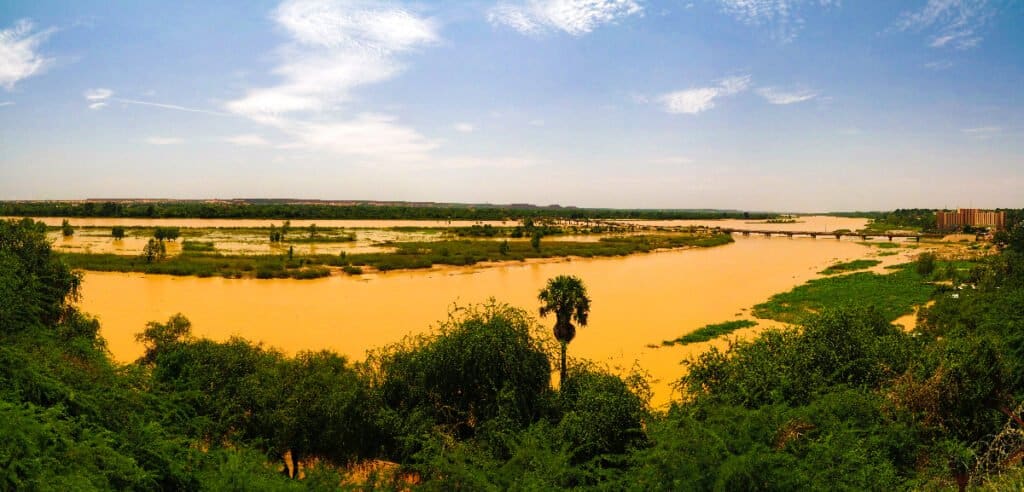
The Niger River is generally considered relatively clear, particularly in its upper course, because it flows over ancient rocks that produce very little silt.
©Homo Cosmicos/Shutterstock.com
The Niger River traverses nine countries (Algeria, Benin, Burkina Faso, Cameroon, Chad, Côte D’Ivoire, Niger, Nigeria, and Guinea) and facilitates trade, transport, and agriculture for approximately 100 million people. Historically, the river served as a key route for the gold and salt trade, while today it is crucial for fishing, farming, and transporting goods like palm oil, textiles, and petroleum.
13. Mackenzie River: 2,637 Miles
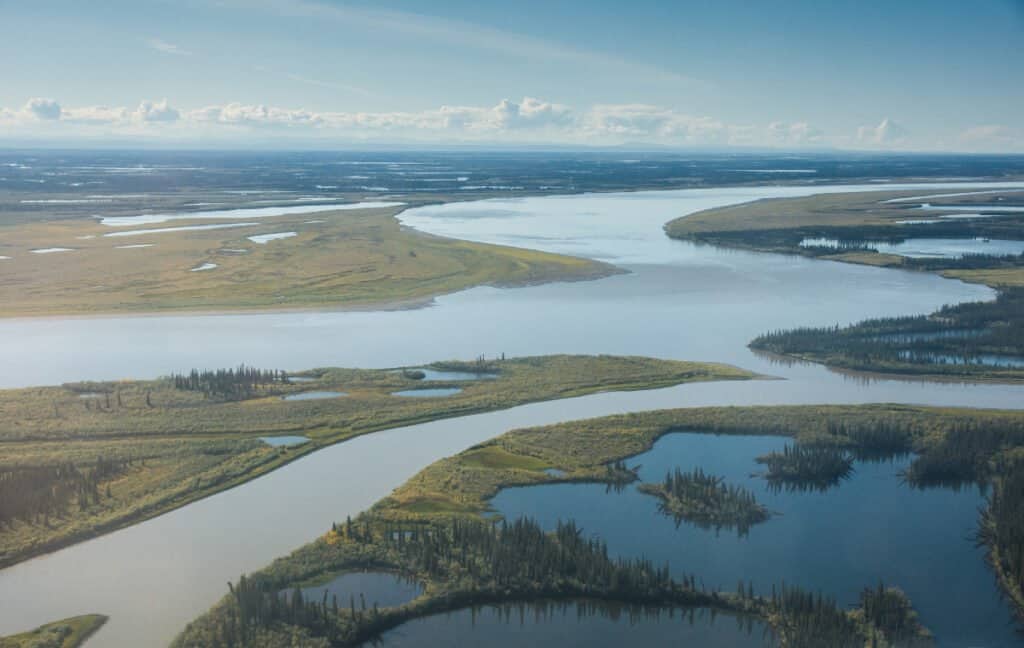
The Mackenzie River is the longest in Canada.
©iStock.com/eppicphotography
The Mackenzie River is a rather remote river that extends through Canada’s Northwest Territories and Yukon areas. Officially, it is part of the Mackenzie-Slave-Peace-Finlay River system. The river’s mouth is located in the Beaufort Sea in Canada.
The Mackenzie River is famous for its gold, lead, and uranium deposits, and as a former oil boom area. The Mackenzie River is a vital artery for commerce, transporting resources and supplies via seasonal barges and acting as a historic corridor for the fur trade.
12. Mekong River: 2,705 Miles
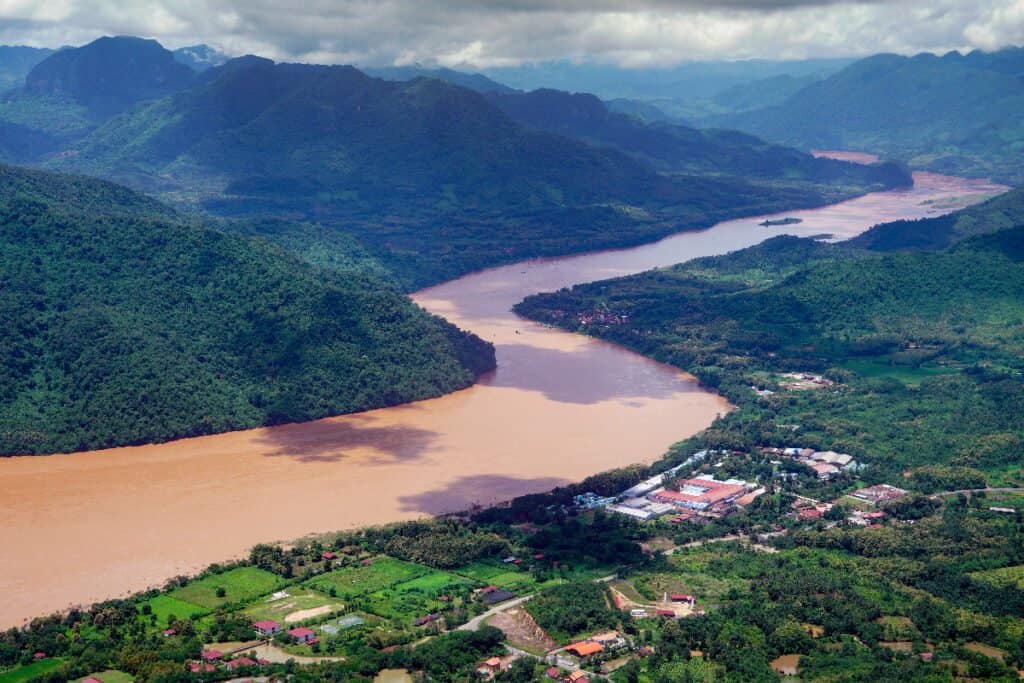
The Mekong River supports millions of people throughout Southeast Asia.
©Mike Towers/Shutterstock.com
The Mekong River stretches into many different countries including China, Thailand, Laos, Vietnam, Myanmar, and Cambodia. This river serves as a lifeline for millions of people who live along its banks.
The Mekong River is home to the Khon Phapheng Falls, a vast waterfall that limited explorers as they attempted to navigate upstream from the Mekong Delta, a fertile, water-logged region in southwestern Vietnam where the river empties into the sea. The Mekong River is known for its vast fisheries as well as the ongoing generation of hydroelectric power in the Mekong basin.
11. Lena River: 2,736 Miles
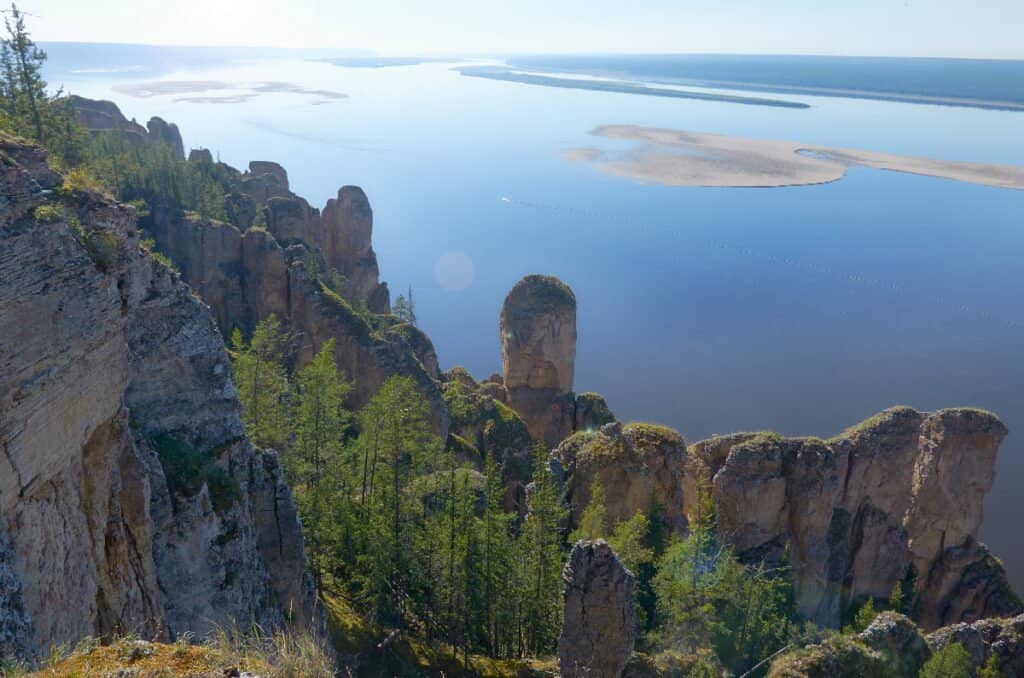
The Lena River has been the site of many archaeological discoveries, including mammoth tusks.
©FotoSovushka/Shutterstock.com
The Lena River runs through Russia for over 2,700 miles, eventually reaching the Laptev Sea far to the north.
Archaeological excavations have revealed hearths, burial sites, and tools, indicating that early communities utilized the river for hunting, fishing, and habitation.
Although it is ice-bound for seven to eight months of the year, the Lena River is a vital transportation corridor serving as the primary shipping route for timber, minerals, fuel, and food to isolated communities.
10. Amur River: 2,763 Miles
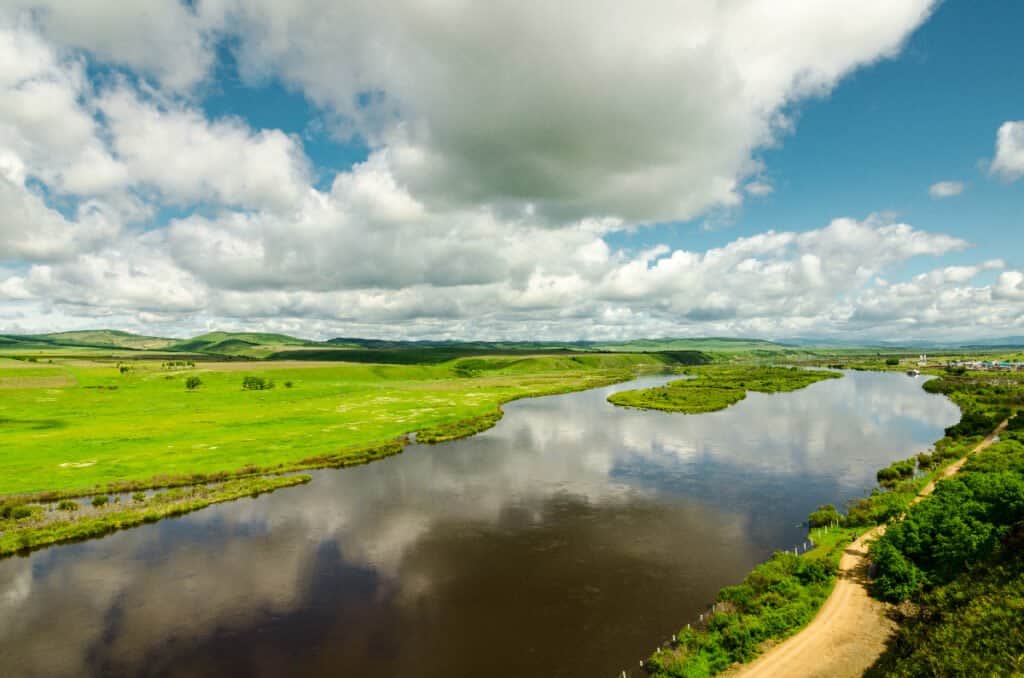
The Argun River is a natural boundary between China and Russia.
©iStock.com/Yuanping
The Amur-Argun-Kherlen River system flows through China and Russia. The name is derived from a term that means wide river. The river is a natural boundary between China and Russia, and names for this river exist in Chinese, Russian, and Mongolian.
The Amur-Argun-Kherlen river system is a shipping corridor for industrial and agricultural trade.
9. Congo River: 2,922 Miles
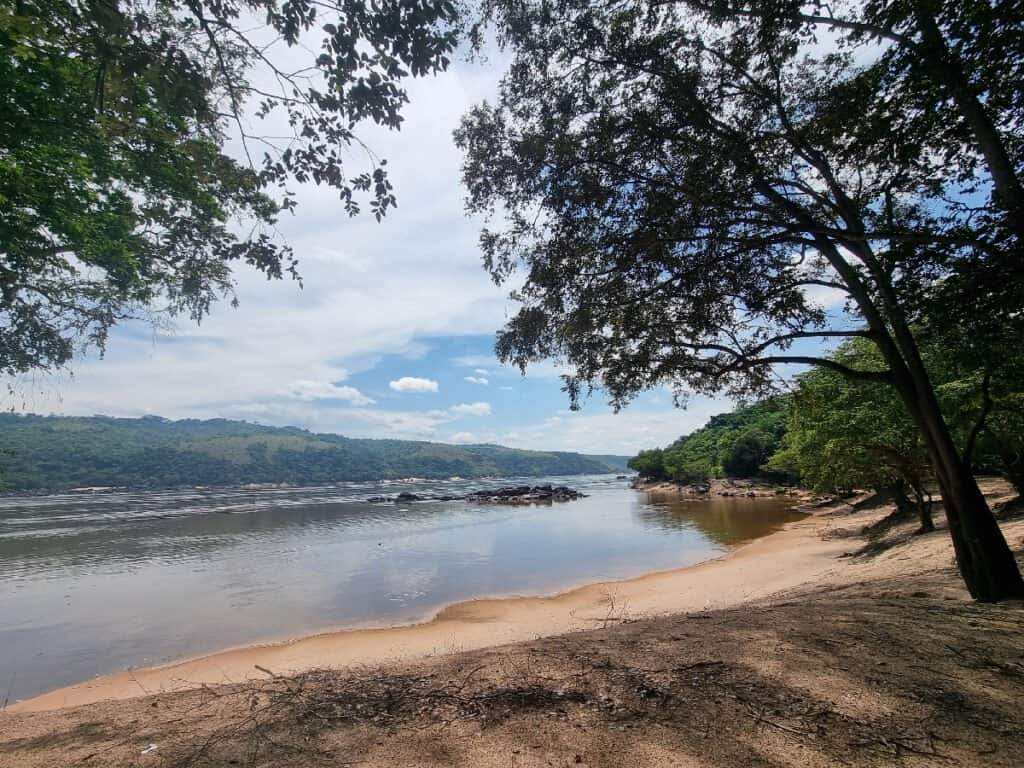
The Congo River is the second-longest river in Africa.
©iStock.com/Fanny Salmon
Formerly called the Zaire River (1971-1997), the Congo River runs through the Democratic Republic of the Congo (formerly Zaire). The river is part of the Congo-Lualaba-Chambeshi River system. The Congo River is the second-largest river in the world by discharge volume.
The Congo River is also the world’s deepest river, at least the deepest confirmed depth; parts of the river are so deep they have yet to be explored.
8. Rio de la Plata: 3,030 Miles
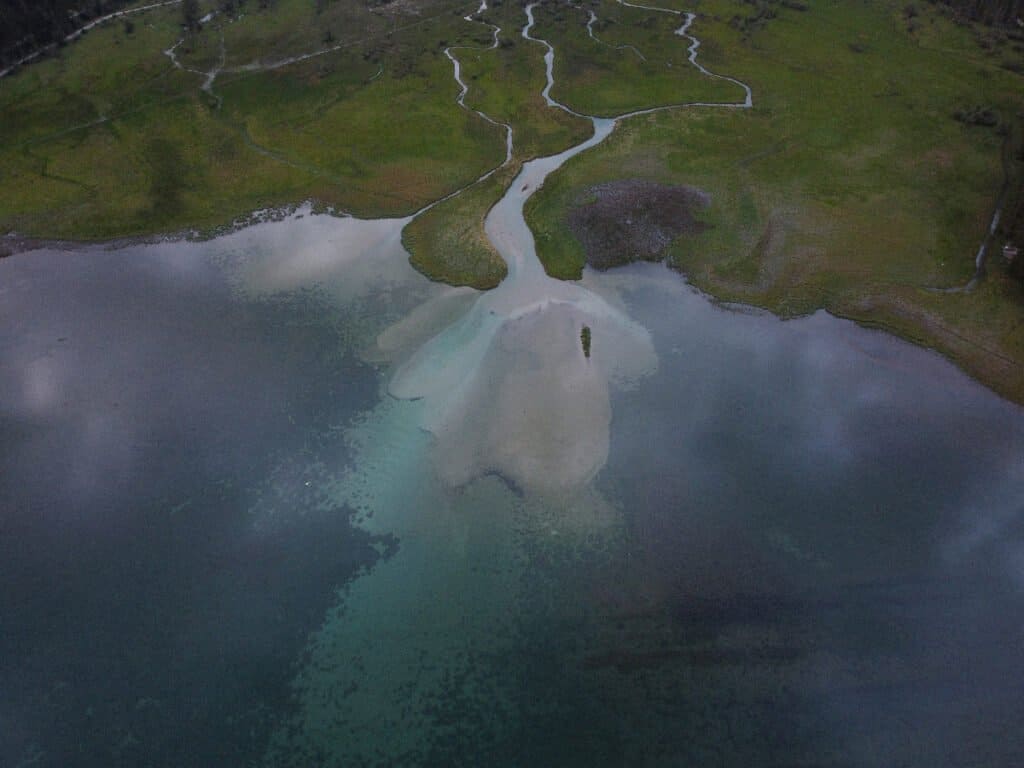
Rio de la Plata runs through Argentina and Uruguay.
©Wirestock Creators/Shutterstock.com
The official measurement of the Rio de la Plata is the total length of the Rio de la Plata-Parana-Rio Grande River system. The Rio de la Plata, which flows through Argentina and Uruguay, has a high level of salinity. The Río de la Plata is saline because it is a large-scale tidal estuary, which allows seawater from the Atlantic Ocean to mix with freshwater from the Paraná and Uruguay rivers.
The Rio de la Plata connects the Atlantic Ocean to the Paraná and Uruguay rivers, acting as a gateway for importing goods and exporting agricultural products like beef, hides, wheat, and silver.
7. Ob River: 3,364 Miles
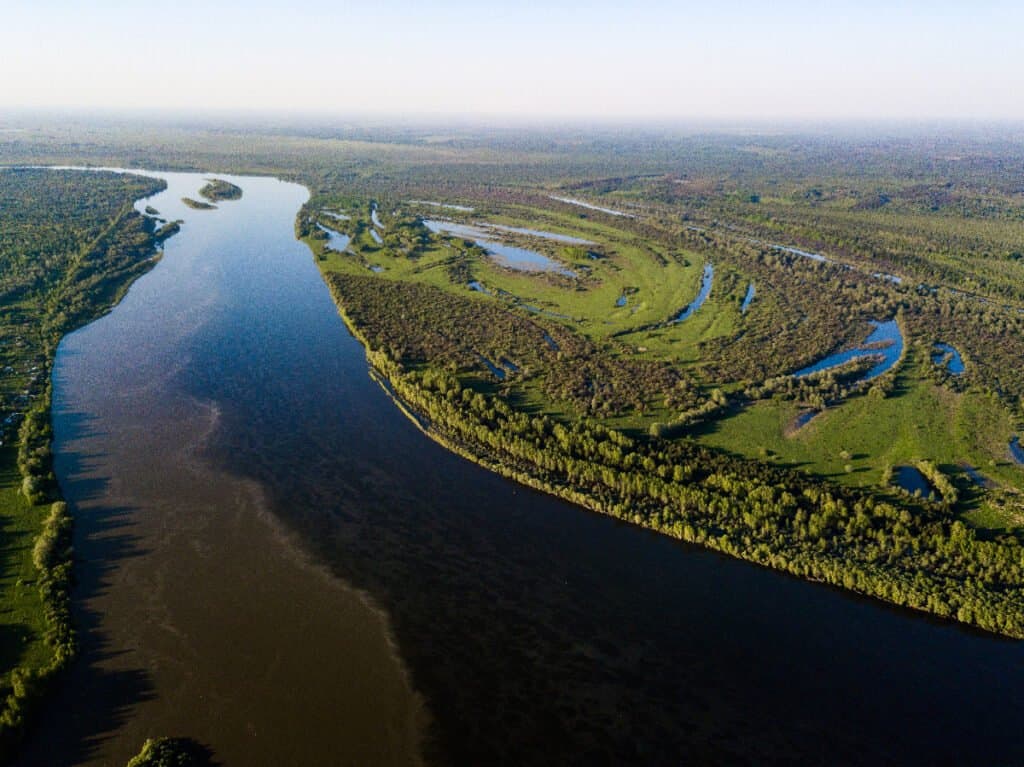
Novosibirsk is on the banks of the Ob River.
©Dmitriy Kandinskiy/Shutterstock.com
The Ob-Irtysh River system, flowing through China, Kazakhstan, and Russia, is characterized by icy, mountainous headwaters and a vast, swampy tundra flow. The Irtysh rises from glaciers in China’s Altai Mountains, while the Ob forms from the Biya/Katun confluence. These rivers merge and empty into the Arctic Gulf of Ob.
The Ob-Irtysh River system serves as a vital transportation corridor, connecting Kazakhstan, China, and Russia.
6. Yellow River: 3,395 Miles
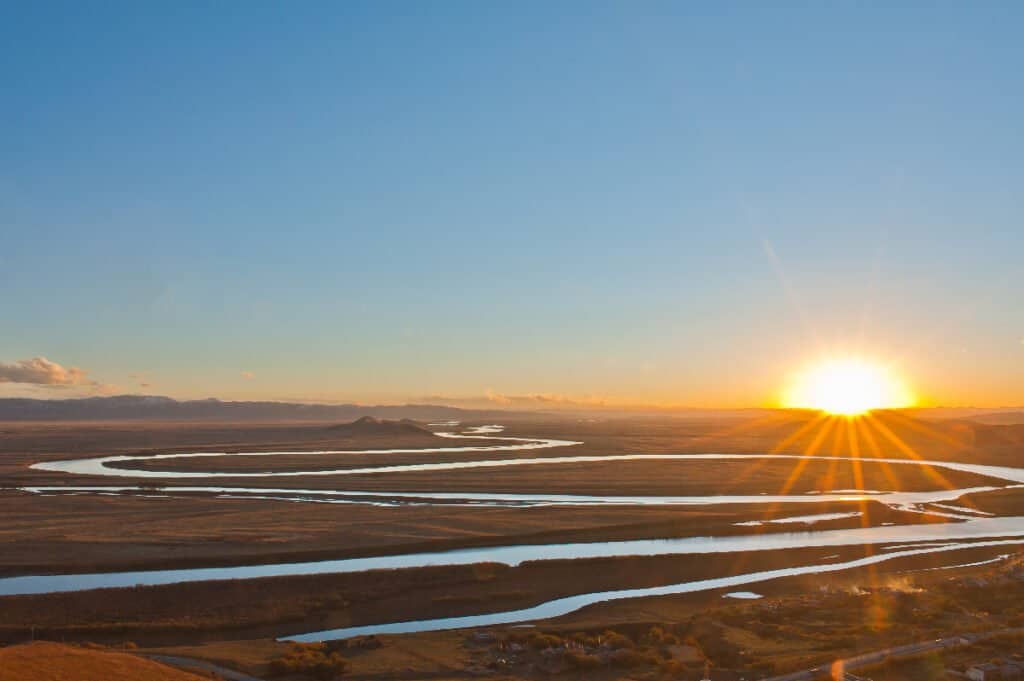
The Yellow River is a very long river that drains into the Bohai Sea.
©cnyy/Shutterstock.com
The sixth largest river in the world, the Yellow River, runs through China. The Yellow River is China’s second-longest river, and is called the “cradle of Chinese civilization”. It originates in the Bayan Har Mountains of Qinghai province on the Tibetan Plateau and flows into the Bohai Sea in Shandong province. The Yellow River is recognized as the world’s most sediment-laden river.
The Yellow River is vital to Chinese commerce, serving as a critical, though challenging, artery for agriculture and transport. The river irrigates farmland through extensive irrigation networks, supporting over 100 million people.
5. Yenisei River: 3,445 Miles
The Yenisei-Angara-Selenga-Ider River system flows through Russia into the Arctic Ocean.
The Yenisei-Angara-Selenga-Ider River system is characterized by high volume discharge, significant hydroelectric dams, and severe winter icing.
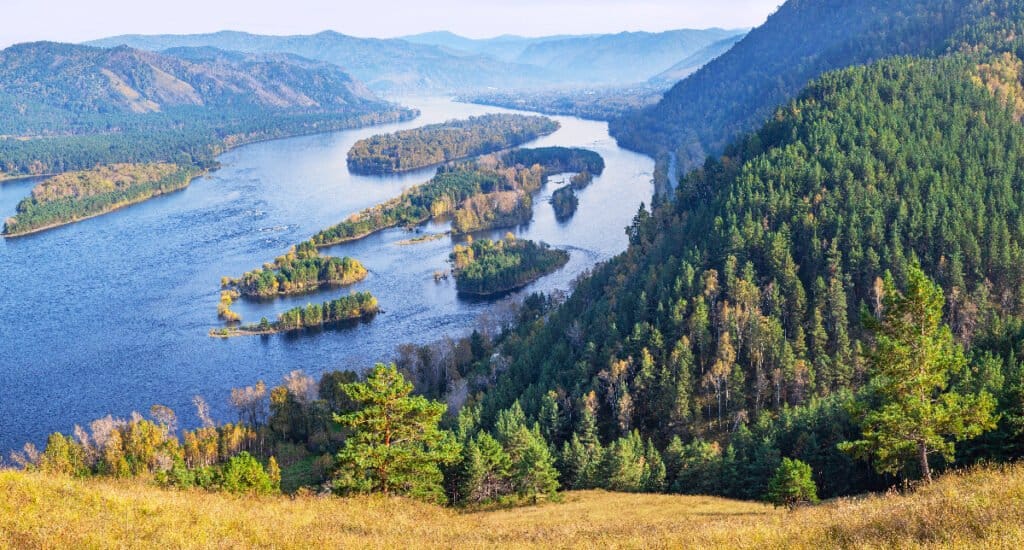
The Yenisei River basin includes Lake Baikal, the deepest lake in the world.
©Valerii_M/Shutterstock.com
The Yenisei-Angara-Selenga-Ider River system serves as a major commercial waterway for transporting timber, machinery, and minerals, while massive hydroelectric stations on the Yenisei and Angara generate power for industries and cities.
4. Mississippi River: 3,902 Miles
The Mississippi-Missouri-Jefferson River system is the longest in the contiguous United States. Ultimately, the water flows out into the Gulf of Mexico, but not before it provides water to dozens of cities and resources for flora and fauna to flourish.
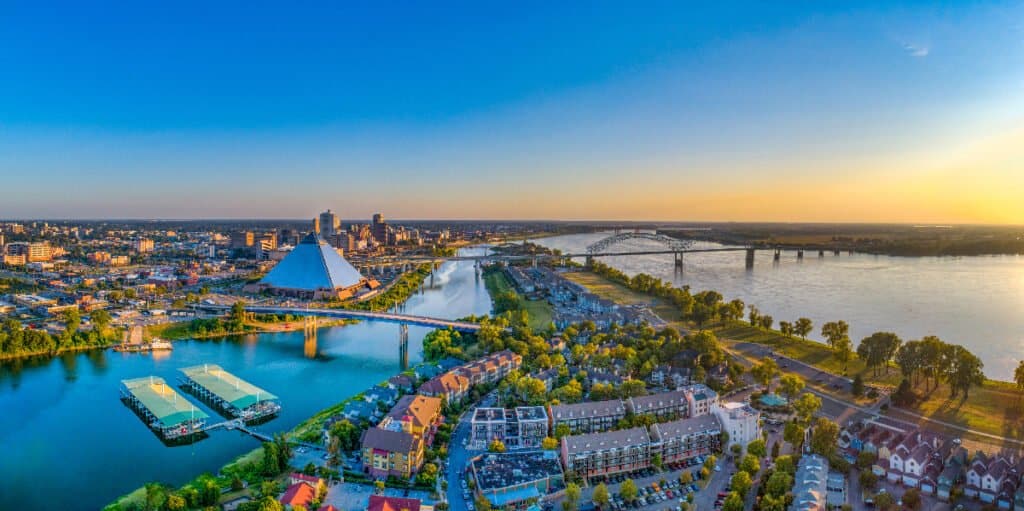
Although the official headwaters of the Mississippi River are located at Lake Itasca in Minnesota, the Jefferson River is a tributary that contributes to the Missouri River, which is the longest tributary of the Mississippi River.
©iStock.com/Kruck20
This river played an important role in the Civil War era and continues to be important today. When not measuring the total river system but individual rivers themselves, the Missouri River actually tops the Mississippi as the largest river in the United States.
3. Yangtze River: 3,917 Miles
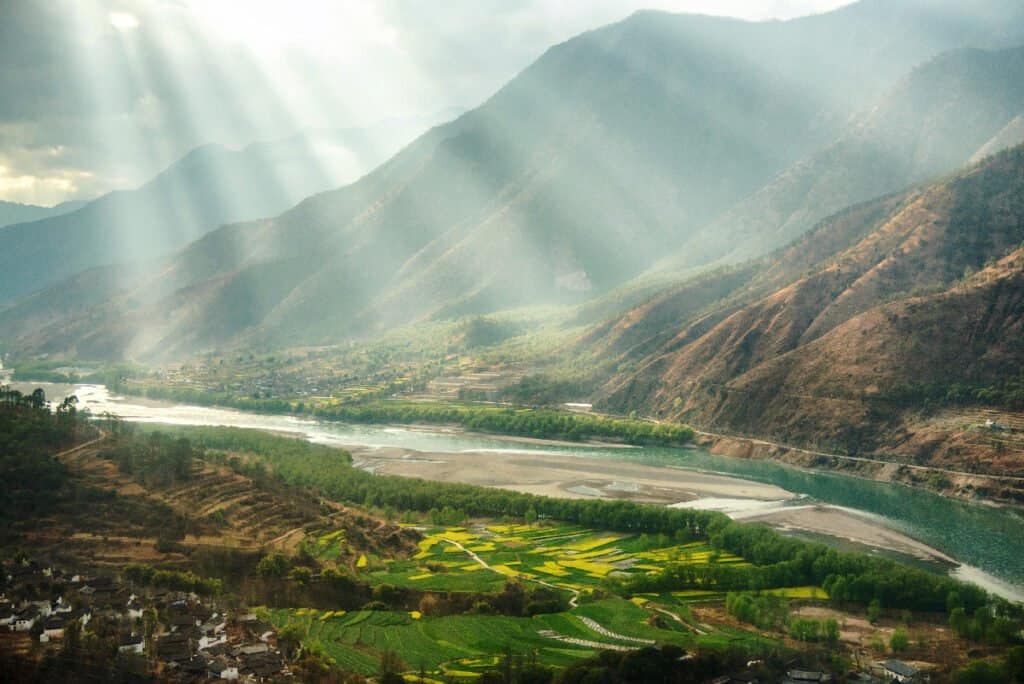
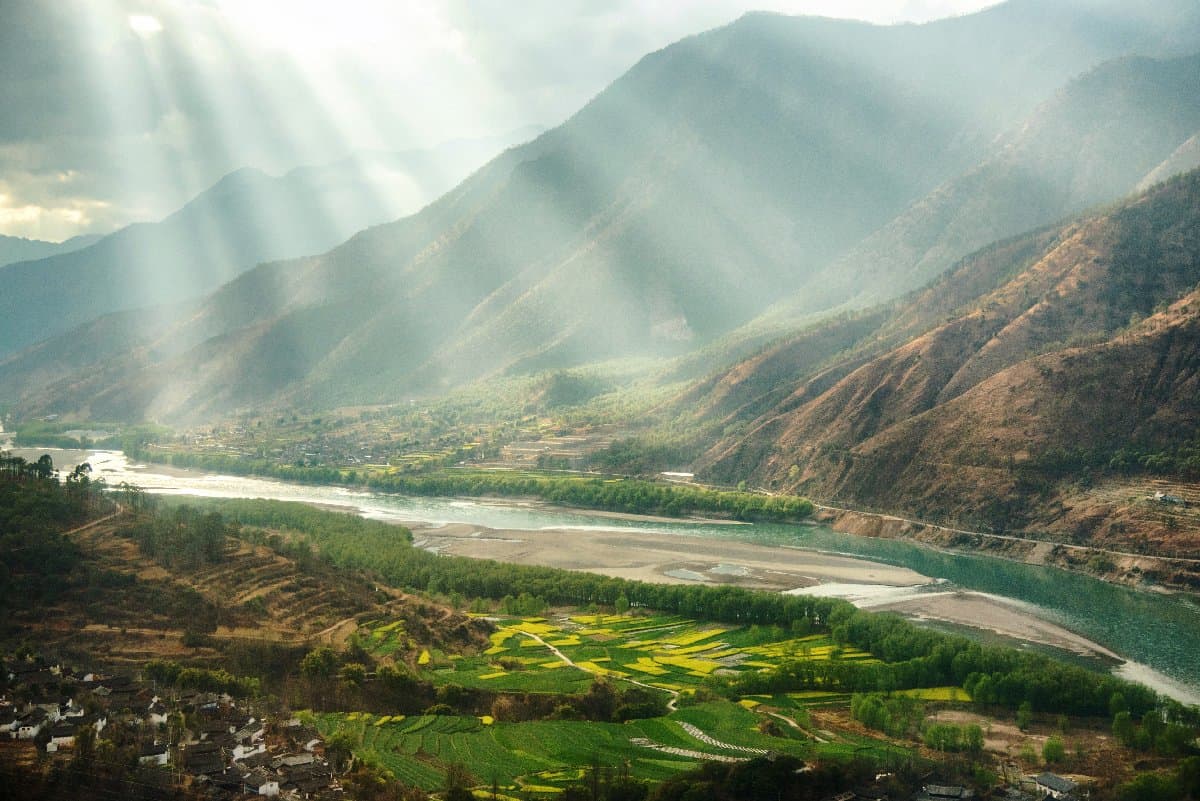
The Yangtze-Jinsha-Tongtian-Dangqu River system flows across Tibet and into China.
©iStock.com/martinhosmart
The Yangtze River system is the longest in Asia and the third-longest in the world. The river system originates in the high-altitude Qinghai-Tibet Plateau and flows eastward to the East China Sea. The upper section—comprising the Dangqu, Tongtian, and Jinsha rivers—is characterized by glacial meltwater, high-altitude wetlands, deep gorges, and steep gradients.
The upper Yangtze, spanning the Jinsha, Tongtian, and Dangqu/Tuotuo sections, functions primarily as a massive, high-gradient hydroelectric power source. The lower river course is wider and is a prime commercial corridor for transportation and tourism.
2. Amazon River: 4,000 Miles
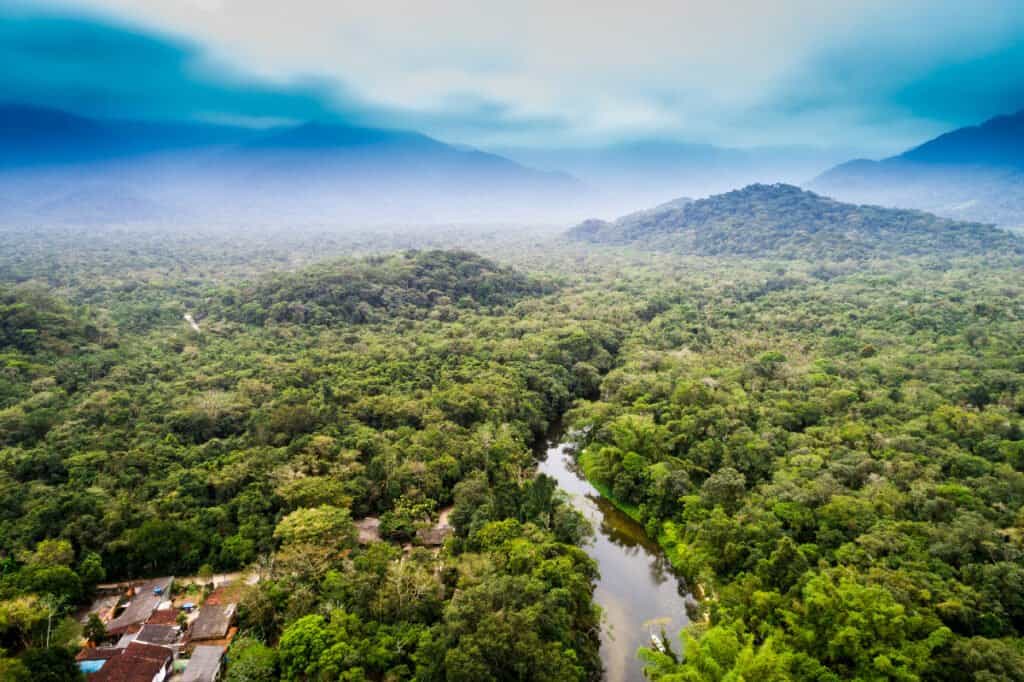
The Amazon River is both long and remote.
©iStock.com/gustavofrazao
The Amazon-Ucayali-Tambo-Ene-Mantaro River system is the second-largest in the entire world. This river stretches across Peru, Colombia, and Brazil. The headwaters of this river system are located high in the Peruvian Andes Mountains, primarily originating from the Apurímac River. The mouth of this river is the Atlantic Ocean, where the Amazon River has the highest discharge of any river in the world.
The Amazon-Ucayali-Tambo-Ene-Mantaro River system supports the greatest biodiversity in the world. The river continues to provide support to indigenous tribes as well as large, industrialized cities.
1. Nile River: 4,130 Miles
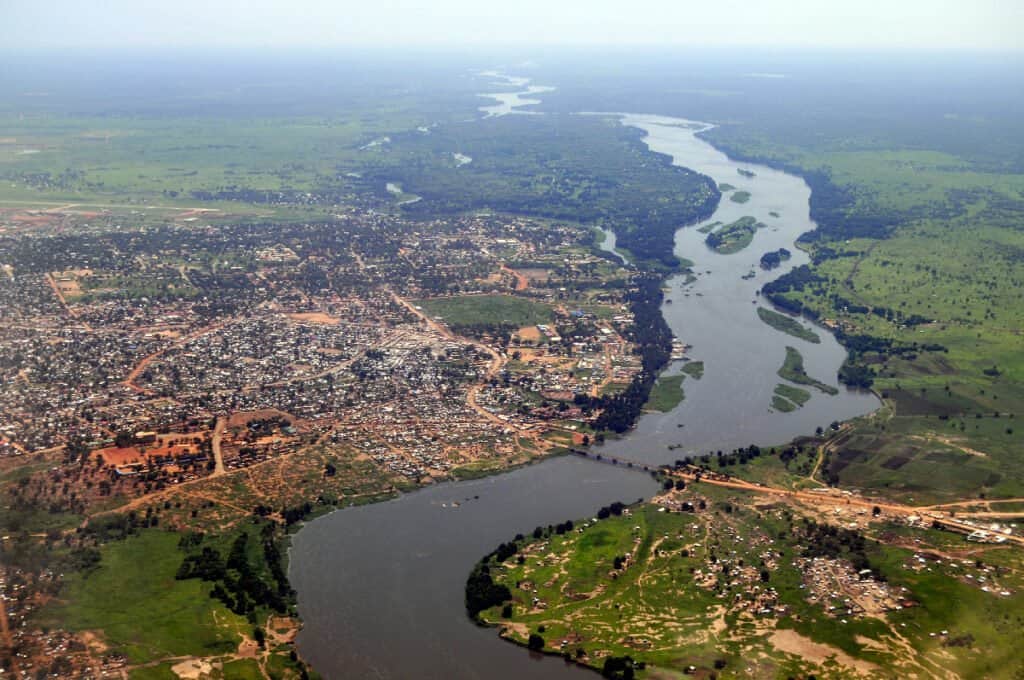
The Nile River is the longest in Africa
©iStock.com/Phototreat
The Nile River is generally considered the longest river in the world, while the Amazon River is the largest by discharge volume and drainage basin. The Nile-White Nile-Kagera-Nyaborongo-Mwogo-Rukarara River system has two primary headwater branches: the White Nile, originating from the Great Lakes region of East Africa, and the Blue Nile, rising from Lake Tana in Ethiopia. The most distant source is the Rukarara River in Rwanda’s Nyungwe National Park, which feeds the Kagera River into Lake Victoria.
The river’s importance to civilization is impossible to overstate. The Nile River was instrumental in the development of Ancient Egypt. The Nile River has been a source of trade and development for thousands of years and continues to provide water and hydroelectric power to the citizens of several nations.
Controversy Over the Length of the Largest River in the World
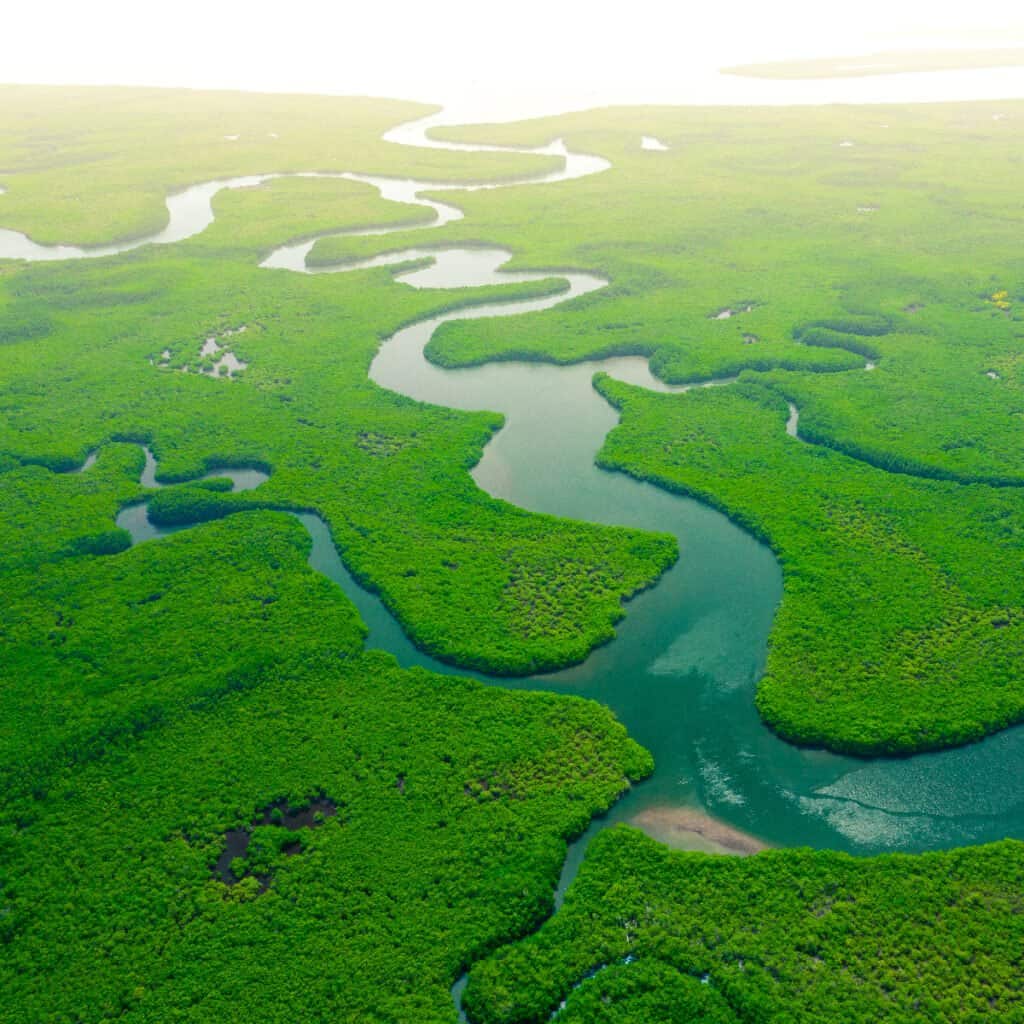
The Amazon River is the longest river system, with nearly a dozen countries in its drainage basin
©Curioso.Photography/Shutterstock.com
Not all scientists recognize the Nile River as the largest river in the world. One that sought to determine the farthest headwaters of the Amazon River found that the added length of the true headwaters could mean that the Amazon River is longer.
Another study used satellite imagery to measure the rivers and claimed that the Amazon was longer than the Nile River.
Yet, a paper published and peer-reviewed in 2009 suggests that the Nile is the longer of the two rivers. The true longest river in the world is a point of contention among scientists to this day, and it could remain unclear. For now, at least, we’re going to give the edge to the Nile River.