
Quick Take
- Connecticut chose the sperm whale in 1975 to honor its pivotal 19th-century whaling industry and maritime heritage.
- Beyond history, the sperm whale symbolizes intelligence, resilience, and modern conservation, linking past maritime enterprise to ecological awareness.
- The whale continues to inspire education, art, and cultural identity through museums, public exhibits, and waterfront heritage programs.
Connecticut’s choice of the sperm whale as its official state animal might seem surprising. After all, this massive marine mammal is more often associated with the open oceans than the quiet harbors of New England. But the sperm whale is actually deeply intertwined with Connecticut’s history, economy, and identity. When the state legislature formalized the sperm whale as the state animal in 1975, it did so to honor Connecticut’s pivotal role in the 19th-century whaling industry. At the time, the whale symbolized prosperity, innovation, and Connecticut’s connection to the wider world through maritime trade. Today, commercial whaling has long since disappeared, but the sperm whale continues to serve as a reminder of the state’s industrious past, its cultural creativity, and its commitment to conservation and maritime heritage.
The Mighty Sperm Whale
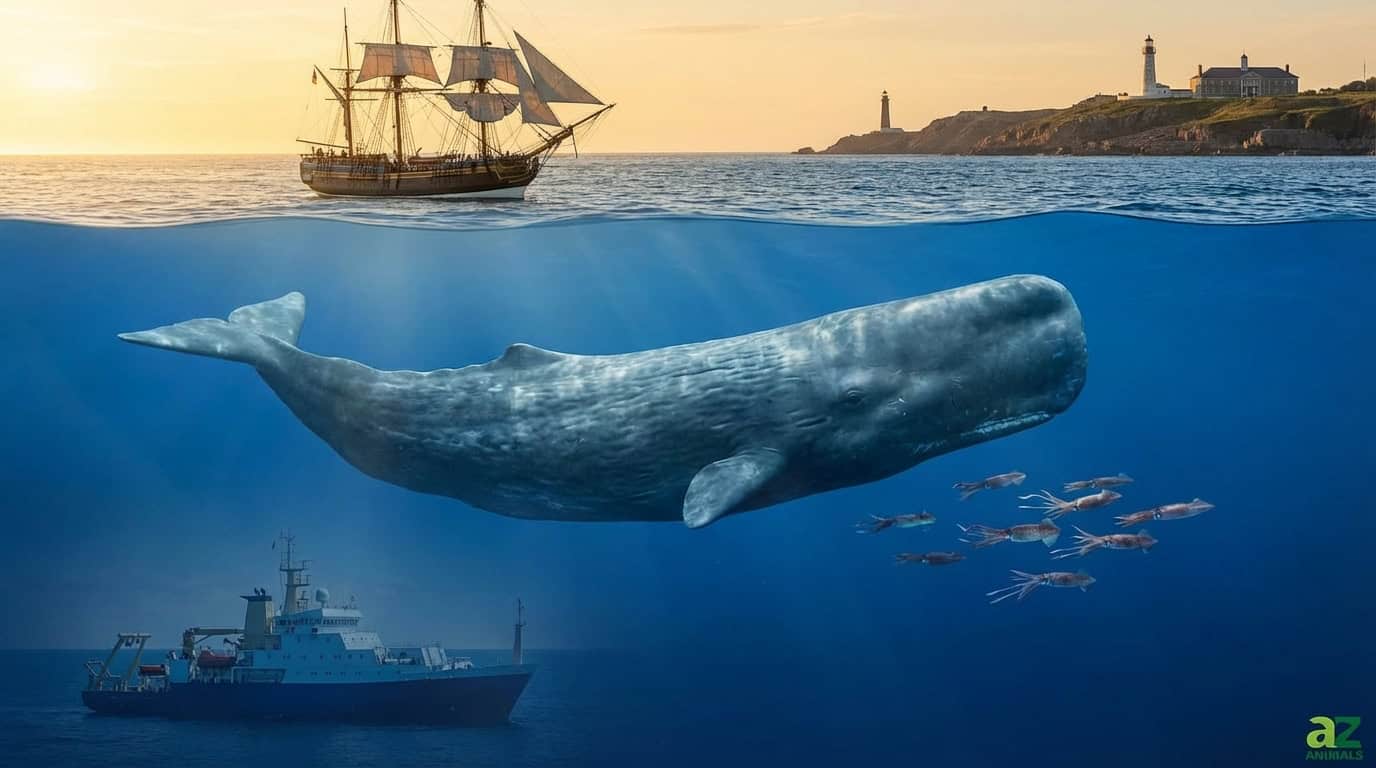
Before we get into its specific ties to Connecticut, let’s talk a little about the sperm whale’s remarkable biological and ecological achievements. Adult males can reach lengths of up to 60 feet and weigh as much as 50 tons (approximately the weight of four city buses), making them the largest toothed predators on Earth. They are deep-diving specialists, plunging over a mile below the surface to hunt squid and other deep-sea creatures. Their echolocation abilities, complex social structures, and long lifespans make them one of the ocean’s most intelligent species.
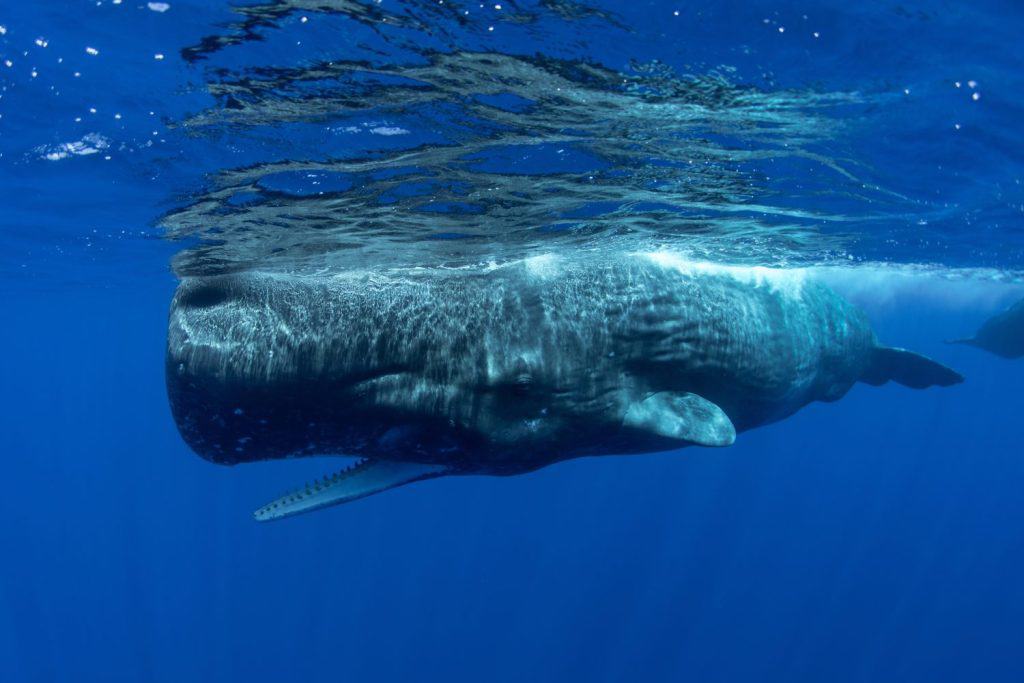
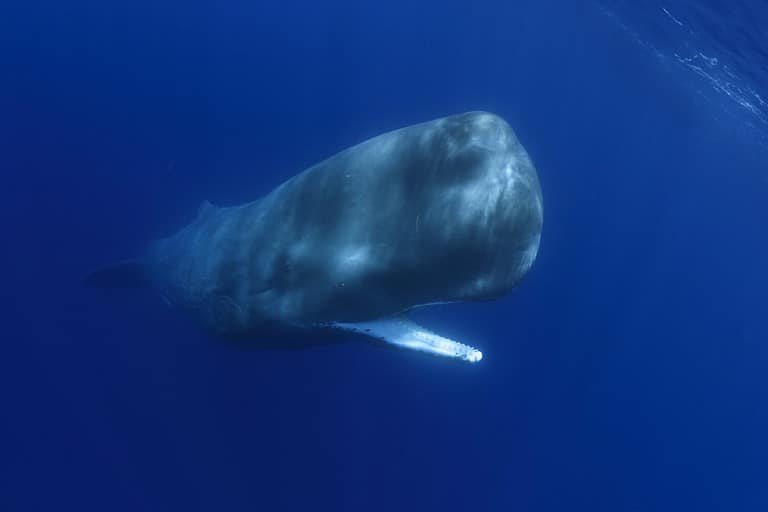
The sperm whale, the largest toothed predator on Earth, dives over a mile deep to hunt squid.
©ohrim/Shutterstock.com
Sperm whales also play a vital role in marine ecosystems. By preying on squid and other species, they help regulate population dynamics in the deep ocean. Their movements and behaviors contribute to nutrient cycling, helping bring nutrients from deep waters to surface ecosystems. Given all that, it wouldn’t be a stretch if one were to look at the sperm whale as a state symbol being a nod to Connecticut’s broader commitment to environmental awareness, linking its historical maritime identity to modern ecological responsibility.
A Seafaring History
Connecticut’s coastline along Long Island Sound is slight compared to states like Massachusetts or Maine, but in the 18th and 19th centuries, it produced some of the nation’s most successful whalers. The city of New London, in particular, was a major hub for whaling expeditions, with fleets venturing across the Atlantic, Pacific, and even Arctic waters in pursuit of sperm whales. These whales were highly prized because of the spermaceti oil found in their heads—a highly valuable substance used for candles, lubricants, and industrial applications.
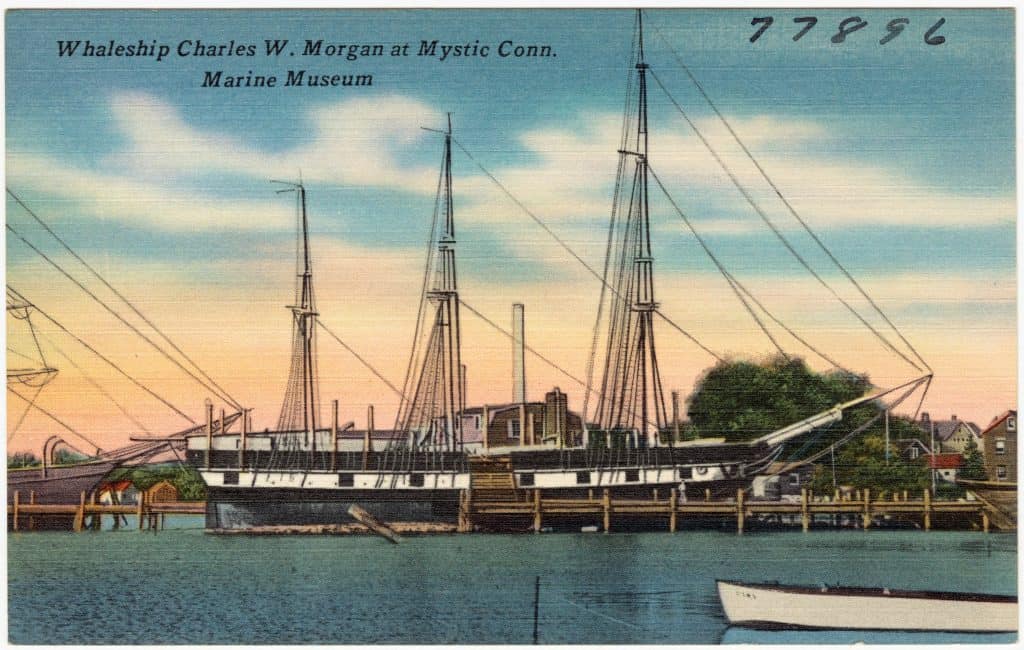
Connecticut whalers sailed global oceans from ports like New London, building fortunes on sperm whale oil.
©Tichnor Brothers, Publisher, Public domain, via Wikimedia Commons – Original / License
Connecticut whalers were among the first Americans to venture into the Pacific in search of sperm whales. These voyages were often daring undertakings. Whaling trips often lasted two to three years, with crews facing storms, rough seas, and the inherent dangers of hunting massive whales. They returned not only with barrels of oil but also with whale teeth that were later carved into scrimshaw art, reflecting both skill and storytelling. The economic impact of these ventures was huge: profits from whaling helped finance shipbuilding, trade, and urban development. Choosing the sperm whale as a state symbol was a way to honor the sailors, merchants, and families whose lives were intertwined with this formidable marine mammal.
Legislative Decisions and Symbolism
In choosing a state animal, Connecticut state legislators wanted to highlight a distinctive aspect of Connecticut’s heritage. While the bald eagle served as a national emblem, Connecticut wanted a symbol uniquely tied to its own specific history. The sperm whale was an obvious choice: no other state could claim such a strong connection to this particular species of whale.

In 1975, Connecticut formally chose the sperm whale to honor its historic whaling industry.
©wildestanimal/Shutterstock.com
During legislative debates, supporters emphasized not only the economic significance of whaling had had on the state, but also its cultural resonance. Museums and historical societies in Connecticut displayed artifacts, charts, and stories documenting the region’s whaling history. Lawmakers highlighted that the sperm whale represented courage, endurance, and resourcefulness—traits they felt reflected the state’s character. By elevating the sperm whale to state-animal status, Connecticut would reinforce its identity as a maritime pioneer in the early United States.
The official designation of the sperm whale was signed into law on June 26, 1975.
Cultural Resonance in Literature and Art
Published in 1851, Herman Melville’s Moby-Dick immortalized the sperm whale as a creature of immense power and mystery. Melville actually hailed from New York, but he drew heavily from narratives originating in Connecticut ports. Stories of whaling exploits, whale sightings, and maritime adventure became part of the local folklore, giving the sperm whale symbolic weight beyond mere economic value.
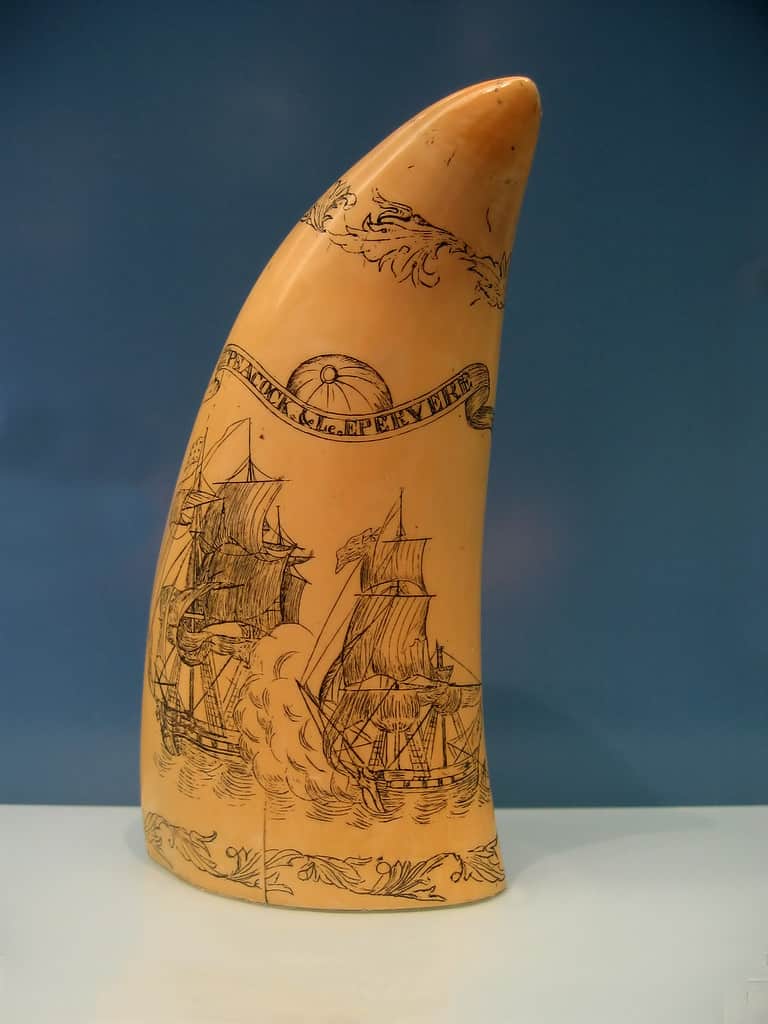
Scrimshaw is the art of carving pictures and designs into whale teeth and bones.
©Lynn Watson/Shutterstock.com
Scrimshaw—intricate carvings on whale teeth or bones—became a distinctive maritime art form in Connecticut and across New England. Sailors carved depictions of whales, ships, and daily life at sea. Some pieces portrayed famous whales or historic whaling events. These artifacts are now preserved in museums like the New London Custom House Museum and the Mystic Seaport Museum, providing tangible links to the past.
Maritime Heritage and Modern Identity
Connecticut’s relationship with the sperm whale also mirrors changing societal values. In the 19th century, whales were hunted extensively, and sperm whale populations declined due to overexploitation. By the 20th century, attitudes toward marine life shifted, and commercial whaling in the U.S. ceased by the 1970s. Connecticut’s symbolic adoption of the sperm whale in 1975 coincided with growing public awareness of conservation issues. The designation served as a bridge between acknowledging the whalers’ industrious past and a more caring attitude toward the ocean and its creatures today.
Modern Connecticut embraces its legacy with the sperm whale largely through museum-based education. Institutions such as Mystic Aquarium and Mystic Seaport Museum offer school programs and public exhibits that teach marine ecosystems, the history of whaling, and the importance of protecting ocean habitats.
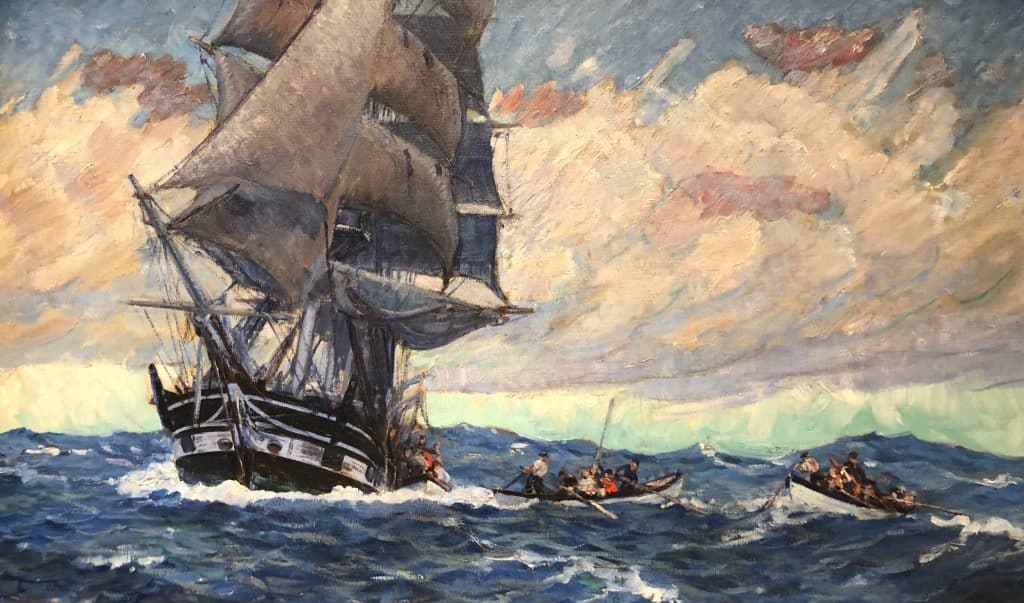
Museums, preserved waterfronts, and public art keep Connecticut’s whaling heritage visible today.
©Clifford Warren Ashley, Public domain, via Wikimedia Commons – Original / License
Coastal towns continue to celebrate the whaling past through festivals, museum exhibits, and public art installations. Waterfronts once bustling with whaling ships are now venues for sailing, fishing, and recreation, yet the historical connection remains visible in preserved wharves, waterfront museums, and public markers that document the region’s maritime past.
The whale also continues to inspire creativity and education in tangible ways. Institutions such as Mystic Aquarium use the sperm whale as a focal species in exhibits and conservation messaging, while Mystic Seaport Museum preserves and interprets scrimshaw and other whale-inspired maritime arts. In New London, public murals, waterfront signage, and heritage displays reference whales as symbols of the city’s identity as a historic whaling port, keeping the animal embedded in both cultural expression and public education.
Does the Symbol Still Hold Up Today?
Nearly fifty years after its designation, the sperm whale still makes sense as a symbol for Connecticut, though the reasons have changed over time. Originally chosen to acknowledge the state’s central role in the whaling industry, the animal now functions not so much as a tribute to an economy of days gone by, but as a marker of historical continuity. Museums, preserved waterfronts, and public artwork keep that maritime past visible without celebrating the exploitation that defined it.
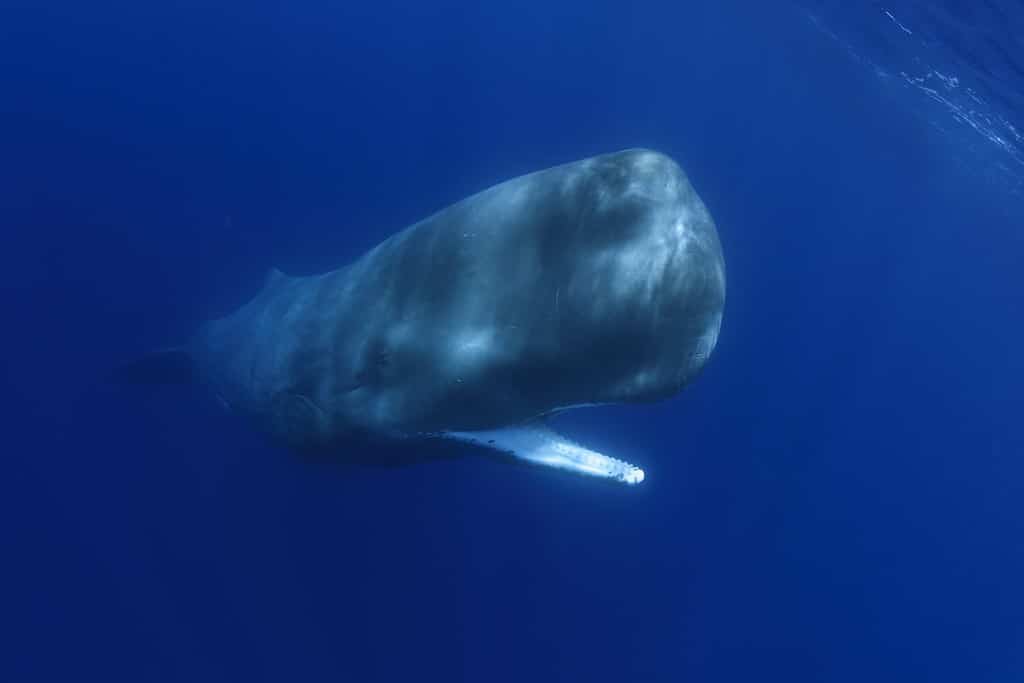
Once a symbol of industry, the sperm whale now reflects conservation, education, and environmental responsibility.
©Thierry Eidenweil/Shutterstock.com
Today, the sperm whale carries a different weight. It reflects how Connecticut has learned from its history, turning a symbol once tied to heavy use of natural resources into one focused on knowledge and care for the ocean. The whale connects New London’s whaling voyages to modern research, education, and conservation, linking past ambition with present responsibility. That’s where the strength of the sperm whale as a symbol lies. Instead of existing as a static emblem frozen in time, it looks back honestly at Connecticut’s past while pointing toward a more thoughtful relationship with the ocean in the future.