
Quick Take
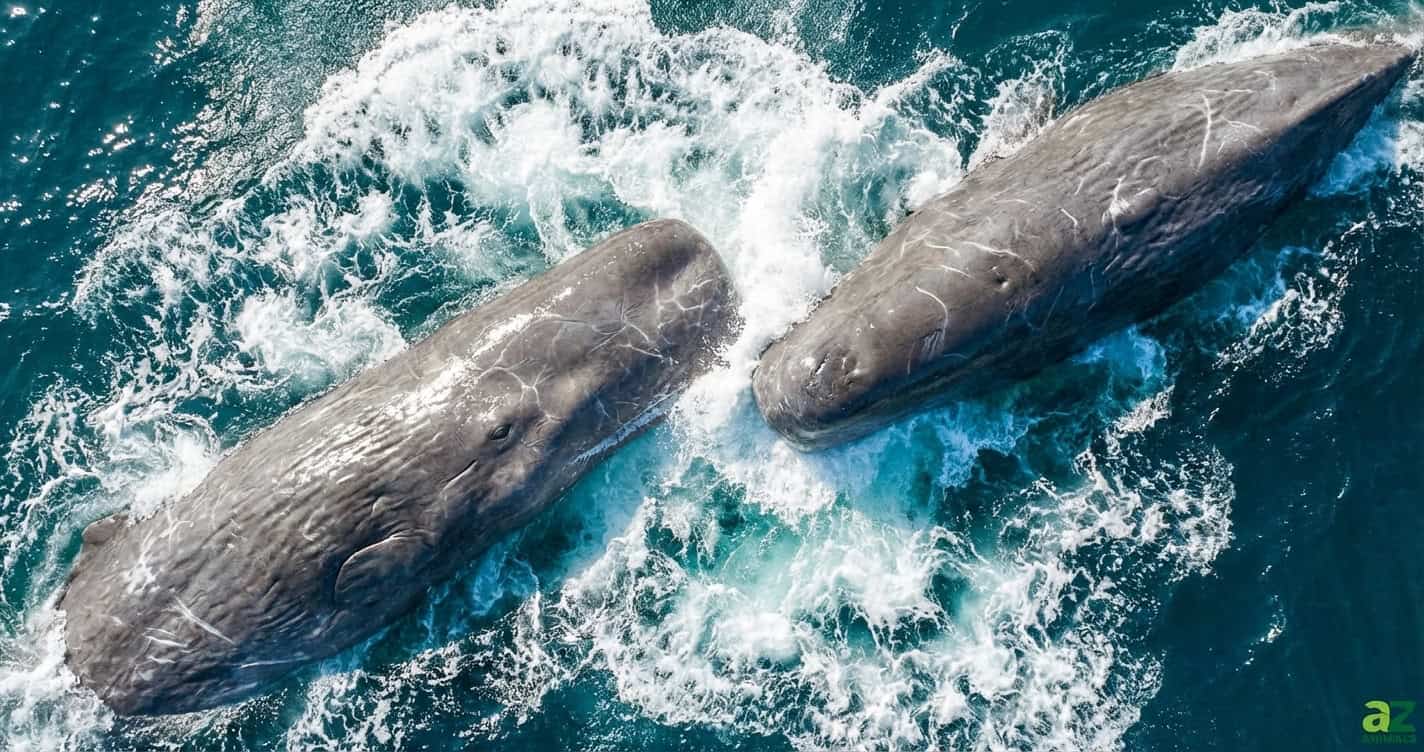
- Scientists conducting research off the coasts of Spain and Portugal captured rare footage of sub-adult sperm whales headbutting each other.
- This is the first known instance of the behavior being recorded.
- Scientists are unsure why young sperm whales headbutt.
- The classic novel, Moby Dick, was inspired by a real-life sperm whale attack that caused a whaling ship to sink in 1820 near the Galápagos Islands.
When sperm whale researcher Rui Prieto shouted “head ramming!” during a routine day of research off the coast of Spain, the scientific team on board was understandably excited. After all, this type of whale behavior is rarely witnessed, let alone documented.
But the behavior, first captured on video by drones and then witnessed by the ship’s research crew, lent credibility to centuries-old sailor lore. Many 19th-century ship captains wrote accounts of whales using their heads to push and strike objects, sometimes even sinking ships. The tales were so compelling that they inspired one of literature’s greatest masterpieces.
Now the researchers who witnessed this unique sperm whale phenomenon have released their findings in a study published on March 23, 2026, in the scientific journal Marine Mammal Science.
What Did the Study Find?
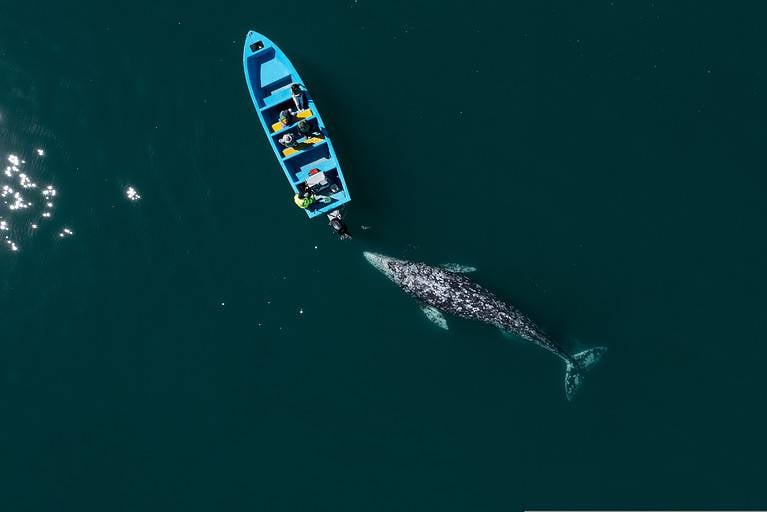
Between 2020 and 2022, researchers conducting marine fieldwork around the Azores and Balearic Islands deployed drones as part of the routine monitoring of sperm whales active in the region. The scientists were focused on the whales’ physical condition, not behavioral patterns.
But when drone footage captured some of the whales headbutting each other, the researchers’ attention shifted. The drones recorded three instances of sperm whales engaging in head ramming behavior. This marked the first time scientists had ever documented this long-reported behavior on video.
The first instance involved a male sperm whale headbutting a similar-sized female in the Balearic Islands off the Spanish coast. Later, in the Azores off the coast of Portugal, the crew captured even more drone footage, this time of two sperm whales colliding head-to-head while audio of patterned clicking was also recorded by in-water sensors attached to the boat.
Lead author Dr. Alec Burslem, who carried out the research while at the University of St. Andrews in collaboration with researchers at the University of the Azores and Asociación Tursiops (an NGO based in the Balearic islands), said in a press release, “It was really exciting to observe this behavior, which we knew had been hypothesized for such a long time, but not yet documented and described systematically.”
The Biggest Surprise? It’s the Kids!
For decades, researchers studying sperm whales hypothesized that any headbutting behavior was done by large, adult males as a way to compete for resources and mating access. Across marine species, it is typically the largest, most physically developed animals that use their head as a weapon.
However, the sperm whales captured on drone footage were all sub-adults. This calls into question the long-held belief that only adult male sperm whales engage in this behavior. For the scientists involved in this study, these findings raise questions about the actual purpose and function of this behavior. Researchers say that more observations—especially using drones to capture these encounters—are needed to better understand how headbutting fits into sperm whales’ overall social dynamics.
Sailor’s Lore vs. Reality
Sperm whales using their heads to sink boats has long been a part of sailing lore. The most famous example is the sinking of the whaling ship Essex near the Galápagos Islands in 1820. Dramatic first-hand reports from sailors on the Essex note that the boat was sunk by two head-on strikes from a large bull sperm whale.
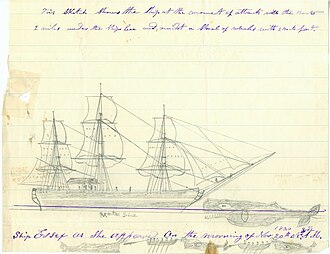
The whaling ship Essex, the inspiration for the novel Moby Dick, was sunk by a sperm whale in 1820.
Other accounts citing sperm whales as the cause of ships sinking in the 1800s, including the Ann Alexander and Kathleen, also exist.
Those tales were supported by dramatic first-hand accounts but lacked scientific video documentation. This new drone footage provides the first direct evidence of headbutting behavior in sperm whales, lending further legitimacy to the sailors’ stories.
What Researchers Think the Headbutting Means
According to the study’s authors, some of the interactions between the young sperm whales could have simply been a form of rough play. Other characteristics typical of whale play activity, like rolling and open jaws, were simultaneously observed.
One hypothesis proposed by the study’s authors is that headbutting may be a reason young males are driven out of whale family groups, which are always led by a matriarch. While females stay with the same group for life, males eventually leave. The researchers think the headbutting could be part of the reason. This behavior may simply annoy the matriarch enough to prompt her to drive the young males away.

Sperm whales form social groups, led by a matriarch.
©wildestanimal/Shutterstock.com
Once males are no longer part of a group, they only have brief interactions with other whale groups. They temporarily join a group when seeking a female to breed with, then depart afterward.
Does Headbutting Hurt the Whale?
A sperm whale’s head anatomy seems designed to absorb much of the impact from headbutting. The head is quite long and makes up about 40 percent of the full body length.
The cranium containing the whale’s brain sits in the far back of the head. The majority of the rest of the head is filled with fluid, muscles, and soft tissue. There is also something called the spermaceti organ, located just in front of the whale’s brain. This organ is filled with oil and acts as an additional cushion.
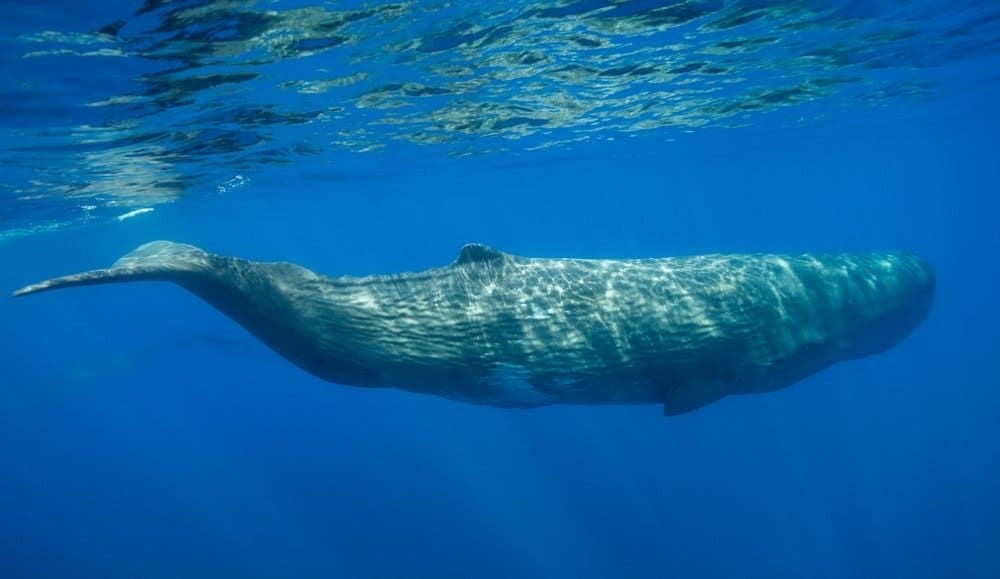
A sperm whale’s head makes up about 40 percent of its overall body length.
©wildestanimal/Shutterstock.com
Other whale experts who have viewed the recordings don’t believe the whales were hurting themselves when headbutting. While the impacts were impressive, they weren’t likely powerful enough to cause damage. Typically, injuries sustained from intense headbutting behavior occur among adult males competing for access to females that are ready to breed.
How Technology Is Changing Marine Research
The addition of drones to marine biologists’ research toolkits is proving to be a game changer, as demonstrated by the sperm whale behavior captured during these routine observation trips. This kind of footage isn’t limited to scientific researchers, either. Virtually anyone operating a drone could capture rare wildlife interactions. Researchers want to see that footage, too.
As Dr. Burslem noted in the press release accompanying the study’s publication, “This unique overhead perspective for observing and documenting near-surface behaviour is just one of the ways drone technology is transforming the study of wildlife biology. It’s exciting to think about what as-yet unseen behaviours we may soon uncover, as well as how more headbutting observations may help us to shed light on the functions the behaviour may serve. If there are people out there with similar footage, we would be very keen to hear from them.”