
Quick Take
- Sperm whales communicate through a phonetic system surprisingly similar to human language, and scientists have already cracked part of it. See the 2024 breakthrough →
- Decoding whale language could hand sperm whales something no animal has ever legally received. Explore the legal personhood question →
- There are no formal international protections stopping this whale-translation technology from being weaponized against the very animals it was built to protect. See the protection gaps →
- The reason scientists chose sperm whales over 90 other cetacean species has nothing to do with their size or abundance. Discover why sperm whales →
Compared to other marine animals, whales have been understudied. Spending their lives in the open ocean, sometimes in very remote locations, whales are more often heard than seen. Consequently, studying whales in their natural environment can prove challenging.
Despite the difficulties involved, researchers are working to unlock whale language. If we could decipher what whales were saying, an entire world of understanding would emerge from the depths of the ocean. This is why Project CETI is working tirelessly to translate the communication system of sperm whales into a language humans can comprehend. This move would bring compassion and empathy to whales and help conserve them in the process.
Why Understanding Whales is Not Only Important, But Necessary
Whale songs have been studied since the late 1950s and early 1960s, providing valuable insights into whale communication. Because of Dr. Roger Payne’s work in this realm, the “Save the Whale” movement began decades ago. The goals were to stop commercial whaling, promote whale conservation and rights, and educate the public on the importance of whales to the marine ecosystem.
Although whale songs have contributed to some conservation efforts, whales are still not adequately protected. Inspired by Dr. Payne’s work, Dr. David Gruber, a marine biologist and National Geographic Explorer, founded Project CETI.
Understanding whale language brings empathy and compassion to these marine animals, hopefully translating to better conservation.
© – Original
Founded in 2020, Project CETI (Cetacean Translation Initiative) aims to understand what sperm whales are saying. By translating their communication, Dr. Gruber believes that human understanding and connectivity to animal species could be transformed, which would translate into protecting species around the world, creating a global conservation movement like never before.
Unlocking whale language forces humans to confront the negative impact our species has had on wild animals. While uncomfortable, it is necessary if we truly aim to protect whales from extinction.
How Sperm Whales Became the Center of Research for Project CETI
In total, there are approximately 90 different species of whales, dolphins, and porpoises. Any one of these cetacean species could have been chosen for language research. In the end, Project CETI chose sperm whales because their “phonetic structures” are similar to those of humans.
“Sperm whales became the center of our research due to their remarkable biological and linguistic complexity,” Dr. Gruber explains to A-Z Animals. “They possess a massive 18-pound brain that is highly intelligent and contains features similar to humans, such as spindle cells, which are related to love and emotion. While scientists have known since 1957 that sperm whales produce sound, so much about them remains a mystery.”
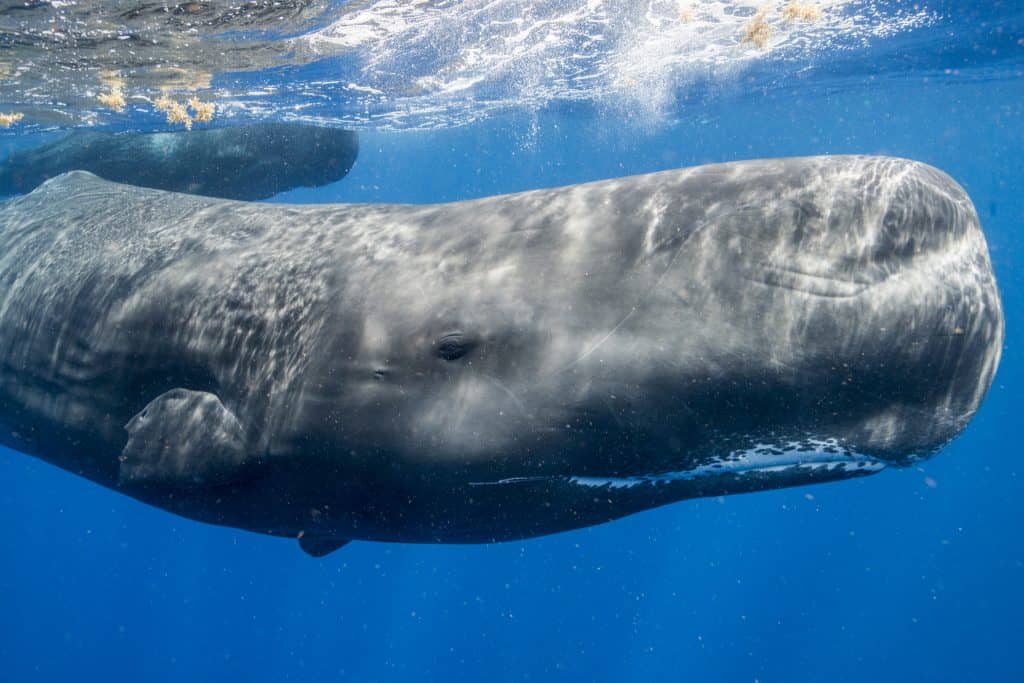
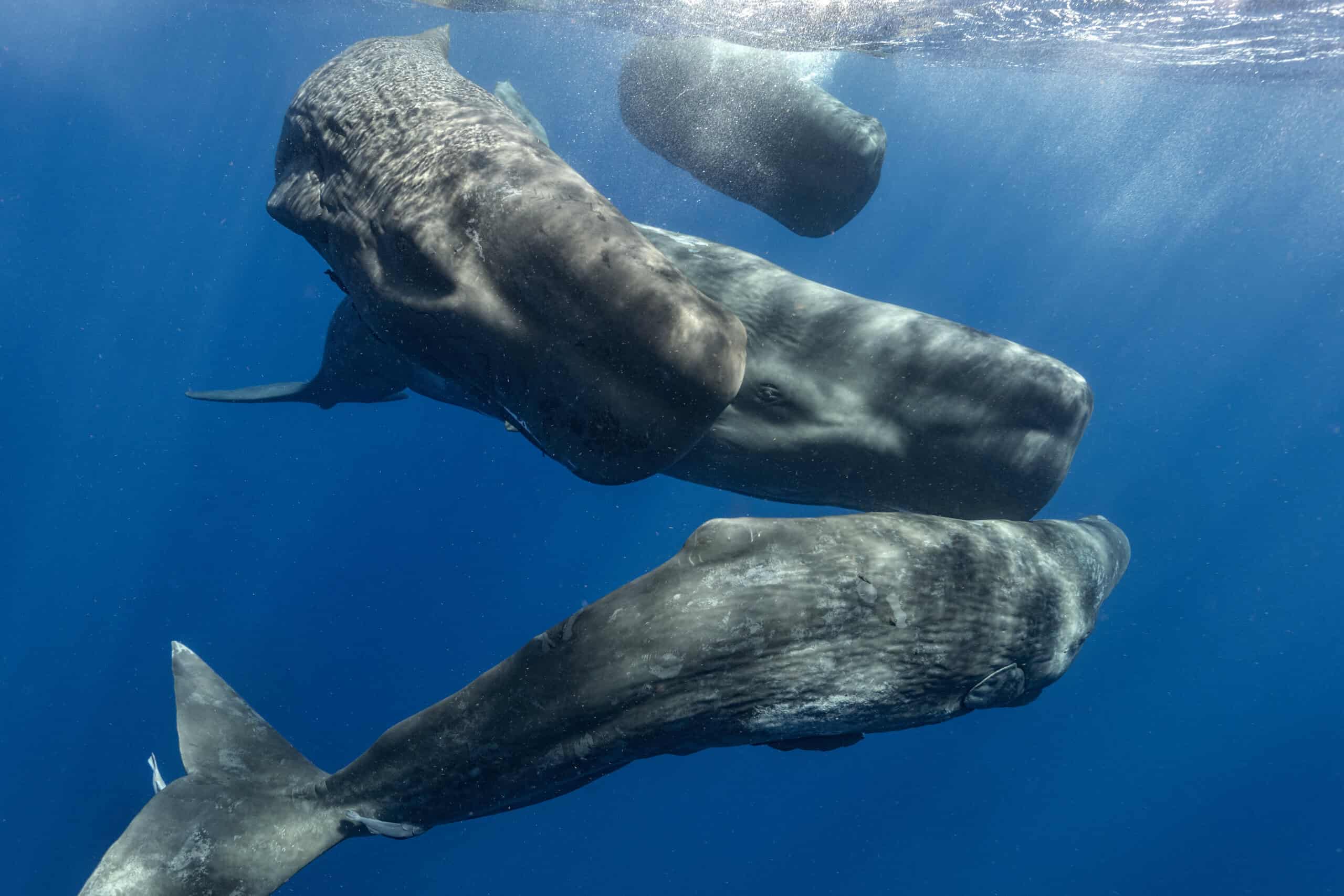
Emotional intelligence and complex communication are just two of the reasons Project CETI is studying sperm whale language.
© – Original
Sperm whales “communicate through rhythmic sequences of clicks known as codas,” says Dr. Gruber. He continues, stating that these codas “resemble human phonetic structures.”
“This combination of complex communication, the availability of long-term field data, and the need for a non-human species with a large brain to test advanced AI made sperm whales the ideal focus for Project CETI,” Dr. Gruber concludes.
Alphabet and Vowels of Sperm Whales
In 2024, Project CETI discovered that sperm whales have a phonetic alphabet. This massive breakthrough was accomplished thanks to “artificial intelligence, natural language processing, and complex system experts,” in addition to a number of experts in the fields of marine biology, robotics, linguists, and more.
With this piece of the puzzle uncovered, the research does not stop there. In fact, it is just getting started.
“Now that we have uncovered what we consider the ‘alphabet and vowels’ of their communication, Project CETI is researching how to integrate machine learning with robotics to analyze complex, continuous acoustic datasets,” Dr. Gruber states. “As with all machine learning, collecting more data is paramount to success. We need datasets of sufficient scale, while also being as gentle and minimally invasive as possible.”
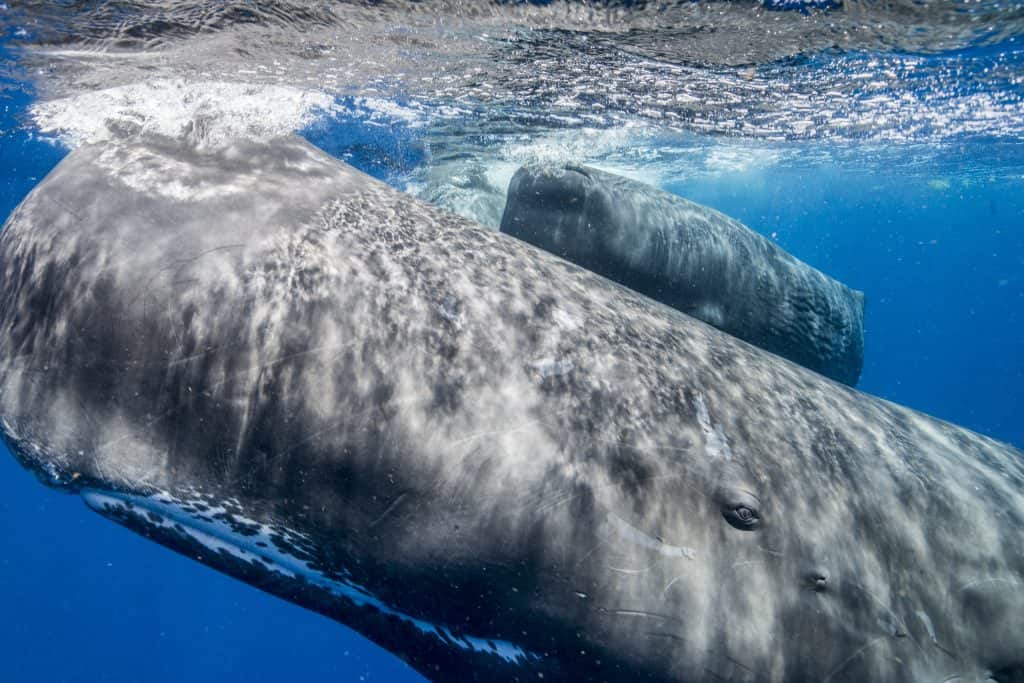
Technology will continue to develop to turn the sperm whale codas into translatable language that humans can understand.
© – Original
Project CETI works to obtain its datasets through gathering information from the sperm whales and using machines to make sense of it. The steps to doing this are as follows:
- Observe and monitor the whales via audio recordings and video
- Process and analyze data to make sense of what is being seen and heard
- Utilize machine learning to take the data and decode patterns by matching communication to corresponding behavior
- Review and test results, bringing the world one step closer to understanding what sperm whales are saying
What Happens Now?
Now that the team at Project CETI has uncovered an alphabet and vowels, Dr. Gruber says that understanding sperm whale language involves more than just identifying sounds. The goal is now to understand the meaning behind these sounds by correlating particular noises with actions.
During the birth of a sperm whale in 2023, the whales allowed our team to remain in close proximity, a level of trust we believe is a direct result of our gentle methods. I feel tremendous empathy for these creatures… We’re not so different and aggression simply isn’t something we do. We build trust over many interactions.
Dr. David Gruber, marine biologist, National Geographic Explorer, and founded of Project CETI
A Non-Invasive Approach is the Only Approach to Study Sperm Whales
Whales spend the majority of their lives under the waves, which can make them hard to observe. In the past, aggressive techniques were used to better understand whales. Unfortunately, the mere presence of humans can alter whale behavior, making the information gathered from forceful interactions less accurate.
Project CETI believes the only approach to understanding whale language is non-invasive. This has allowed the team to be present for incredible events, like the birth of a baby sperm whale in 2023, where the pod was observed working together to bring the newborn to the surface to help it breathe. Dr. Gruber believes this would not have been possible had the sperm whales not developed a trusting relationship with the Project CETI team.
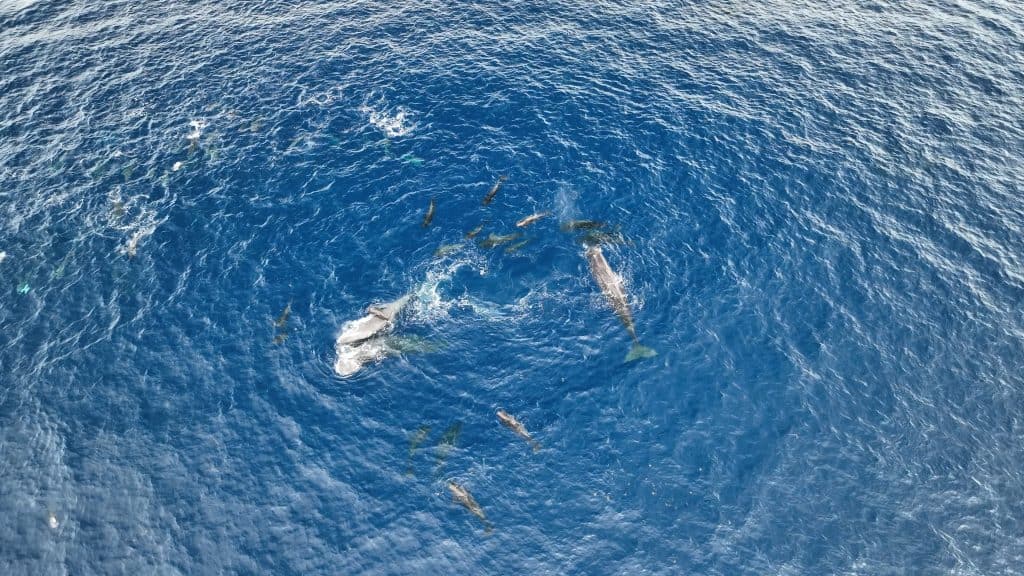
Sperm whales allowed Project CETI to get close enough to witness the birth of a calf in 2023.
© – Original
“At CETI, we have prioritized a non-invasive approach to studying the language of sperm whales,” Dr. Gruber tells A-Z Animals. “This philosophy of respect is fundamental to our success.”
Dr. Gruber continues, saying, “For instance, during the birth of a sperm whale in 2023, the whales allowed our team to remain in close proximity, a level of trust we believe is a direct result of our gentle methods. I feel tremendous empathy for these creatures… We’re not so different and aggression simply isn’t something we do. We build trust over many interactions.”
According to Dr. Gruber, the relationship between humans and the whale pods Project CETI works with is 20 years in the making. It did not happen overnight. Without the groundwork of trust already laid, obtaining such advanced data on sperm whales would have been impossible.
Understanding Sperm Whales May “Shift Global Perspective on Personhood”
Attorneys have argued that animals such as elephants, chimpanzees, and bonobos should be granted legal personhood status. This is based on these animals’ social lives, high cognition, and self-awareness, which is not unlike that of humans. To date, none of these animals has been granted personhood status. However, courts have acknowledged that these cases are establishing precedent for future proceedings.
Those future proceedings may concern sperm whales. If Project CETI succeeds in deciphering what these whales say and how they feel, it may be enough for courts to pay attention and finally grant personhood status to a species other than humans.
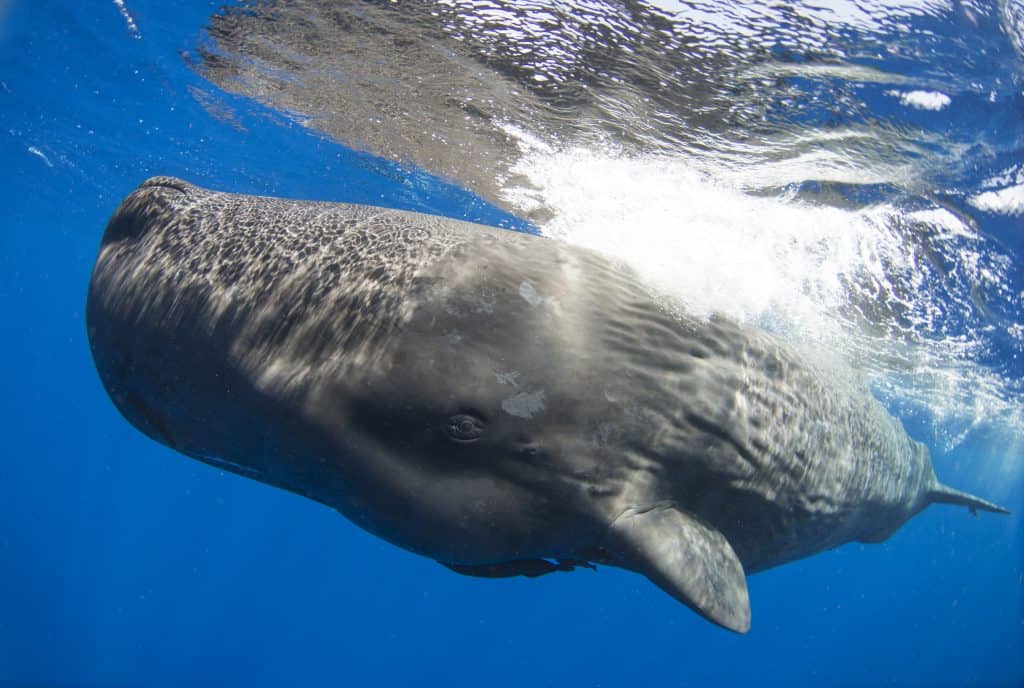
Sperm whale communication may open the door to granting personhood status to animals other than humans.
© – Original
“As we get closer to deciphering this language,” Dr. Gruber says, “we believe it will have a profound impact on the rights of all whales.”
Dr. Gruber explains that Project CETI is working with the MOTH Project (More-Than-Human Life Program) at NYU Law. The collaboration is on the “Whale Declaration.” This declaration, and “legal frameworks” that “advocate for their protection,” has an end goal of shifting “the global perspective on cetacean personhood” by “proving the depth of [sperm whales’] internal lives and social structures through language.”
“CETI’s research on sperm whales demonstrates that these highly auditory and social beings have communication systems with linguistic complexity,” Dr. Gruber explains, “while MOTH suggests that our findings offer evidence for strengthening existing laws, influencing court rulings in different countries, and even creating new rights for sperm whales and other cetaceans.”
Are There Protections in Place to Keep Technology from Falling into the Wrong Hands?
The technology being used to translate the codas of sperm whales is groundbreaking. As it becomes more refined, there are fears that the technology could be used for animal exploitation or financial gain.
Project CETI is very aware that technology of this caliber can be used to harm animals rather than to help them. The organization is doing all it can to ensure that only those with the animals’ best interests in mind collaborate on the project.
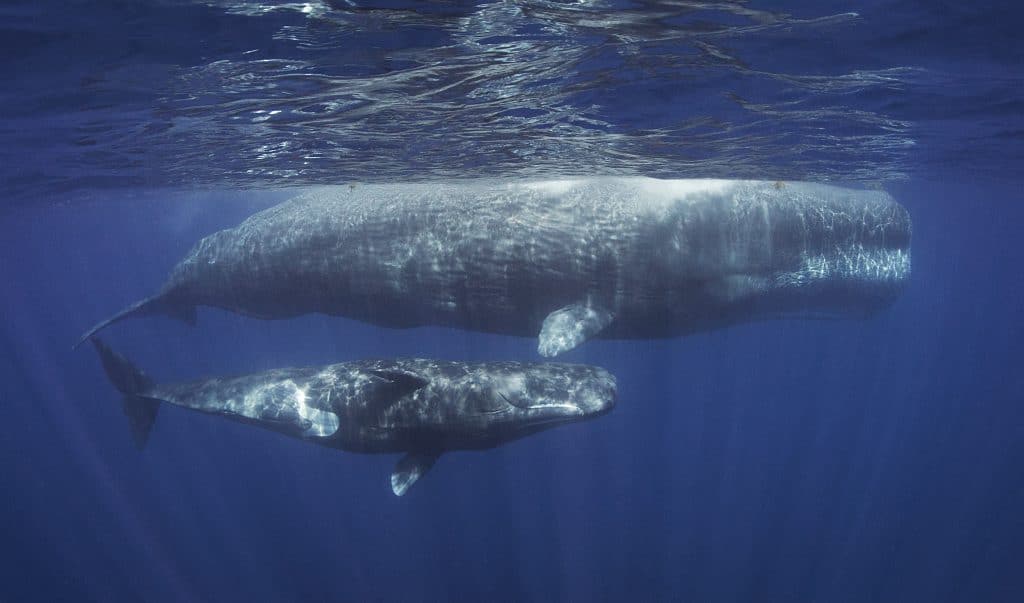
Currently, there are no protections in place to prevent the technology used to understand sperm whale communication from being misused.
© – Original
“Currently, there are no formal international protections in place to prevent whale language from falling into the ‘wrong hands’ or being exploited,” Dr. Gruber tells A-Z Animals. “Given the long history of animal exploitation for financial gain, we recognize the risk that this information could be misused. This is exactly why CETI takes the vetting of our partnerships so seriously.”
Dr. Gruber says that Project CETI and MOTH are working together to “establish ethical guardrails.” The hope is that by doing this, “discoveries are used to protect these creatures rather than provide a new avenue for their exploitation.”
Sperm Whales Need to Be Viewed with Empathy
In centuries past, a lack of scientific understanding led to whales being viewed as creatures with little intelligence. Before migration, playing, and even social structure were recognized, whales were seen as unpredictable and simple, mindlessly swimming through the ocean.
As scientists have learned, none of these early assumptions about whales are accurate. Sperm whales, in particular, have the largest brain of any extant animal. While brain size does not always indicate higher intelligence, in the case of these whales, it does. Sperm whales live in complex social structures, possess advanced problem-solving skills, exhibit incredible communication, and have emotional intelligence that allows them to experience a variety of emotions, including empathy and grief. For all these reasons, Dr. Gruber believes it is time for sperm whales to be defined as more than just a marine animal. Instead, they should be viewed as the complex, emotional beings that they are.
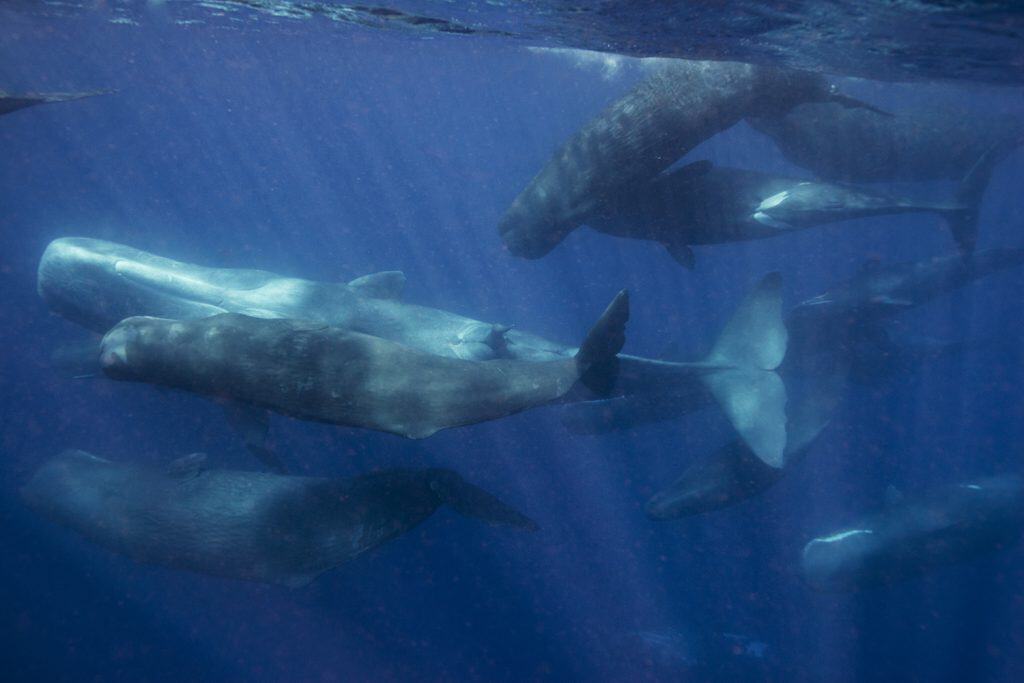
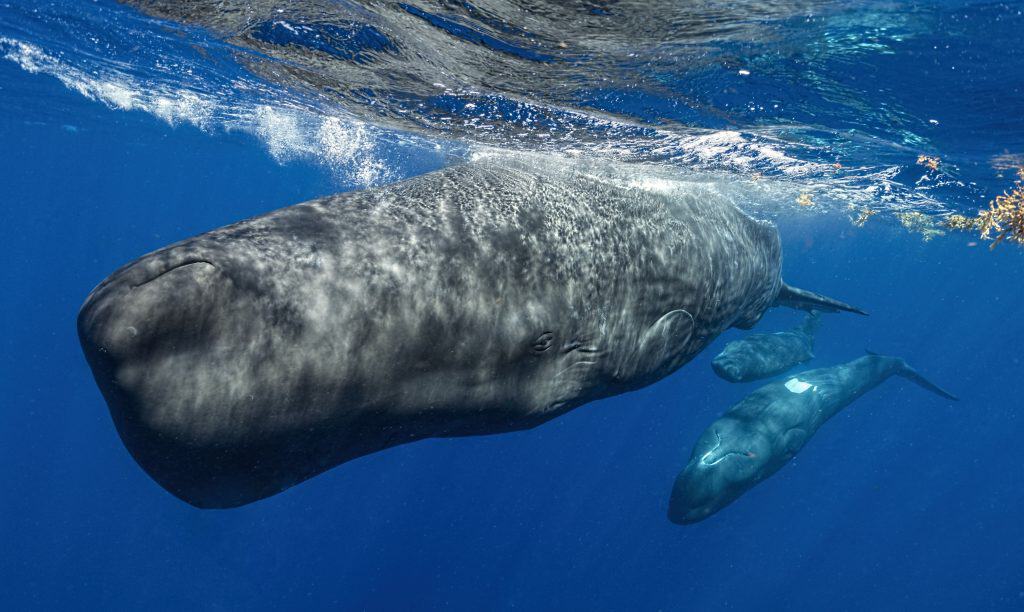
Dr. Gruber hopes that cracking the code on sperm whale communication will lead to more empathy for the animals.
© – Original
“If there is one thing we want the world to take away from our findings, it is the importance of viewing these animals with empathy,” Dr. Gruber says. “We are finally in a position where we can truly listen to the whales. Our goal is to move beyond seeing them as mere biological subjects and instead recognize them as complex, emotional beings that have been communicating in our oceans for millions of years.”
As Project CETI continues its work with sperm whales, more about this incredible species will be revealed. The time will likely come when humanity will acknowledge that these animals possess emotional and cognitive abilities similar to those of humans. This realization has the potential to help save species of all kinds.