
Quick Take
- Massachusetts requires the protection of the remaining 300 North Atlantic right whales to ensure marine health.
- Unique crustacean-hosting callosities on the head now expose these mammals to significant modern dangers.
- The 1980 Marine Mammal designation counterintuitively prioritized a species once valued primarily as raw fuel.
- Establishing shore-based lookout points was a vital requirement for the Commonwealth’s early economic stability.
For Massachusetts, the North Atlantic right whale represents more than a large animal moving through offshore waters. It reflects how the state’s early economy once depended on whaling and how its future now depends on responsible ocean management. The Commonwealth designated the North Atlantic right whale as its official marine mammal in 1980, linking colonial history with modern conservation priorities.
The decision marked a shift from viewing whales as fuel and raw material to recognizing them as living indicators of marine health. By choosing a species that had been pushed to the brink of extinction, Massachusetts acknowledged its history of exploitation and committed to a more responsible relationship with the ocean.
The North Atlantic Right Whale
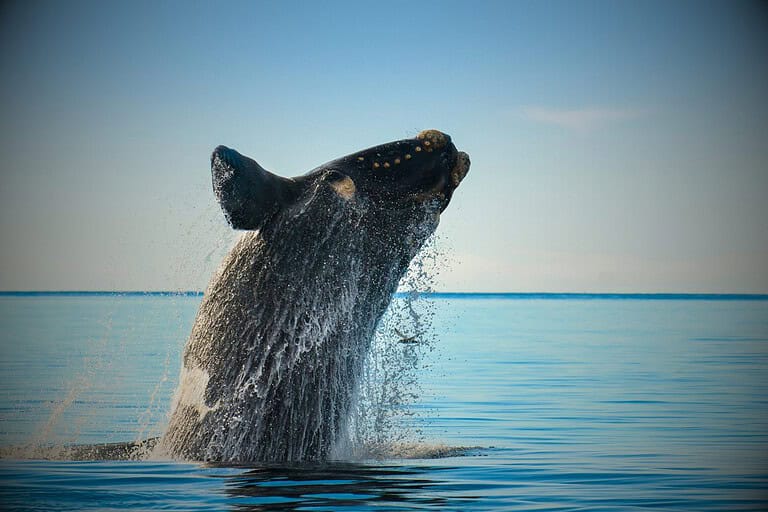
The North Atlantic right whale is a large baleen whale known for its thick body, broad head, and lack of a dorsal fin. Adults can exceed 50 feet in length and weigh many tons. The species is mostly dark in color, with rough white patches of skin called callosities on the head. These patches host small crustaceans and allow researchers to identify individuals over time.
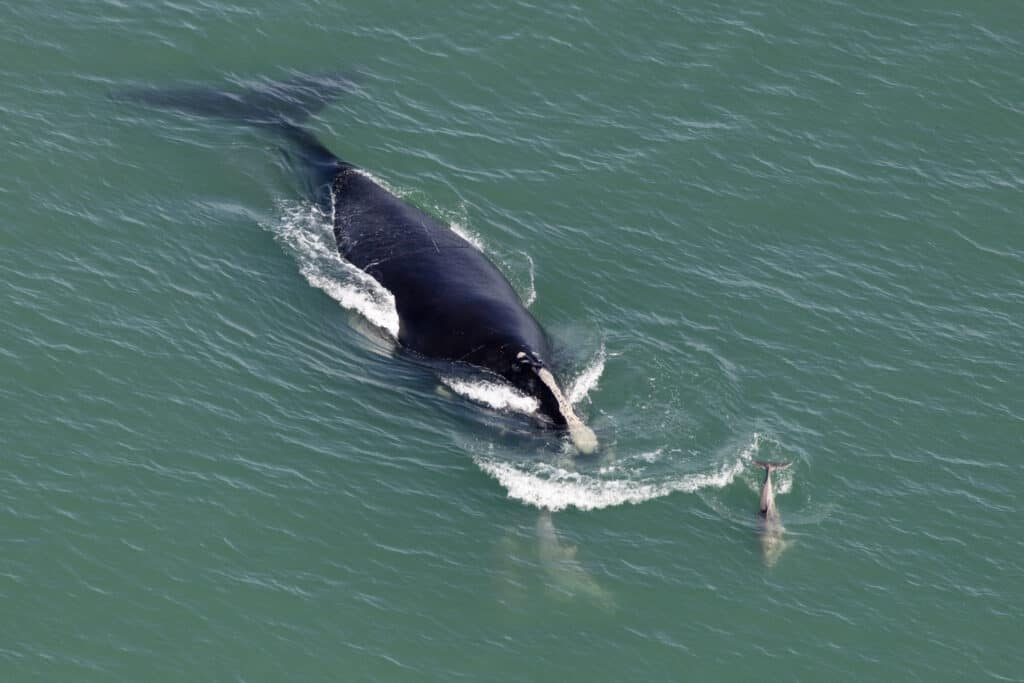
The North Atlantic right whale swims slowly near the ocean surface, filtering zooplankton through baleen plates, while rough white callosities on its head allow researchers to identify individual whales.
©iStock.com/6381380
Right whales feed by swimming slowly near the surface while filtering dense concentrations of zooplankton through long baleen plates. Their slow movement, surface feeding, and coastal habits once made them easy targets for hunters and now leave them exposed to modern dangers.
Early Whaling Along the Massachusetts Coast
During the seventeenth and eighteenth centuries, Massachusetts communities developed shore-based whaling operations focused on right whales that migrated close to land. Towns on Cape Cod, Nantucket, and Martha’s Vineyard relied on lookout points where observers scanned the water for whales feeding near the surface. When a whale appeared, crews launched small boats directly from shore. Right whales were favored because they floated after death, yielded large amounts of oil from their blubber, and provided baleen used in everyday goods. Income from whale oil supported lighting, industry, and trade, tying the species closely to the region’s maritime economy.
Decline and Near Extinction
Intensive hunting sharply reduced right whale numbers by the late nineteenth century. By that point, the population had fallen so low that commercial whaling for the species was no longer profitable. International bans on right whale hunting began in the 1930s, but the damage had already been done. The population showed little to no recovery throughout much of the twentieth century. Only about 360 North Atlantic right whales remain.
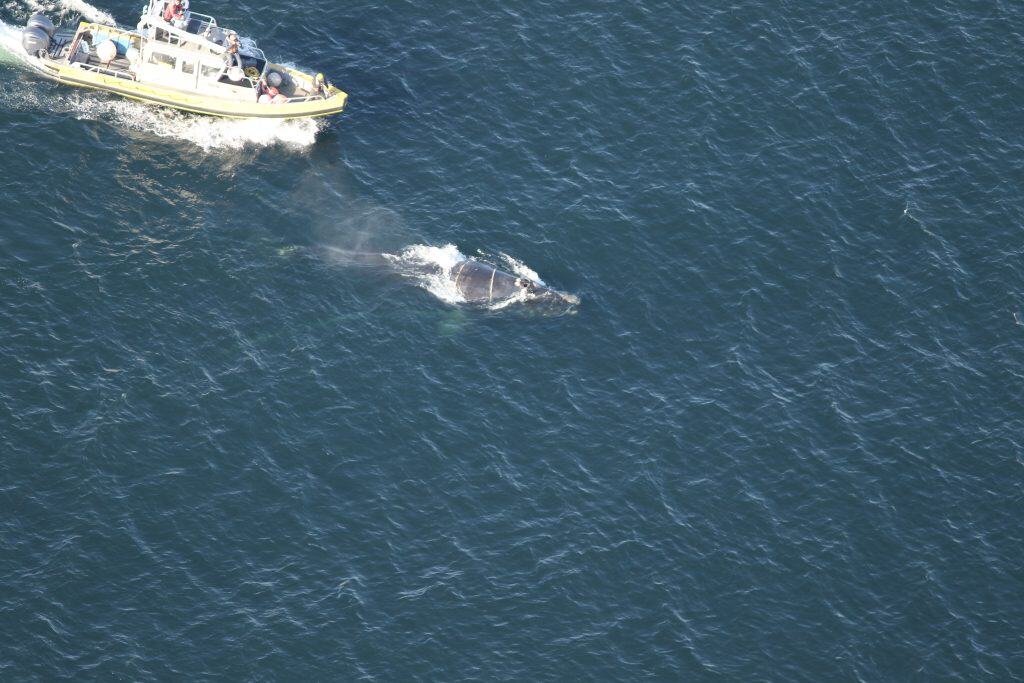
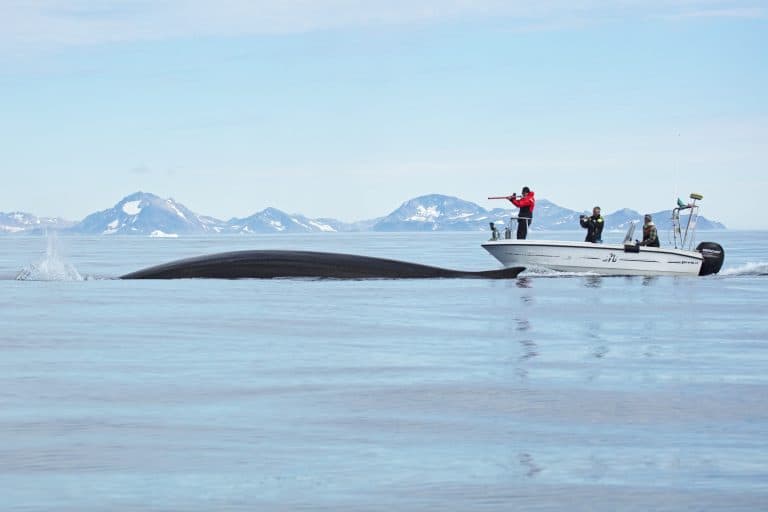
Entanglement in fishing gear is a major threat to the North Atlantic right whale, which now numbers only a few hundred individuals.
©The Center for Coastal Studies (NOAA Permit #24539) – Original
The species is listed as critically endangered under federal law and is protected under Massachusetts regulations. Traits that once made the whale valuable to whalers now increase the risk of injury from ships and fishing gear.
The 1980 Marine Mammal Designation
In 1980, the Massachusetts legislature formally named the North Atlantic right whale as the Commonwealth’s official marine mammal. The designation appears in Massachusetts General Laws chapter 2, section 16. Lawmakers selected the species because of its historical role in early New England industry and its endangered status. By choosing a whale once heavily hunted by colonial residents, the state recognized the long-term consequences of unchecked resource use. The law presented the whale not as a relic of the past but as an ongoing responsibility that continues to influence state waters and policy decisions.
Why Lawmakers Chose the Right Whale
Massachusetts waters host several whale species, including humpback and sperm whales, that are well known through literature and tourism. Lawmakers focused on the right whale because it was central to early shore-based whaling rather than deep-water expeditions.
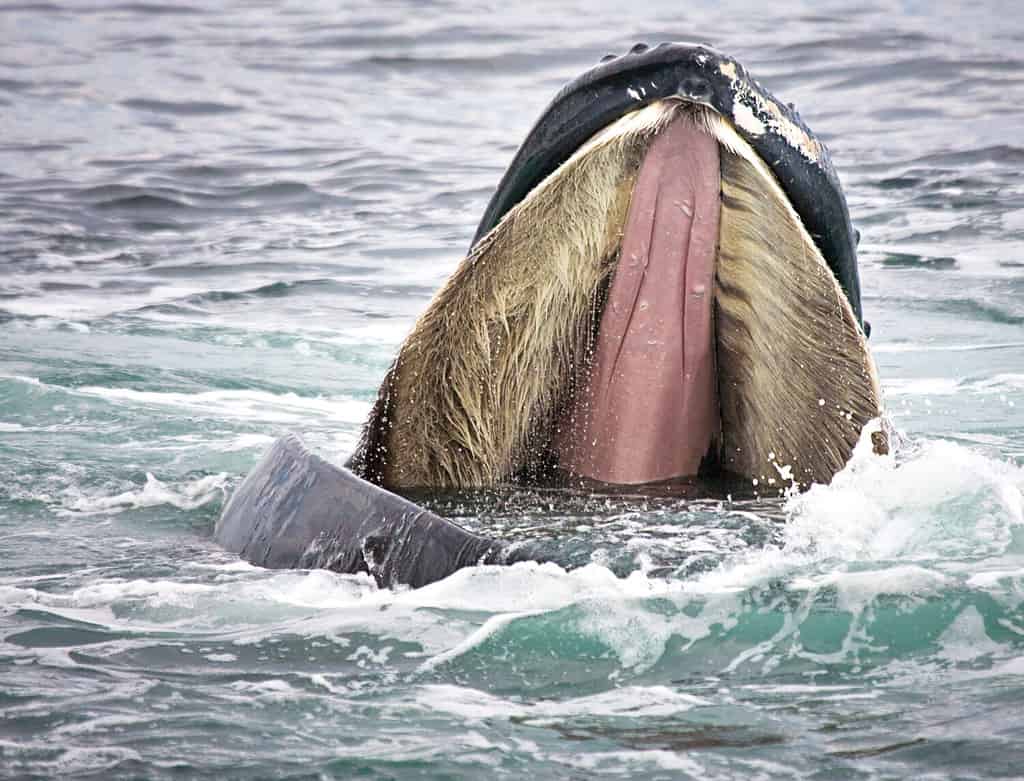
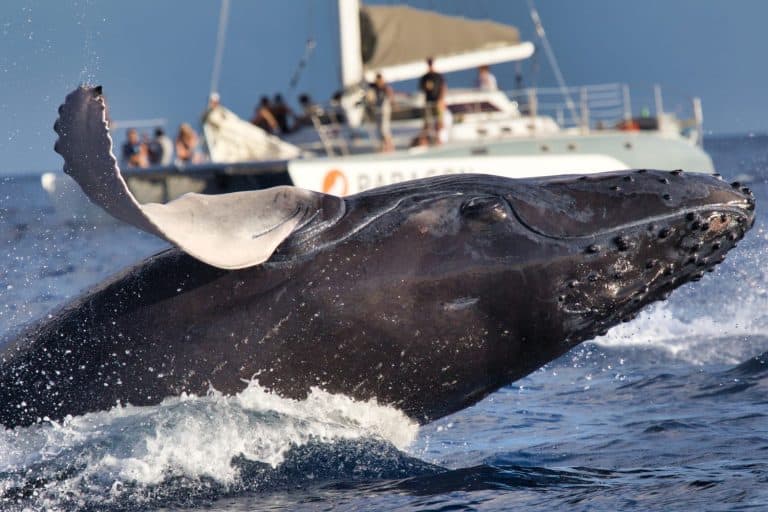
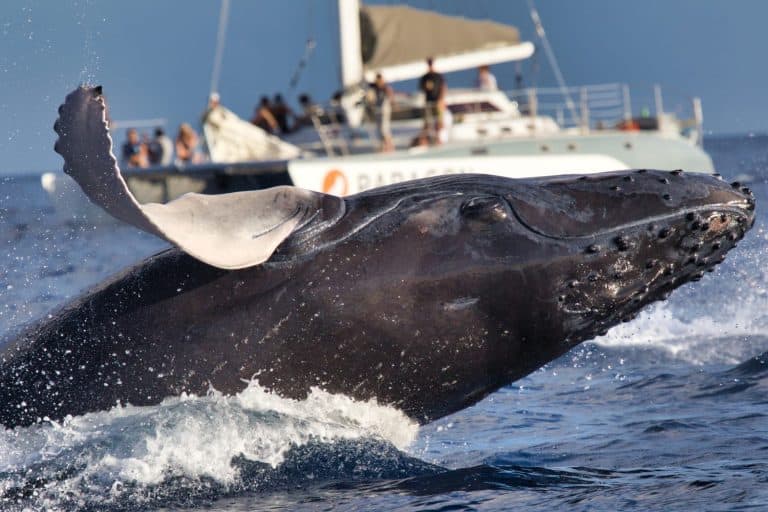
Humpback whales eat a ton of food a day, filtering it through thick, hair-like baleen in their mouths.
©John Tunney/Shutterstock.com
Its history was tied directly to local communities and coastal practices. By 1980, scientists had already warned that the species faced a high risk of extinction. Naming it a state symbol helped draw public attention to that warning. The choice was intended to connect the state’s historical identity with environmental responsibility, rather than to highlight a more common or commercially prominent whale.
Right Whales in Massachusetts Waters
North Atlantic right whales continue to use Massachusetts waters as an important seasonal habitat. Cape Cod Bay serves as a feeding area during late winter and early spring, when dense concentrations of zooplankton are available. Whales often swim close to the surface during these periods, making the region one of the most reliable locations to observe them.
Their presence places them near busy shipping lanes and active fishing grounds, increasing the need for careful management. Because these whales return regularly, Massachusetts plays a central role in regional monitoring and protection efforts.
Modern Threats and State Protection Measures
Entanglement in fishing gear and collisions with vessels remain the leading causes of injury and death for North Atlantic right whales. Massachusetts works with federal agencies through programs such as the Atlantic Large Whale Take Reduction Plan to address these risks. State regulations limit certain fishing practices, require seasonal gear restrictions, and support changes in rope design to reduce entanglement. Vessel speed rules and approach limits are also used in areas where whales are known to gather. These policies reflect how the marine mammal designation aligns with practical steps aimed at reducing harm in shared waters.
Public Debate and Civic Meaning
The right whale now appears regularly in public discussions about fisheries, shipping, and coastal economies across New England. Legal challenges and policy debates often focus on how to balance whale protection with economic activity. In Massachusetts, the species has also gained a broader civic role.
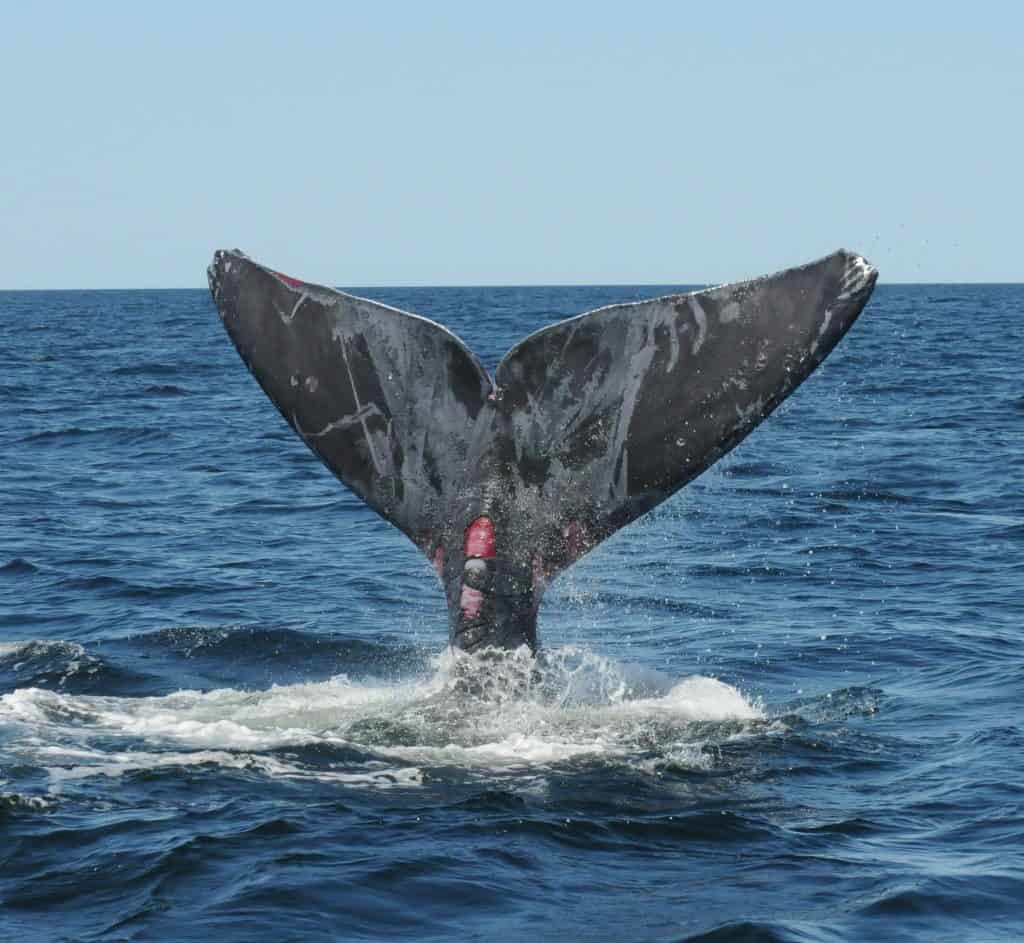
Injuries from fishing gear highlight why the North Atlantic right whale is central to policy debates about fisheries, shipping, and conservation in New England.
©NOAA Fisheries, public domain – Original
Proposals to include the whale in redesigned state symbols and public art emphasize its connection to the sea. Educational programs and annual observances encourage residents to learn how personal choices and policy decisions affect marine life. The whale has become part of ongoing conversations about responsibility and shared use of ocean resources.
Where to See Right Whales in Massachusetts
People in Massachusetts can sometimes observe North Atlantic right whales without traveling far offshore. Cape Cod Bay is the most reliable location, especially from February through April, when whales feed close to the surface. Sightings may occur from ferries, research vessels, and designated shoreline viewing areas during calm conditions. Whale watching companies operating under strict guidelines may also encounter right whales while targeting other species. Observers are required to maintain safe distances to avoid disturbing the animals.
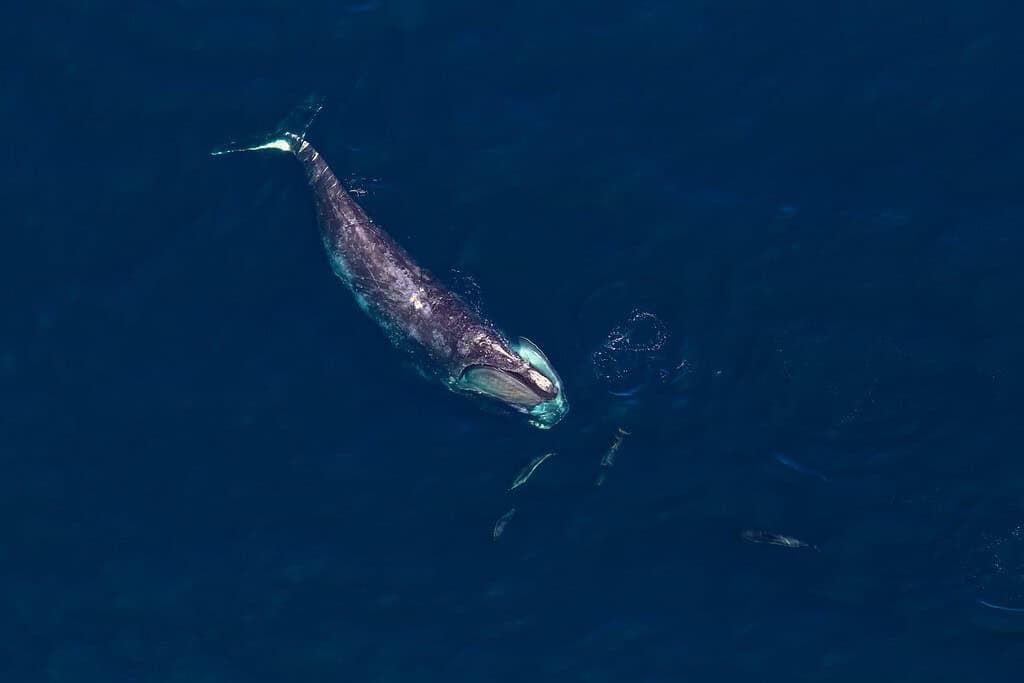
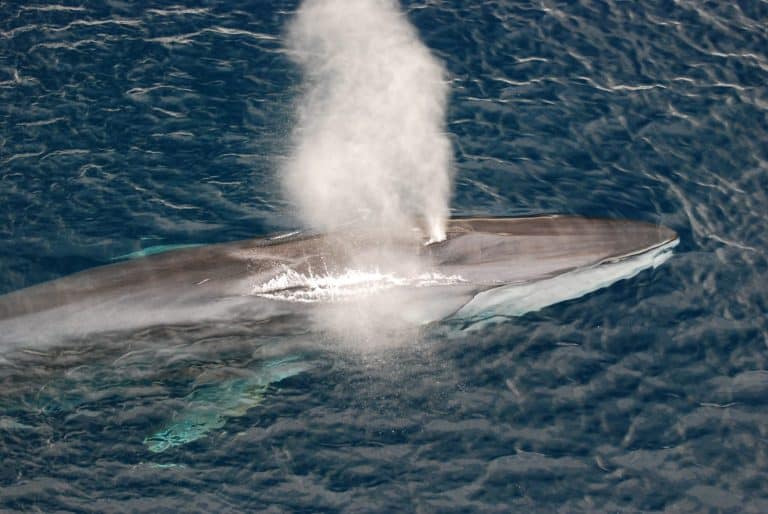
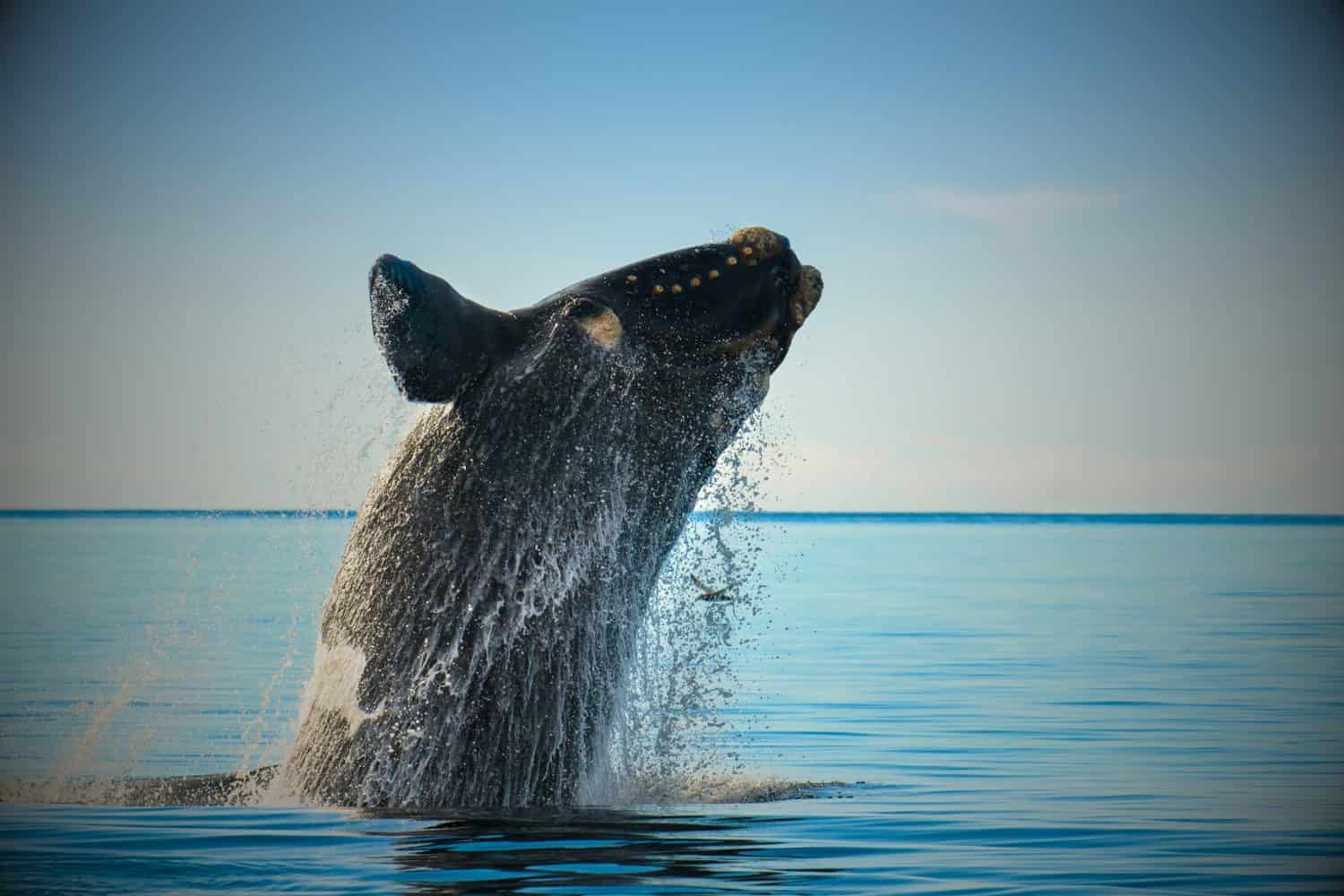
A North Atlantic right whale in protected Massachusetts waters highlights the species’ role in public discussion, conservation policy, and shared ocean responsibility.
©lego 19861111/Shutterstock.com
Seasonal advisories and sighting reports help residents and visitors understand when whales are present. State and federal agencies publish updates during peak months, allowing boaters to reduce speed and remain alert. These precautions protect whales while allowing people to experience a living state symbol in its natural setting. Seeing a right whale in Massachusetts waters reinforces the idea that the species is not just an abstract symbol, but an active presence affected by human actions.
A Continuing Symbol of Responsibility
When Massachusetts adopted the North Atlantic right whale as its marine mammal, the decision reflected a change in values rather than nostalgia. The whale’s history mirrors the state’s shift from extraction toward stewardship. Its continued survival depends on choices made about shipping, fishing, and climate impacts on the ocean. As long as right whales return to Massachusetts waters, the symbol remains relevant. It serves as a reminder that history leaves its mark not only on people but also on the living systems that sustain them.