
A group of volcanic islands, Hawaii is located 2,000 miles southwest of the U.S. mainland in the Pacific Ocean. Hawaii boasts an exceptionally high number of endemic species that are now severely threatened by invasive species and habitat loss, making Hawaii home to more endangered species than any other U.S. state. Even so, from microscopic organisms to massive marine animals, the Hawaiian Islands and the surrounding waters are teeming with wildlife. Continue reading to discover nine of the largest animal species in Hawaii and where you’ll find them.
8. Koa Bug
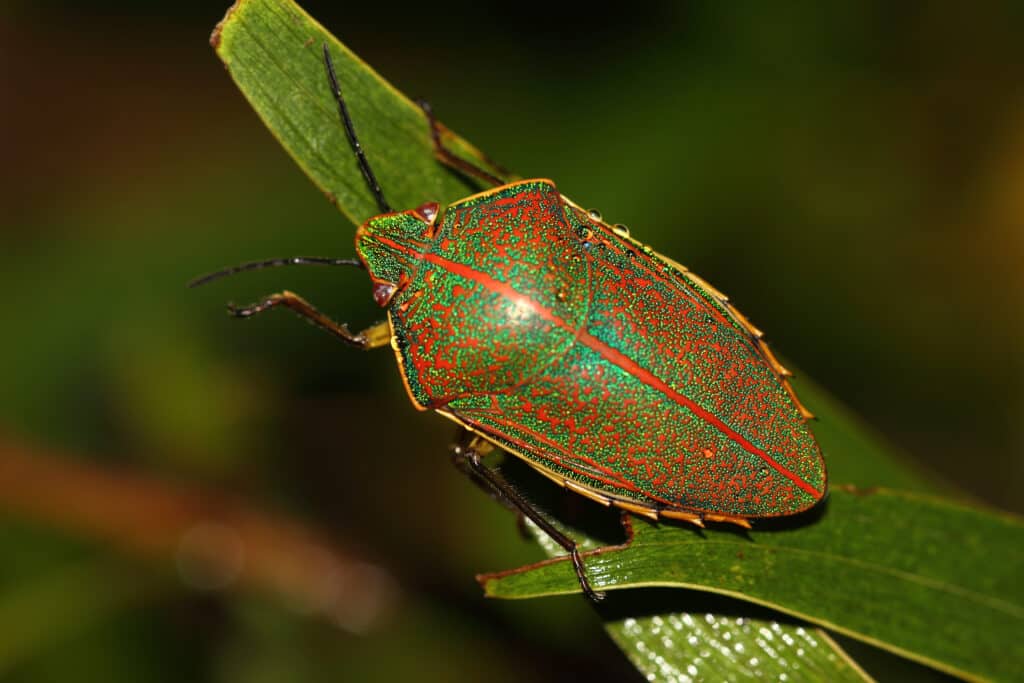
Although koa bugs were once extremely common in Hawaii, their numbers are now greatly reduced.
©Aaron Miyamoto/Shutterstock.com
Also known as the stinkless stink bug, the koa bug (Coleotrichus blackburniae) is endemic to Hawaii, where it is the largest insect on the islands. Koa bugs are approximately 1 inch long and can be a variety of colors, although red and green are particularly common. They usually live on koa trees and aʻaliʻi bushes, upon which they feed on sap and nectar. Although koa bugs were once common in Hawaii, their numbers are now greatly reduced. Today, koa bugs are primarily found on the Big Island and Maui
7. Madagascan Giant Day Gecko
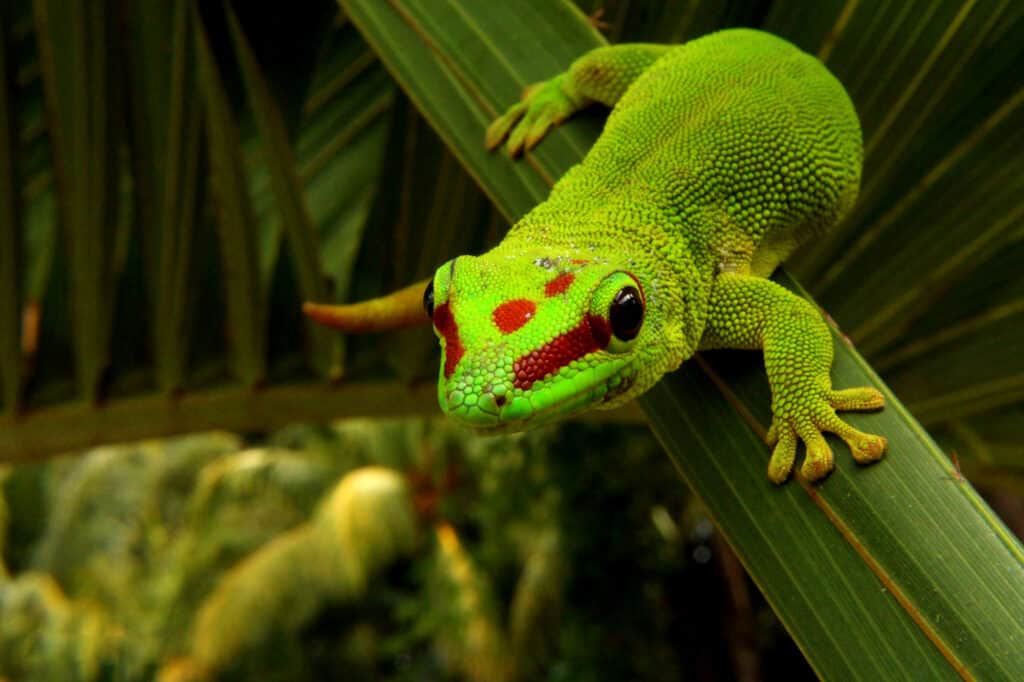
Madagascan giant day geckos are native to Madagascar but have been introduced to Hawaii.
©Tallies/Shutterstock.com
With their stunning bright green coloration, the Madagascan giant day gecko (Phelsuma grandis) is easily recognizable by its stunning bright green body. These lizards have a red stripe extending from the nostril to the eye, with many also having red markings on their backs. Madagascan giant day geckos are widespread throughout Madagascar and have been introduced to Hawaii, possibly from the illegal pet trade. Although they can live in a range of habitats, they prefer tropical rainforests, and in Hawaii, they are most often found in Oahu. These geckos are usually 9 to 11 inches long and weigh only a few ounces. Madagascan giant day geckos eat various fruits, insects, and small lizards.
6. Black-Footed Albatross
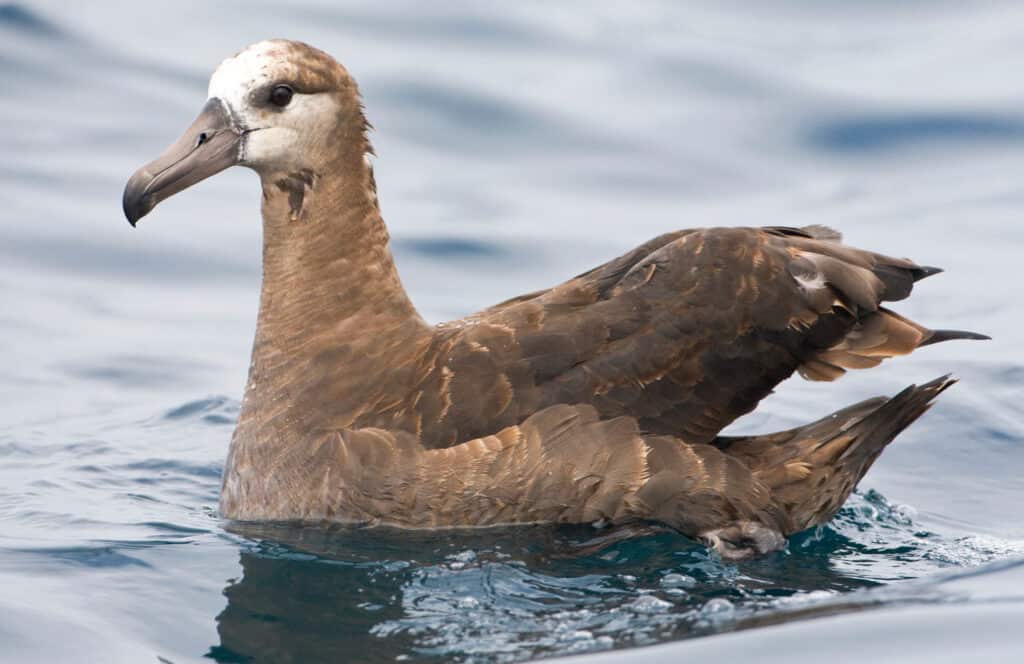
There are two species of albatross found in Hawaii; the Laysan albatross and the black-footed albatross, pictured.
©Agami Photo Agency/Shutterstock.com
There are two species of albatross found in Hawaii, and the larger of these is the black-footed albatross (Phoebastria nigripes). Black-footed albatrosses have a massive wingspan of 7 feet 2 inches and weigh up to seven pounds. As sea birds, they spend a lot of their time at sea, except when they raise chicks on their breeding islands. They feed in the open ocean and prey on fish, squid, and crustaceans. Incredibly, approximately 97.5% of the entire population of black-footed albatrosses live in and around the Northwestern Hawaiian Islands. The largest populations are on Midway Atoll and Laysan Island.
5. Wild Turkey
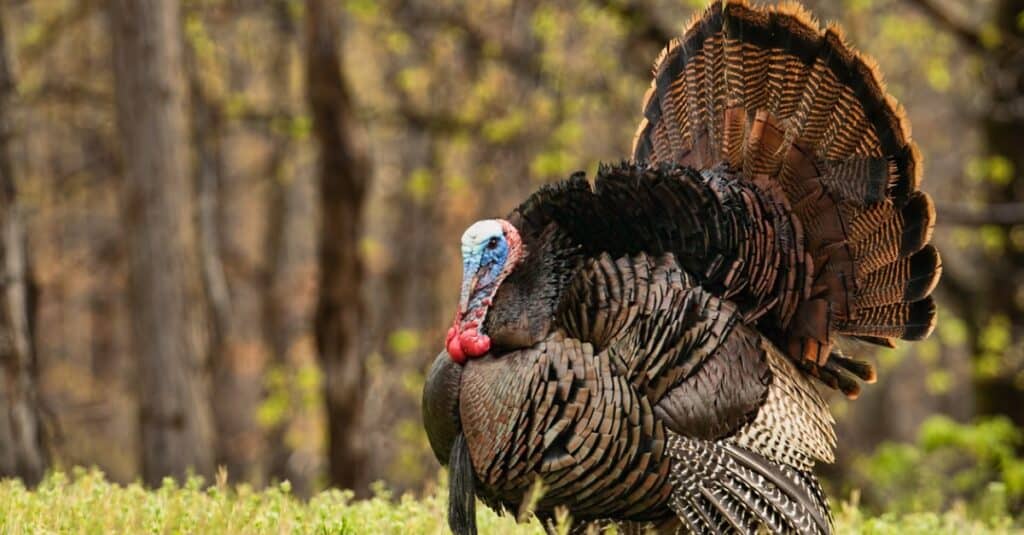
Wild turkeys spend all of their awake time hunting for food.
©iStock.com/Jens_Lambert_Photography
One of the largest birds in Hawaii is the wild turkey (Meleagris), which can weigh up to 24 pounds. Despite their large size, they are actually accomplished fliers. Wild turkeys are typically black with a red head and wattles. They live in open woodlands and pastures where they can forage on the ground. Wild turkeys are omnivores and eat a wide variety of nuts, seeds, berries, insects, amphibians, lizards, and small snakes. Wild turkeys are widespread across the Hawaiian islands and are considered an important game bird species.
4. Hawaiian Monk Seal
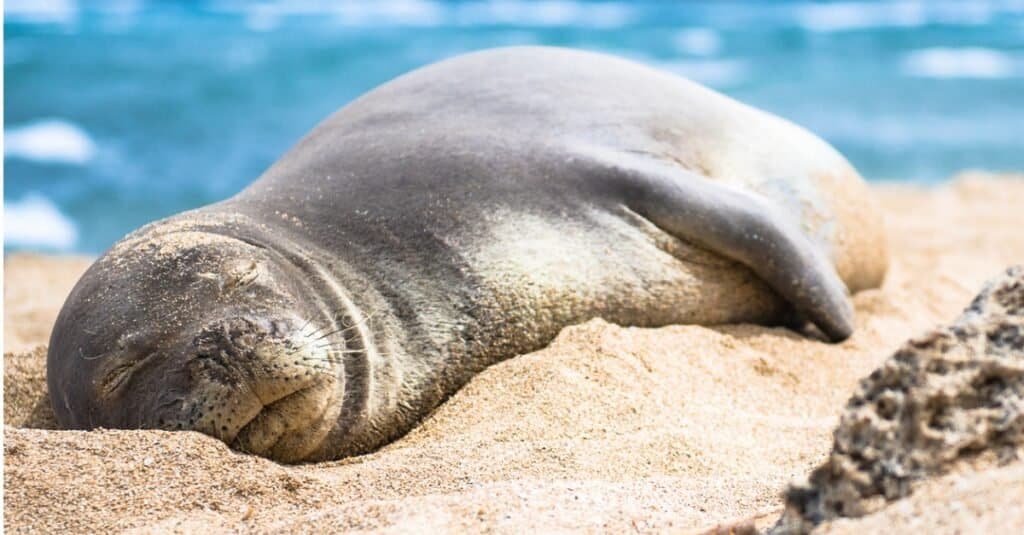
Hawaiian monk seals can dive more than 1,800 feet deep but prefer to stay in more shallow waters.
©iStock.com/greghonda
Very few mammals are native to Hawaii, but one of the largest is the endangered Hawaiian monk seal (Monachus schauinslandi), the only seal native to Hawaii. These seals have slender bodies and are grey with white bellies. Females are usually larger than males and can reach 8 feet long and weigh up to 600 pounds. Hawaiian monk seals spend approximately two-thirds of their lives at sea. They are endemic to Hawaii and live mainly around the northwest islands. Kauai is the best place to spot them as it is near their prime feeding grounds. Hawaiian monk seals prey on bony fish, crustaceans, and some octopuses. Sharks are their main predators, particularly tiger, Galapagos, and great white sharks.
3. Pacific Blue Marlin
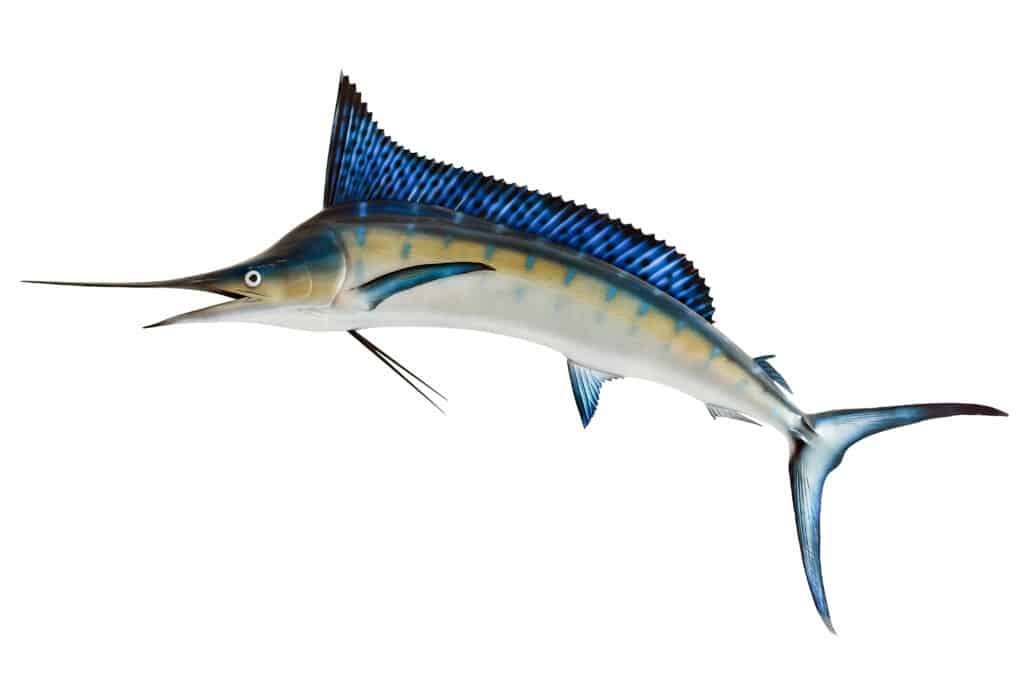
Blue marlin are approximately 16 feet long and weigh around 1,800 pounds.
©Hayk_Shalunts/Shutterstock.com
One of the most breathtaking fish in Hawaii is the powerful Pacific blue marlin (Makaira nigricans). Commonly known as Kajiki, this game fish inhabits the waters around the islands. Pacific blue marlin can reach approximately 16 feet long and weigh around 1,800 pounds. Females are larger than males. Pacific blue marlin are usually silvery white on their underside and dark blue on their upper side. Their long sword-like bill easily distinguishes them. Pacific blue marlin often use their bill to catch or stun their prey. They prey on a variety of fish, squid, and dolphins. Pacific blue marlin are highly prized as game fish because they are fast and strong.
2. Whale Shark
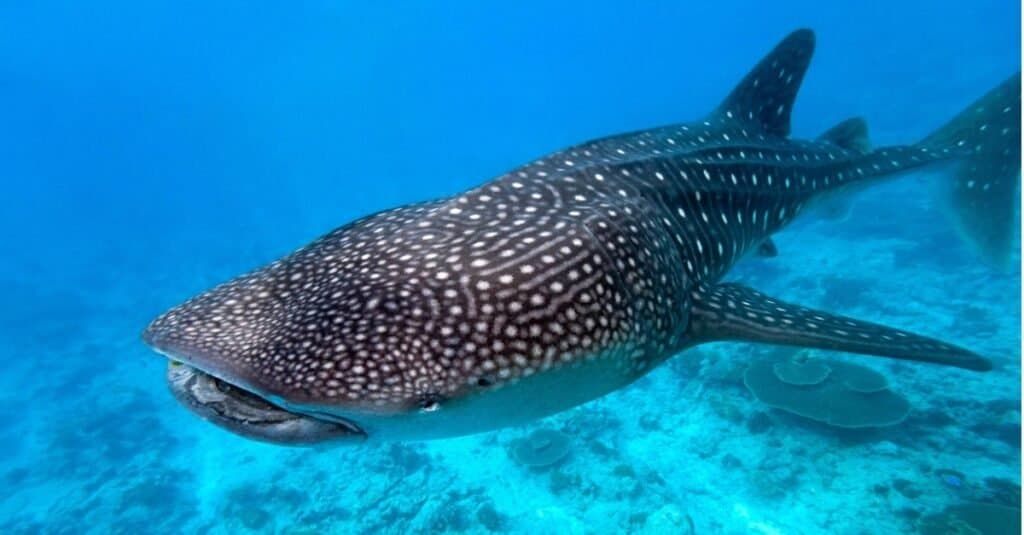
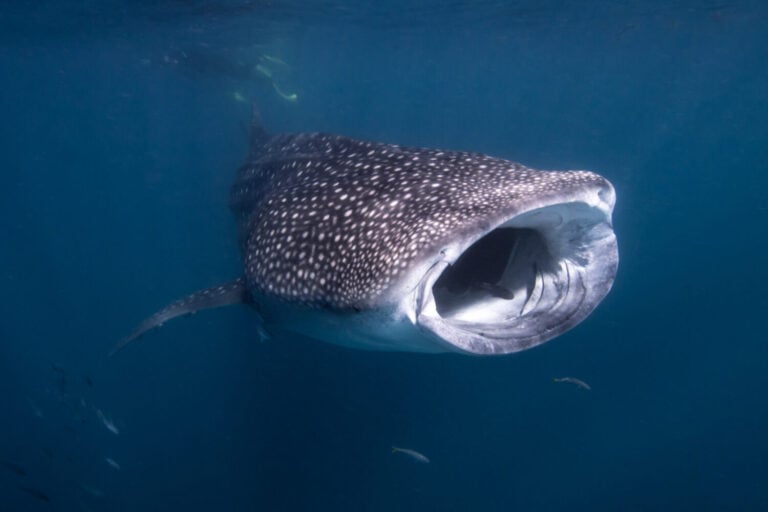
Like human fingerprints, each whale shark has a unique pattern of spots.
©iStock.com/crisod
The largest fish in Hawaii — and indeed the world — is the huge whale shark (Rhincodon typus), which reaches 72 feet long and weighs an estimated 41,000 pounds. Whale sharks are filter feeders and mainly eat plankton, small fish, and squid. As filter feeders, they don’t have typical functional teeth; instead, they have small vestigial teeth and “filter pads” in their mouths. These are used to catch their prey as they filter the water back out over their gills, much like how baleen whales eat. To help them take in great mouthfuls of plankton, whale sharks have massive wide mouths up to 5 feet across. Whale sharks are an endangered species, and although historically sightings of them in Hawaiian waters have been rare, scientists now believe that their population in the area is increasing.
1. Humpback Whale
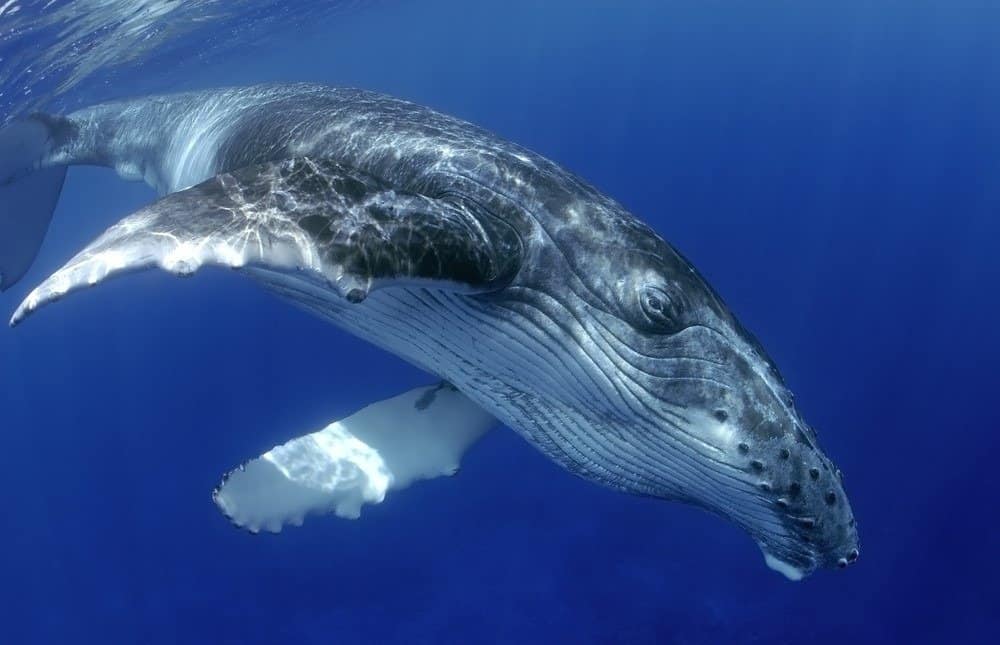
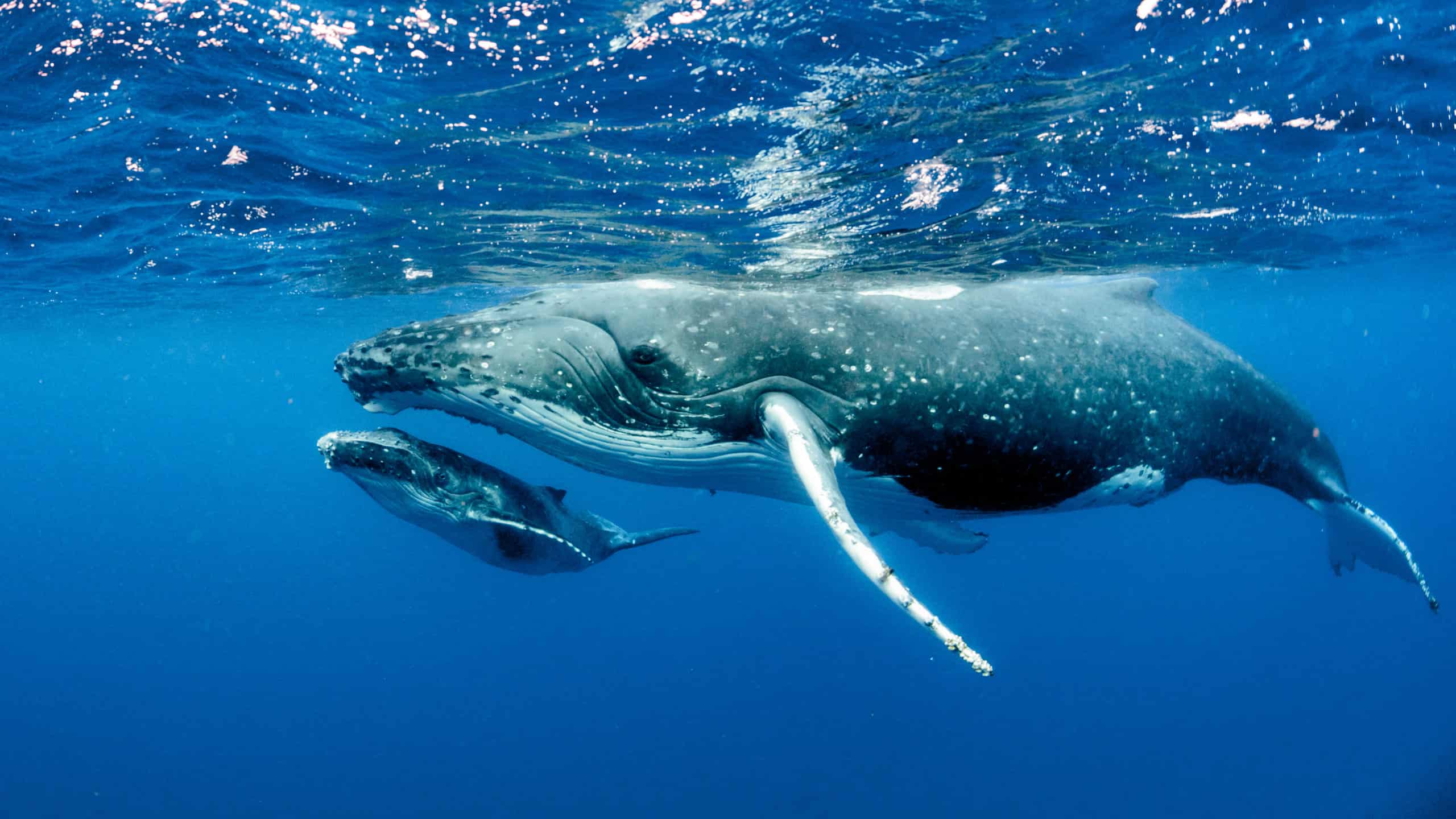
Despite their size, humpback whales prey only on some of the smallest organisms, such as krill and small fish.
©Yann hubert/Shutterstock.com
Many whales and dolphins call the water around Hawaii their home, but undoubtedly, one of the largest is the humpback whale (Megaptera novaeangliae). Humpback whales are typically 46 to 56 feet long and can weigh an immense 80,000 pounds. These massive whales are baleen whales, filter feeders that use baleen plates, which are stiff, keratinous structures hanging from the whale’s upper jaw. These plates function as filters to strain food, such as krill and small fish, from large quantities of seawater. Humpback whales are found around the world and are a highly migratory species, often migrating around 10,000 miles every year. The Kohala Coast is considered to be one of the prime whale-watching spots.