
Quick Take
- Even without official status, the Honu remains Hawaii’s nerve-center symbol of conservation, culture, and long memory.
- The trio of designated mammals—the humpback whale, the Hawaiian monk seal, and the Hawaiian hoary bat—signals that protecting ecosystems is inseparable from cultural heritage and future livelihoods.
- Read on to discover how the Honu bears scars of exploitation and signs of recovery that mirror Hawaii’s ocean fate.
Hawaii never passed a law naming the Honu (the green sea turtle) as its official state animal, yet few creatures are more closely associated with the islands. Visitors quickly notice how often turtle imagery appears across Hawaii, from petroglyphs and quilts to jewelry, murals, and roadside souvenirs. That visibility reflects more than tourism. It comes from the Honu’s long presence along Hawaiian shorelines and its deep cultural significance.

The green sea turtle is a large marine reptile found throughout tropical oceans. In Hawaiian waters, it is the most commonly encountered sea turtle and the one most strongly woven into local tradition. While Hawaii has several animals formally designated through legislation, the Honu occupies a unique space as the islands’ most recognizable and emotionally resonant wildlife symbol.
What Species Does the Honu Refer To?
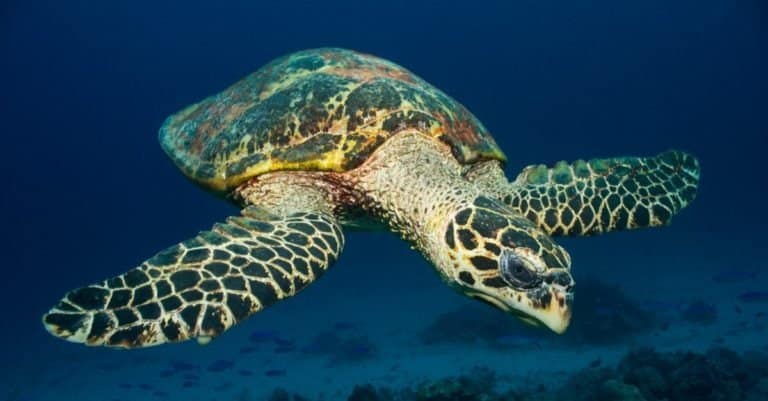
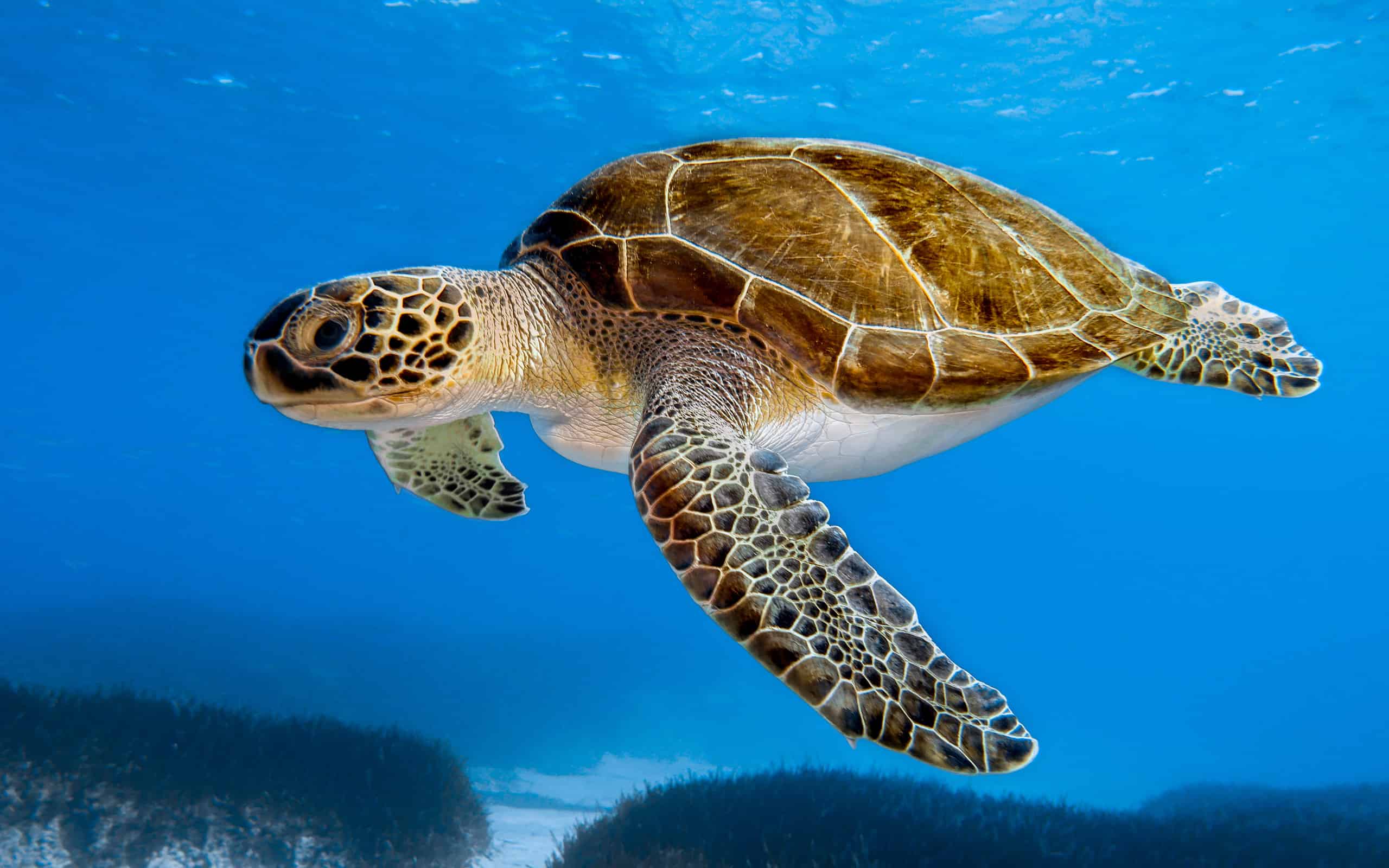
The Honu is the Hawaiian name for the green sea turtle (Chelonia mydas). Adults can exceed three feet in shell length and weigh more than 300 pounds. Despite their name, green sea turtles are not green on the outside. The name comes from the color of their body fat, shaped by a diet rich in algae and seagrass.
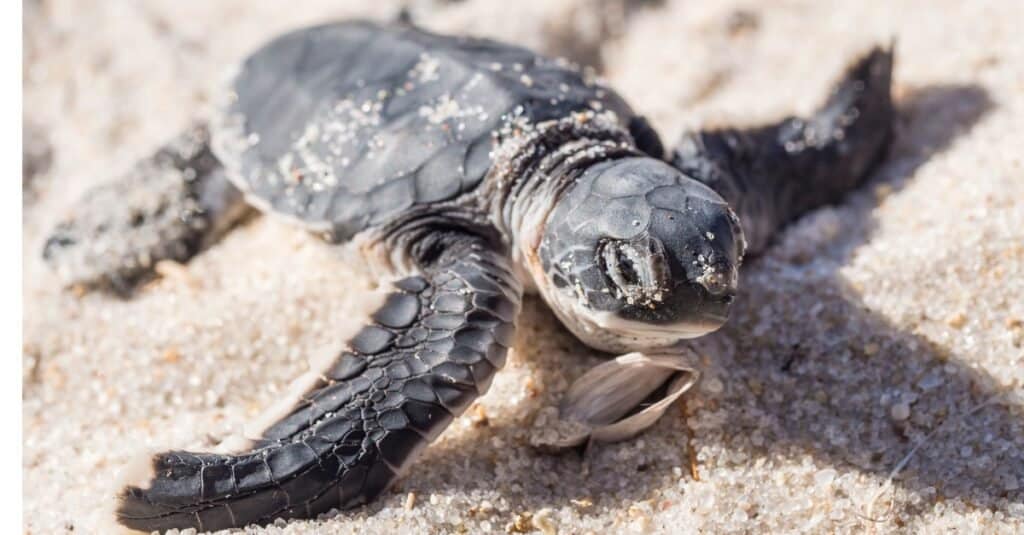
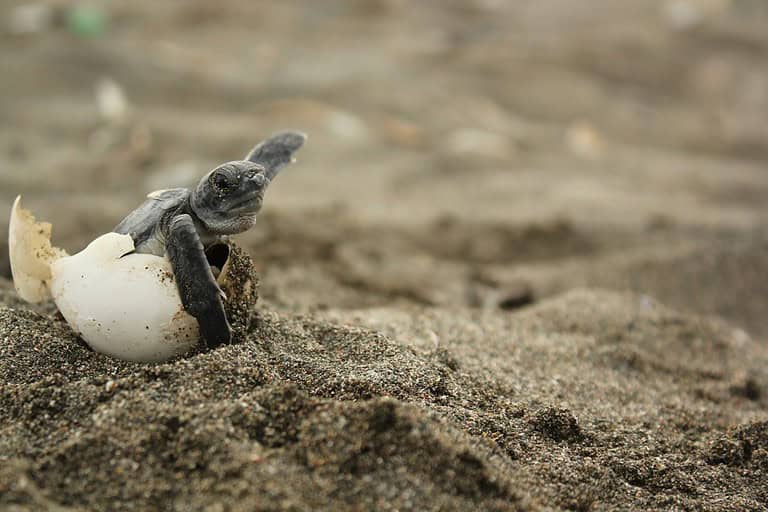
Though nesting occurs far from the main islands, young green sea turtles are often seen along Hawaii’s reefs and beaches.
©Magdalena Paluchowska/Shutterstock.com
Hawaii’s green sea turtles belong to a distinct population in the central Pacific. Most nesting occurs far from the main islands, especially at French Frigate Shoals in the Northwestern Hawaiian Islands. Juveniles and adults spend much of their lives feeding along the reefs and coastlines of the main islands, where people commonly encounter them resting, swimming, or basking on shore.
Is the Honu Hawaii’s Official State Animal?
The Honu is not Hawaii’s official state animal. Instead, Hawaii has adopted several animals through separate legislative acts. The Nēnē goose became the state bird in 1957. The humpback whale was named the official marine mammal in 1979. The Hawaiian monk seal became the official state mammal in 2008, and the Hawaiian hoary bat was designated the official land mammal in 2015. No law has ever designated a state reptile. As a result, the Honu remains absent from the formal list of state symbols even though it is far more visible in daily life than many officially recognized species.
Why the Honu Is Widely Seen as Hawaii’s Unofficial Animal
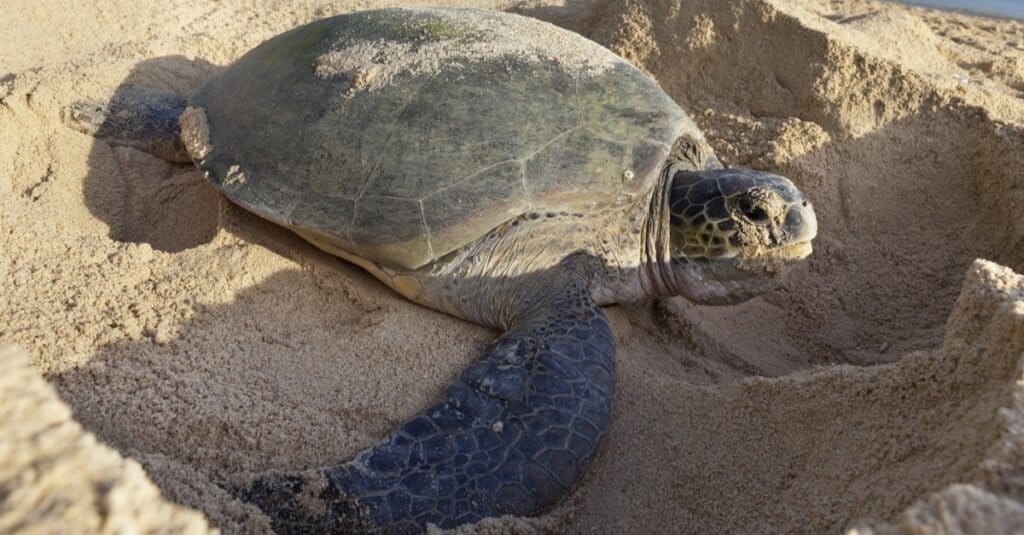
Familiar along Hawaiʻi’s shores, the honu feels like a state animal because it is part of everyday island life.
©David Evison/Shutterstock.com
The Honu feels like Hawaii’s state animal because it is familiar, accessible, and closely tied to everyday island experiences. Green sea turtles regularly appear along beaches and shallow reefs, placing them in direct contact with residents and visitors. Encounters are often personal and memorable in a way that distant whale sightings or nocturnal bats are not.
Cultural meaning reinforces this visibility. For generations, Native Hawaiians viewed Honu as guardians connected to family lineage, ocean travel, and protection. Over time, those beliefs blended with modern conservation values, allowing the Honu to symbolize respect for the sea, patience, and responsibility toward fragile ecosystems.
Honu in Hawaiian Tradition and Belief
Long before state symbols existed, the Honu appeared in Hawaiian oral tradition and genealogical chants such as the Kumulipo, where marine life emerges early in the creation sequence. In many families, Honu were regarded as ʻaumākua, or ancestral guardian spirits. These guardians were believed to guide, protect, and warn family members, sometimes appearing physically near shorelines associated with family lands.
Stories describe turtles guiding voyagers to safety or appearing during moments of danger at sea. Because Polynesian navigation depended on deep understanding of currents, stars, and animal behavior, the Honu became associated with memory, direction, and safe return. These beliefs reinforced the idea that humans, land, and ocean existed within a single moral system of balance and obligation.

In Hawaiian tradition, the Honu is an ʻaumākua — a guardian linking ocean, land, and family.
©J nel/Shutterstock.com
From Revered Animal to Exploited Resource
Traditional Hawaiian society respected the Honu but also used turtles in limited, highly regulated ways. Harvesting was restricted by rank, season, and purpose, reflecting a broader system of resource management designed to prevent depletion.
After Western contact, those systems collapsed. Commercial hunting expanded during the nineteenth and early twentieth centuries to supply meat, oil, and eggs. By the mid-twentieth century, green sea turtle numbers in the main Hawaiian Islands had dropped sharply. Nesting nearly disappeared outside of remote atolls, and Honu vanished from many beaches where they had once been common.
Natural History and Ecological Role
Green sea turtles are long-lived, slow-maturing animals that may take three decades to reach reproductive age. Adults primarily graze on algae and seagrass, helping maintain healthy reef flats and coastal ecosystems. Their feeding prevents overgrowth, supports fish habitats, and contributes to nutrient cycling.
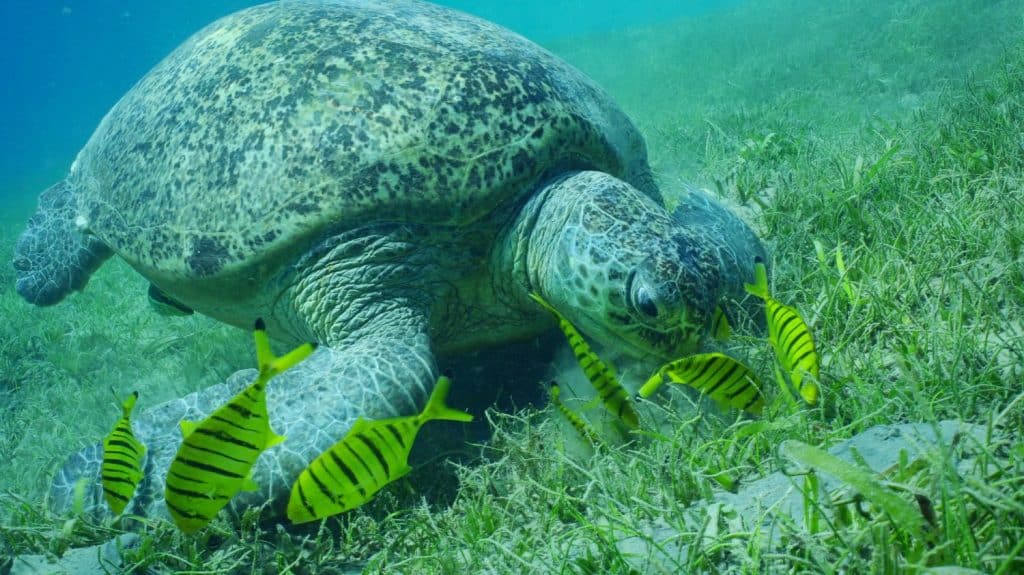
By grazing on algae and seagrass, honu help maintain healthy reefs and coastal ecosystems.
©Andriy Nekrasov/Shutterstock.com
In Hawaii, Honu follow a predictable rhythm. They forage in shallow coastal waters during the day and rest at night in protected underwater areas or on shore. Some bask on beaches, a behavior more common in Hawaii than in many other regions.
Conservation Status and Legal Protection
Although the IUCN Red List downgraded the global status of green sea turtles to ‘least concern’ in October 2025, Hawaiian green sea turtles remain listed as ‘threatened’ under the U.S. Endangered Species Act and are still fully protected by federal and state law.
Although direct killing has largely stopped, Honu still face serious modern threats. Climate change is reshaping nesting beaches through erosion, rising seas, and warmer sand temperatures that affect hatchling survival. Habitat loss from coastal development, entanglement in marine debris, accidental capture in fishing gear, boat strikes, and disease, including fibropapillomatosis, continue to impact individual turtles. Many of these dangers are indirect, arising from human activity rather than intent, but they remain significant.
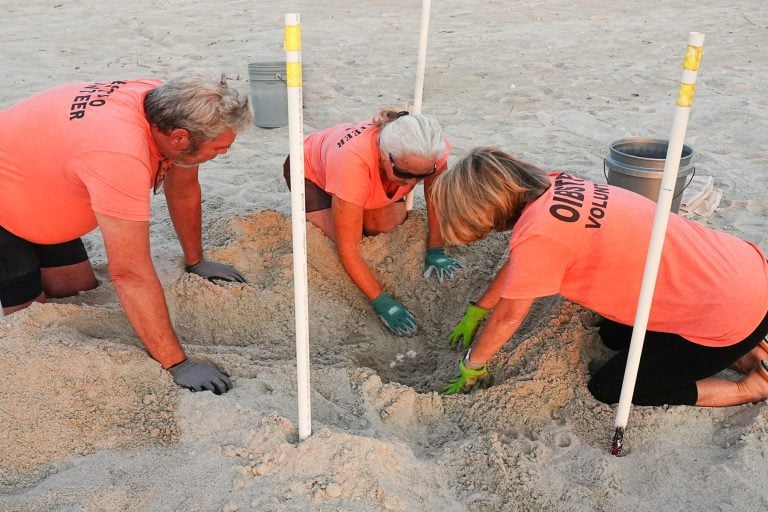
In the early 1970s, only about 60 nesting female green sea turtles were documented annually in Hawaii. In recent years, estimates at the primary nesting site have ranged from roughly 500 to more than 800 nesting females, reflecting a substantial recovery. Despite this progress, the turtles’ slow reproduction and reliance on a small number of nesting sites mean continued protection is essential to prevent setbacks and ensure long-term survival.
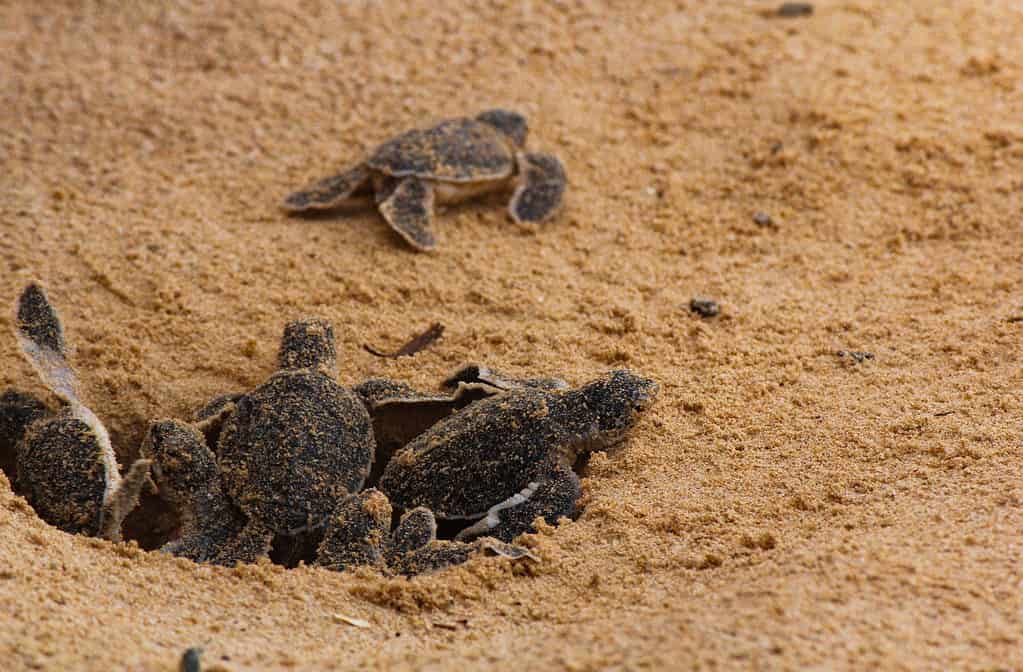
Decades of protection have increased nesting numbers, but each new generation still depends on continued care.
©SLSK Photography/Shutterstock.com
Does the Honu Need Official State Status for Protection?
The Honu does not depend on official state-symbol status for its protection. Strong federal and state laws already make it illegal to harm, harass, feed, or disturb green sea turtles in Hawaii, with enforcement backed by clear penalties. These legal safeguards are far more consequential than symbolic designation, providing direct protection for the species across beaches, nearshore waters, and nesting sites.
Cultural reverence adds another layer of protection that legislation alone cannot create. For many residents, the Honu is treated as sacred rather than simply regulated, which encourages voluntary compliance and respectful behavior even when enforcement is not present. In practice, this combination of law, education, and tradition has made the Honu one of the most carefully protected wild animals in the islands. While official recognition could increase visibility, the Honu’s survival has been secured primarily through strong laws and deep cultural commitment rather than symbolic status.
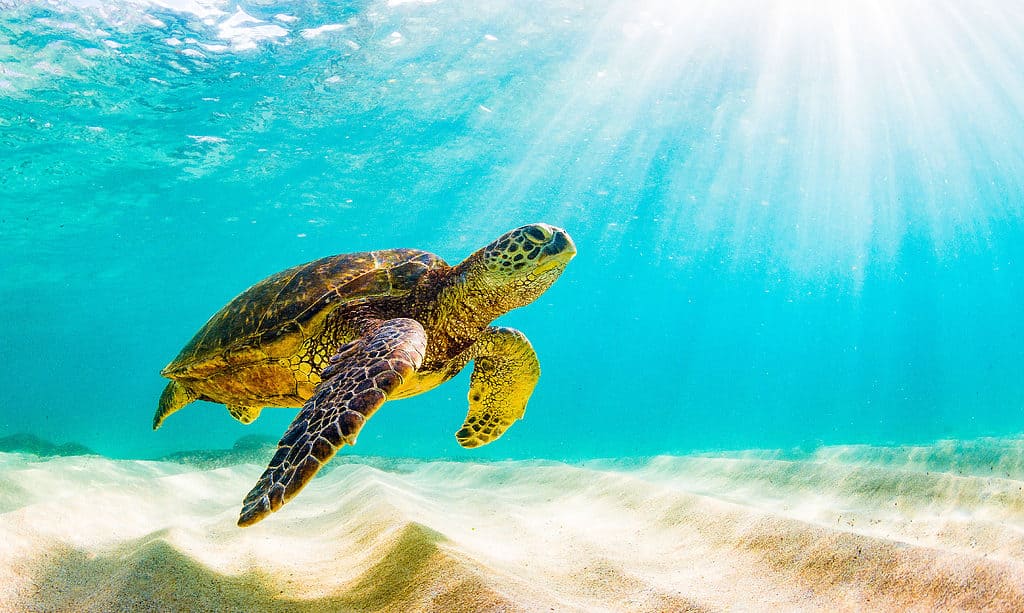
Strong laws protect the honu, but cultural respect plays an equally important role in keeping it safe.
©iStock.com/ShaneMyersPhoto
A Living Symbol of the Islands
The Honu became Hawaii’s unofficial animal through lived experience rather than law. Stories, loss, recovery, and daily encounters shaped its role in island identity. Whether or not it ever gains official status, the Honu continues to represent continuity between past and future. Like the guardian figures in Hawaiian tradition and modern storytelling alike, it stands as a reminder that protection, memory, and responsibility move together across generations.