
Quick Take
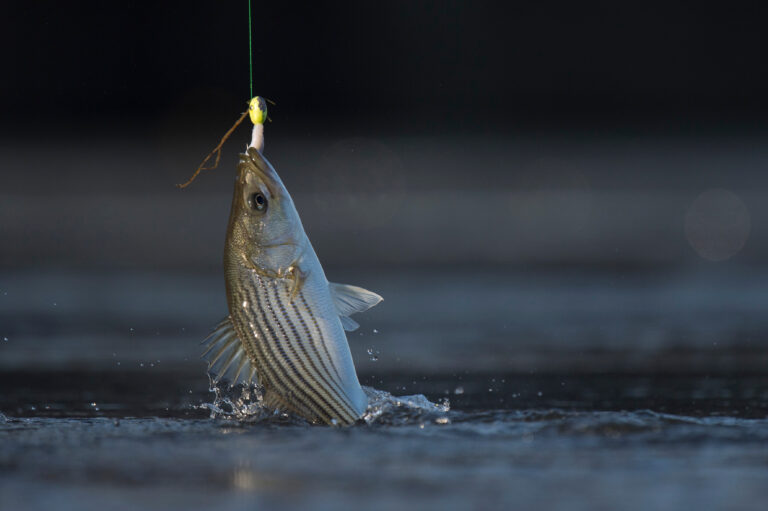
- Atlantic tarpon are large fish between 4 and 6 feet long.
- The West Indian manatee cannot survive in waters below 60 °F.
- Alabama’s state bird, the Northern flicker, has a tie to Civil War uniforms.
Each of the 50 United States takes pride in its sense of individuality, and as such designates official symbols that they feel define their history and culture, including plants, rocks, and animals. The Gulf Coast state of Alabama is no exception, having recognized 15 official species to showcase the state’s amazing array of native wildlife. Continue reading to discover the animals Alabama has chosen to be the ambassadors of the Yellowhammer State.
State Bird: Northern Flicker
The Northern flicker (Colaptes auratus) was officially recognized as the state bird of Alabama in 1927. Also called a yellowhammer, it was designated the state bird due to its association with a troop of Confederate soldiers from Huntsville, Alabama, who wore bright yellow uniforms and were also nicknamed yellowhammers.
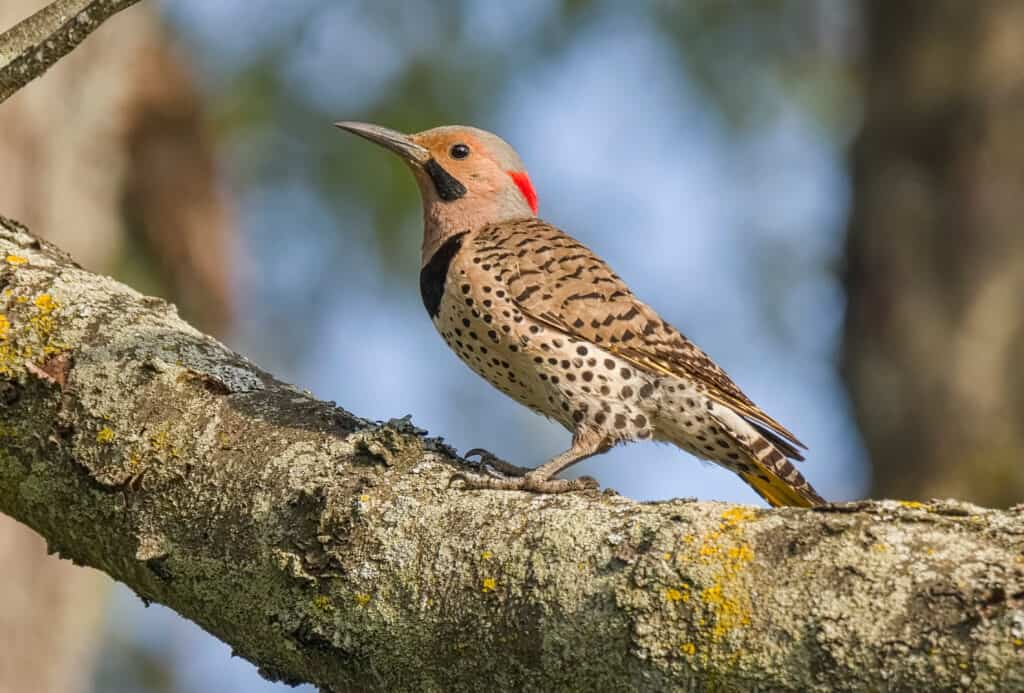
The Northern flicker is found throughout Alabama year-round.
©Fiona M. Donnelly/Shutterstock.com
The Northern flicker is a medium-sized woodpecker that forages for insects such as ants and beetles on the ground, rather than hammering on tree bark. It is found throughout Alabama year-round, with populations increasing significantly during the winter months.
State Saltwater Fish: Atlantic Tarpon
The Atlantic tarpon (Megalops atlanticus) was designated the state saltwater fish of Alabama in 1955. These ray-finned fish are between 4 and 6 feet long and weigh up to 100 pounds. Tarpon are found along the Alabama Gulf Coast, particularly from Dauphin Island to the Florida border, including Perdido Pass and Mobile Bay.
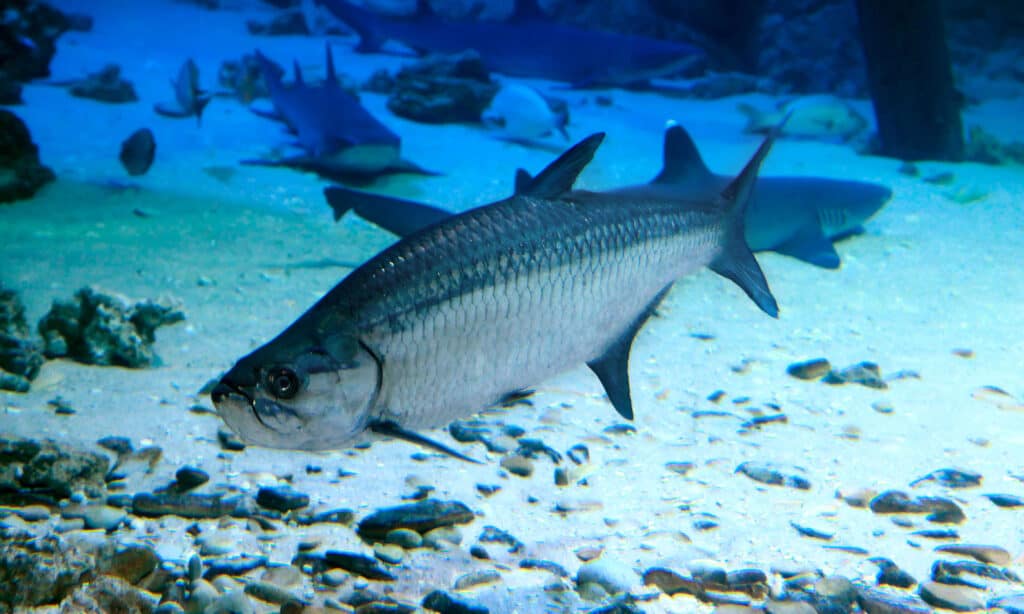
The Atlantic tarpon is a sizable saltwater fish.
©iStock.com/TatianaMironenko
Atlantic tarpon are sport fish that are highly prized for their size, fighting style, and strength, earning them the nickname The Silver King.
State Freshwater Fish: Largemouth Bass
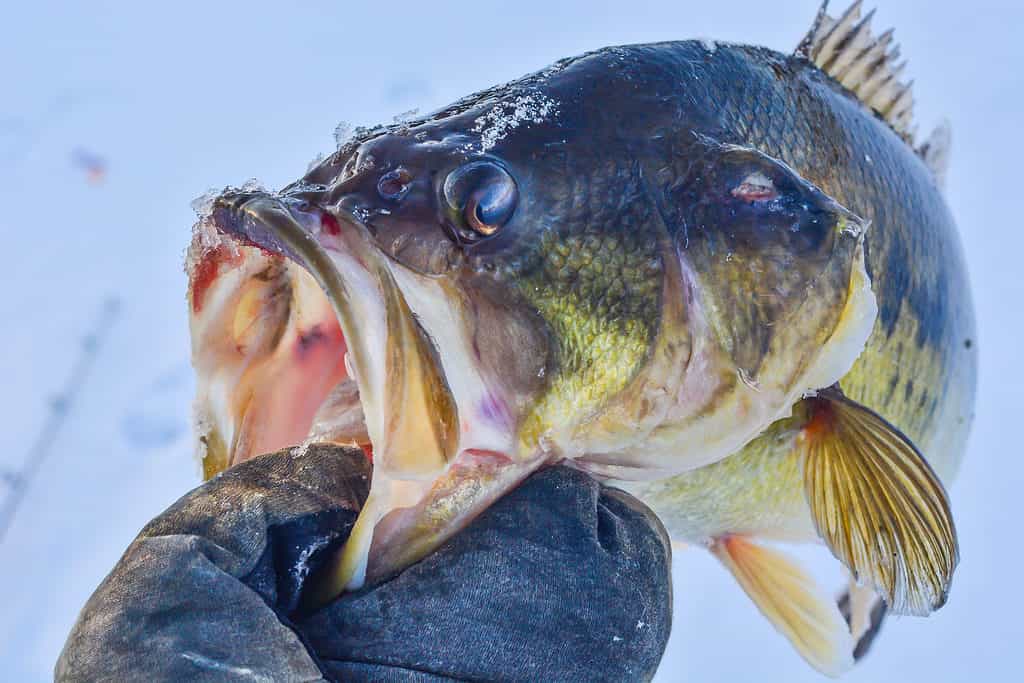
A native species, the largemouth bass has become a symbol of Alabama’s rich freshwater fishing culture.
©iStock.com/michaldziki
Recognized in 1975, Alabama’s official freshwater fish is the largemouth bass (Micropterus salmoides). It is found throughout Alabama’s lakes, ponds, and reservoirs, often bolstered by stocking efforts. The Alabama Department of Conservation and Natural Resources actively manages and stocks the fish, recognizing its value for both sport and as a top predator in the ecosystem.
State Horse: Racking Horse
The racking horse (Equus caballus) was made the official state horse of Alabama in 1975. The breed is derived from the Tennessee Walking Horse and was officially recognized by the USDA in 1971. The term racking refers to the horse’s symmetrical, four-beat lateral gait, in which only one foot strikes the ground at a time.
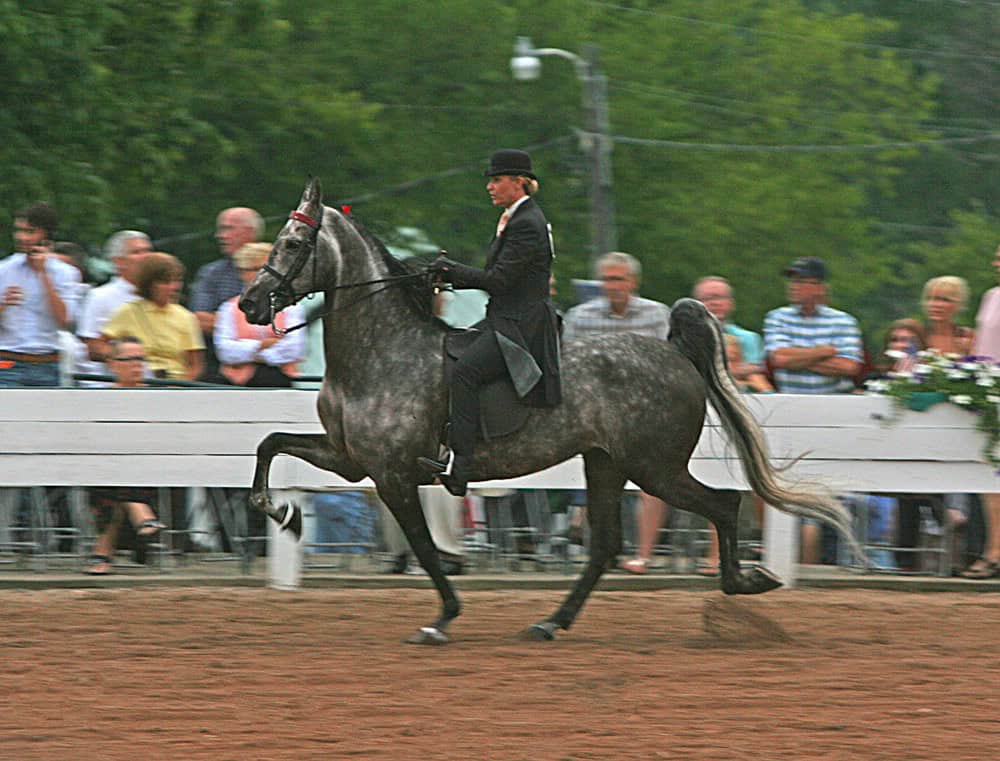
The Racking Horse is popular for its comfortable ride.
©Heather Moreton from Louisville, KY, USA – Original / License
State Game Bird: Wild Turkey
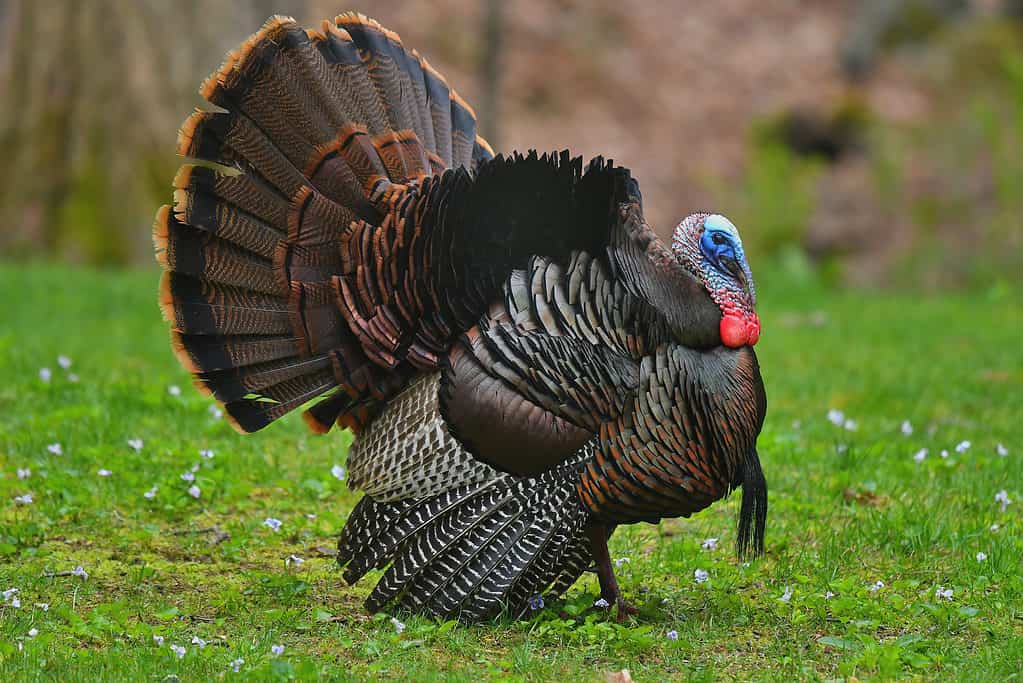
Alabama has one of the highest per-acre populations of wild turkeys in the U.S.
©iStock.com/Robert Winkler
The Eastern wild turkey (Meleagris gallopavo silvestris) was named as the official game bird of Alabama in 1980. Although they spend most of their time on the ground and prefer walking, wild turkeys will fly to escape danger and to roost in trees at night for safety.
The Eastern wild turkey is a native, iconic species central to Alabama’s hunting heritage.
State Fossil: Basilosaurus
Alabama adopted the Basilosaurus (Basilosaurus cetoides) as its official state fossil in 1984. An abundance of fossilized remains found within the state dates back 35–40 million years.
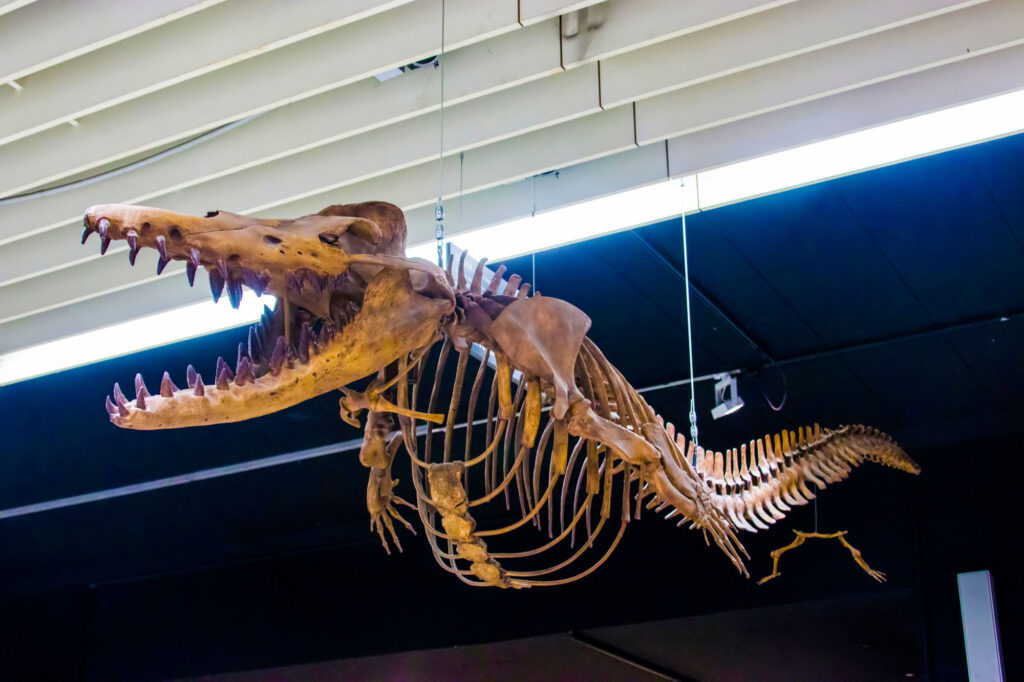
Basilosaurus was the first fossil whale to be named.
©Danny Ye/Shutterstock.com
These 60 to 70-foot prehistoric marine-dwelling whales were prevalent in the shallow, tropical seas that once covered modern-day Alabama. Originally discovered in the 1830s, Basilosaurus fossils are frequently found in Alabama’s southwestern counties.
State Butterfly: Eastern Tiger Swallowtail
The Eastern tiger swallowtail butterfly (Papilio glaucus) became Alabama’s official state butterfly in 1989.
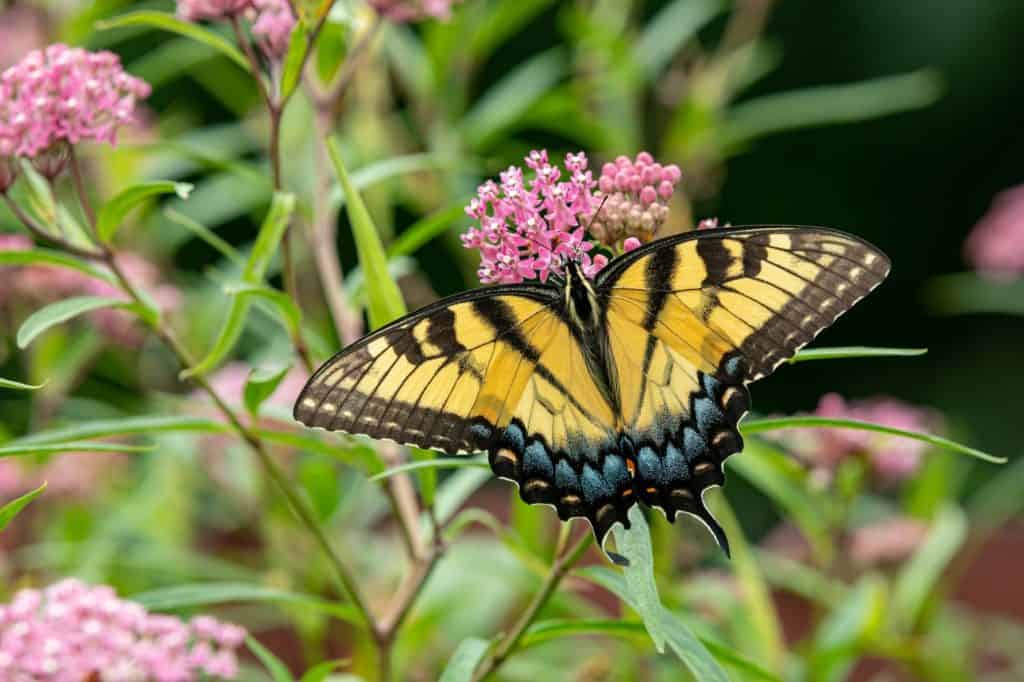
An adult Eastern tiger swallowtail.
©J.J. Gouin/Shutterstock.com
The Eastern tiger swallowtail was chosen because it is a common, native species that lives in Alabama year-round, unlike migratory butterflies. The selection was driven by Selma, Alabama’s Butterfly Lady, Mallieve Breeding, who sought to honor the species, which is found across the state.
State Insect: Monarch Butterfly
The monarch butterfly (Danaus plexippus) was recognized as the official state insect of Alabama in 1989.
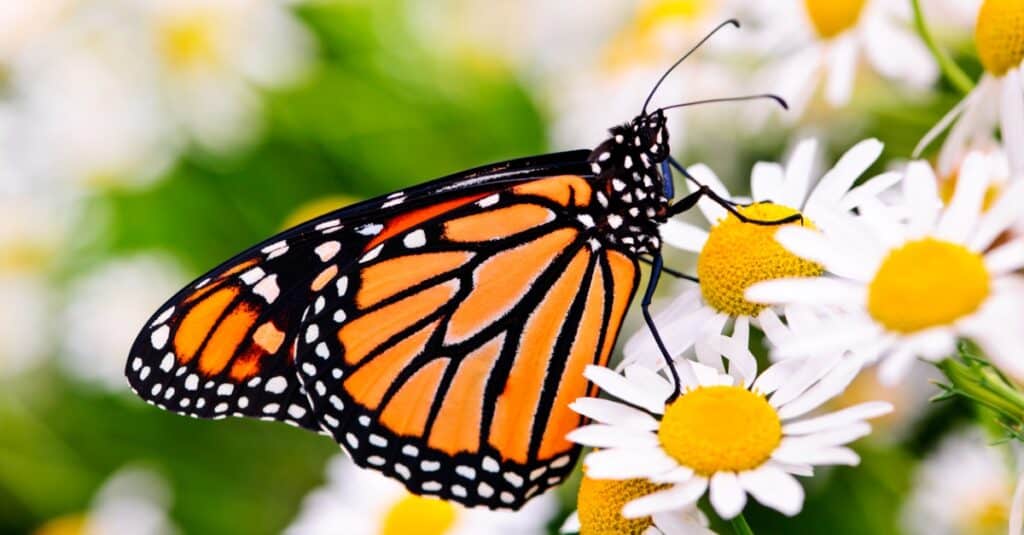
One of the most well-known types of butterfly, the monarch, is recognized for its distinct color patterns.
©iStock.com/Elenathewise
Monarch butterflies are primarily seen in Alabama in the spring and fall when they migrate through the state. Migratory monarch butterflies spend summers in the Northern U.S. and Southern Canada, and winters in Mexico. They have orange wings with black veins and black edges with white spots.
State Shell: Johnstone’s Junonia
In 1990, Alabama adopted Johnstone’s junonia (Scaphella junonia johnstoneae) as its official state shell. The shell is named after Kathleen Yerger Johnstone, a nature writer, dance educator, and amateur conchologist. Her two published books on the subject earned her the moniker Alabama’s most famous conchologist.
The junonia is a rare, highly coveted marine gastropod found in the Gulf of Mexico. Prized by collectors for its creamy white shell covered in distinct brown spots, the shells are 1 to 6 inches long and only wash ashore after storms.
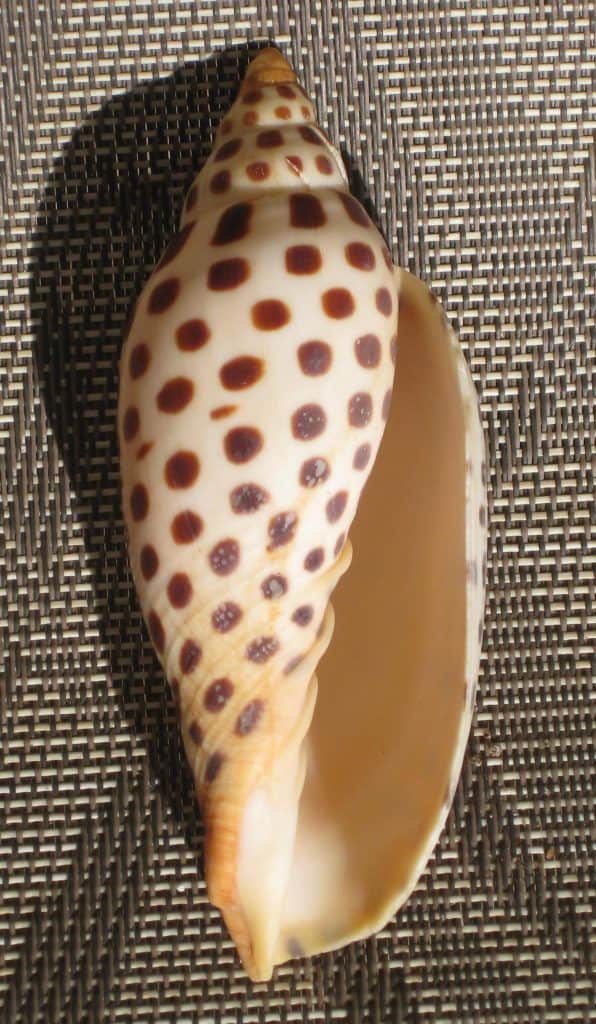
The junonia is considered the holy grail of sea shells.
State Reptile: Alabama Red-Bellied Cooter
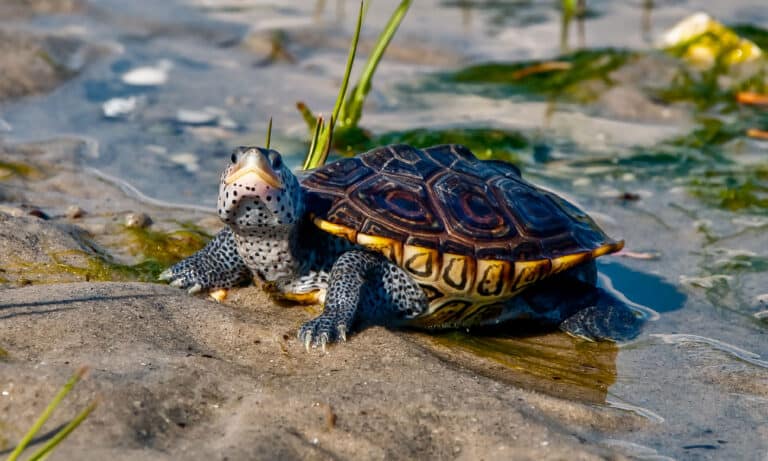
The Alabama red-bellied cooter (Pseudemys alabamensis) was designated as the official state reptile of Alabama in 1990. A cooter is a type of freshwater turtle, commonly found in the Southeastern United States. Cooters are often large, aquatic, or semi-aquatic, and are primarily herbivorous.
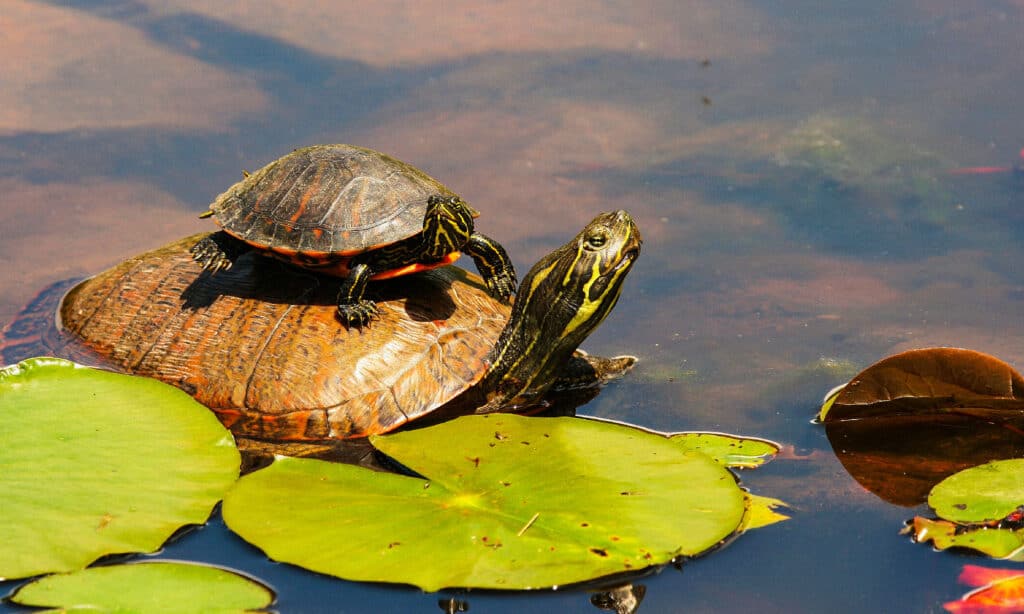
It’s easy to identify red-bellied cooters by their red bellies and the red edges of their shells when viewed from above.
©iStock.com/DavidByronKeener
Red-bellied cooters are listed as endangered due to habitat loss, pollution, nest predation, and high mortality rates from crossing roads. The Alabama red-bellied cooter’s habitat is limited to the coastal river systems of Alabama and Mississippi.
State Amphibian: Red Hills Salamander
The Red Hills salamander(Phaeognathus hubrichti) was officially recognized as the state amphibian of Alabama in 2000. It is a rare, land-dwelling salamander found exclusively in the Red Hills region of the state, and was designated to draw attention to its conservation status.
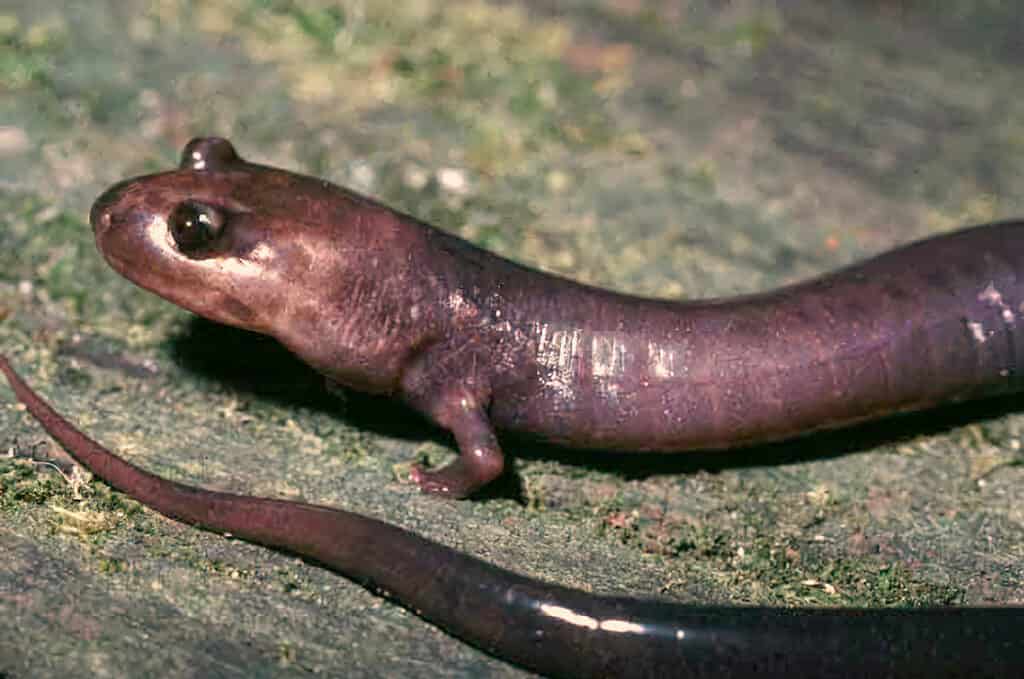
Land-dwelling Red Hills salamanders burrow into sandy loam when they feel threatened.
©United States Geographical Survey / public domain – Original / License
Red Hills salamanders are rare, burrowing salamanders found only in a small region of south-central Alabama, making them highly susceptible to habitat loss, and are listed as an Endangered Species by the IUCN.
State Mammal: American Black Bear
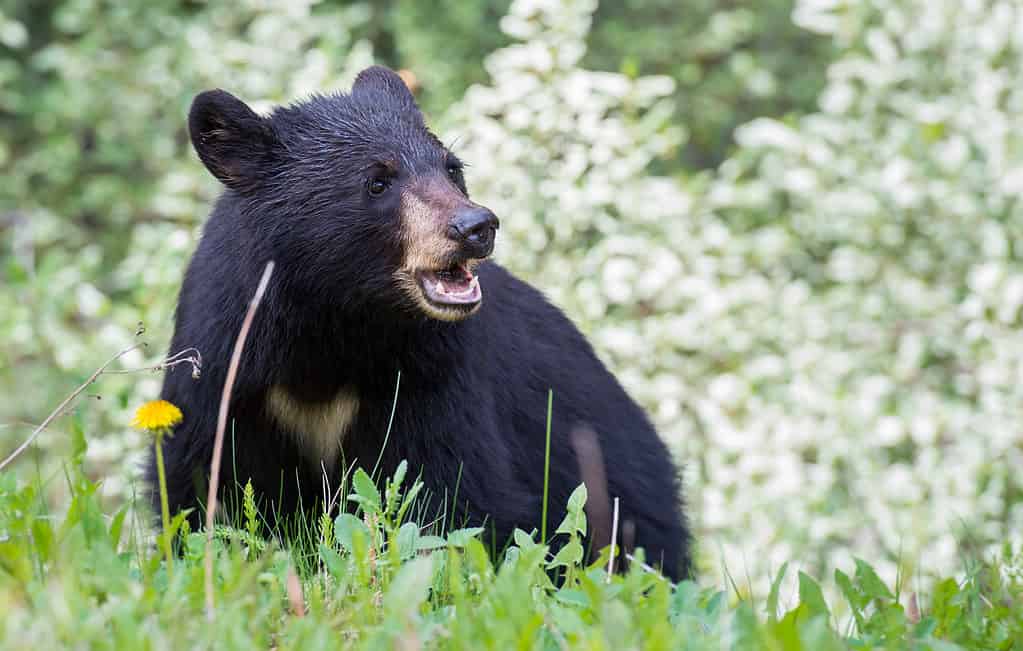
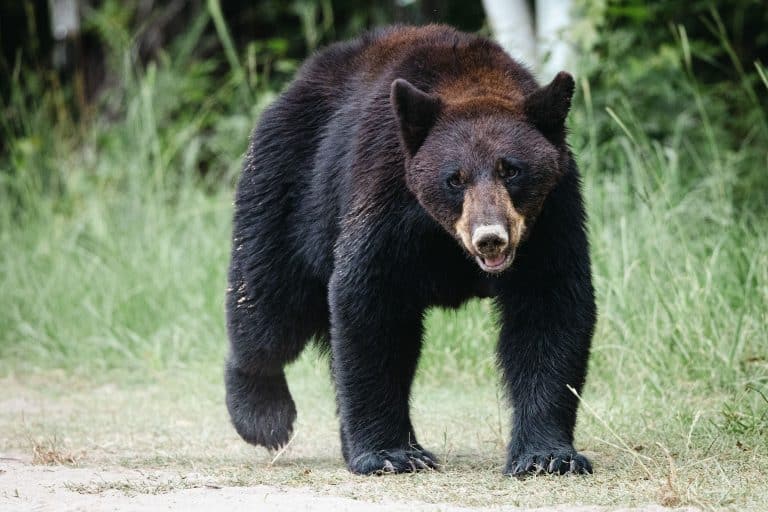
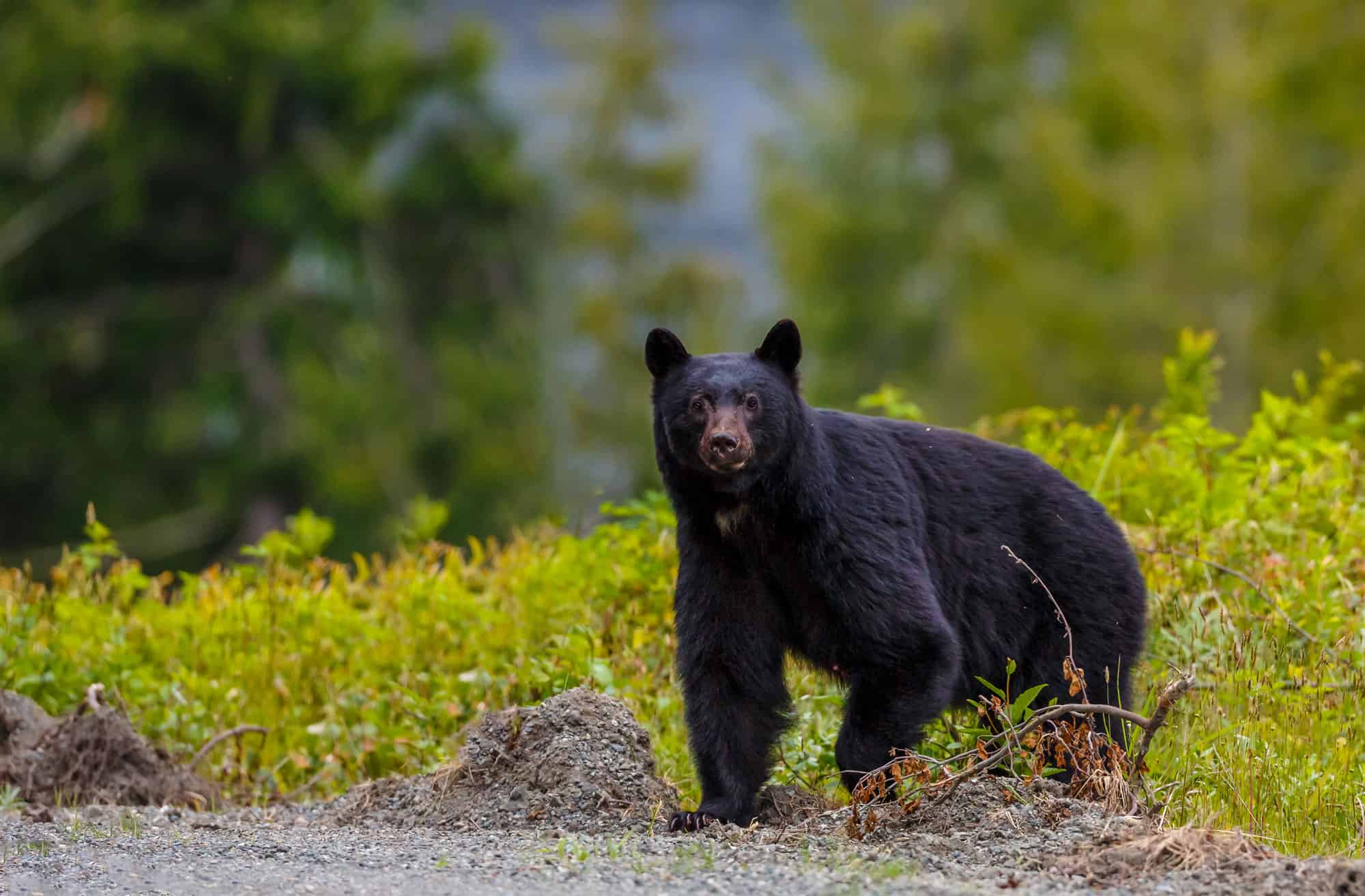
Black bears measure between 4 feet and 6 feet long and weigh from 90 to 600 pounds.
©Ghost Bear/Shutterstock.com
The state legislature designated the American black bear (Ursus americanus) as the state mammal in 2006. Students from the Escambia County Middle School and the Turtle Point Science Center campaigned for the black bear to raise awareness about protecting the species, whose population was in decline. After declining in the mid-20th century, black bear populations are rebounding in Alabama, aided by bears migrating from neighboring states. Currently, there are between 200 to 500 black bears in Alabama, primarily in the northeast and southwest regions of the state.
State Marine Mammal: West Indian Manatee
The West Indian manatee (Trichechus manatus), also known as the North American manatee, was designated as the state marine mammal of Alabama in 2009.
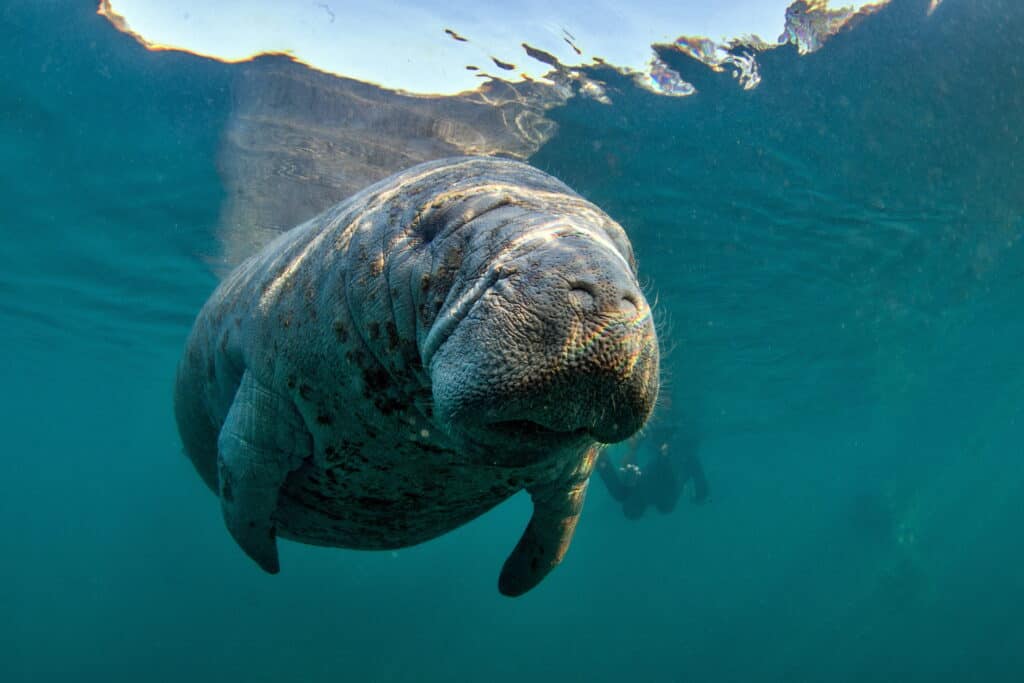
Manatees are at serious risk of cold stress and mortality in waters below 68 °F, with these risks increasing as temperatures drop farther.
©Tomas Kotouc/Shutterstock.com
Fourth graders from St. Ignatius Catholic School in Mobile, Alabama, proposed the West Indian manatee as Alabama’s official state marine mammal to increase awareness of the endangered species. While rare, they are increasingly spotted in Alabama’s coastal waters, particularly in the summer, with some tagged individuals known to return to the area.
State Agricultural Insect: Queen Honey Bee
The queen honey bee (Apis mellifera) became Alabama’s state agricultural insect in 2015. The push to make the queen honey bee the official state agricultural insect of Alabama was led by Bill Mullins, chairman of the Alabama Bee and Honey Producers. The initiative sought to highlight the importance of the bee, encourage education, and recognize the vital role bees play in Alabama’s $70 billion agricultural industry.
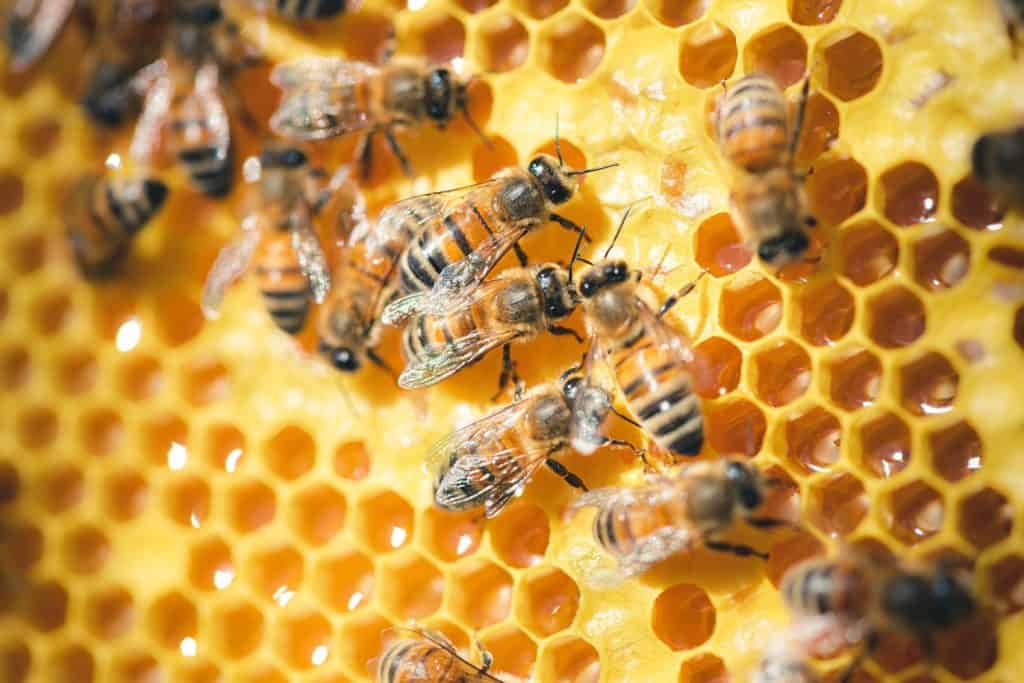
Queen honey bees rarely leave the hive and are not considered pollinators.
©Alexander Wallstrom/Shutterstock.com
Queens and worker bees are genetically identical females. The differences in their size, anatomy, and lifespan are caused by their diet during the larval stage: queens are fed exclusively royal jelly, while workers are not.
State Crustacean: Brown Shrimp
Alabama made the brown shrimp (Farfantepenaeus aztecus) iits official state crustacean in 2015 to highlight its importance to the Alabama commercial fishing industry. It is one of the top three commercially caught shrimp species in Alabama waters. Together with white and pink shrimp, they form the backbone of Alabama’s coastal seafood industry.
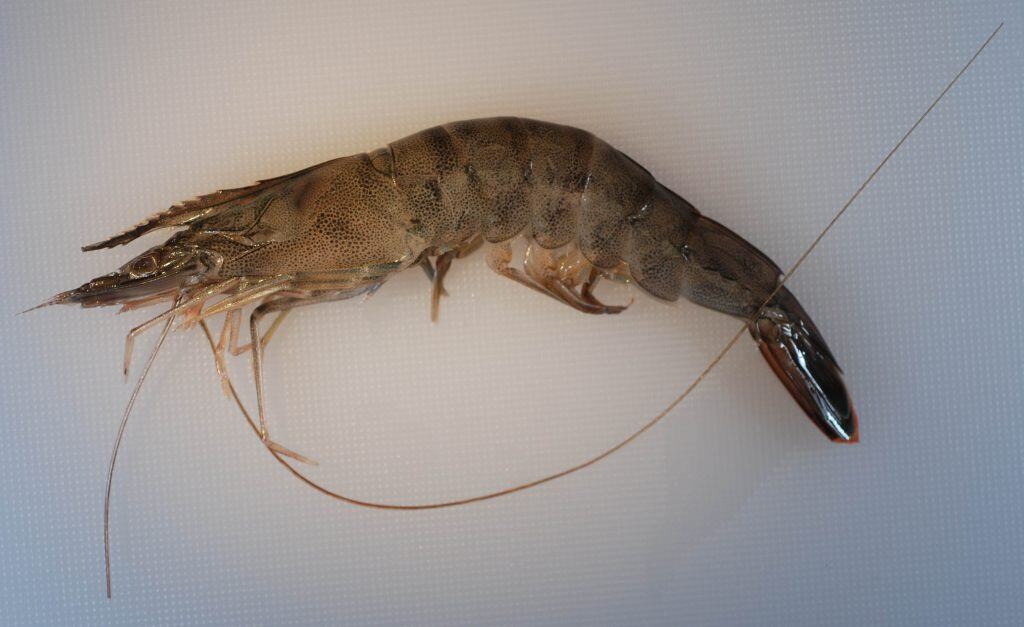
A versatile crustacean, brown shrimp are ideal for boiling, frying, and in stews.
©Smithsonian Environmental Research Center – Original / License
Brown shrimp are not considered a threatened species and are generally managed as a sustainable, fast-growing annual crop. However, as the Gulf of Mexico warms, brown shrimp are moving farther from the coast into federally protected waters, creating significant challenges for Alabama’s inshore fishing industry.