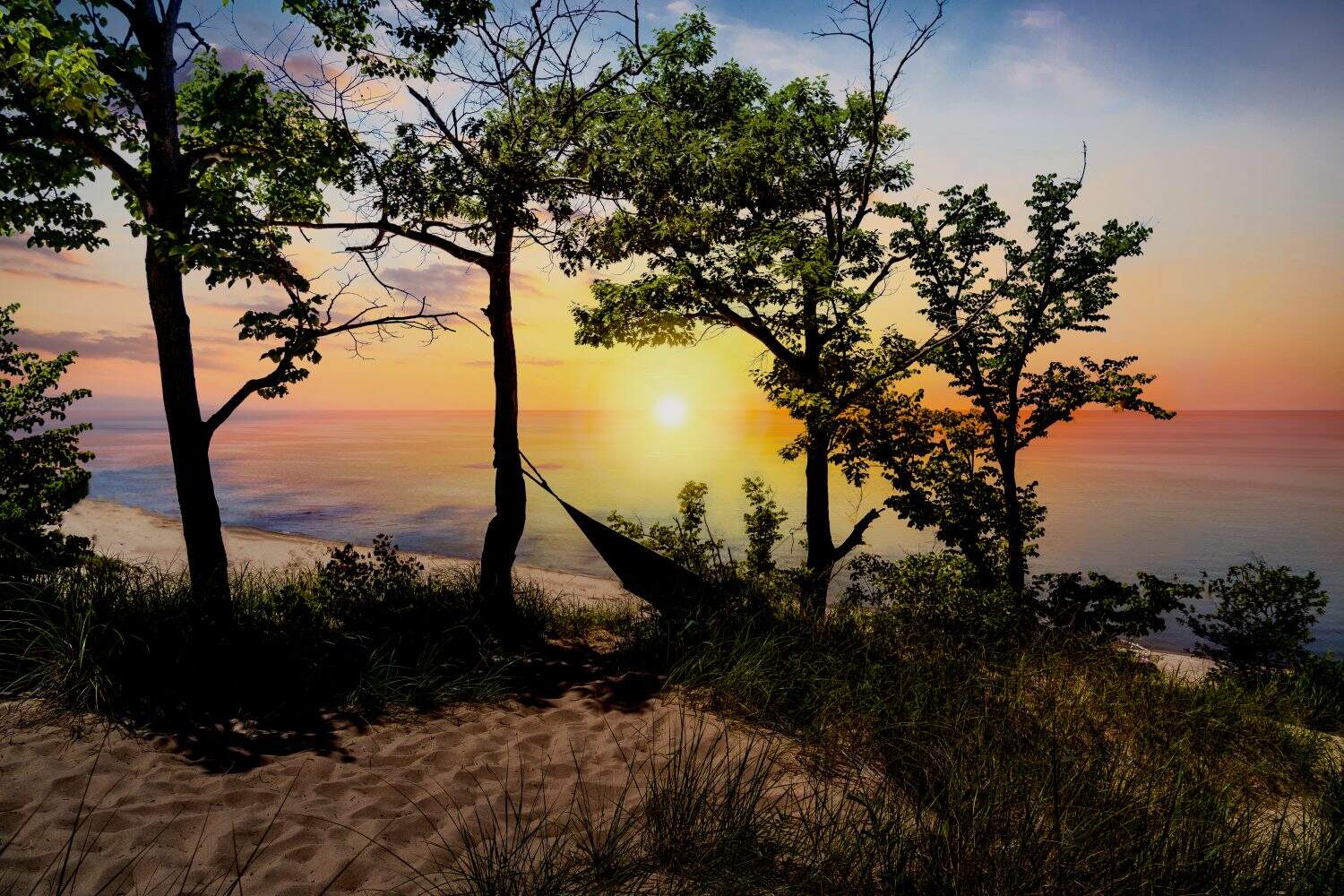

One of the more unique National Parks in the United States is undoubtedly Indiana Dunes National Park. Situated on the southern shore of Lake Michigan in the state of Indiana, the park runs about 20 miles and covers over 15,000 acres. Its oak savannas and open wetlands offer some stunning views year-round. The park also has plenty of fascinating wildlife. Let’s learn about the animals that call Indiana Dunes National Park home.
Karner Blue Butterfly
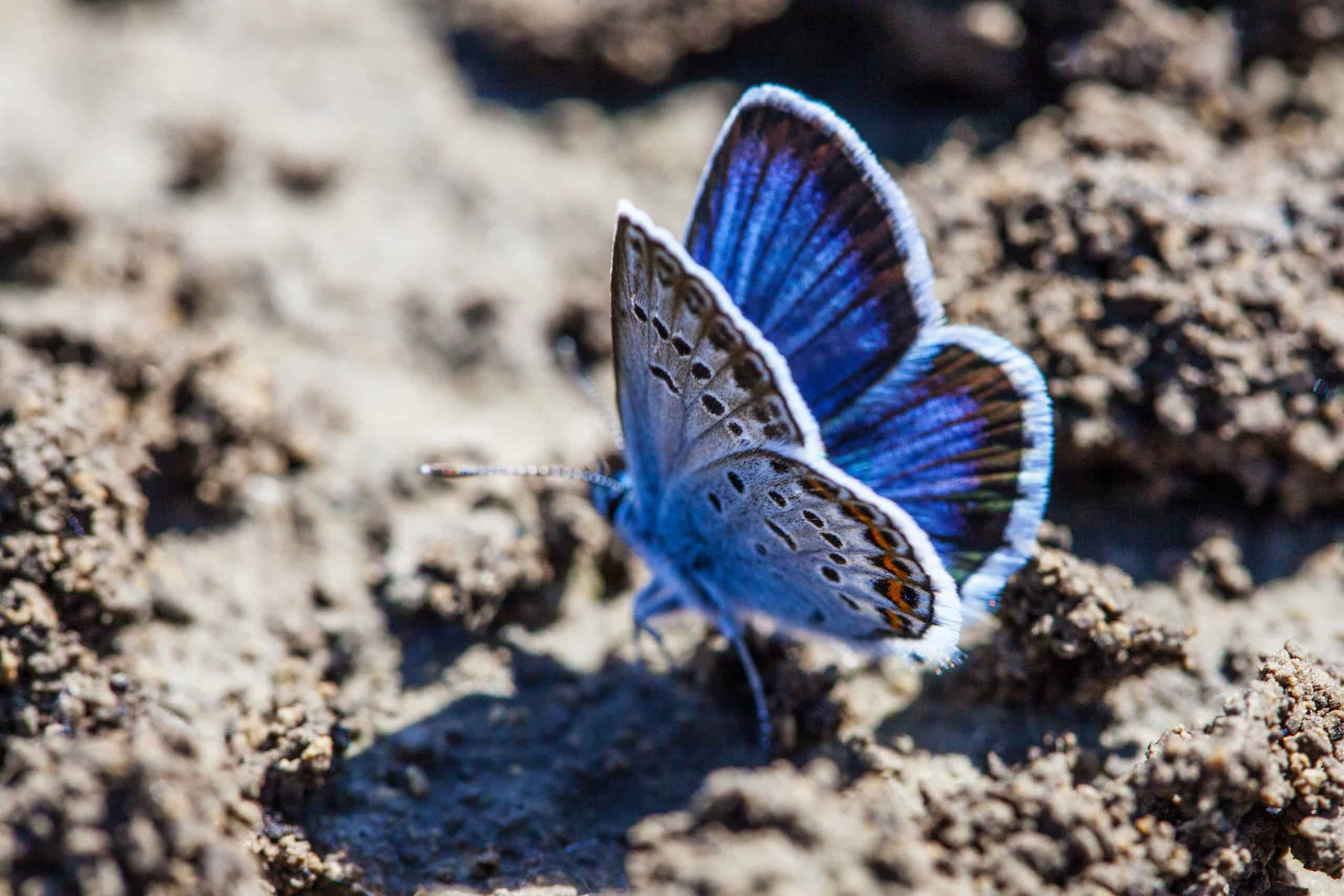
Conservation efforts aim to bring the endangered Karner blue butterfly back to its former glory in Indiana Dunes National Park.
©Alexandra Lande/Shutterstock.com
One of the animals that defines Indiana Dunes National Park but is likely extirpated from the area is the Karner blue butterfly. It deserves special mention, however, due to its unique providence and relative rarity. This endangered species of small blue butterfly was initially considered a subspecies of Plebejus melissa. The Karner blue butterfly was first described by entomologist Samuel Hubbard Scudder in 1861. The novelist Vladimir Nabokov later studied and classified North American blue butterflies, including the Karner blue.
Despite their dazzling appearances, male and female Karner blue butterflies are built slightly differently. Males have a silver to dark blue topside with narrow black margins. Females, however, have grayish brown outer portions of their wings. Both genders, however, have a continuous band of orange crescents along the edges of both wings with speckles of black spots, circled in white. Though Karner blue butterflies are scarce, they can still be found in parts of eastern Minnesota, Michigan, and New York. While these butterflies tend to live in oak savannas and pine barrens, people see them in right-of-way areas and road margins. Karner blue butterfly life cycles are almost entirely dependent on wild blue lupine flowers.
Lupine blooms in late May, but human encroachment and habitat destruction have decimated blue lupines in many areas. This, in turn, greatly affects Karner blue butterflies. They were listed as endangered in the United States in 1992 and have been all but extirpated from Indiana Dunes National Park. A particularly hot and dry season in 2012 practically decimated them from the area. Luckily, however, several conservation groups have initiated plans to replant large areas of blue lupine flowers. In tandem, they hope to bring Karner blue butterflies back to places like Indiana Dunes National Park.
Eastern Cottontail
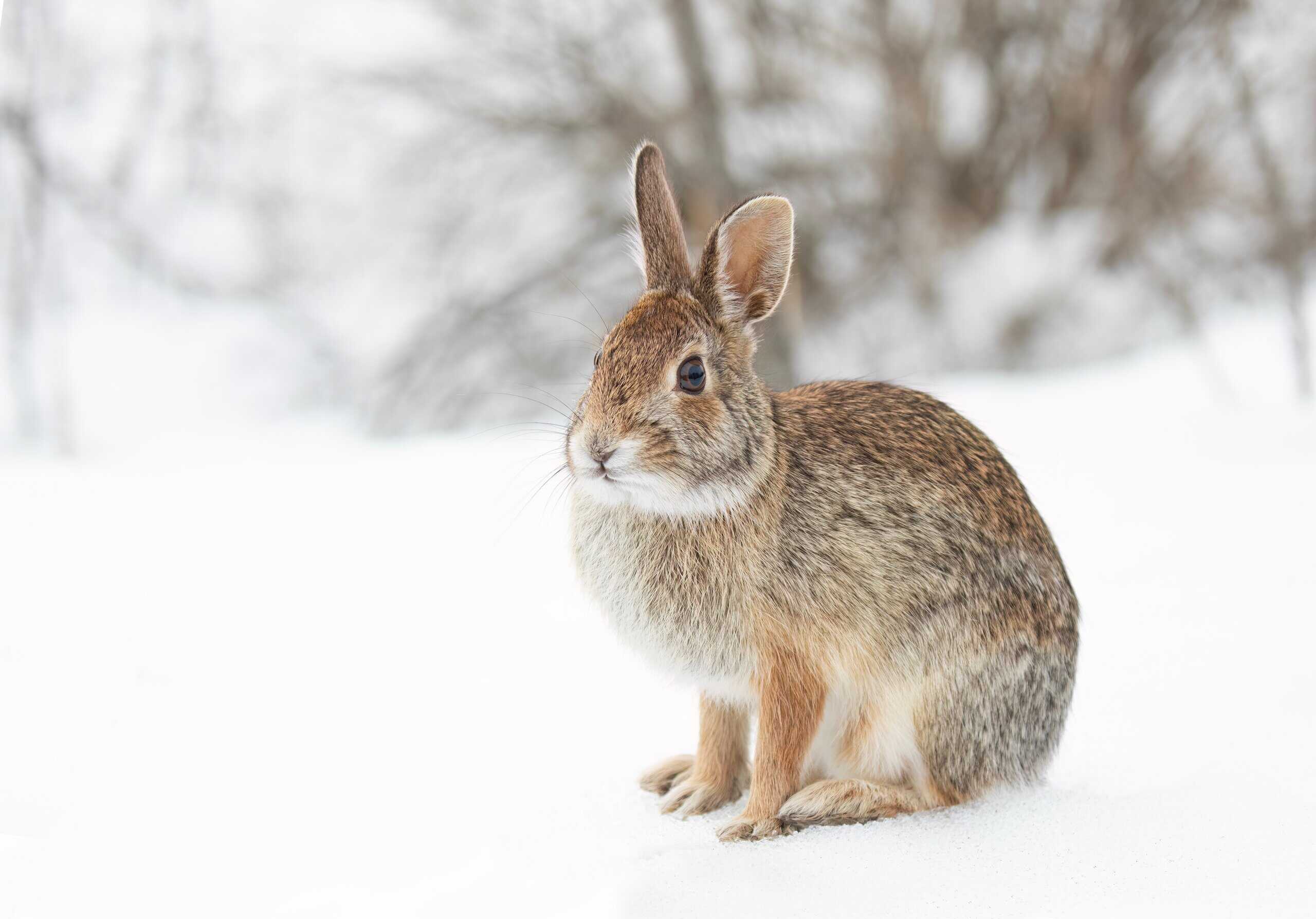
An abundance of eastern cottontails signals healthy ecosystems, especially when it comes to meadows and forest edges.
©Jim Cumming/Shutterstock.com
Park officials consider eastern cottontails to be a common but welcome sight. A species of rabbit in the family Leporidae, eastern cottontails live all across North America. They range from southern Canada into Mexico and parts of Central America. They have fluffy white tails that look like cotton balls, which gives them their name. Eastern cottontails are also one of the most commonly found mammals at Indiana Dunes National Park. Active during the early morning and evening, eastern cottontails forage on grasses and garden plants while avoiding predators like hawks and snakes.
People usually see them near open dune meadows or along the Paul H. Douglas Trail in particular. While they are widespread across the United States, eastern cottontails play an important role in plant balance through selective feeding. When they are a-plenty, it’s a clear sign that ecosystems are thriving.
Red-headed Woodpecker
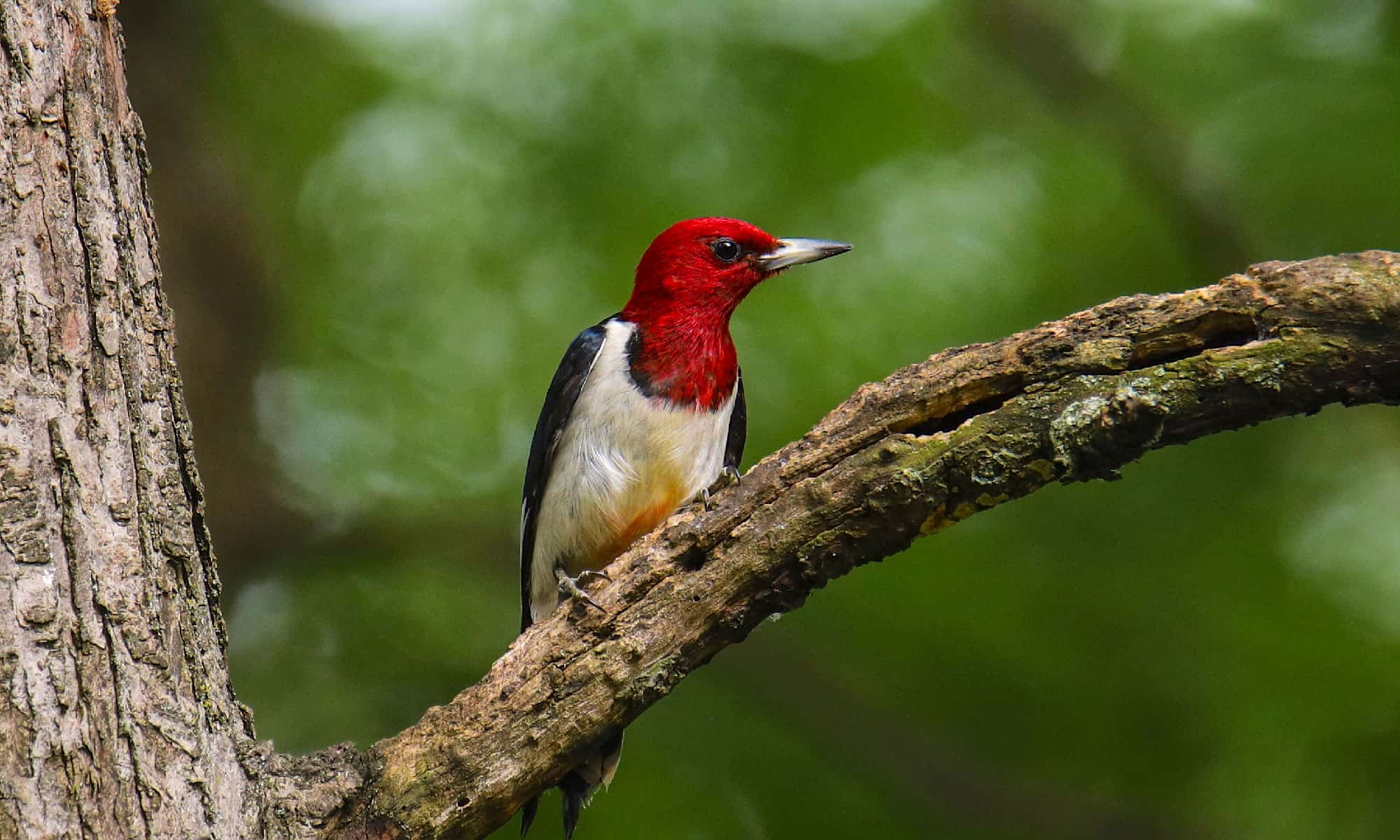
Once listed as near threatened, the red-headed woodpecker population has grown back, thanks to clever ecological management strategies.
©vagabond54/Shutterstock.com
A dazzling-looking bird, red-headed woodpeckers have red heads, white bodies, and black backs. While many woodpeckers pull out grubs from inside of tree trunks, red-headed woodpeckers catch their meals mid-air. They even store nuts in tree cracks for a later date. People often see these stunning-looking birds in the open woodlands of Miller Woods and in the oak flats near West Beach. When they aren’t showing off their hunting leaps or investment capabilities, red-headed woodpeckers nest in standing dead trees. Park officials used to cut these trees down, but now they keep them standing, just for the woodpeckers. Management strategies like this have helped red-headed woodpeckers become rated as least concern on the IUCN’s Red List.
Northern Leopard Frog

These leopard-spotted frogs can be found most commonly around the Great Marsh Trail or the Cowles Bog Complex.
©Paul Reeves Photography/Shutterstock.com
While northern leopard frogs can be hard to spot these days in Indiana Dunes National Park, they were once abundant in the Great Lakes Region. However, people still spot them pretty quickly thanks to their cat-like dark oval spots on their green or brown skin. Typically, northern leopard frogs live in meadows, grassy marshes, and along the edges of ponds. There, they feed on insects and even smaller frogs and give out their location during breeding season with low, jangling calls. In Indiana Dunes National Park, people see them around the Great Marsh Trail and the Cowles Bog complex. When the temperature heats up in the summertime, northern leopard frogs usually leave the water for the park’s prairies or dunes in search of food.
Eastern Massasauga Rattlesnake
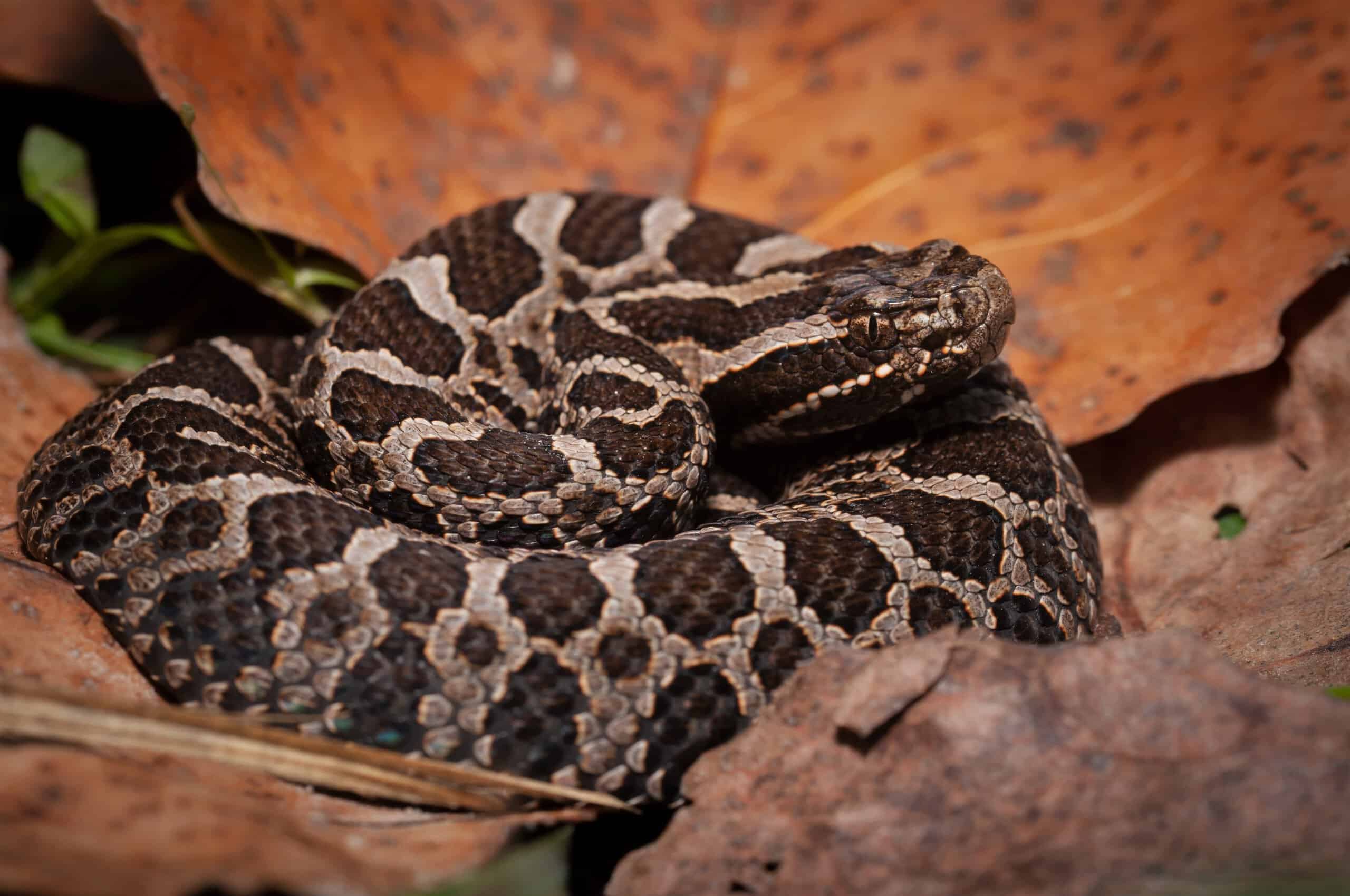
Despite being venomous, eastern massasuage rattlesnakes only attack when cornered or threatened.
©Mike Wilhelm/Shutterstock.com
Eastern massasauga rattlesnakes are one of the more rare reptiles to call the Indiana Dunes National Park home. Once widespread throughout the region, this small but venomous rattlesnake now lives in isolated patches of wet meadows and sedge marshes in the inland section of the park. While they spend most of their time concealed among tall grasses and moss, hunting frogs and small mammals, people still see them around Cowles Bog and Great Marsh. Despite being venomous, eastern massasauga rattlesnakes only attack when cornered or threatened. Park officials, however, keep a watchful eye on this federally threatened species to ensure it continues to weather rapidly changing environmental conditions.
Coho Salmon
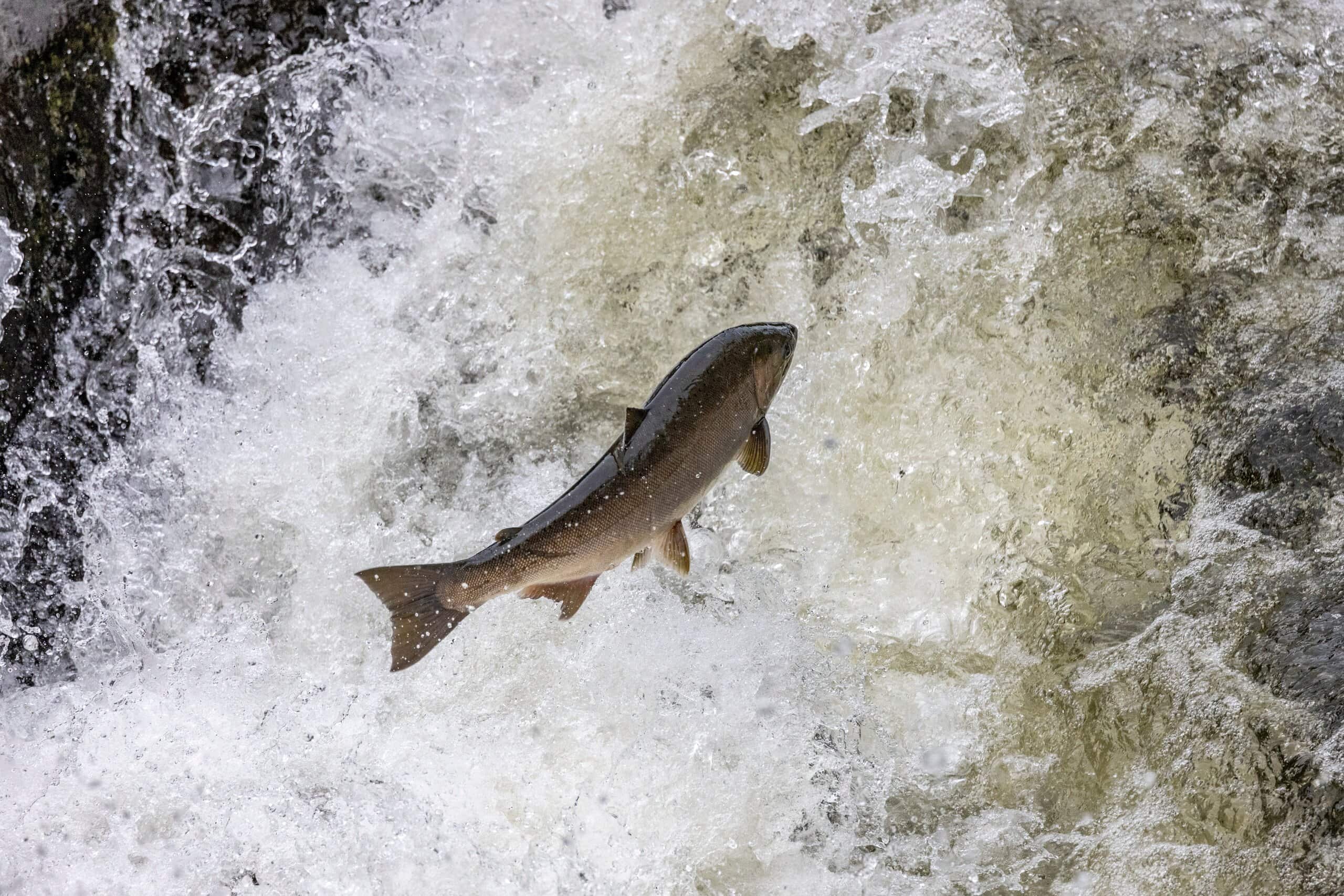
Wildlife officials introduced coho salmon to the Great Lakes region in the 1960s to help control growing alewife populations.
©Danita Delimont/Shutterstock.com
While many creatures on this list are native to the area in and around Indiana Dunes National Park, coho salmon are relative outsiders. Officials introduced this salmon species to Lake Michigan in the 1960s to control alewife fish populations. Since then, coho salmon have grown into an established species. They are fast and fierce, hunting down smaller fish with ease. People usually see them off the beaches or near Burns Waterway. Not an invasive species, but rather a non-native species, coho salmon are a symbol of complex but supervised ecosystems. Coho salmon may eat a lot of the small fish that live in the Great Lakes environment, but they also help support tourism and the fishing industry. Plus, when they die, their bodies provide considerable nutrients for insects and aquatic vegetation.
Sandhill Crane
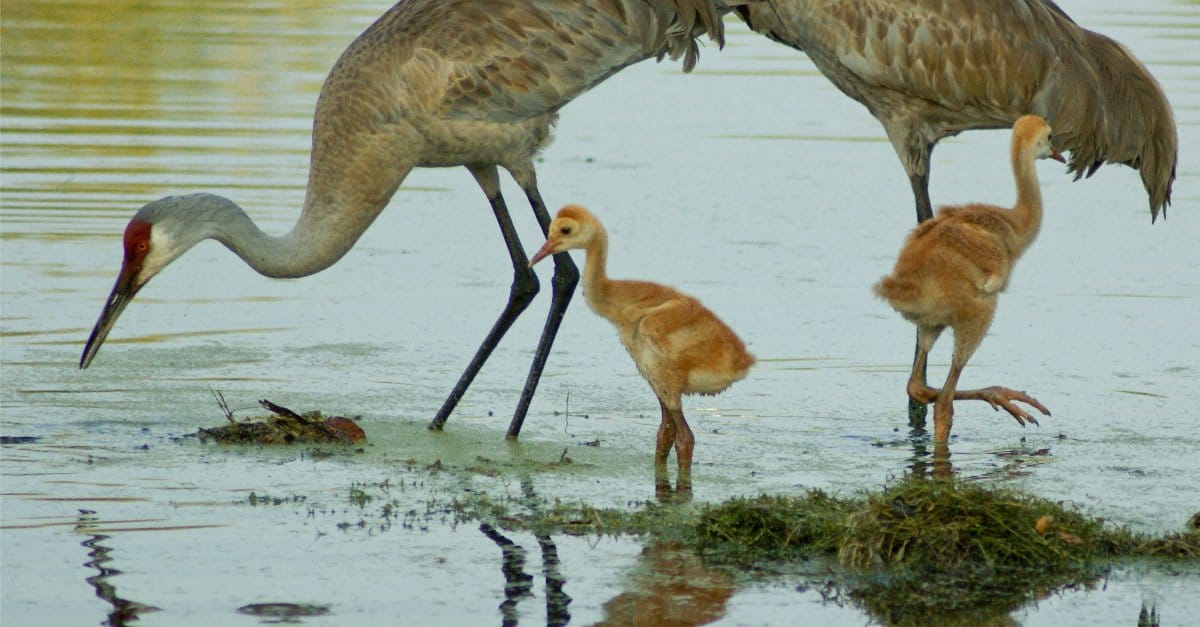
People usually spot sandhill cranes in Indiana Dunes National Park when they are flying in formation over the dunes.
©iStock.com/Bkamprath
Sandhill cranes are one of the more impressive bird species found in Indiana Dunes National Park. Standing almost four feet tall, sandhill cranes have long necks, long legs, and even longer bills. Though similar in appearance to herons or egrets, sandhill cranes are heavier and have distinctive colorations. Typically, they are brown, gray, or white, with burgundy red patches of feathers on the tops of their heads. Like most hikers in the park, sandhill cranes are also visitors. They migrate through the area every spring and fall, announcing their presence with trumpet-like calls. That said, some stick around through the summer to breed. People usually see them at dawn or dusk, flying in formation over the dunes. When not in the air, they are usually seen near the Great Marsh as well as wetlands more inland.
White-Tailed Deer

These ungulates are abundant in the park, but officials keep a careful eye on their numbers lest they overgraze and throw the ecosystem into disarray.
©Lester Graham/Shutterstock.com
White-tailed deer are easily the most common large mammal (ungulate) in North America. Indiana Dunes National Park is no exception, as these deer can be found across the park. These white-tailed creatures with reddish-brown fur are found throughout the park. They are equally at home in the forest interiors, adjacent meadows, or in the grassy dunes that give the park its characteristic look. People usually see white-tailed deer near Cowles Bog and Heron Rookery near dawn and dusk. In truth, however, they can be found almost anywhere in Indiana Dunes National Park. Park officials keep a watchful eye on these large mammals because they can do serious damage to the ecosystem if left unchecked. Luckily, predators like coyotes and bobcats help maintain the balance of the park’s food web.
Coyote
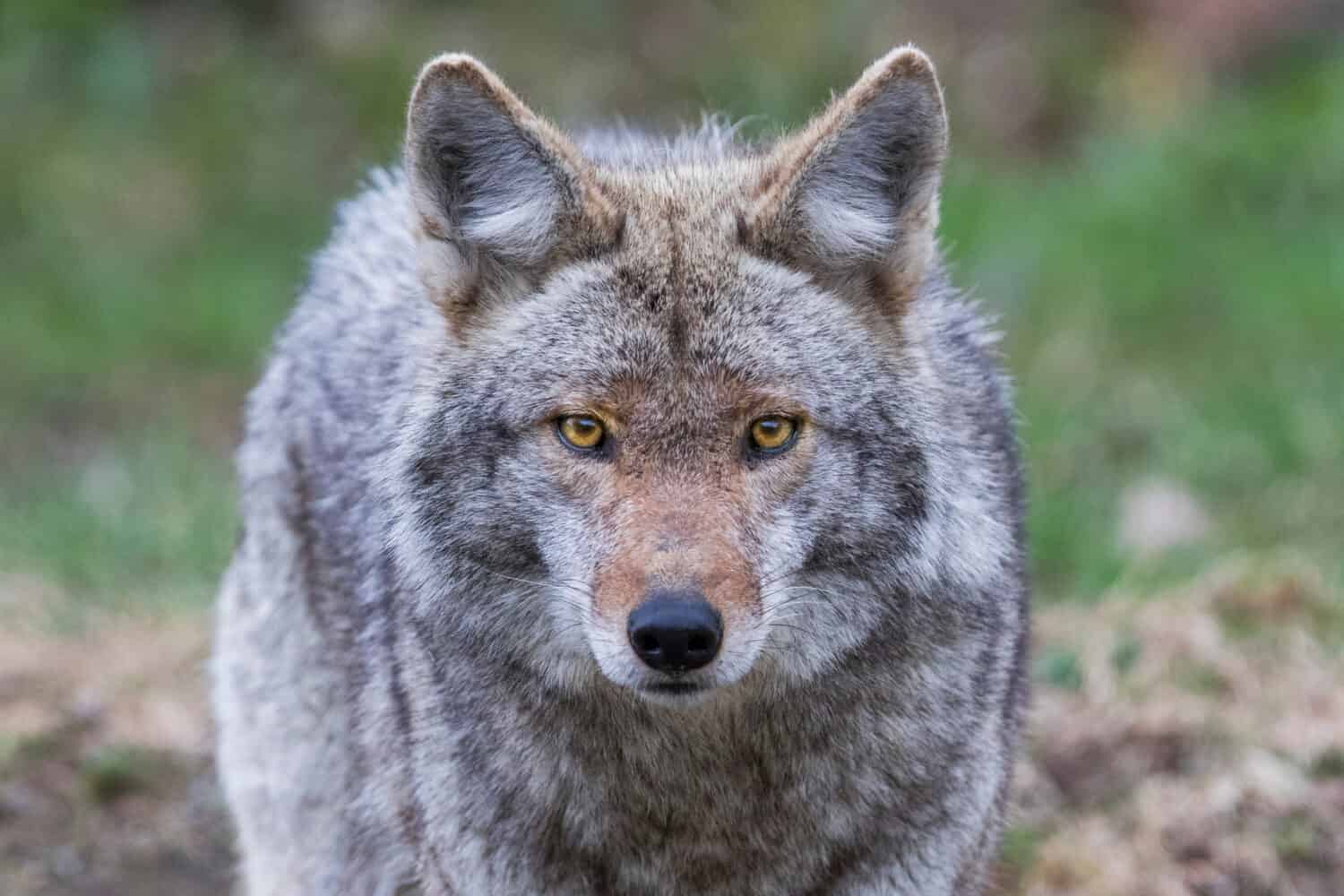
You will likely hear coyotes before seeing them in Indiana Dunes National Park when their high-pitched howls sound out through the night.
©Mircea Costina/Shutterstock.com
Just as the white-tailed deer forages for grass and acorns across Indiana Dunes National Park, coyotes hide in the shadows waiting to hunt them. The largest predatory mammal in the area, coyotes move through the park with ease. Adaptable and clever, coyotes range from the beach dunes to the inland forests and everywhere in between. They are primarily nocturnal, so people usually only see them at dusk or early in the morning. Sometimes, however, the lucky visitor will spot one as it runs across a trail or meadow.
Though typically opportunistic hunters, subsisting on small mammals and even fish, coyotes sometimes tackle larger game as well. If you are going to see one in the park, it will likely be in the areas around Cowles Bog, Heron Rookery, and Miller Woods. Even if you don’t spot one with your own two eyes, you will likely hear them emitting high-pitched howls late into the night. People may have an uneasy relationship with coyotes, but these canines are highly adaptable and can thrive even in challenging environments. Though they are usually shy and prefer to stay away from humans, they can be dangerous in rare instances.
Slender Glass Lizard
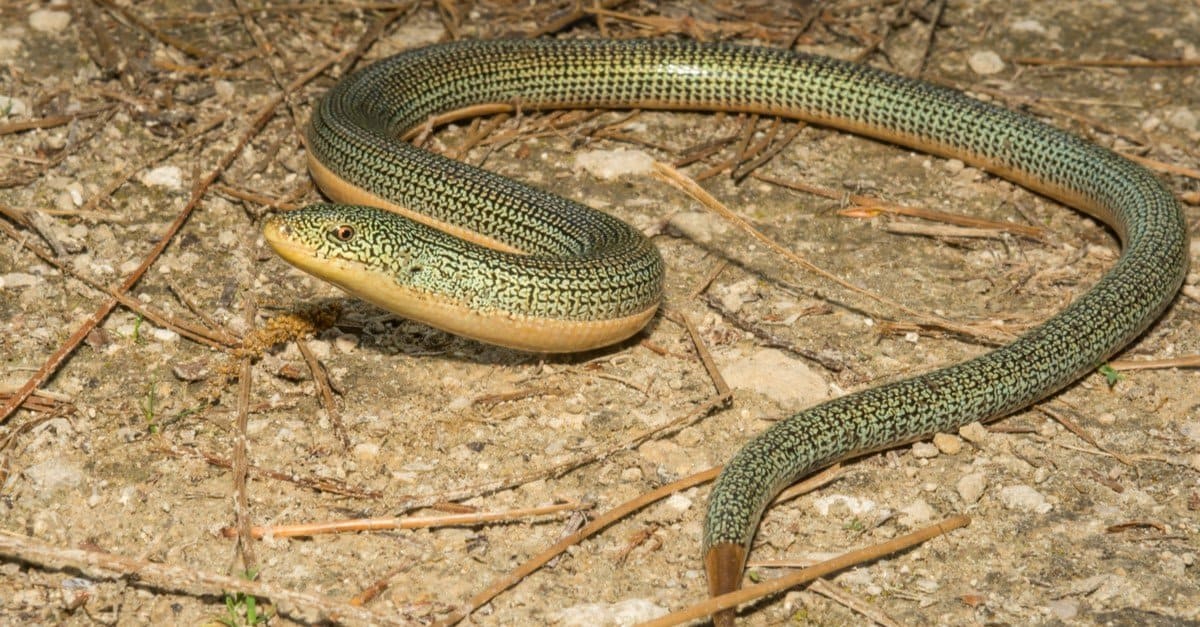
They may look like snakes, but slender glass lizards are actually a type of legless lizard with tails that are so delicate they can break off without ever being touched.
©Jay Ondreicka/Shutterstock.com
Slender glass lizards are one of the more unique-looking lizards found in Indiana Dunes National Park. They have yellow or brown bodies with six stripes. White specks in the middle of their scales also resemble light stripes. While this serpent-looking lizard can reach up to three feet long, its tail comprises at least two-thirds of its total body length. Though they have pointed snouts, their heads are not very distinct from their bodies. Easily confused with snakes, slender glass lizards are endemic to the United States.
Slender glass lizards (Ophisaurus attenuatus) are a distinct species, separate from the eastern glass lizard (Ophisaurus ventralis). They get their name from their tail fragility. Their tails can break off without ever being touched. Though these snake-like lizards are listed as a species of least concern, they are considered vulnerable in Iowa and endangered in Wisconsin. As for Indiana Dunes National Park, people often spot them moving through its many dunes.
Thirteen-Lined Ground Squirrel
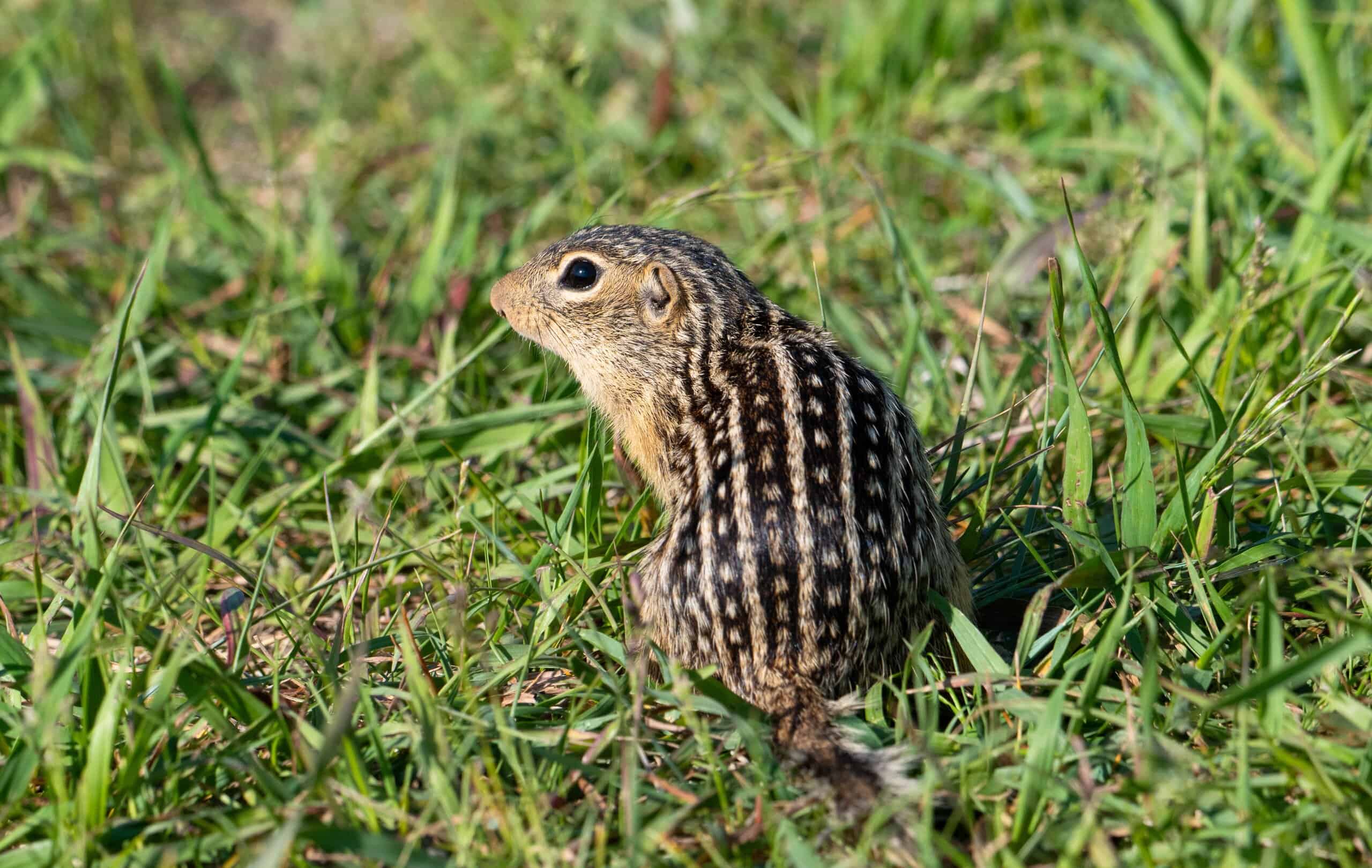
These striking-looking squirrels serve an important function in the Indiana Dunes National Park ecosystem.
©Krista Marie T/Shutterstock.com
Some animals have names that don’t speak to their attributes in the slightest. Thirteen-lined ground squirrels, however, don’t have that problem. Their name perfectly describes their appearance. Their coats feature 13 alternating brown and white/grey lines running the length of their bodies on both the backs and sides. This gives them a carpet-like appearance, with a row of white or grey spots between each longitudinal line. 13 stars and stripes, indeed. These ground squirrels are most active during the day. That is when they venture out to the open to hunt caterpillars, grasshoppers, and crickets. They will also aggressively attack cicadas if they get a chance. Remarkably, these ground squirrels will also hunt mice and shrews. Despite this healthy selection of prey, they will also eat grass and weed seeds. This sometimes makes them a nuisance to gardeners, as they dig burrows and eat vegetables.
The burrows they dig can reach over fifteen feet in length with several rooms and passages. When it comes to Indiana Dunes National Park, people often see these striking-looking ground squirrels where the grass is short and the soil is diggable. They can be seen running across trails in West Beach, Miller Woods, and the Great Marsh Prairie Overlook. Despite their adept hunting skills, thirteen-lined squirrels are also easy prey for larger animals like snakes, hawks, and coyotes. Thirteen-lined ground squirrels are an important part of the Indiana Dunes National Park ecosystem and are also unwitting builders; their burrows often become shelters for other small animals, insects, and even owls.
Painted Turtle
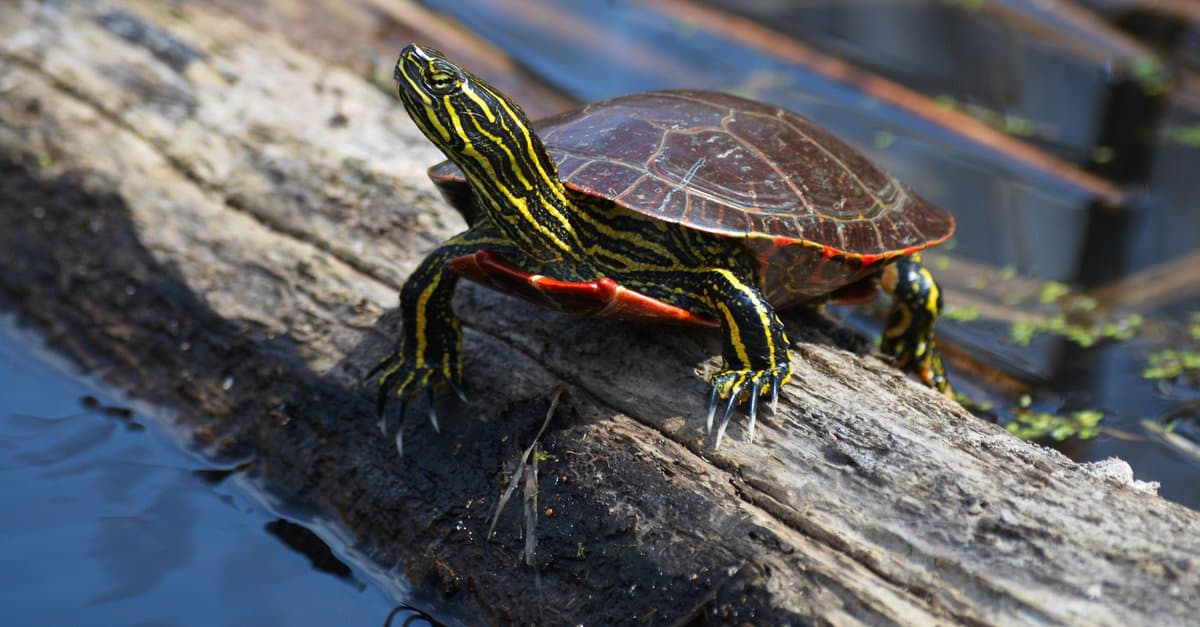
These vibrantly colored turtles are often found along the Great Marsh Trail or Cowles Bog Boardwalk.
©KARI K/Shutterstock.com
Painted turtles are another striking-looking animal found in Indiana Dunes National Park. They have almost neon yellow and red accents on their legs and carapaces. Typically, these aquatic reptiles are found in ponds, marshes, and slow-moving streams. When it comes to the park, in particular, visitors see them sunning themselves on logs or rocks along the Great Marsh Trail or Cowles Bog boardwalk. When they aren’t soaking up the sun, painted turtles hunt for insects, small fish, and feed on aquatic vegetation. Painted turtles play an important role in the ecosystem because they recycle nutrients by eating dead plants and small carrion. They are one of the most visually striking symbols of the park’s wetlands.
American Badger
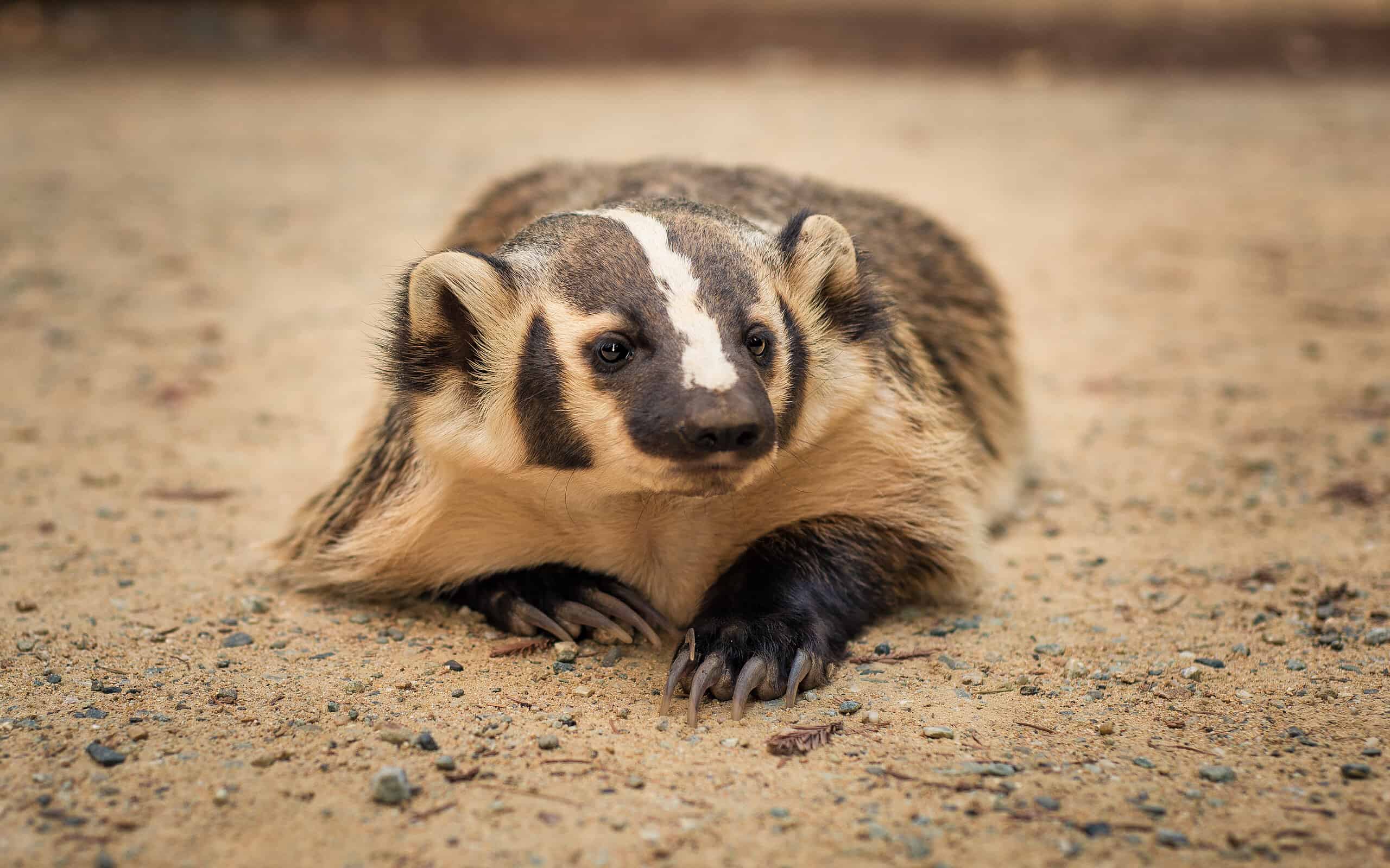
These low-to-the-ground mammals prefer areas with plenty of sandy soil in which to dig burrows.
©Photography by Adri/ via Getty Images
Once common along Lake Michigan’s southern shore, the American badger has become much rarer due to human development. However, these stocky, low-to-the-ground mammals don’t seem to mind. They have white stripes on their faces and black feet. They spend most of the day sleeping, then sneak around at night to hunt birds, reptiles, and insects. American badgers are big fans of burrows, which they excavate quickly and effectively. In Indiana Dunes National Park, they prefer areas with sandy soil and plenty of squirrels, gophers, and other prey to eat. Though a pretty rare sight, visitors sometimes spot badgers in the areas around West Beach, Tolleston Dunes, as well as deeper inland in the park’s oak savannas.
Piping Plover
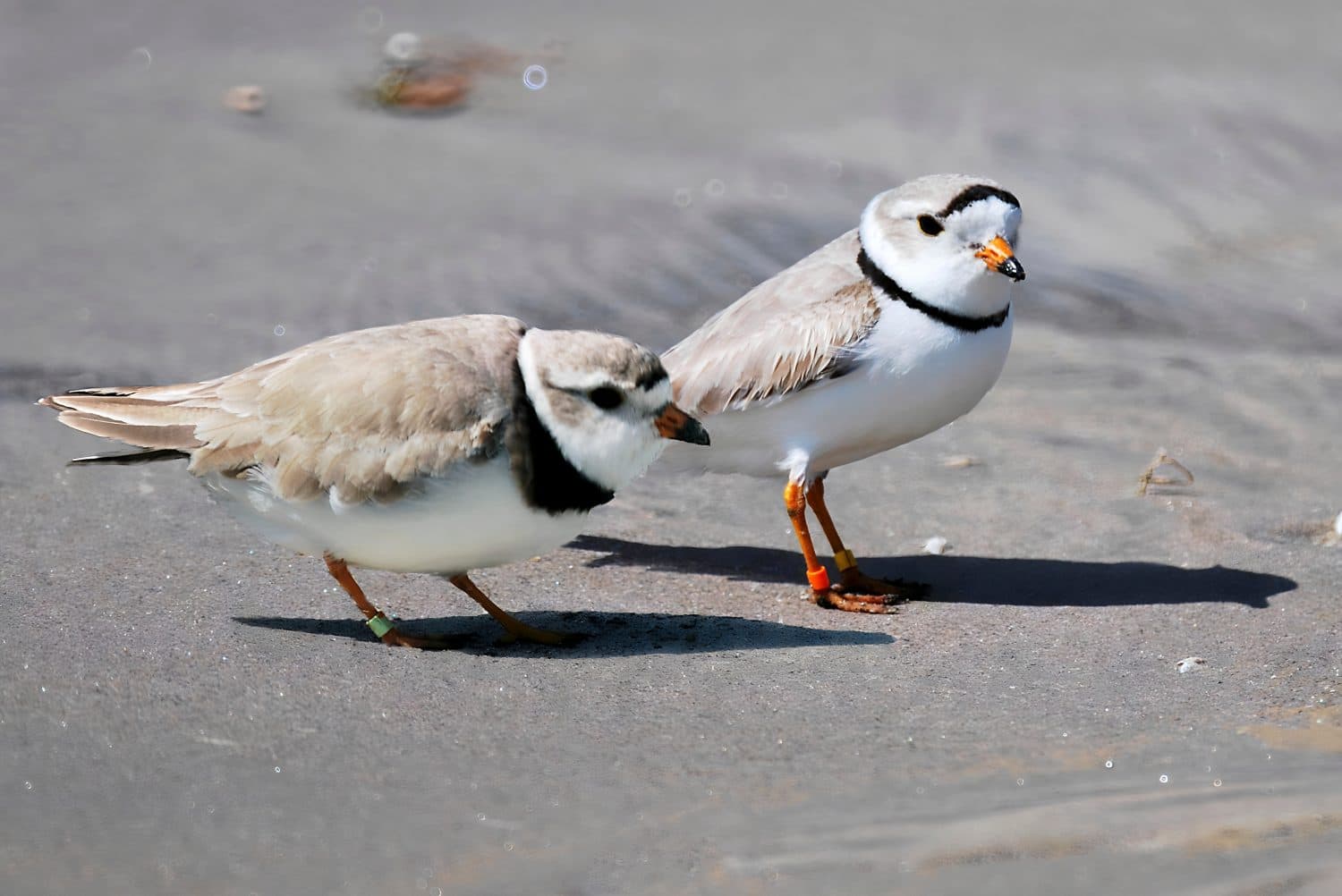
Piping plovers are one of the most endangered birds in North America.
©Susana Miranda/Shutterstock.com
Indiana Dunes National Park is chock-full of interesting animals, but the piping plover might be its most golden. Piping plovers are among the most endangered birds in North America, and Indiana Dunes National Park is one of the few places on the continent where they breed. These rare birds are small and have sandy colored feathers. They usually stay along the shoreline, feeding on small invertebrates and building shallow nests that blend in with the rocks and pebbles. Several sites between Mount Baldy and the western dunes host piping plover nests. Due to their status, both park officials and volunteers work to keep their nesting areas free of disturbance and danger.
Blue-spotted Salamander
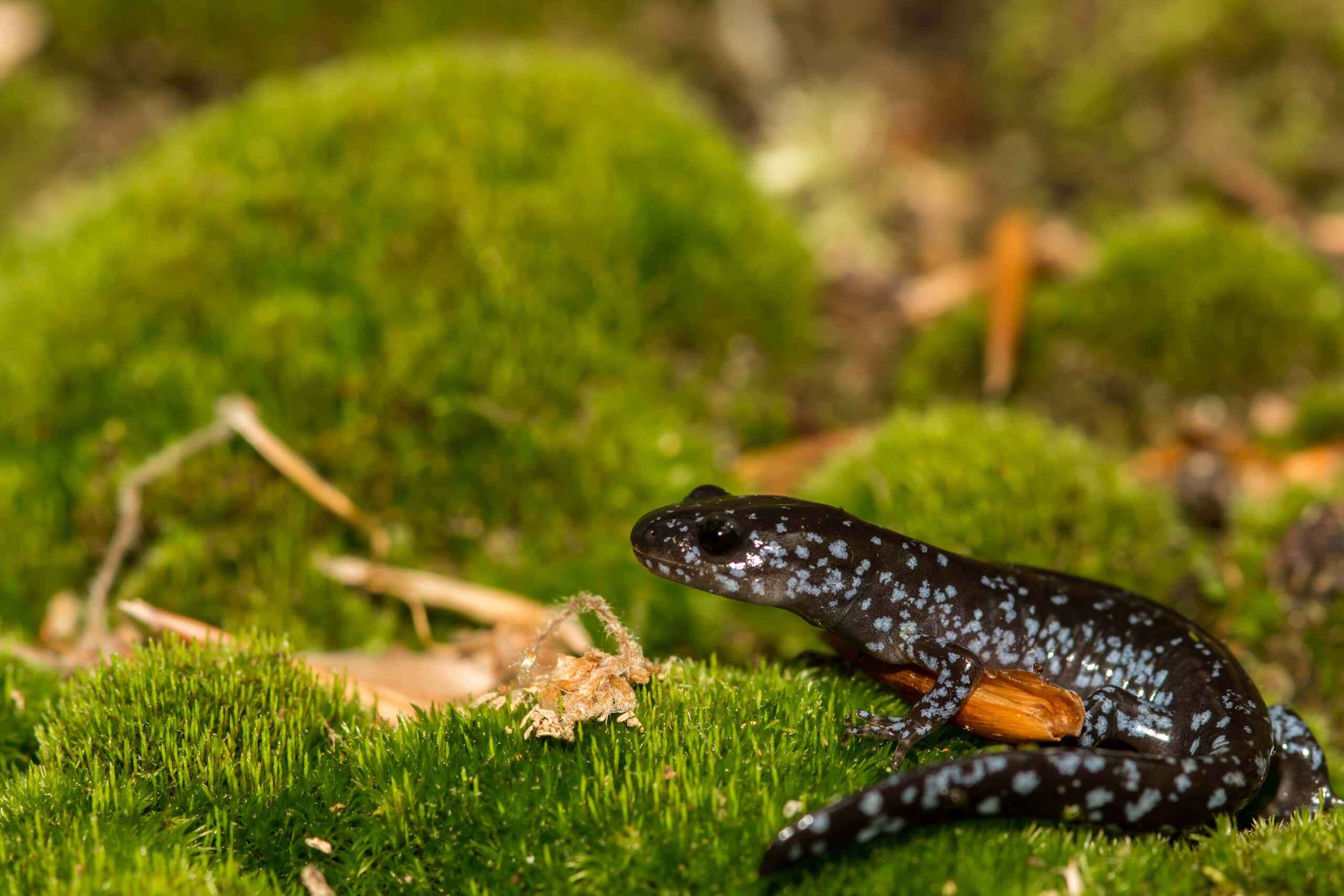
Blue-spotted salamanders spend most of their time underground or hidden under rotten logs.
©Jay Ondreicka/Shutterstock.com
While not as endangered as the previous entry on this list, blue-spotted salamanders are a pretty rare sight anywhere, not least of which in Indiana Dunes National Park. A sign of healthy forests and wetlands, blue-spotted salamanders have smooth, dark bodies with blue spots that appear almost iridescent under direct light. Though they spend most of their time underground, blue-spotted salamanders emerge from their hiding spots on rainy spring nights and head toward breeding ponds. The lucky visitors who have seen them have spotted them around Heron Rookery or Cowles Bog. Though one of the more elusive amphibians in North America, the presence of blue-spotted salamanders indicates a healthy wetland habitat.
White-Footed Mouse
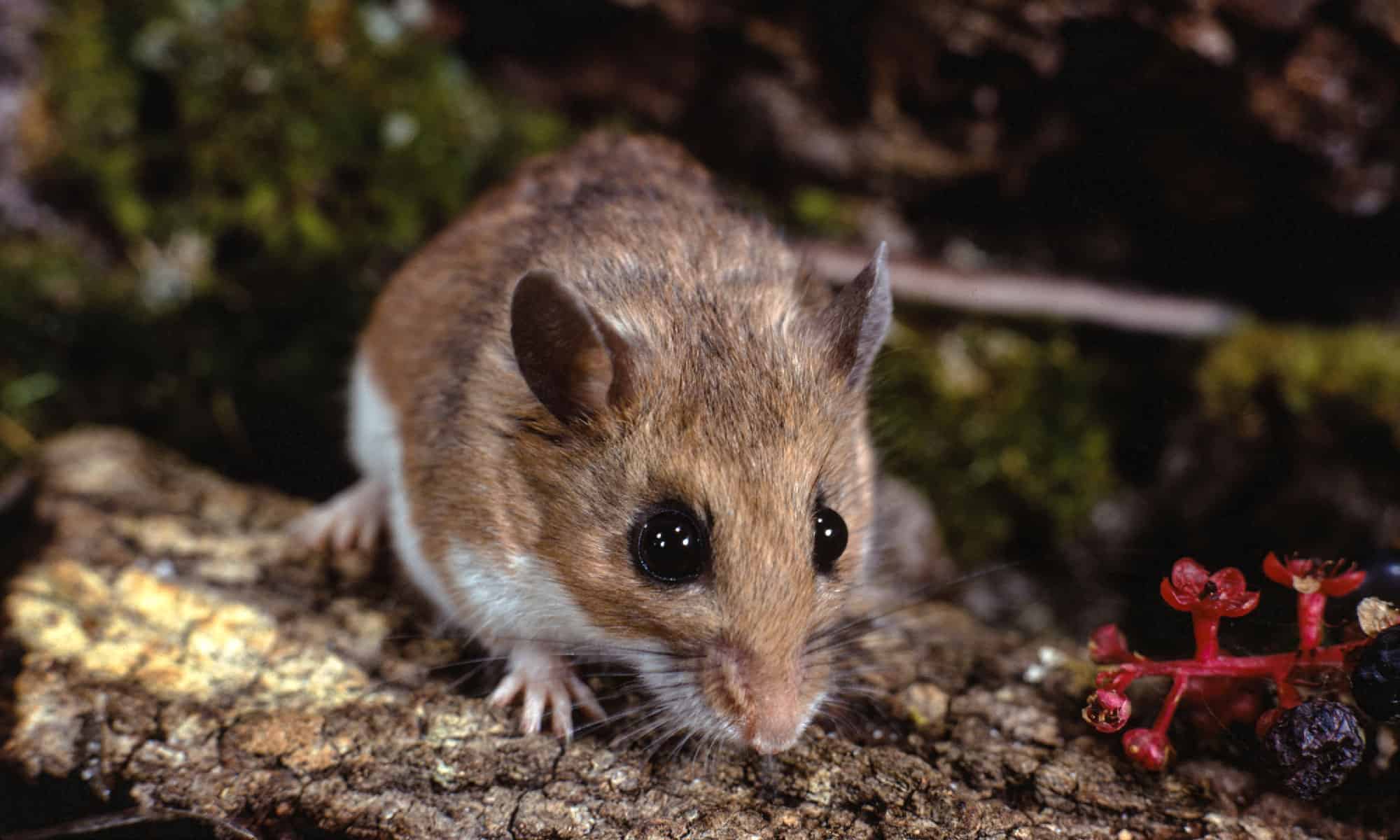
White-footed mice are one of the most abundant rodents in Indiana Dunes National Park.
©iStock.com/Weber
Like the thirteen-lined ground squirrels, white-footed mice have names that are pretty on the nose. They are often called deermice, and have white feet, relatively large black eyes, and coats that are brown on top and white on their bellies. These adorable little rodents are found almost everywhere in Indiana Dunes National Park, from the oak forests and grasslands to the dunes and wetland margins. Good luck spotting one, though, as white-footed mice are nocturnal and move around almost too quickly to see with the naked eye.
American Kestrel
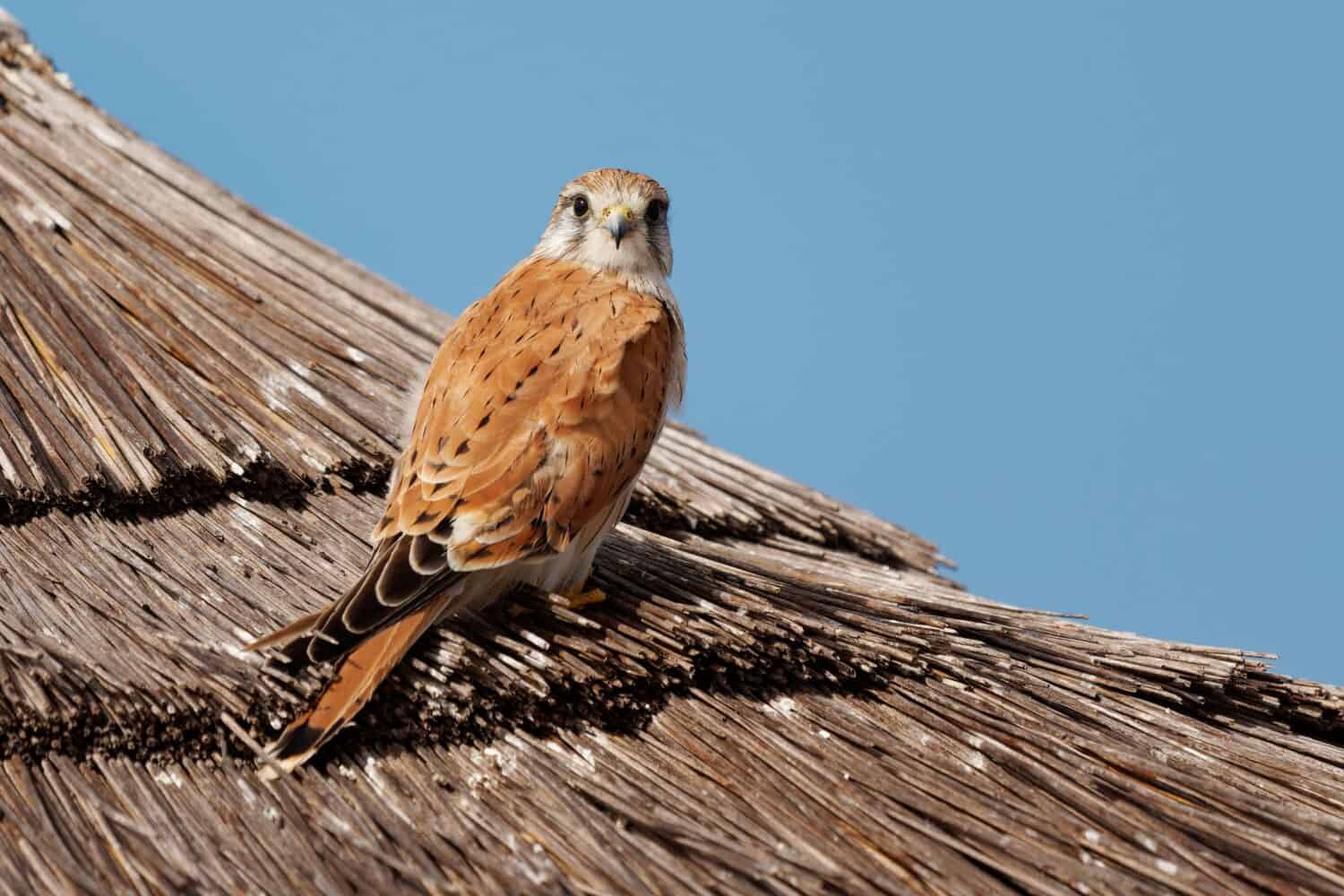
American kestrels are the smallest falcon in North America.
©Martin Pelanek/Shutterstock.com
An unassuming but still majestic bird of prey, the American kestrel is the smallest falcon in North America. Despite their diminutive size, these birds of prey are incredibly fast flyers and efficient hunters. They have reddish-brown backs and tails and black spots/speckles on their faces. They can usually be found in the park’s open grasslands and dune ridges. People see them most along West Beach, Tolleston Dunes, and the Great Marsh Prairie Overlook, where they hunt small mammals and insects.