
Quick Take
- King salmon can grow far larger than most anglers expect, and the gap between Indiana's state record and the world record reveals just how extreme that ceiling really is. See the record extremes →
- A catch in 2021 may have shattered the all-time world record, but it will never count due to a single decision made by the angler. Read about the 2021 catch →
- Indiana borders Lake Michigan, yet its state king salmon record has gone unchallenged for nearly five decades, and the location where it was caught helps explain why. Indiana's 46-year record →
- The color of king salmon meat is not fixed but is determined by what the fish ate recently, and that affects why anglers and diners prize certain catches over others. Explore their diet and color →
Five salmon species occur in the waters of North America. These fish have been delighting anglers and feeding wildlife alike for centuries. The five species found in the U.S. include the Coho, Chum, Sockeye, Pink, and Chinook, or king salmon. The largest salmon species is the king salmon, earning the fish its name. Wild-caught king salmon is considered one of the best fish to eat in America. The hope of setting the next record, whether national, state, or worldwide, is also a draw for sports fishers. There have been many record-breaking salmon caught in the Great Lakes region, but how big was the largest king salmon ever caught in Indiana?
Why King Salmon?
Considered the most valuable type of salmon, the king salmon is found both wild and farmed in North America. They are technically considered Pacific salmon, but they may be found in non-oceanic bodies of water, like the Great Lakes and their tributaries. The fish belongs to the genus Oncorhynchus and takes its common name from the Chinookan peoples of the Pacific Northwest. They can be found in the North Pacific Ocean and the river systems of the western U.S. from California to Alaska, as well as in other bodies of water in North America. King salmon are also anadromous, which means they hatch in freshwater, migrate to the ocean to mature, then return to spawn in their birth rivers.
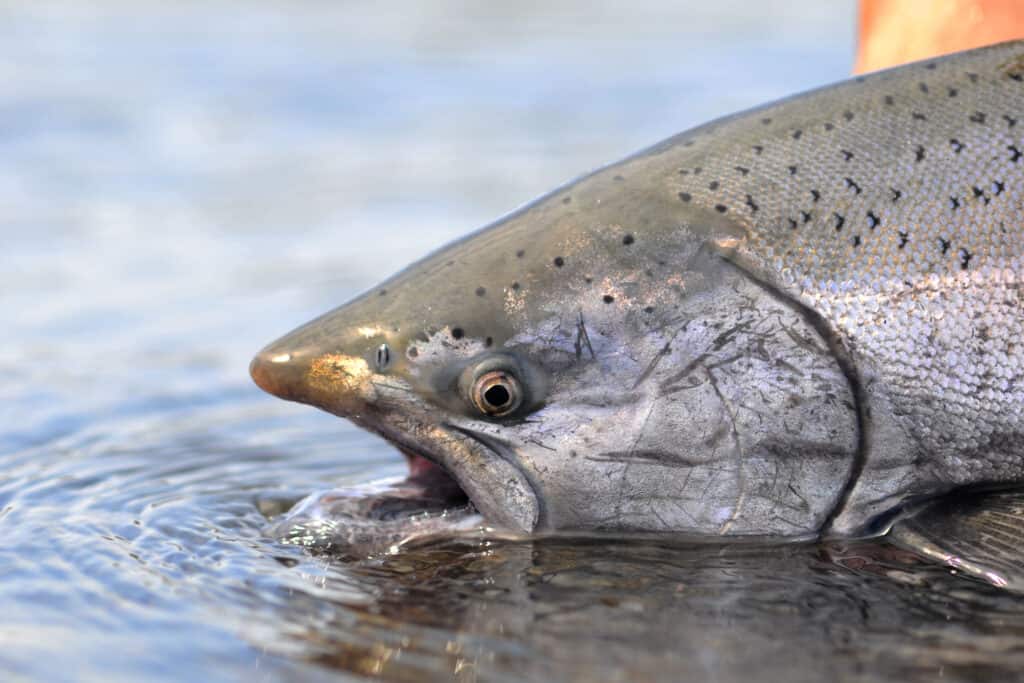
The largest species of salmon, the chinook, is favored for its size and flavor.
©Dec Hogan/Shutterstock.com
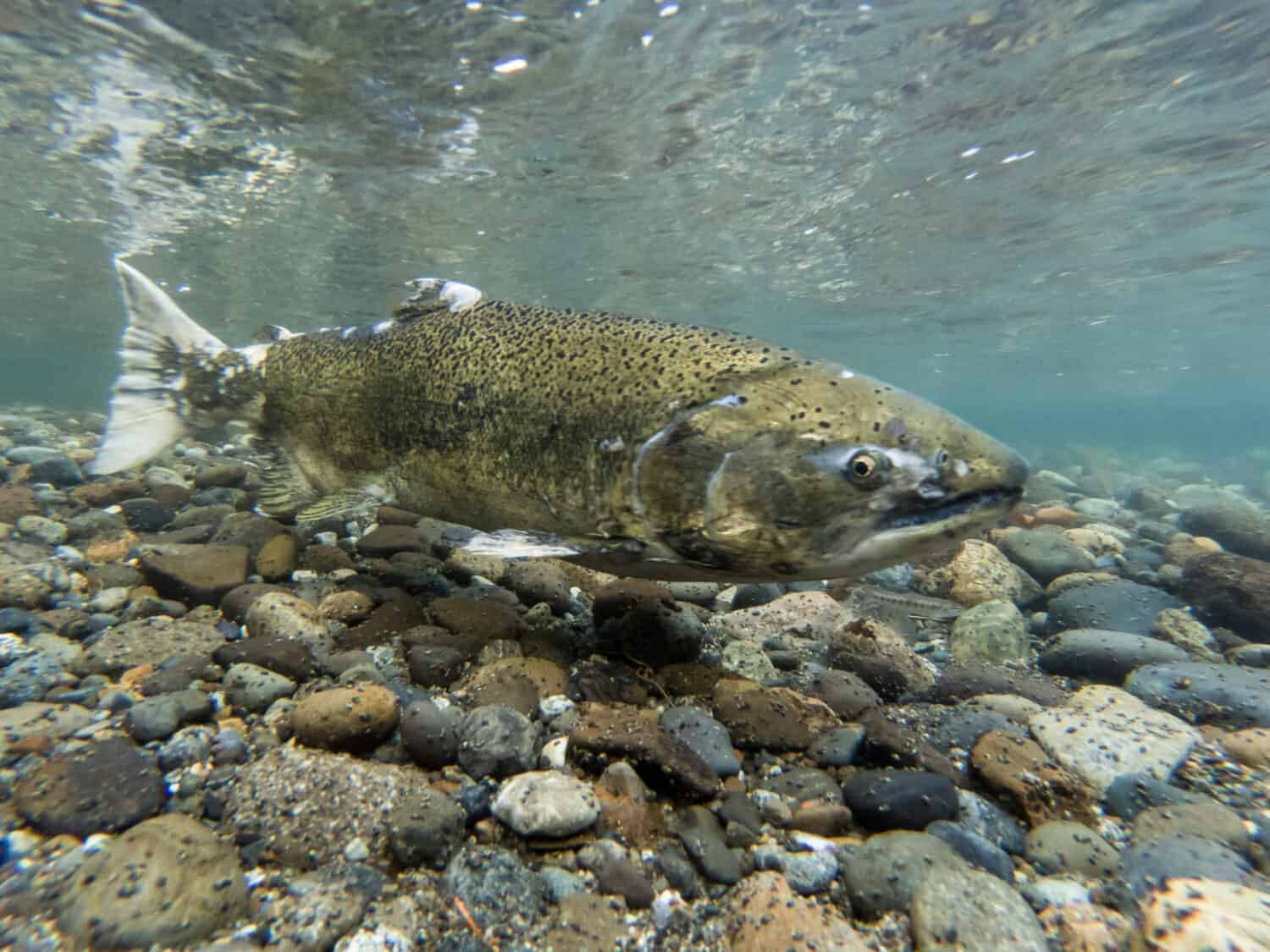
King salmon are blue-green on their backs and the tops of the heads. Their sides are silvery, with white underbellies. Black spots on their tail and upper half of the body help to distinguish them from other salmon species, though pink salmon also have spots on their tails. They also have a black gum line in both saltwater and freshwater varieties. They can reach up to 5.9 feet in length and weigh up to 129 pounds. On average, they are closer to 3 feet in length and 30 pounds. They live an average of 3 to 7 years, with the oldest individuals being the largest.
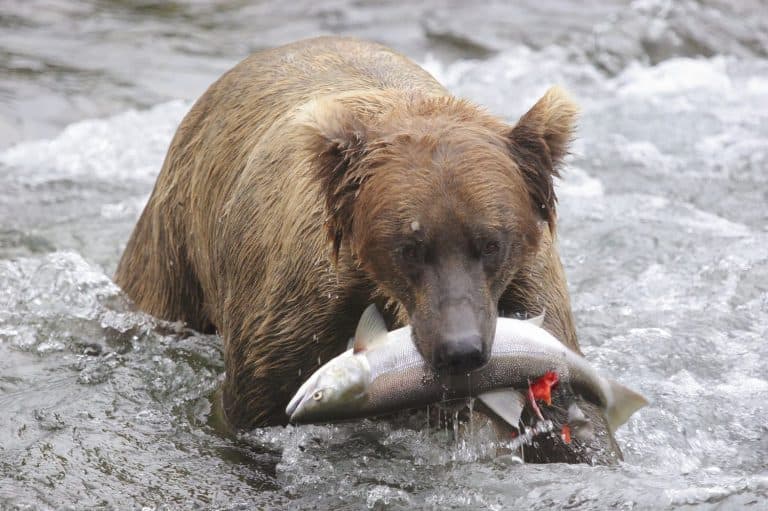
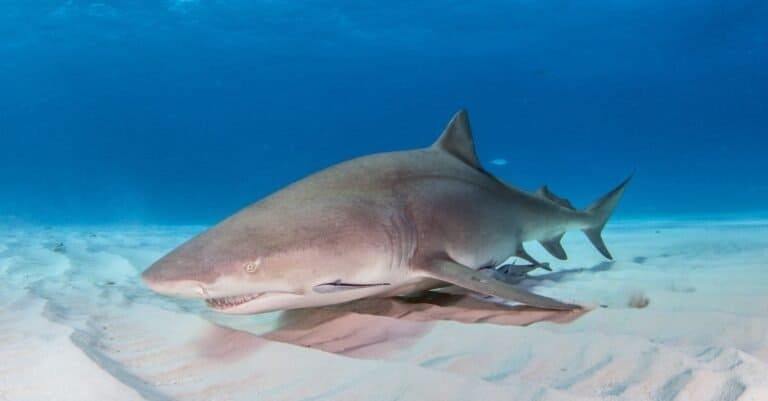
The meat of a king salmon may be pink or white, depending on its recent diet. Feeding primarily on plankton, insects, fish, and amphipods, king salmon are both prey and predator. The young are often fed on by birds and other fish. Adults are a favorite meal among mammals such as orcas, sea lions, bears, and sharks, depending on their locale.
The Largest King Salmon Ever Caught In Indiana
According to the official state website, the largest king salmon caught in Indiana is a 38-pound king caught in Trail Creek, La Porte County. Trail Creek is close to Michigan City, which is on the south shore of Lake Michigan. The fish was caught by Rich Baker in 1980, 46 years ago. Since then, many other large king salmon have been caught in other states, including a record-breaker in Michigan weighing 47.86 pounds. But no other Indiana anglers have broken the record since 1980.
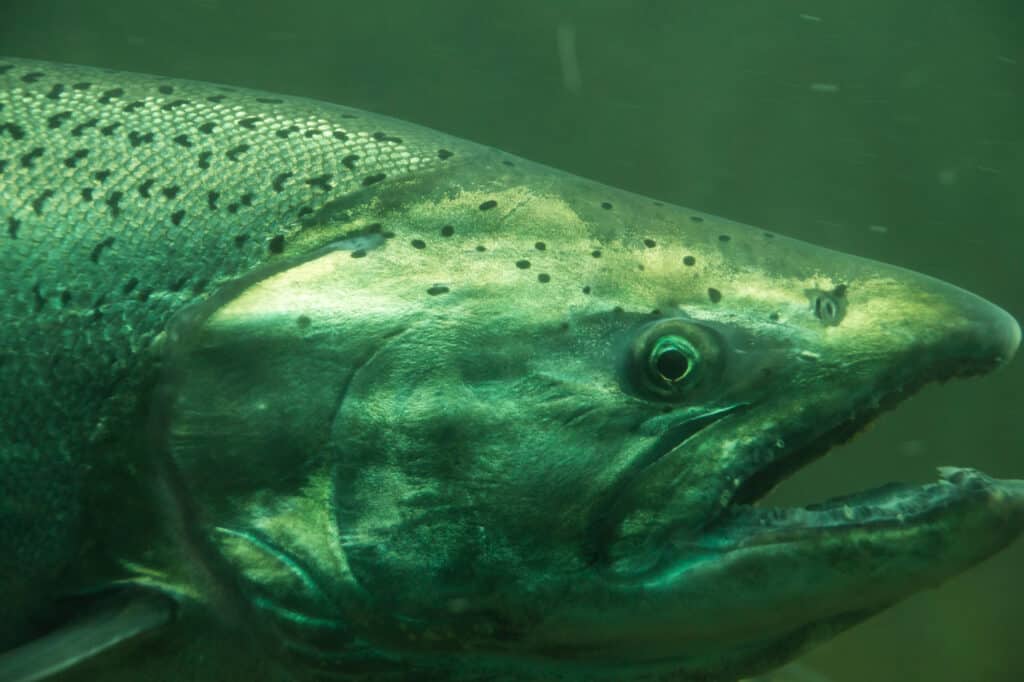
The beautiful silver fish usually weighs around 30 pounds.
©vladdon/Shutterstock.com
The state of Indiana is located in the Midwest area of the United States, at the “Crossroads of America,” and is part of the Great Lakes Region. It is bordered by Lake Michigan to the northwest, Michigan to the north, Ohio to the east, Kentucky to the south, and Illinois to the west.
The Largest King Salmon Ever Caught In The World
The world record for a king salmon in the sport fishing category was broken in 1985 by Les Anderson. The fish was 97 pounds and 4 ounces, caught in the Kenai River in Alaska. The largest commercial record goes to the 126-pound fish caught in the late 1970s. The beast was caught near Rivers Inlet, British Columbia.
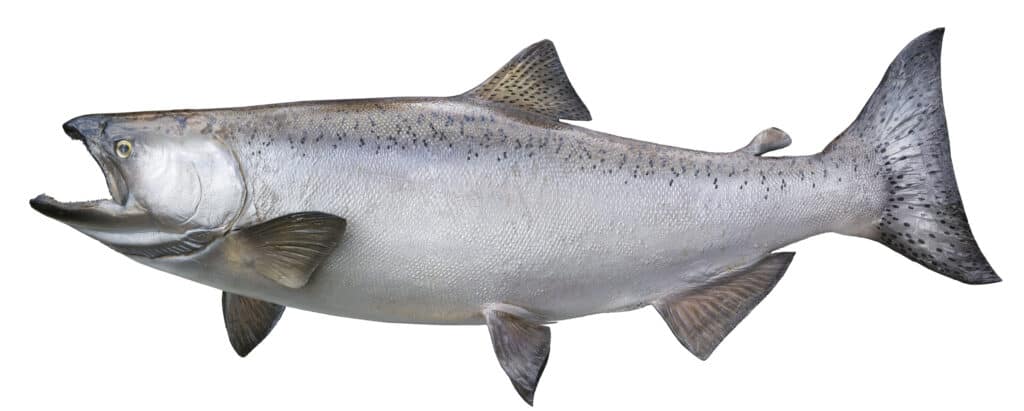
A favorite among diners, the king salmon offers some of the best flavor of all species of salmon.
©Dan Thornberg/Shutterstock.com
An unofficial catch in 2021 could well have beaten the sport fish record. Angler Gayle Gordon brought in a whopper estimated at 100 to 122 pounds in Rivers Inlet. The fish was released alive after girth and length measurements were taken. This means only an estimated weight could be recorded, and therefore the catch would not qualify for any official record.