Quick Take
- Disney won an Oscar for a nature documentary, yet the film's most iconic scene was a deliberate fabrication that killed real animals. See how Disney faked it →
- The lemming suicide myth is centuries older than Disney, and the original misunderstanding actually makes logical sense once you see what naturalists observed. Trace the myth's origins →
- Lemmings do die in massive numbers during population booms, though not for the reason anyone assumed. See how lemmings really die →
- A lemming population can explode 100-fold in just a few years, and the way they handle it is far stranger than jumping off a cliff. Explore the population boom cycle →
The lemming has become known for mindless and herd-like behavior. This false narrative is a result of creative license taken when producing a wilderness film in the 1950s. Lemmings do not commit mass suicide. The film created this myth, which still lingers despite being disproven decades ago.
How Disney Promoted the Idea of Lemmings Jumping Off Cliffs
The idea that lemmings jump off cliffs to cull their own population did not begin with Disney. However, that idea was embedded in American culture with the release of Disney’s 1958 film White Wilderness.
White Wilderness was a part of Disney’s True Life Adventure series. In this particular film, lemmings were shown jumping off a cliff into the ocean below in an odd suicide event. The problem was that the incident was staged. The lemmings never jumped off a cliff into the Arctic Ocean. Instead, they were thrown off by film producers.
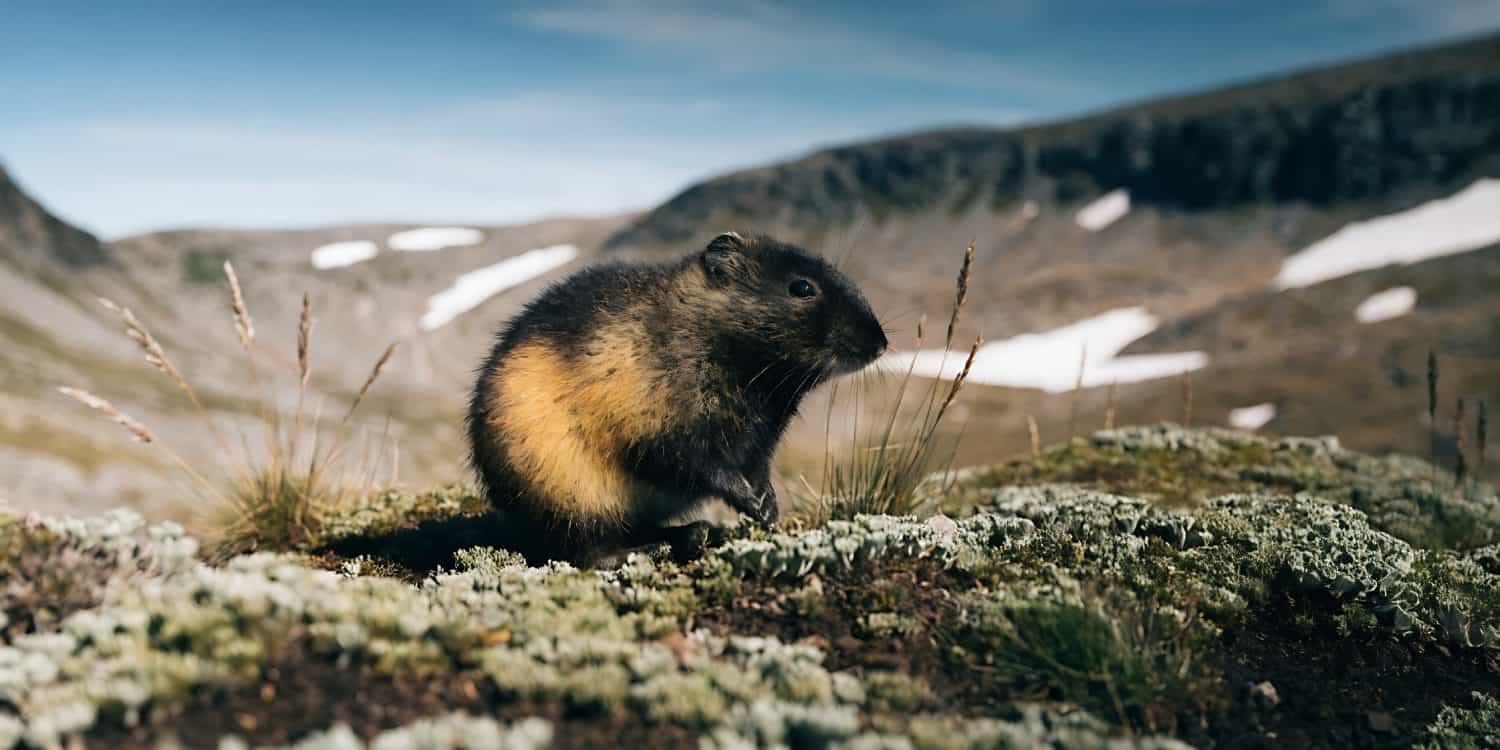
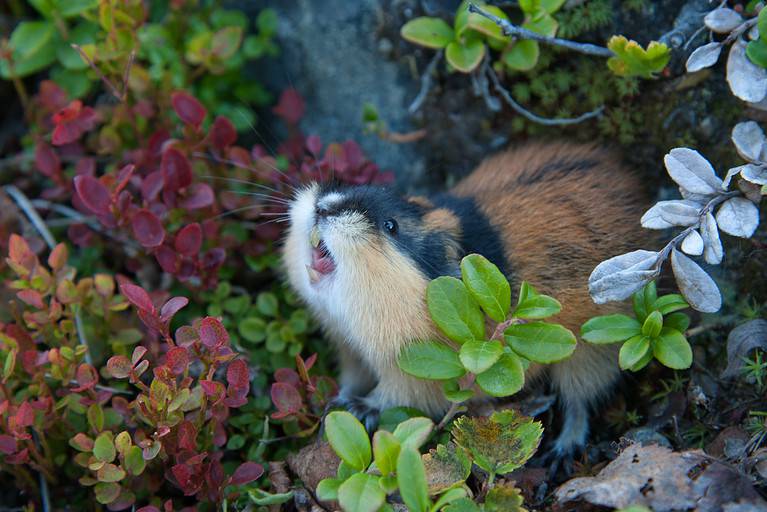
Lemmings will not run to the edge of a cliff and jump off to commit suicide, despite what White Wilderness portrayed.
©Digitalart14/Shutterstock.com
The segment was staged using close-ups of the lemmings and creative editing. There was no mass group of lemmings in the area. In fact, lemmings did not even live in Alberta, Canada, where White Wilderness was filmed. The lemmings were purchased from Inuit children in Manitoba.
As the lemmings were tossed into the “ocean,” which was actually a river, the narrator, Winston Hibbler, explained the mindset of the lemmings.
“This is the last chance to turn back,” Hibbler explained in the film, according to Alaska’s Department of Fish and Game. “Yet over they go, casting themselves out bodily into space.”
The movie concludes with a shot of multiple lemmings dying in the ocean.
Not only was the segment entirely fabricated, but innocent lemmings perished just to evoke a response from the audience. As a result, White Wilderness has gone from a beloved, Oscar-winning film to one that is highly controversial.
Lemmings Do Not Commit Mass Suicide
Lemmings have no desire to end their lives when their population increases. Yet this misinformation has persisted for centuries due to a misunderstanding of lemmings’ intentions.
It is believed that the idea of lemmings committing mass suicide began in the 1700s. At the time, Norwegian naturalists observed lemmings engaging in a massive dispersal. Some of these lemmings crossed large bodies of water to find more resources. Unfortunately, not all survived.
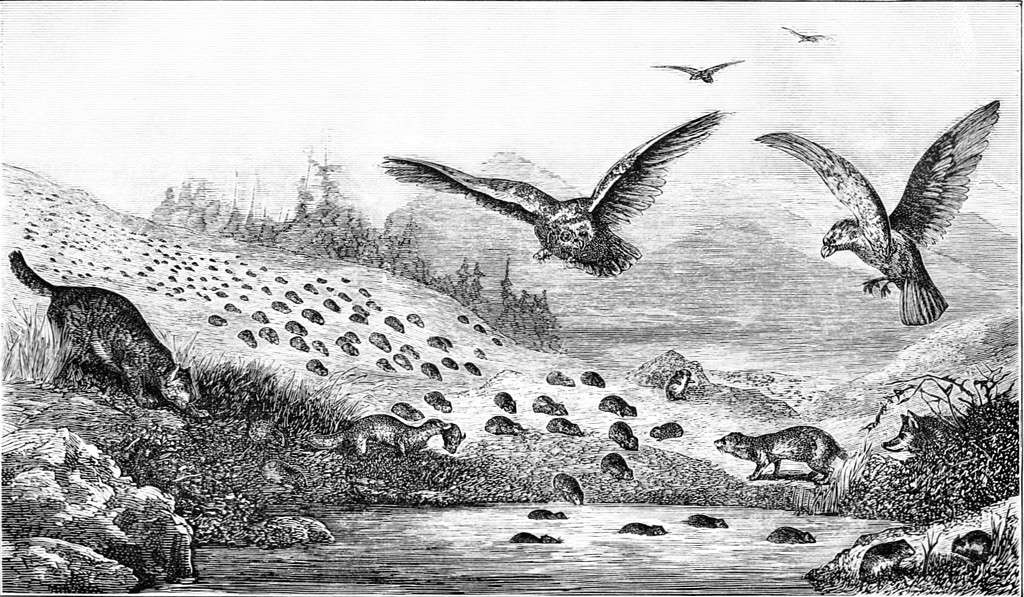
Early naturalists observing a mass lemming dispersal circulated the idea that lemmings commit mass suicide by drowning themselves in bodies of water.
©Popular Science Monthly Volume 11 / Public domain – Original / License
Observing large numbers of lemmings that did not make it across a lake, river, or even the ocean led to the idea that lemmings have an inner drive to kill themselves when the population increases significantly. This idea was debunked in 1983 by the Canadian Broadcasting Corporation. The investigative piece proved that Disney staged the entire lemmings segment, something that zoologists and naturalists had claimed for years.
How Do Lemmings Control Population Booms?
Every three to five years, lemmings experience a population boom. During this time, the population can explode 100-fold in some regions. Essentially, numbers can increase from one lemming on 2.5 acres to 100 lemmings on the same piece of land.
The reasons population booms occur include:
- High reproduction rate during the winter
- Low predation rate of offspring during the winter
- Abundant resources
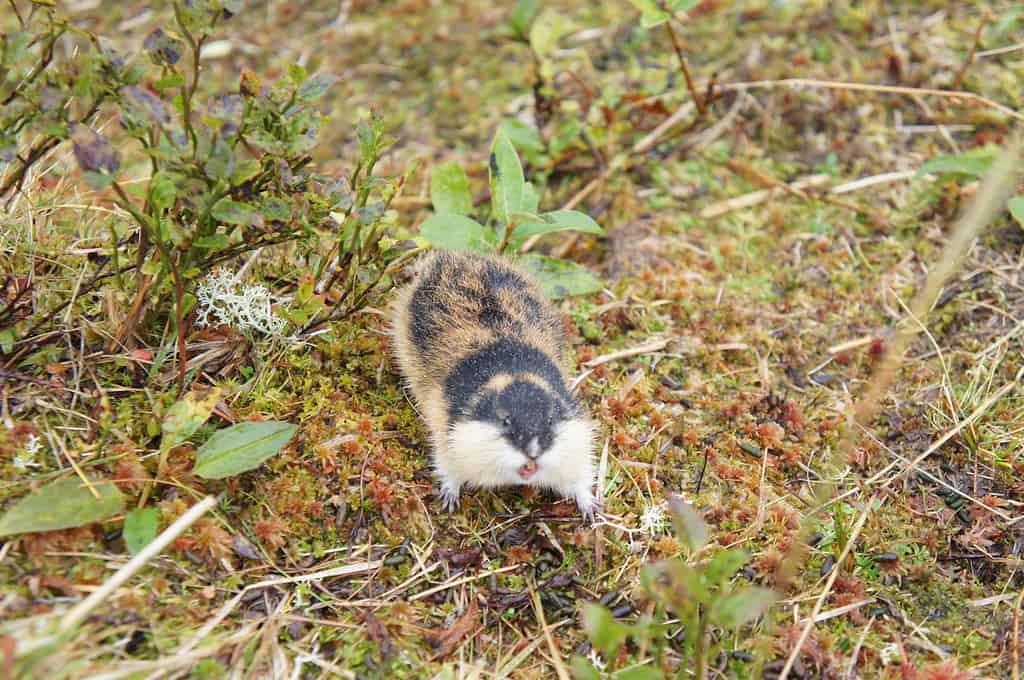
Lemmings will participate in mass dispersal after a population boom.
But just as quickly as the boom occurs, a bust can follow. This is all but guaranteed if lemmings remain in one area and deplete its resources. Consequently, to mediate the results of a population bust, lemmings participate in a mass dispersal.
The effort is not coordinated among the entire population. Groups of varying sizes go in different directions, often making for a chaotic scene. There is no sense of direction. However, due to natural barriers, it may appear that lemmings are moving toward a single location because of the funneling effect. Again, this movement is unplanned, and often the distance traveled is not far. When resources are again found, the group stops wandering.
Lemmings Do Die from Mass Dispersal Drowning
Unfortunately, when it comes time for a mass dispersal, lemmings may face the challenge of crossing a body of water. In some cases, this leads to a large number congregating on shorelines. Once one or more decide to cross the body of water, others follow.
Lemmings are not strong swimmers and have poor eyesight. The survival rate of the lemmings depends on the water conditions. If the water is slow-moving and a short distance across, and the lemmings do not get soaked to the skin, they have a good chance of survival.
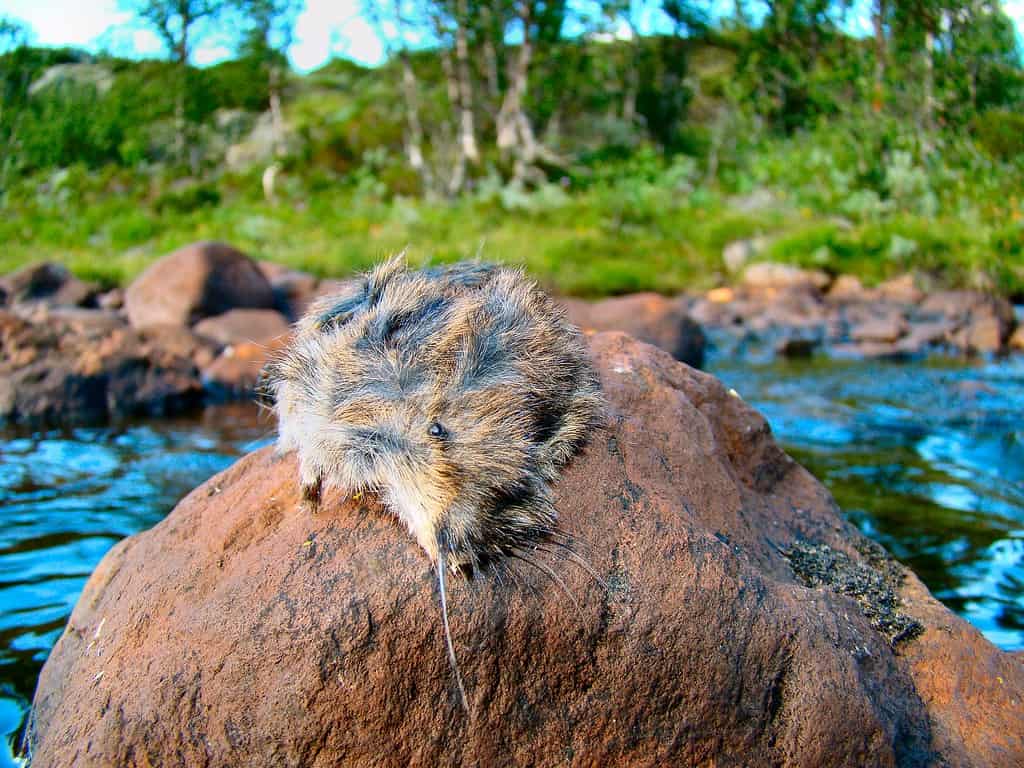
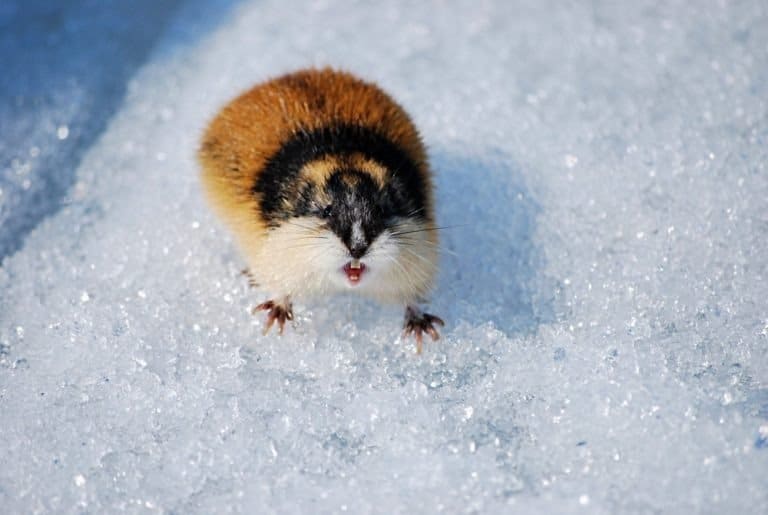
Unfortunately, not all lemmings will survive water crossings during a mass dispersal.
©Bjørn Christian Tørrissen / CC BY-SA 4.0 – Original / License
When the water is moving too quickly, lemmings become exhausted. Though some may make it to the final migratory destination, it is fairly common to see lemmings washed up on shore after their attempts to cross fail.
Lemmings do not have a desire to die en masse. They will not jump off cliffs to their deaths to reduce their population size. But even with the myth debunked decades ago, the misinformation persists and will likely remain for decades to come.