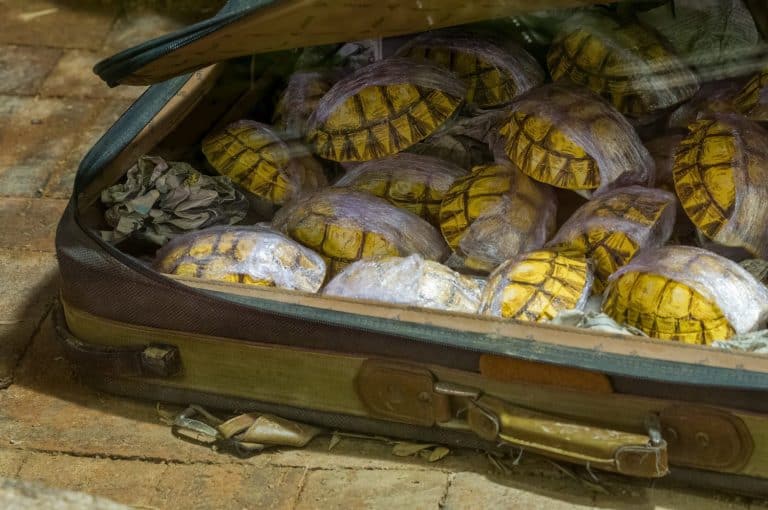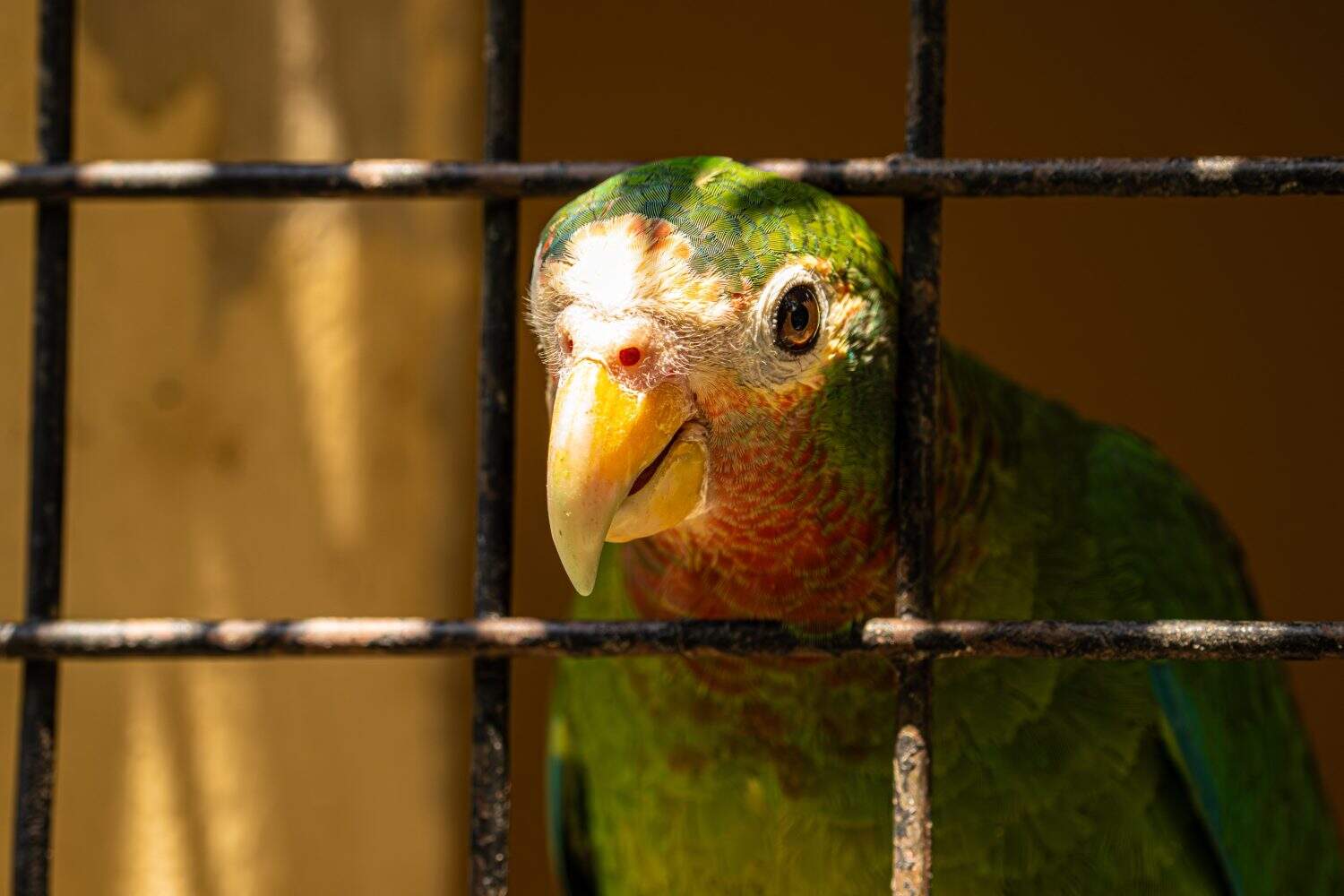

When you check your bag at the airport, you expect it to travel alongside other people’s personal items like clothes and toiletries. But those airport backrooms provide a perfect avenue for the smuggling of illegal goods. While people expect some drugs or even weapons to be transported surreptitiously through airports, few realize just how many animals are smuggled as well. One of the most valuable and commonly smuggled animals is the parrot.
Parrots are charming, charismatic, and vibrant birds. They can sing and talk and have beautiful, even iridescent coats. Behind that pleasing facade, however, lies a murky world of brutal smuggling routes, animal suffering, and the threat of extinction, even as the demand for these birds compels bad actors to smuggle them illegally across country borders. To uncover more of this nefarious, little-understood underworld, we’ve reached out to the premier experts on the human impact on endangered species: the World Wildlife Fund. Let’s learn more about the fascinating and frightening underworld of parrot smuggling.
Meet the Expert: Sara Grange, Program Officer, World Wildlife Fund

Sara Grange conducts investigative research and analysis of the prohibited wildlife trade.
A-Z-Animals got a chance to sit down with someone in the know about the dark world of parrot smuggling: Sara Grange, Program Officer, Wildlife Conservation for the World Wildlife Fund. Grange received both her Bachelor’s and Master’s Degrees from the University of Wisconsin, Madison, in Genetics and Environmental Studies and Environmental Science, respectively. After working as a Wildlife Epidemiology Technician and Digital Communications Specialist, among other roles, Grange began working for the World Wildlife Fund (WWF). There, she served as an Associate Specialist before becoming a Program Officer. In her current role, Grange not only leads the management of strategic approaches for addressing conservation efforts, but she also conducts investigative research and analysis of the prohibited wildlife trade.
History of Parrot Pet Ownership
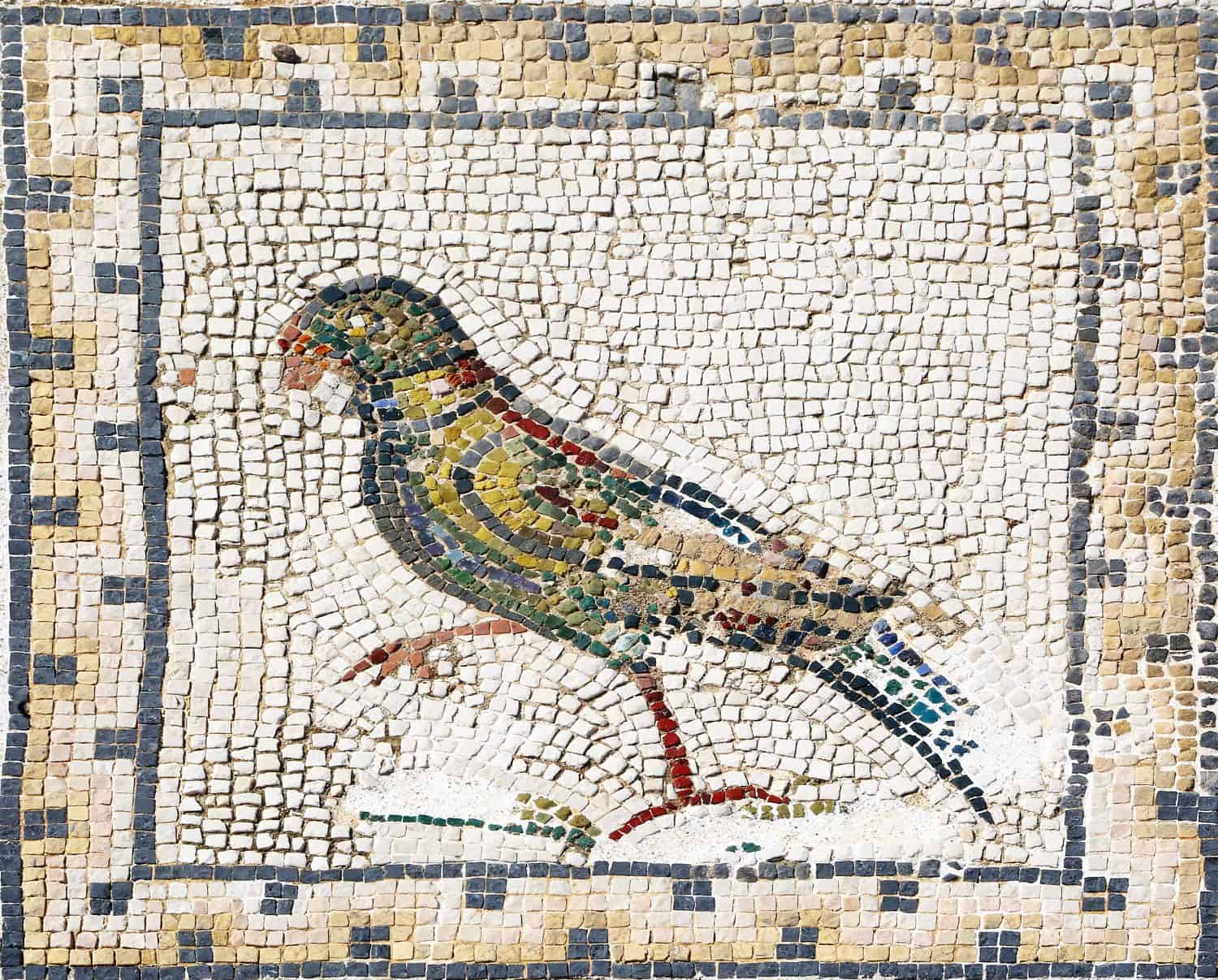
Alexander the Great is believed to have brought the first parrots to Europe from India in 327 BCE.
©spatuletail/Shutterstock.com
The first record of pet parrots is from around 5,000 years ago in Brazil. As the world slowly globalized, the novelty of parrots as pets spread far and wide. Since parrots can be found all across the southern hemisphere, they have been traded and transported practically everywhere. It’s said that Alexander the Great brought the first parrots, Alexandrine and ringneck parrots, from India back to Greece in 327 BCE.
However, after the fall of Rome hundreds of years later, the parrot trade declined. It took until the ‘discovery’ of the New World for the parrot trade to be reignited. Famously, Christopher Columbus brought two Cuban-Amazon parrots back to Spain. As the centuries progressed, the idea of parrots as pets steadily increased in popularity. The (first) First Lady of the United States, Martha Washington, was an avid bird and parrot lover. Her favorite, a pet parrot named Polly, often spent time with her and even entertained guests.
Location, Location, Location
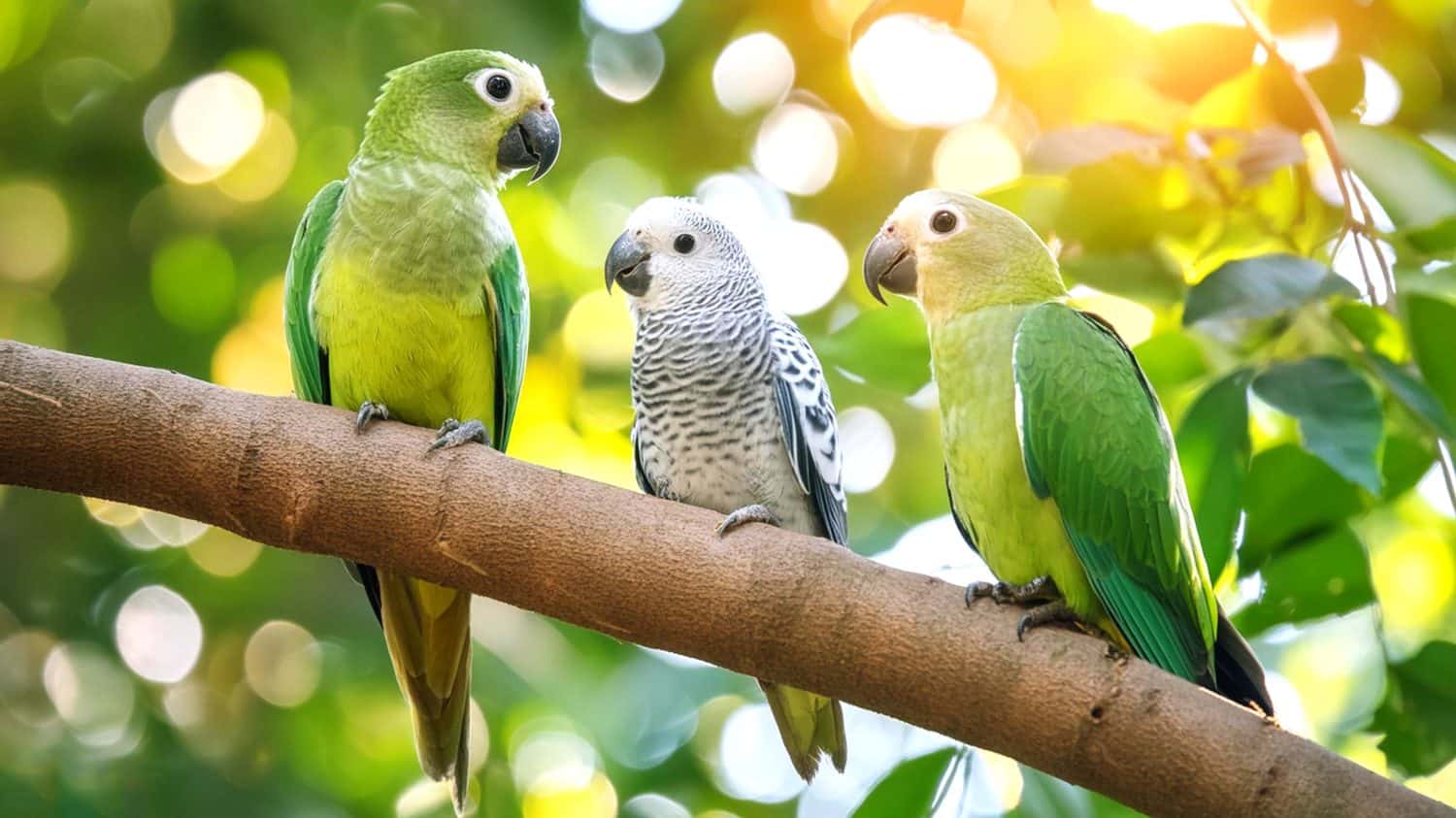
As of 2009, there were approximately 11,199,000 birds kept as pets in the United States.
©Habib CREATIVE/Shutterstock.com
Walk through any neighborhood in your city, and you’re bound to come across people with parrots as pets. As of 2024, there are approximately 5.7 million households in the United States that own pet birds. Of these, 75 percent are parrots. There’s a long history of parrot ownership due to the bird’s intelligence, charisma, and ability to talk.
While the illegal bird trade involves thousands of species, approximately 20% of these species belong to the order Psittaciformes. This order of birds, known as parrots, is characterized by curved beaks, upright stances, and clawed feet. Psittaciformes comprises four families containing around 410 separate species of parrot. Of those, several are in high demand.
“Parrots are taken from their natural habitat across all parts of the world, from Sub-Saharan Africa to South America to Southeast Asia,” Grange says. “These are highly biodiverse regions of the world that are home to some of the most demanded taxa of parrots, such as African Grey Parrots, Amazon Parrots, and Yellow-crested Cockatoos, among many others.”
Malicious Motivations
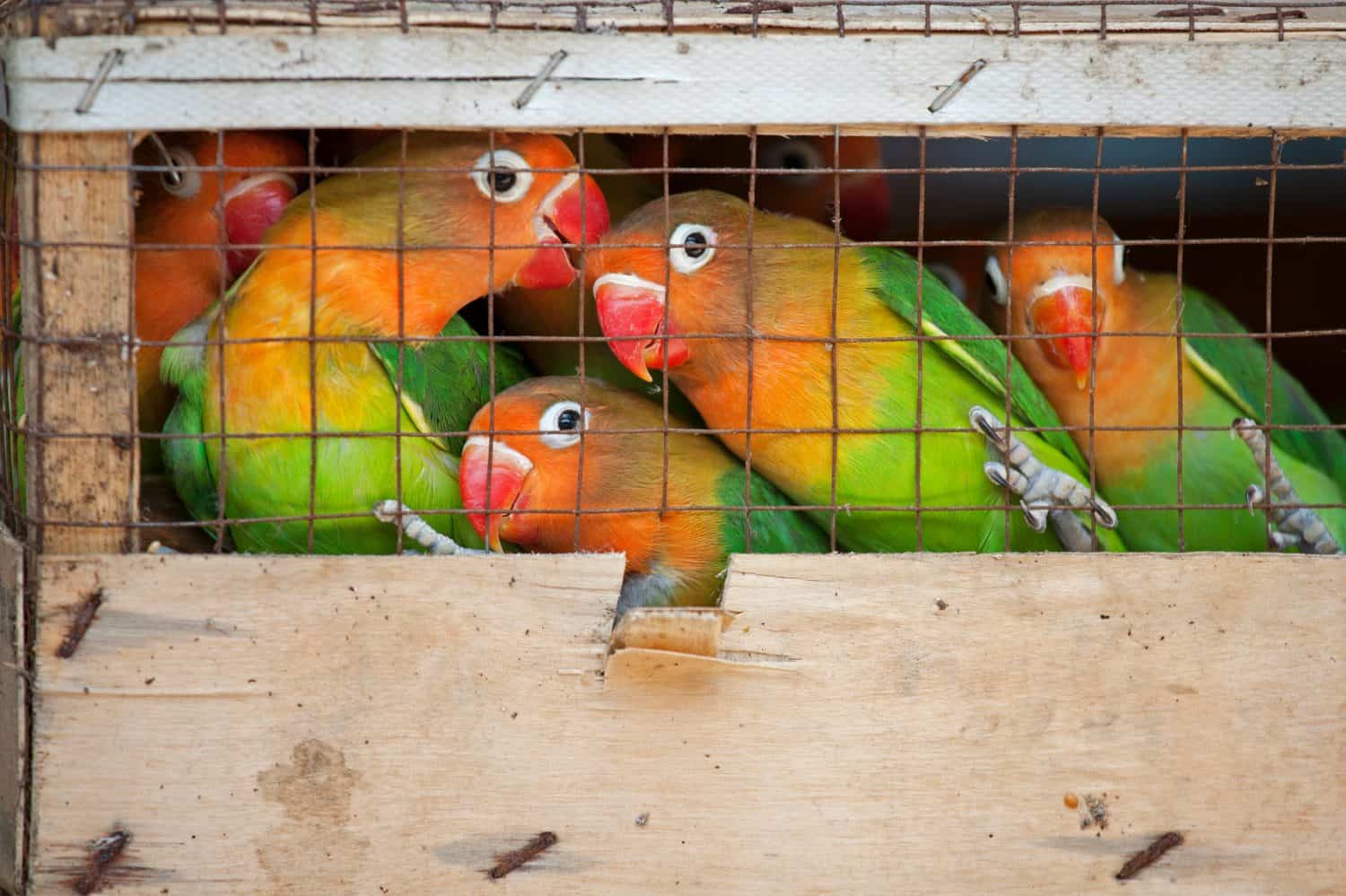
The parrot trade has steadily reduced their populations around the world.
©DnDavis/Shutterstock.com
Not many creatures on earth can bond with people like parrots. This makes them both a prize for pet owners and a target for illegal smugglers. Parrots are also targeted for other reasons, whether they are medicinal or spiritual. As Grange explains, “The demand for parrots as pets is the main driver for the parrot trade and the trade of thousands of other species; however, some species of parrot are also in demand for other purposes such as traditional medicines, spiritual rituals, and research.”
The relative rarity of parrots has also made them a rare gem for unscrupulous collectors. Grange explains that securing the rarest species can be both brag-worthy and profitable. She says, “Whether driven by the desire to add the rarest species to their collection or the potential for high profits by breeding such rare species, wild-caught individuals are often collected to start or diversify a breeding stock.”
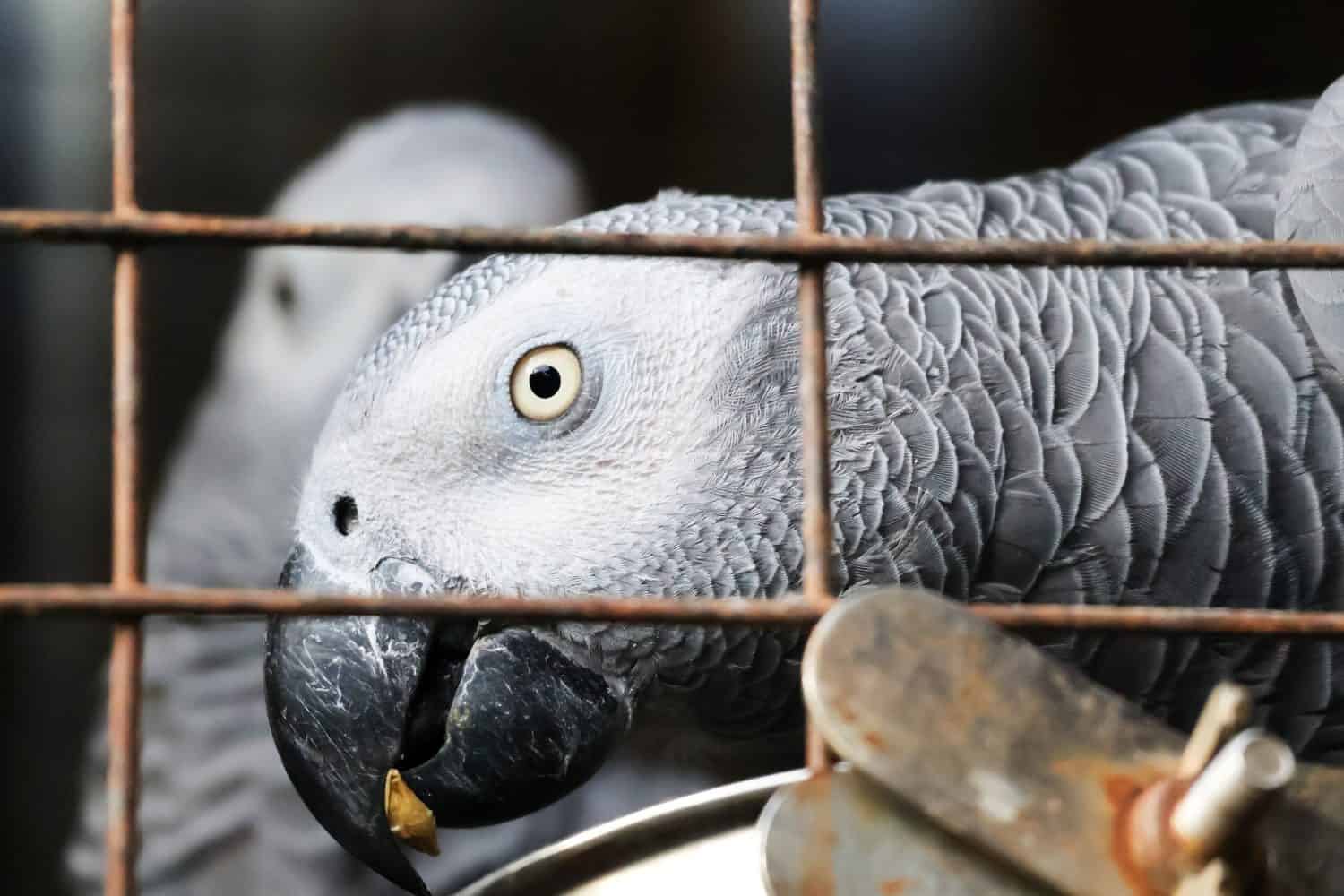
Indeed, the trade has contributed to the steady decline of parrot populations around the world. As of 2025, nearly 45% of parrot species are considered threatened with extinction. Due to their value in the wildlife trade, they face higher rates of extinction than any other comparable bird group.
The demand for parrots as pets is the main driver for the parrot trade and the trade of thousands of other species; however, some species of parrot are also in demand for other purposes such as traditional medicines, spiritual rituals, and research.
Sara Grange, Program Officer, Wildlife Conservation for the World Wildlife Fund.
Booming Business
The illegal wildlife trade is worth up to billion annually.
©Flukycliks/Shutterstock.com
It is hard to say exactly how much the illegal wildlife trade is worth. According to Grange, “The most recent estimate from the 2016 UNEP-Interpol report shows the illegal wildlife trade could be worth up to $23 billion annually.” There’s not much data out there on just how much of this value is comprised of parrots. Even so, it is probably a considerable fraction. “There is no existing data on what fraction of this involves parrots, but parrots are the most heavily traded taxa of birds,” Grange says.
While organized crime networks often facilitate illegal parrot smuggling, much of the exotic pet trade remains legal and sustainable. Even so, as Grange explains, parrots and other species face pressure from human demand. “The high demand for certain species puts extreme pressure on their wild populations, leading to many parrot species being endangered,” she says.
Parrots also play an important role in their native ecosystems. When they are transported away from home to faraway places, they can become invasive. This is especially true if they manage to get free. Many people do not realize just how long parrots live or the kind of care they need to thrive as pets.
“The high demand for certain species puts extreme pressure on their wild populations, leading to many parrot species being endangered. Parrots play an important role in their native habitats through seed dispersal and pollination for ecosystem health,” Grange says, adding: “At the same time, while being depleted in their native range, parrots can become invasive in destination countries if they escape or are released and outcompete the native wildlife in that region, leading to great economic and ecosystem damages.”
Rules and Reinforcement

Online trade has made the enforcement of laws regarding wildlife trade challenging.
©PeopleImages/Shutterstock.com
The demand for parrots has had detrimental effects on their populations. Fortunately, this led to some rules and regulations regarding their trade and ownership. The global treaty CITES lists 55 species of parrot, prohibiting their international trade. However, as one door closes, another opens; the online environment creates loopholes for illegal parrot trade. The sheer scale and anonymity of the online trade are immense. It makes enforcement of regulations enabling countries to “fulfill their commitment to CITES increasingly challenging,” says Grange.
Luckily, the WWF is on the frontline of defense. The organization works across the wildlife trade supply chain to deter wildlife trafficking. It also provides ample guides for proper pet ownership. This helps deter illegal pet acquisition due to ignorance. It also ensures that animals—like parrots—receive the best care throughout their lives.
According to Grange, the WWF has partnered with several organizations to co-convene the Coalition to End Wildlife Trafficking Online. This coalition comprises approximately 40 to 47 leading e-commerce and social media platforms. “People can report suspicious wildlife listings they find online directly to the platform they found it on, or through the Coalition’s reporting page if needed,” Grange says.
The dark world of parrot smuggling is a grim place. However, organizations like the World Wildlife Fund have the resources to challenge the practice before it decimates parrot populations around the world.