
Quick Take
- One beaver became the unexpected hero of the entire operation, and nobody predicted how he would react after each test drop. Meet Geronimo the beaver →
- The first drop box prototype had a fatal flaw that engineers only caught at the last second, and the problem had nothing to do with the parachute. See the drop box design →
- Moving beavers overland was so bad for everyone involved that horses and mules had their own documented complaints about the job. See the overland transport troubles →
- The original government film proving all of this happened vanished for decades, and tracking it down took longer than the entire beaver drop program itself had. Trace the lost film's recovery →
In 1948, the Idaho Department of Fish and Game pulled off one of the strangest wildlife relocations in American history: they parachuted live beavers out of airplanes. As bizarre as it sounds, the plan was surprisingly practical. Wildlife officials needed a way to move beavers from populated parts of Idaho into central Idaho’s remote Chamberlain Basin — an isolated and rugged wilderness of steep mountains and dense forests with virtually no roads. Today, this area is part of the massive Frank Church–River of No Return Wilderness.
At the time, trying to transport the animals by truck and pack mule was slow, dangerous, and incredibly stressful for both the handlers and the beavers. Looking for a better way, Fish and Game employee Elmo W. Heter proposed a wildly unconventional idea: fly the beavers into the backcountry and parachute them straight into the wetlands.
Why Were Beavers Being Relocated?
After World War II, a housing boom pushed more people into Idaho’s wooded rural areas. This expansion quickly put humans at odds with native beavers. The new homeowners and farmers were dealing with flooded fields, plugged culverts, damaged orchards, and toppled trees near homes and farms.
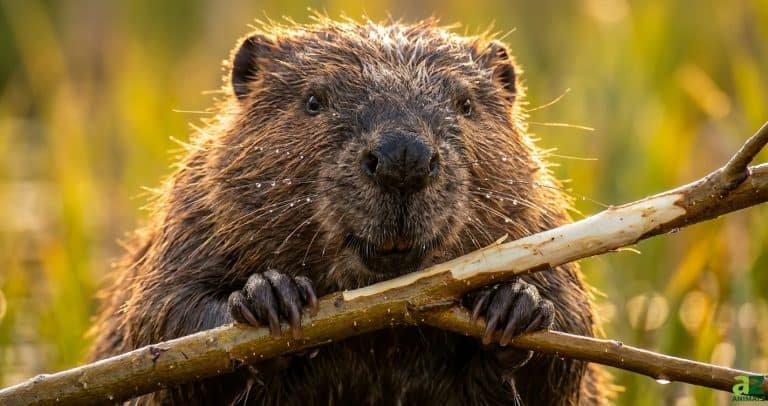
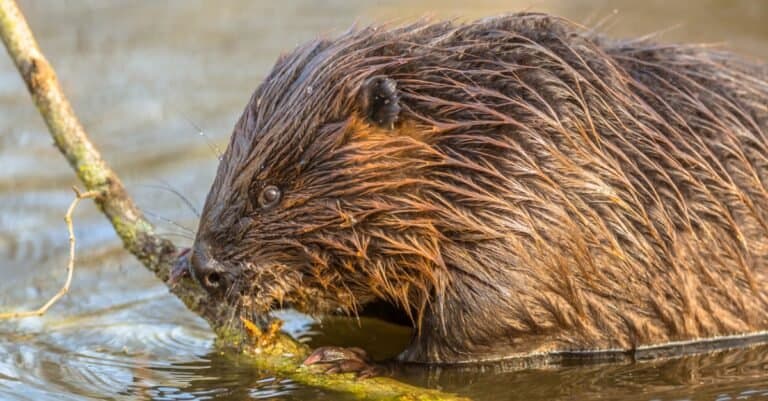
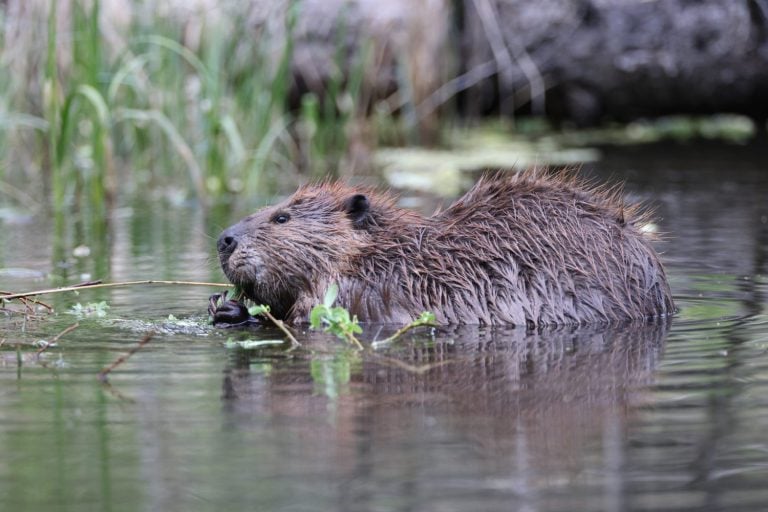
Beavers can completely transform the landscapes and ecosystems where they live.
©Idaho Department of Fish and Game / Public domain / Wikimedia Commons – Original / License
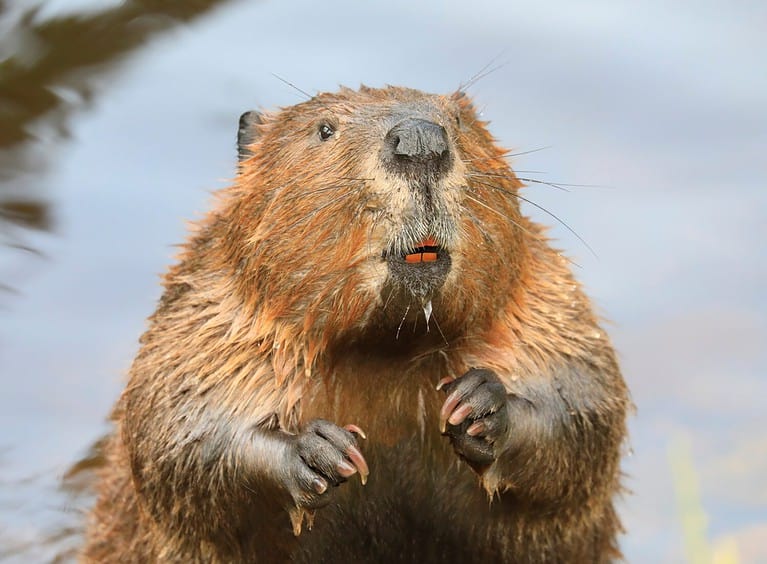
Despite the headaches, wildlife officials didn’t want to kill the animals. Beavers are crucial “ecosystem engineers.” Their dams create vital wetlands that improve water quality, prevent erosion, stabilize local water supplies, and provide habitats for fish and birds. On top of that, North American beavers were still recovering from centuries of heavy trapping during the fur trade. By 1900, their continental population had plummeted to just 100,000 individuals.
Relocation made the most sense environmentally and financially. According to the U.S. Department of the Interior, moving a single beaver in the late 1940s cost only $7 to $8. The environmental benefits that the same beaver created over its lifetime were worth roughly $300.
The Problem with Moving Beavers by Land
The real challenge was actually getting the animals into the Chamberlain Basin. Attempts at traditional relocation were a nightmare. Officials would trap the beavers and drive them overnight in trucks. Then they would load the heavy crates onto horses or mules for exhausting, multi-day treks through steep wilderness. The beavers often overheated, suffered severe stress, and refused to eat. Sadly, many did not survive the trip.
The pack animals hated the journey just as much. In a 1950 article for The Journal of Wildlife Management, Heter wrote that the horses and mules became “spooky and quarrelsome” as they lugged struggling, foul-smelling beavers across rough mountain trails. Clearly, a better solution was needed.
Designing a “Beaver Bomb”
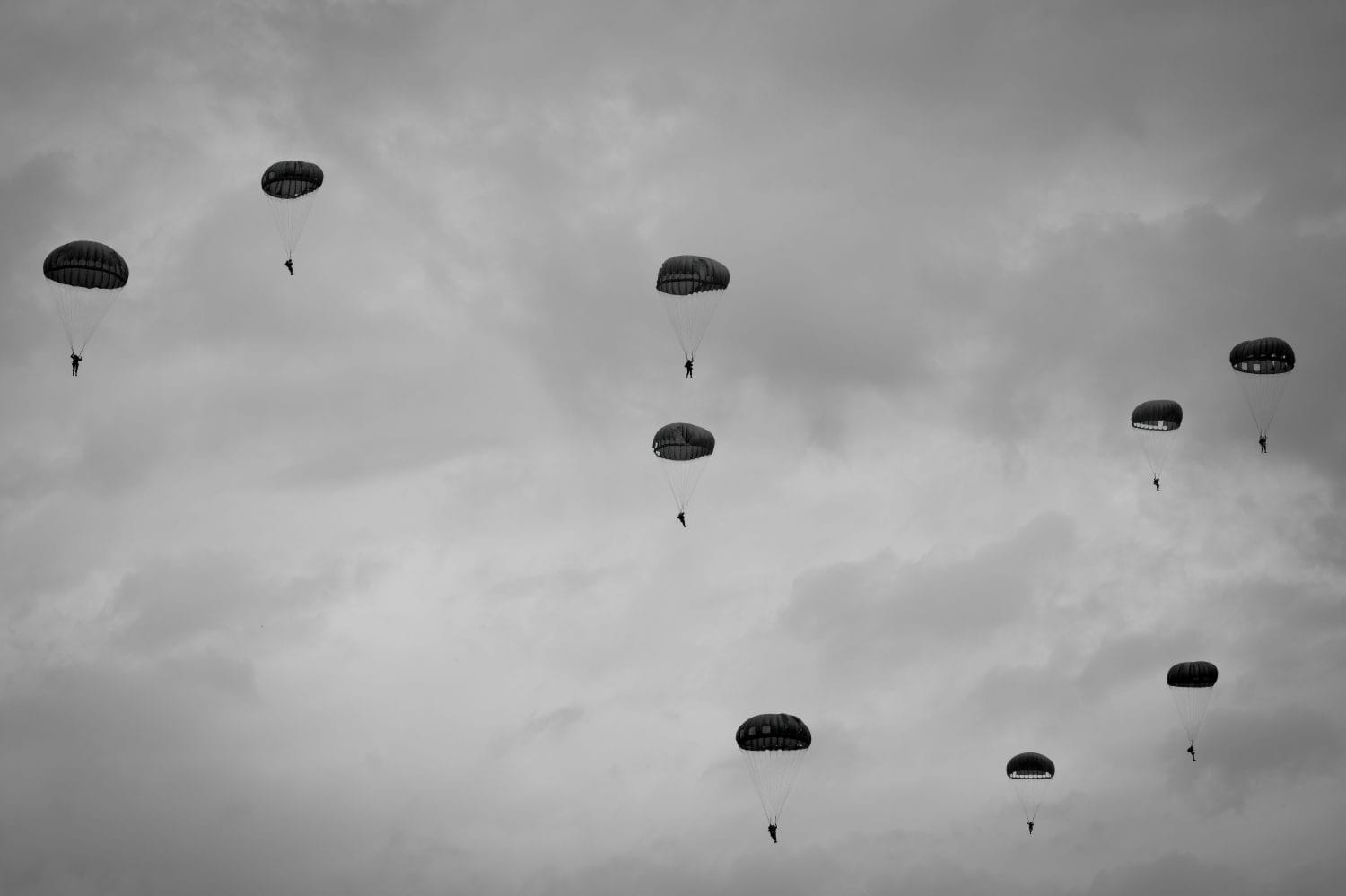
Moving beyond traditional methods, Heter designed a custom wooden drop box attached to surplus World War II parachutes. The crate needed to be tough enough to survive the flight, yet designed to open automatically upon landing. His first prototype — woven from willow branches — was quickly abandoned when he realized a stressed beaver might simply chew through the sides while midair.
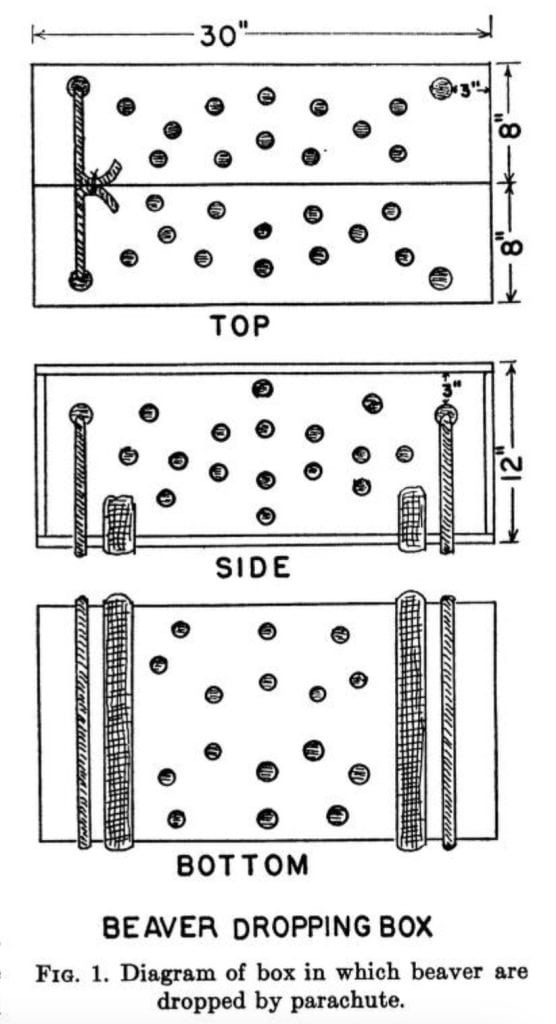
Officials wanted to keep the beavers unharmed so they could continue being ecosystem engineers in a new area.
©Elmo W. Heter employee of Idaho Department of Fish and Game / Public domain / Wikimedia Commons – Original / License
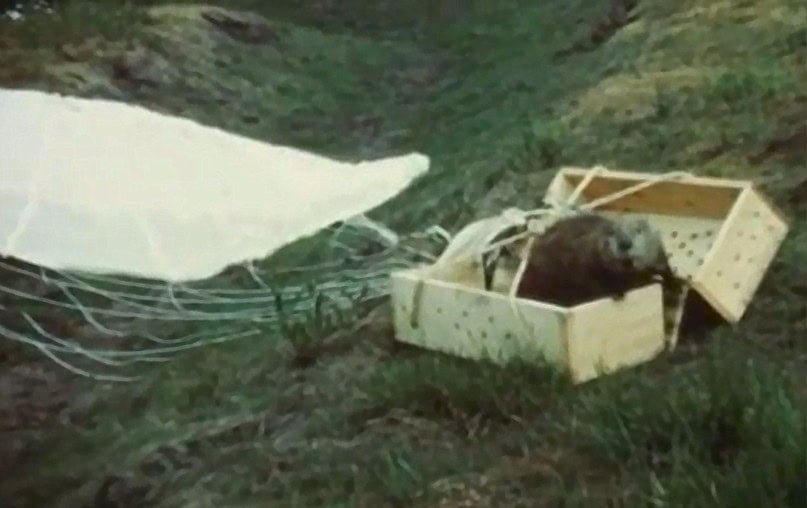
The final design looked more like a wooden suitcase. Ventilation holes allowed airflow, while heavy elastic cords and a rope harness kept the crate securely shut during flight. Once the box hit the ground and the parachute collapsed, the tension on the cords released, and the crate automatically sprang open.
However, before trusting the contraption with live animals, Heter tested the boxes repeatedly using weighted dummies. Once the tests confirmed the boxes would work, it was time for real trials with live animals.
Geronimo the Test Beaver
An older male beaver nicknamed “Geronimo” became the unlikely hero of the project. Geronimo endured multiple test drops as crews observed the boxes’ performance. Over time, he reportedly became so accustomed to the process that after landing, he would calmly climb back into his crate, seemingly ready for another flight.
With the kinks worked out, wildlife officials settled on a strategy: they would drop the beavers in small breeding groups, typically one male and three females.
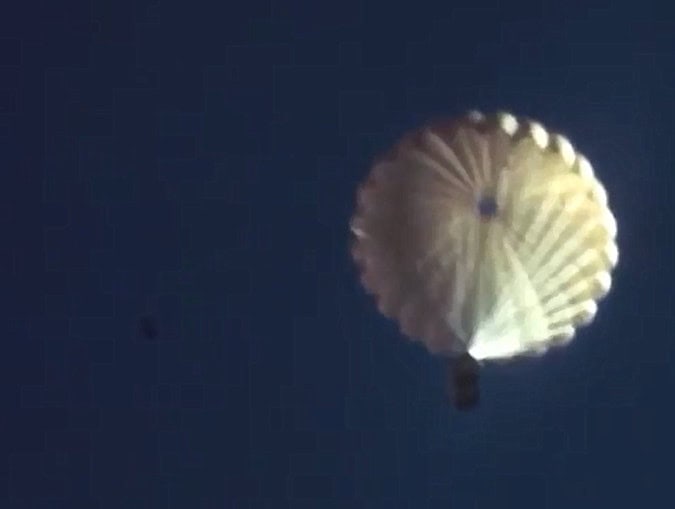
Researchers prioritized younger animals, as they adapted much faster to new territory.
©Idaho Department of Fish and Game / Public domain / Wikimedia Commons – Original / License
The Historic 1948 Beaver Drop
On August 14, 1948, the first official mission took flight. A twin-engine Beechcraft aircraft carried eight beaver crates over the Chamberlain Basin, releasing them above remote mountain meadows. Geronimo was given a “priority reservation” on this historic flight and dropped alongside three female companions into a valley that officials reportedly called a “beaver paradise.” By the end of the operation, 76 beavers had parachuted into the wilderness — and remarkably, 75 of them survived. The only casualty occurred when an agitated beaver partially escaped its crate in midair and fell before the box reached the ground. Aside from that single tragic mishap, the project was hailed as an overwhelming success.
By 1949, officials confirmed that the relocated “Parabeavers” — a catchy nickname popularized by Popular Mechanics — had successfully built dams, established lodges, and started families in the basin. Today, the descendants of those pioneering animals still thrive in the area.
The aerial drops were a short-lived program, as the relocation goals were achieved relatively quickly. Modern wildlife management has since moved on from parachutes, relying instead on helicopters and non-lethal tools like “beaver bafflers” — clever piping systems that control flooding without needing to move the animals at all.
How the Story Went Viral Decades Later
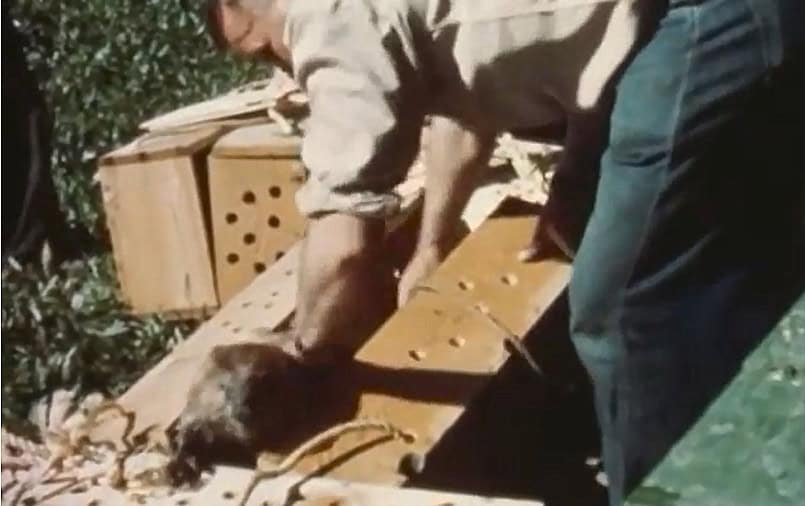
It took six years to find the film of the great beaver drop.
©Idaho Department of Fish and Game / Public domain / Wikimedia Commons – Original / License
For decades, this bizarre operation was largely forgotten outside of Idaho. Then, in the early 2000s, Idaho Fish and Game historian Sharon Clark set out to find a rumored government film called Fur for the Future, which supposedly documented the project. After a meticulous six-year hunt, archivists finally uncovered the mislabeled film canister in 2014. Once the footage was digitized and uploaded online in 2015, the story of the skydiving beavers became a viral internet sensation.
Today, the “Great Beaver Drop” is a beloved piece of Idaho folklore, commemorated in artwork, merchandise, craft beer labels, and even sports tributes. In 2025, the Boise Hawks baseball team even temporarily rebranded as the “Boise Battle Beavers” to honor the strange conservation experiment. Few wildlife projects have ever sounded so ridiculous — or worked so well.