
Quick Take
- Paternal care is vanishingly rare in the animal kingdom. So why do some harvestmen dads show up to guard the nest? Why dads guard the nest →
- Smartphone app uploads from everyday people contributed data to crack open a 30-year scientific mystery. How iNaturalist solved it →
- Harvestmen fathers evolved parental care repeatedly and along two distinct evolutionary routes. Two paths to caregiving →
- Harvestmen make up less than 1% of arachnid species, yet they punch wildly above their weight in parental care. See the surprising numbers →
Traditionally, data collection was the purview of scientists, but times have changed. Recognizing the value of sheer numbers of crowd-sourced data, citizen science projects have cropped up all over the world. They invite regular citizens to contribute data that, after suitable vetting, becomes part of a research study.
A new study published in the Zoological Journal of the Linnean Society reinforces the significance of citizen science data in scientific research. Led by biologists at the University of São Paulo in Brazil, the study examined parental care in spider relatives called harvestmen, known to many as “daddy longlegs.” They’re not spiders, despite the resemblance, although they’re in the same broad group of arachnids.
Some Harvestmen Care for Their Eggs
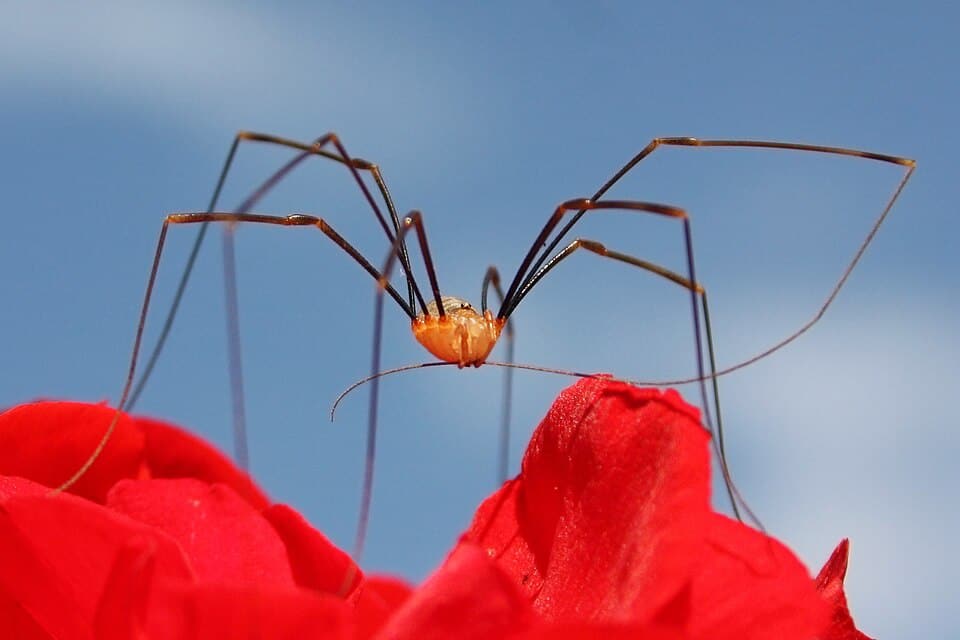
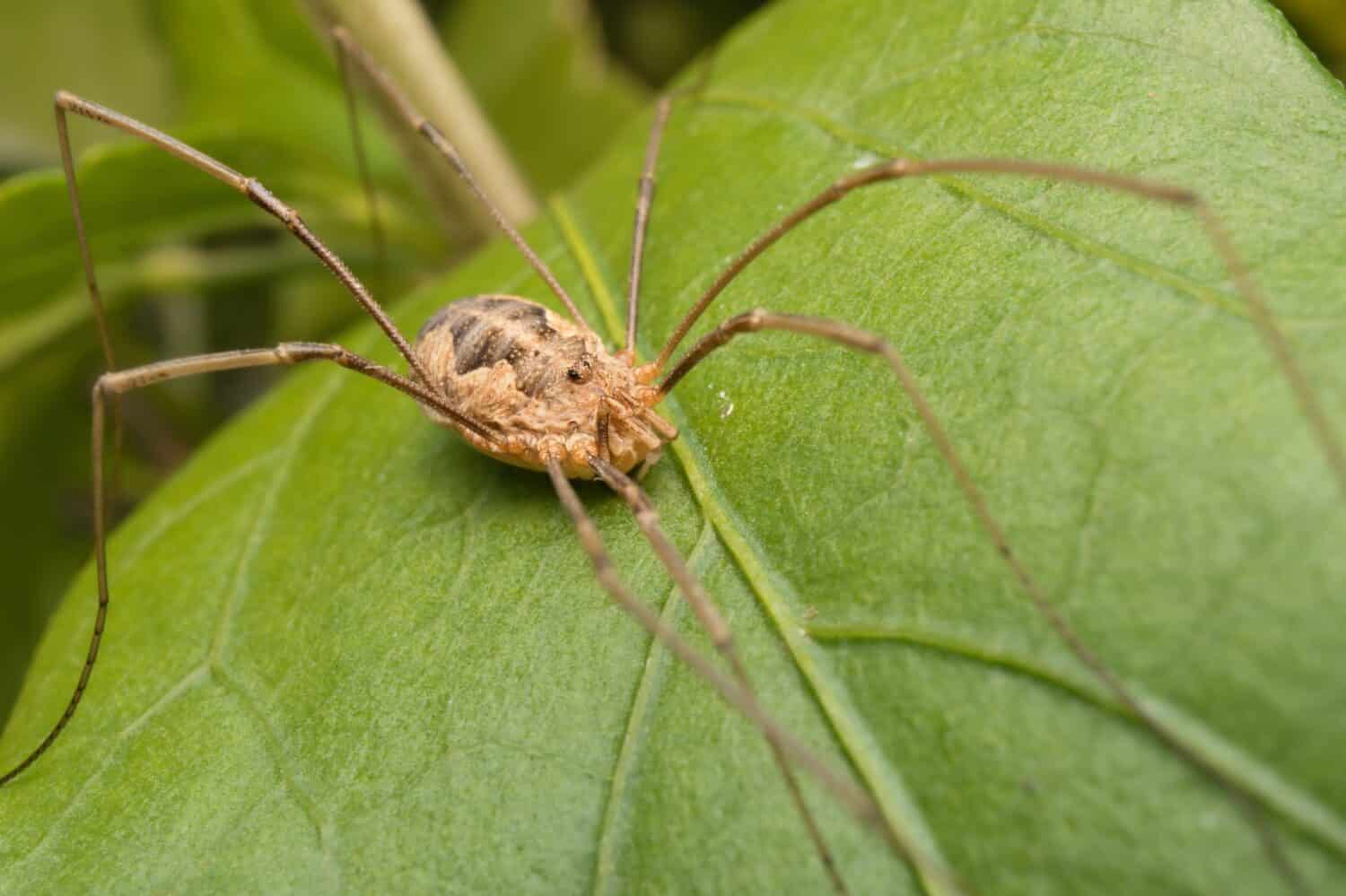
This male harvestman (Opilio canestrinii) on a geranium is cleaning one of his long legs in his jaws.
Harvestmen tend to be active during late summer and fall, i.e., harvest time. Parental care, especially by animal fathers, is exceptionally rare in nature. Yet, it appears multiple times within harvestmen (scientific order Opiliones), of which there are more than 6,900 known species, according to recent estimates.
By tapping into citizen data submitted to the citizen science app iNaturalist, Machado and his coauthors more than doubled the number of documented examples of parental care in harvestmen. The citizen science contributions expanded the dataset from records of 80 species, collected over 30 years of field work, to 142 species, enough to decipher how harvestmen’s parental care evolved.
“It’s a tremendous source of information that can improve the speed with which we accumulate biological information,” explains study author Glauco Machado in a press release. “I would never be able to do this by visiting museums around the world. It would be very expensive, very time-consuming, but here we conducted the search in only one week.”
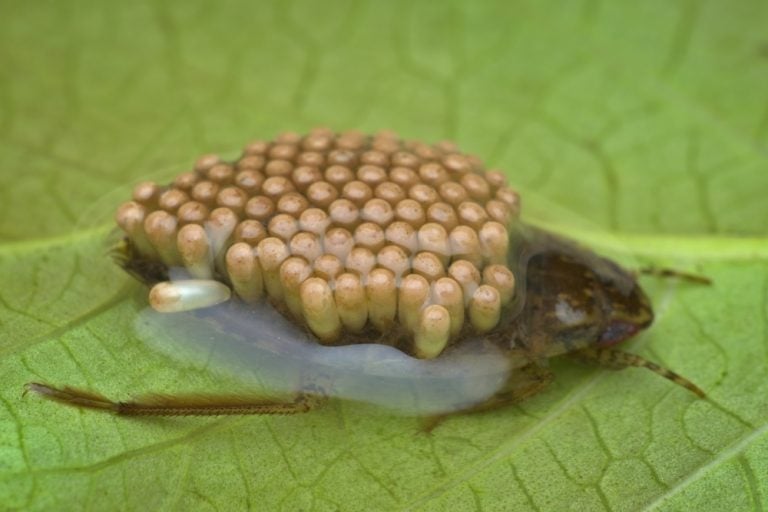
Harvestmen species show a range of parental care behaviors. In many species, after egg laying, parents play no further role in the development of their offspring. In some species with maternal care, however, females lay all their eggs at the same time, then stay with them as they develop. In other species, males collect eggs into a nest from a set of females, then intermittently guard the eggs during development. With maternal care, the female also tends to stay with the nymphs, once they hatch, for up to several weeks. With paternal care, in contrast, fathers are known to stay no more than a few days after hatching.
The researchers sorted the examples of parental care by species to plot them on a harvestmen family tree. “By looking at harvestmen, we can explore questions related to the factors that led to the evolution of this behavior,” said Machado.
The Evolution of Parental Care
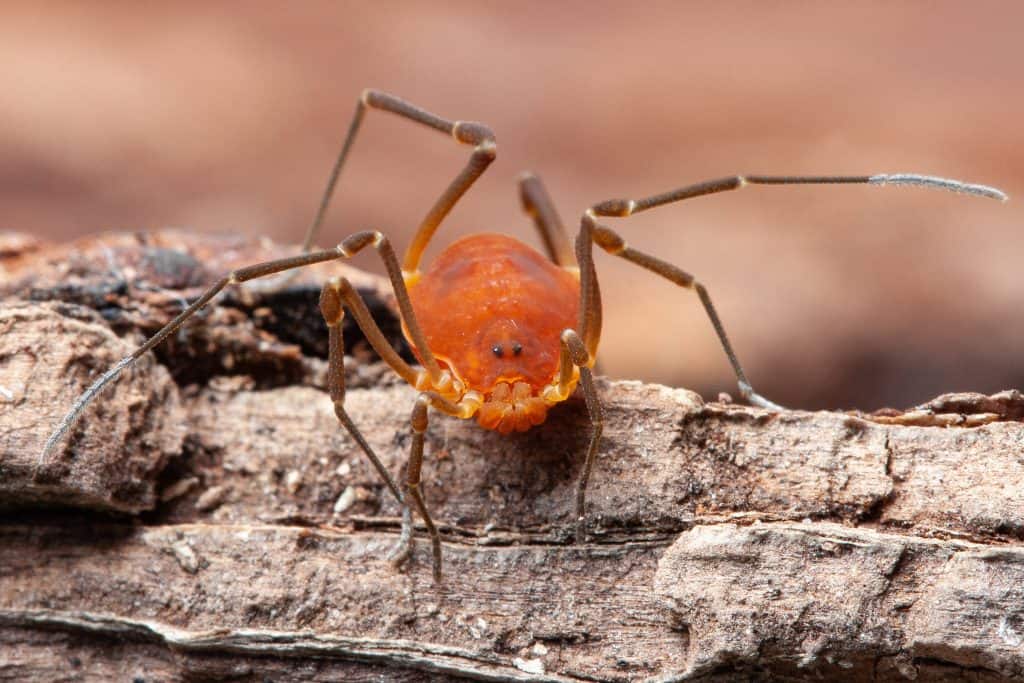
Species such as this Vonones sayi tuck their eggs into hidden spots, like under bark or fallen leaves.
The results showed that parental care had evolved, disappeared, and then re-emerged multiple times throughout the evolution of harvestmen. In both sexes, evolutionary transitions from care back to no care were frequent, which the study authors attribute to the tradeoffs of offering parental care. Guarding eggs may increase the chance of offspring survival, but it detracts from the time that an adult can be feeding or searching for more mates.
“Alternative egg-protection strategies may compensate for the absence of parental attendance, while avoiding the costs of prolonged care,” wrote the study authors. In some species without parental care, females lay eggs in protected places, such as cavities in tree bark or small holes in plant stems.
In species where parental care by mothers evolved, it was always from ancestors that didn’t tend their eggs or offspring. However, parental care by fathers evolved along two evolutionary routes — either from species that had no parental care, or from species that already had maternal parental care. The study authors hypothesize that in the cases where care by fathers evolved from existing maternal care, it may have been related to attracting or impressing females.
“In many species where males care for the offspring alone, the caring activity is a sexually selected behavior, which means that females prefer males that are caring for the eggs,” added Machado. Over time, female preference for males willing to invest in tending the nest may exert selective pressure favoring paternal participation. Harvestmen have been on Earth for at least 410 million years, according to paleontologists, giving plenty of time for natural selection to influence their parenting strategies.
Citizen Science Gives Research a Boost
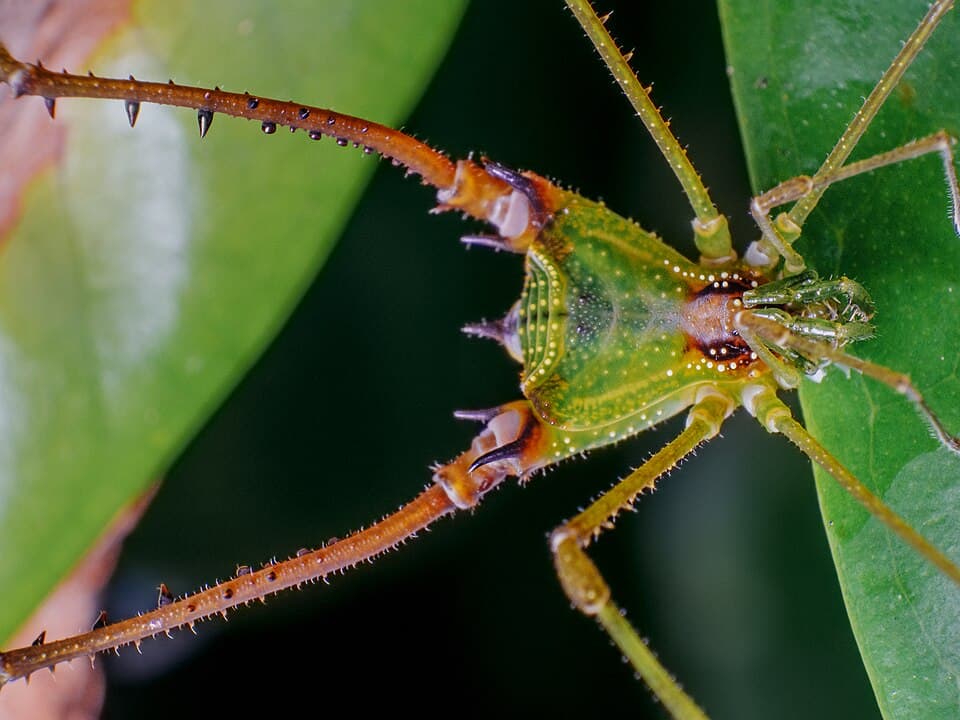
This gonyleptid harvestman (Iguapeia melanocephala) from Paraná, Brazil has male parental care.
With the addition of the iNaturalist citizen science data used in this study, harvestmen are now estimated to account for more than half of all known parental care by fathers in arachnids. That’s remarkably high, given that harvestmen constitute less than one percent of arachnid species. Those harvestmen dads deserve a shout-out.
As citizens continue to contribute data to iNaturalist and other crowd-sourced apps, we can expect more scientific insights to emerge about the natural world. Still, the study authors emphasize that citizen science won’t replace the roles of professional biologists in discovering new organisms, classifying them, and studying their behaviors.
“I think taxonomists’ role in modern science is more important than ever,” said Machado. “We cannot preserve a species that doesn’t have a name. And names are provided by taxonomists.”